
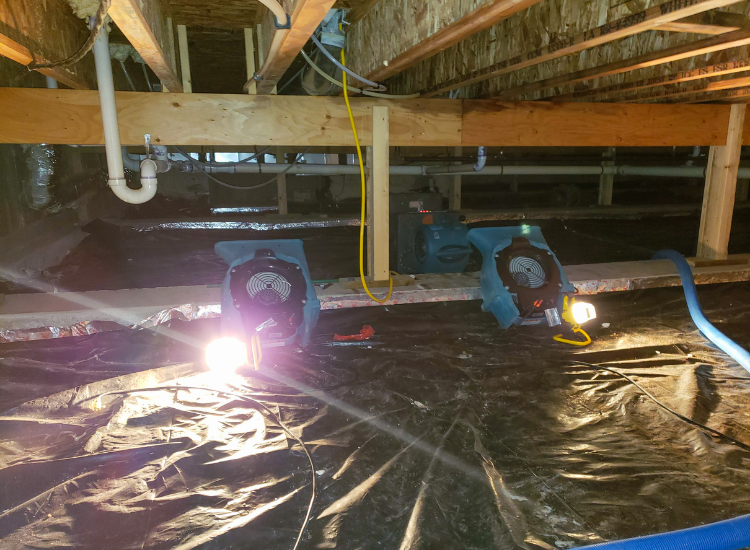
Standing water, musty odors, visible mold growth, wood rot, and increased pest activity are the most common signs of crawl space water damage. In Chicago-area homes, especially older bungalows and two-flats common throughout neighborhoods like Beverly, Hyde Park, and Arlington Heights, crawl space moisture problems often develop silently until they create significant structural issues. If you notice sagging floors, increased humidity in your home, or rust on metal components in your crawl space, you likely have water damage that requires immediate professional attention.
Understanding Crawl Space Water Damage in Chicagoland Homes
Crawl spaces in Chicago-area homes face unique challenges due to our region’s brutal winters, humid summers, and frequent spring flooding. The freeze-thaw cycles that occur throughout winter and early spring can create foundation cracks that allow water intrusion, while summer humidity promotes mold growth in dark, enclosed spaces. Many historic Chicago bungalows and older homes in communities like Oak Park, Evanston, and Elmhurst were built with crawl spaces that lack modern vapor barriers and proper drainage systems, making them especially vulnerable to water damage.
Understanding the warning signs of crawl space water damage can save you thousands in repair costs and protect your home’s structural integrity.
Visual Signs of Water Damage
Standing Water or Puddles
The most obvious indicator is visible standing water or puddles in your crawl space. This can result from groundwater seepage, plumbing leaks, or poor drainage around your foundation. In Chicagoland communities across Cook, DuPage, Lake, Will, and Kane Counties, spring thaw and heavy rainfall from severe thunderstorms frequently overwhelm inadequate drainage systems.
Moisture on Surfaces
Even without standing water, you may notice condensation on pipes, HVAC ducts, or foundation walls. Damp or wet insulation is another red flag. During Chicago’s humid summer months (June through August), moisture problems often worsen as warm, humid air enters the cooler crawl space environment.
Wood Rot and Structural Damage
Inspect floor joists, support beams, and subflooring for soft spots, discoloration, or crumbling wood. Water-damaged wood loses its structural integrity and may feel spongy or easily break apart. In older homes throughout Naperville, Schaumburg, and Downers Grove, prolonged moisture exposure can compromise the entire floor system.
Sensory Indicators
Musty or Earthy Odors
A persistent musty smell in your home, especially noticeable on the first floor, often indicates mold or mildew growth in the crawl space below. This odor results from decomposing organic materials and active mold colonies feeding on moisture-damaged wood and debris.
Increased Humidity Inside Your Home
If your home feels unusually humid or you notice condensation on windows even when running your air conditioning, moisture from your crawl space may be migrating upward through your floors. Up to 50% of the air you breathe on your first floor comes from your crawl space, making moisture control critical for indoor air quality.
Pest Activity and Biological Growth
Mold and Mildew
Look for black, green, white, or gray patches on wood surfaces, insulation, or foundation walls. Mold thrives in damp, dark environments and can spread rapidly throughout Chicagoland’s humid summer months. Some mold species pose serious health risks and require professional remediation.
Pest Infestations
Water-damaged crawl spaces attract termites, carpenter ants, roaches, and rodents. These pests seek moisture and feed on deteriorating wood. If you’ve noticed increased pest activity in your home, especially in areas like Elmhurst, Tinley Park, or Orland Park where mature trees and vegetation are common, crawl space moisture may be the underlying cause.
Structural and Mechanical Warning Signs
Sagging or Uneven Floors
Water-damaged floor joists lose their load-bearing capacity, causing floors above to sag, slope, or feel bouncy when you walk on them. You may notice gaps between walls and floors, or doors and windows that suddenly stick or won’t close properly.
Rust and Corrosion
Metal components in your crawl space—including support posts, HVAC equipment, plumbing pipes, and electrical junction boxes—will show rust or corrosion when exposed to moisture. This not only indicates water damage but also creates safety hazards.
Efflorescence on Foundation Walls
White, chalky deposits on concrete or block foundation walls indicate that water is moving through the masonry, leaving behind mineral deposits as it evaporates. This is common in Chicago-area homes built on clay-rich soil that retains moisture.
Seasonal Considerations for Chicago-Area Homes
Spring (March-May) brings the highest risk for crawl space flooding as snow melts and heavy rains saturate the ground. Winter (December-February) freeze-thaw cycles can create new foundation cracks, while summer humidity (June-August) accelerates mold growth in already-damp crawl spaces. Fall (September-November) is the ideal time for preventive inspections and repairs before winter arrives.
Protecting Your Chicago-Area Home
If you’ve identified any signs of crawl space water damage in your Lincoln Park, Lakeview, Logan Square, Wicker Park, or any other Chicagoland home, don’t wait for the problem to worsen. Redefined Restoration provides comprehensive crawl space water damage assessment, professional drying, mold remediation, and waterproofing solutions throughout Cook, DuPage, Lake, Will, and Kane Counties.
Our experienced team understands the unique challenges Chicago-area homes face and can implement lasting solutions including vapor barrier installation, drainage system improvements, and structural repairs. Contact Redefined Restoration at https://redefinedresto.com today for a thorough crawl space inspection and protect your home’s foundation, indoor air quality, and property value.