Resilience and Recovery: The Definitive Guide to Professional Fire Damage Restoration Services

fire damage restoration

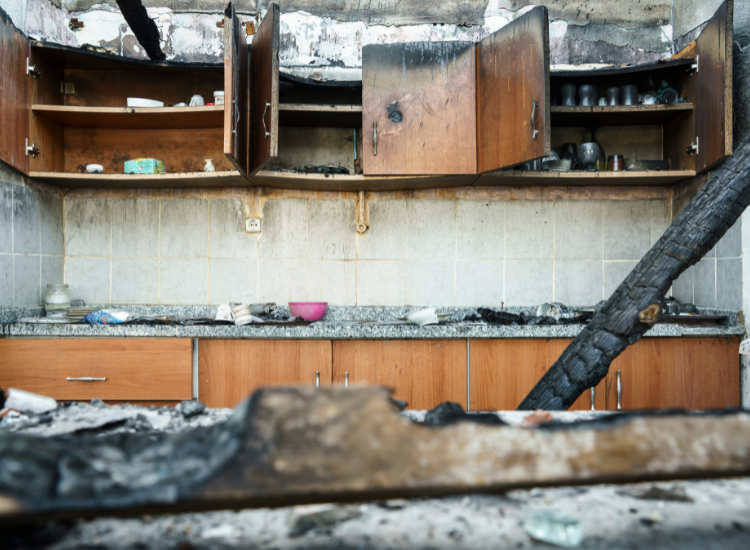
Standing amidst the wreckage of a fire is a singular, overwhelming experience. Even after the flames are extinguished, the silence that follows is heavy with the scent of charred materials and the sight of a property transformed by heat. For property owners, the instinct is often to begin cleaning immediately. However, the chemistry of a post-fire environment is volatile. What looks like simple soot is often a complex, acidic residue that continues to damage the building every hour it remains untreated.

In our region, the challenges of property recovery are compounded by local factors—from the specific humidity levels that can set smoke odors into porous wood, to the unique architectural styles that define our neighborhoods. Navigating this process requires more than a general contractor; it requires a specialist. At Redefined Restoration, we provide the technical precision and structural expertise necessary to navigate the complexities of fire damage restoration services and return your property to its pre-loss condition.

The Hidden Dynamics of Fire and Smoke

To effectively restore a property, one must first understand that fire damage is not just a surface-level issue. It is a multi-dimensional event that affects the air quality, the structural skeleton, and the chemical composition of the interior environment.

The Behavior of “Pressurized” Smoke

During a fire, the intense heat creates pressure that drives smoke deep into the infrastructure of a building. It travels through wall cavities, floor joists, and electrical conduits. This is why a fire in a first-floor kitchen can result in heavy smoke damage in a third-floor attic. Smoke is also attracted to cooler surfaces, often settling behind cabinets or inside the insulation of exterior walls. Without professional fire damage restoration services, these hidden deposits will continue to off-gas, causing recurring odors for years.

The Acidic Nature of Soot

Soot is the byproduct of incomplete combustion, and its composition varies depending on what burned. When synthetic materials like plastics or electronics burn, they create “wet” soot—a greasy, smeary, and highly acidic residue. On the other hand, wood and paper produce “dry” soot. If left for more than 48 hours, these acidic particulates begin to etch glass, pit metal fixtures, and permanently stain marble or granite surfaces.

Thermal Shock and Masonry

While brick and stone are fire-resistant, they are not fire-proof. The rapid expansion caused by extreme heat, followed by the rapid contraction when hit with cold water from fire hoses, can cause “thermal shock.” This leads to micro-cracks in the masonry that can compromise the structural load-bearing capacity of chimneys or foundation walls.

A Strategic Framework for Total Restoration

Recovery is a phased process that requires a delicate balance of aggressive cleaning and surgical precision. At Redefined Restoration, we follow a rigorous protocol designed to stabilize the environment and prevent secondary losses.

Phase 1: Emergency Stabilization and Site Protection

The first few hours are critical. A property with a breached roof or broken windows is vulnerable to the elements and unauthorized entry. Our team prioritizes immediate board-up and tarping services. In our local climate, where unexpected rain or high humidity can exacerbate smoke damage, sealing the building envelope is the first step in successful fire damage restoration services.

Phase 2: Comprehensive Water Extraction

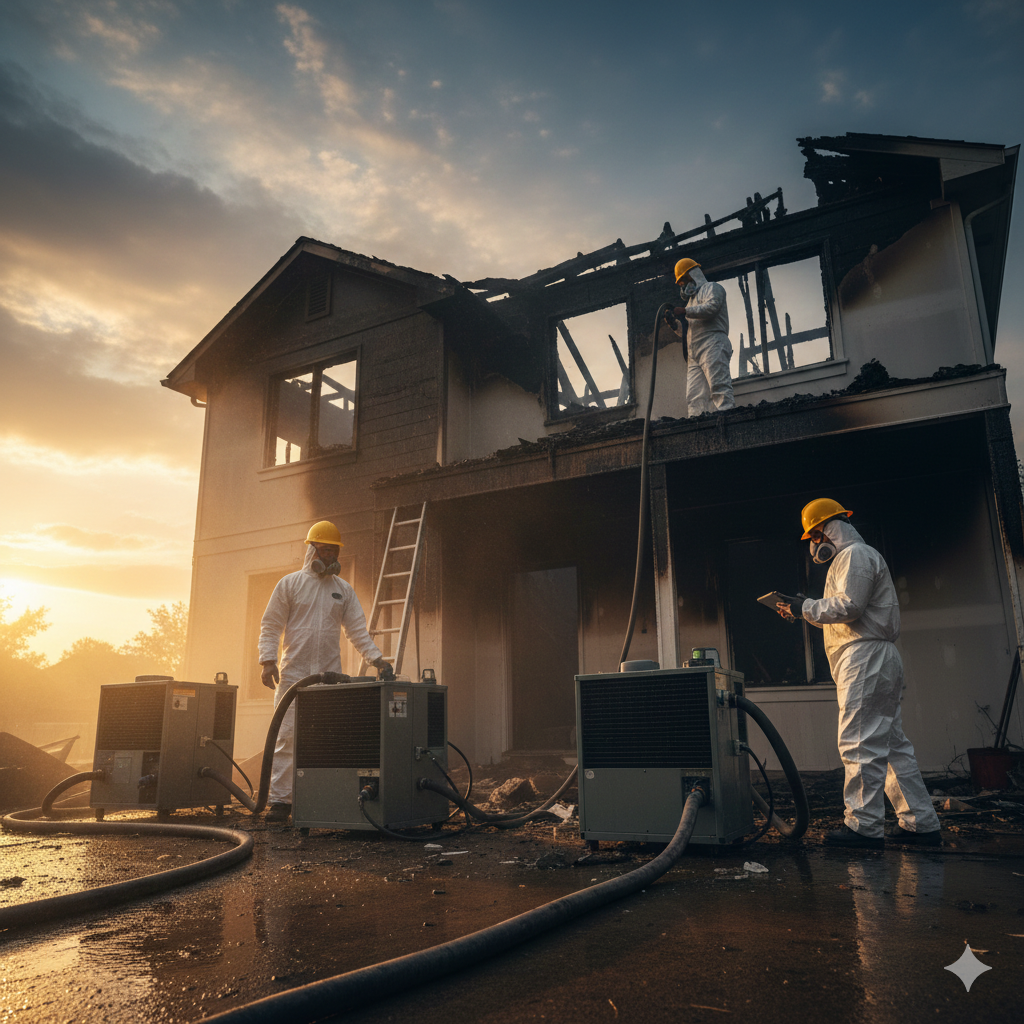
It is a common irony that water damage is often a primary component of fire recovery. Standing water from fire suppression efforts must be extracted immediately. We utilize industrial-grade dehumidifiers and high-speed air movers to stabilize the relative humidity. In the 2026 restoration landscape, we use advanced moisture-mapping technology to ensure that moisture hasn’t migrated into subfloors or behind baseboards, where it could trigger a mold outbreak.

Phase 3: Soot and Residue Decontamination

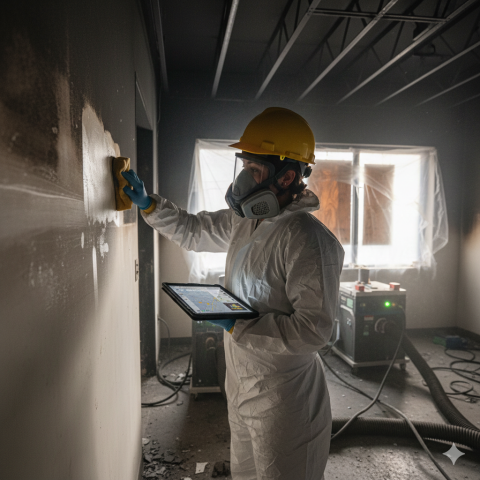
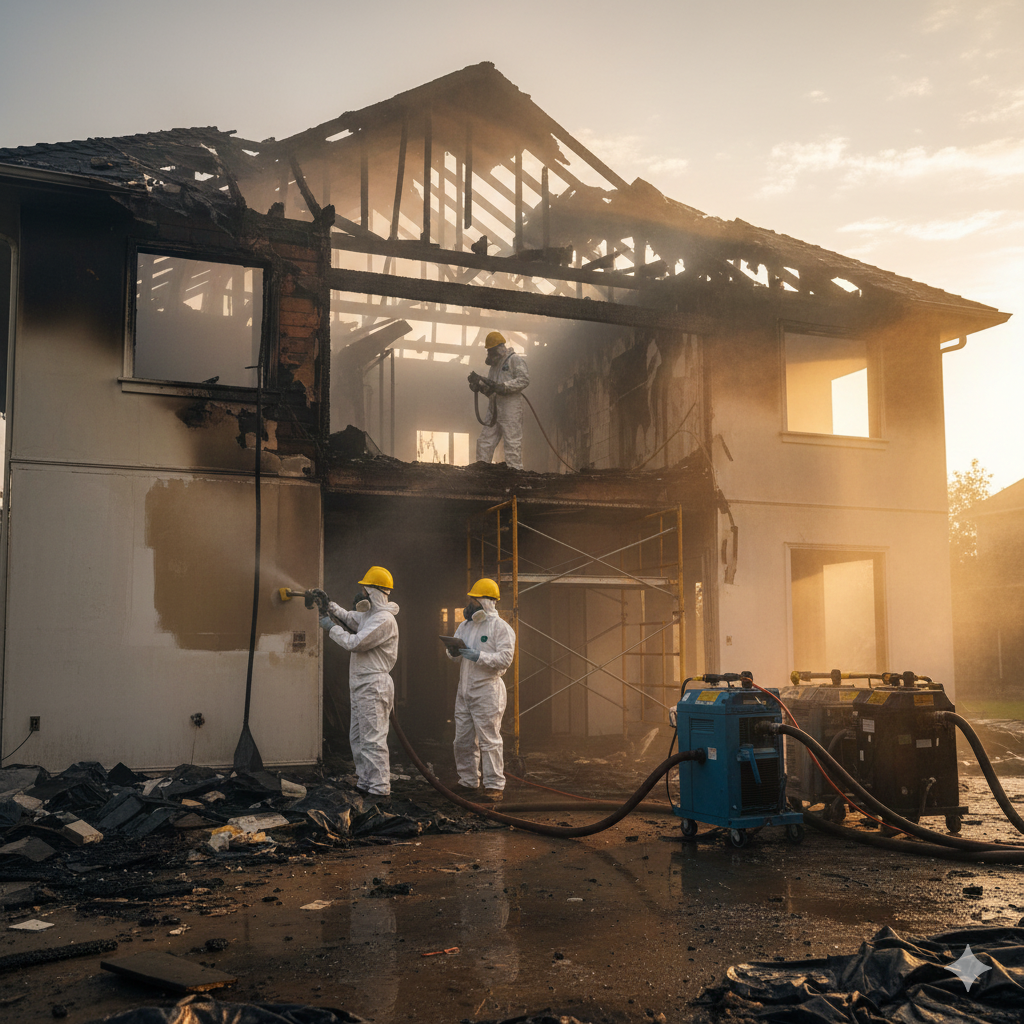
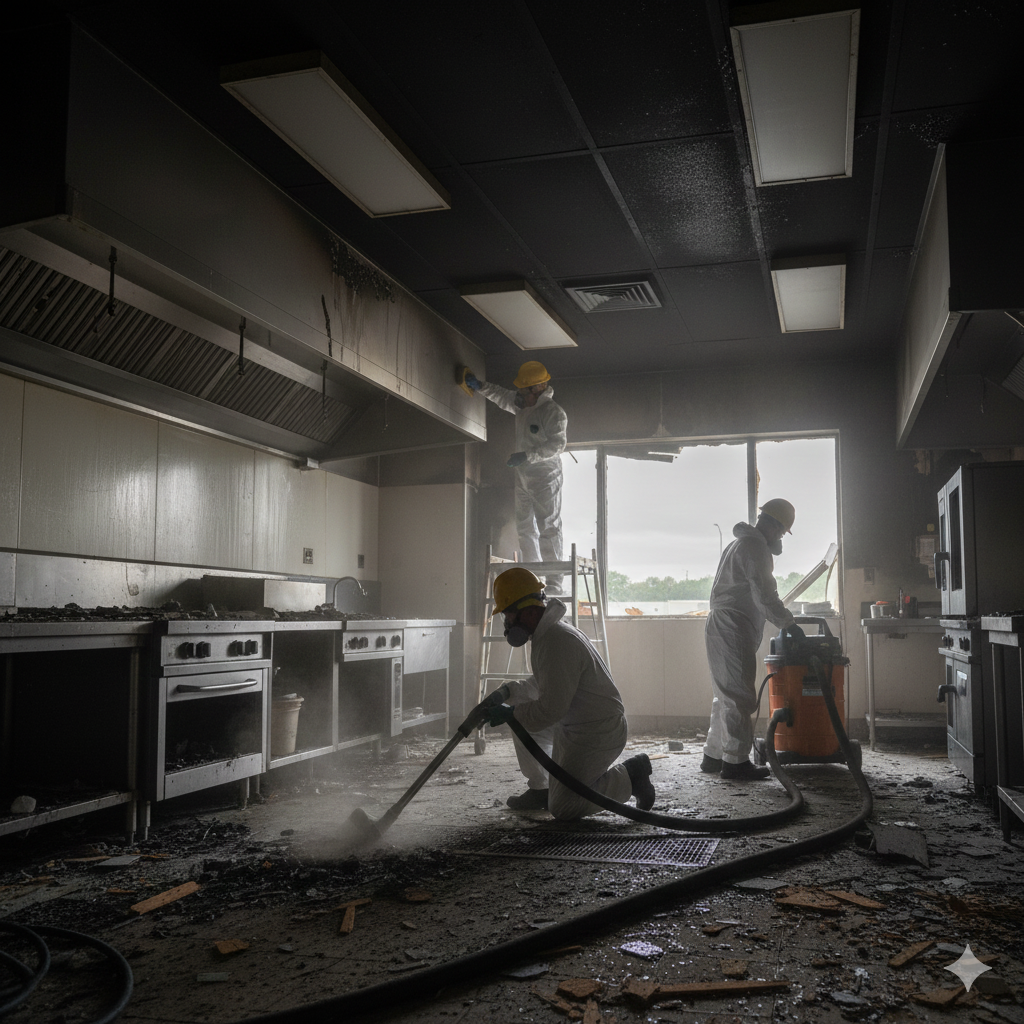
Cleaning soot requires a “top-down” approach. We begin at the highest point of the structure and work downward to prevent re-contamination. Using specialized HEPA vacuums, we remove loose particulates before they can be ground into surfaces. For stubborn residues, we utilize “dry-ice blasting” or specialized chemical sponges that lift soot without the use of water, which can sometimes drive the stain deeper into porous materials.

The Science of Odor Neutralization

Perhaps the most difficult part of fire recovery is the removal of the “smoke smell.” This is because the odor is trapped at a molecular level within the building’s materials.

Beyond Masking Agents

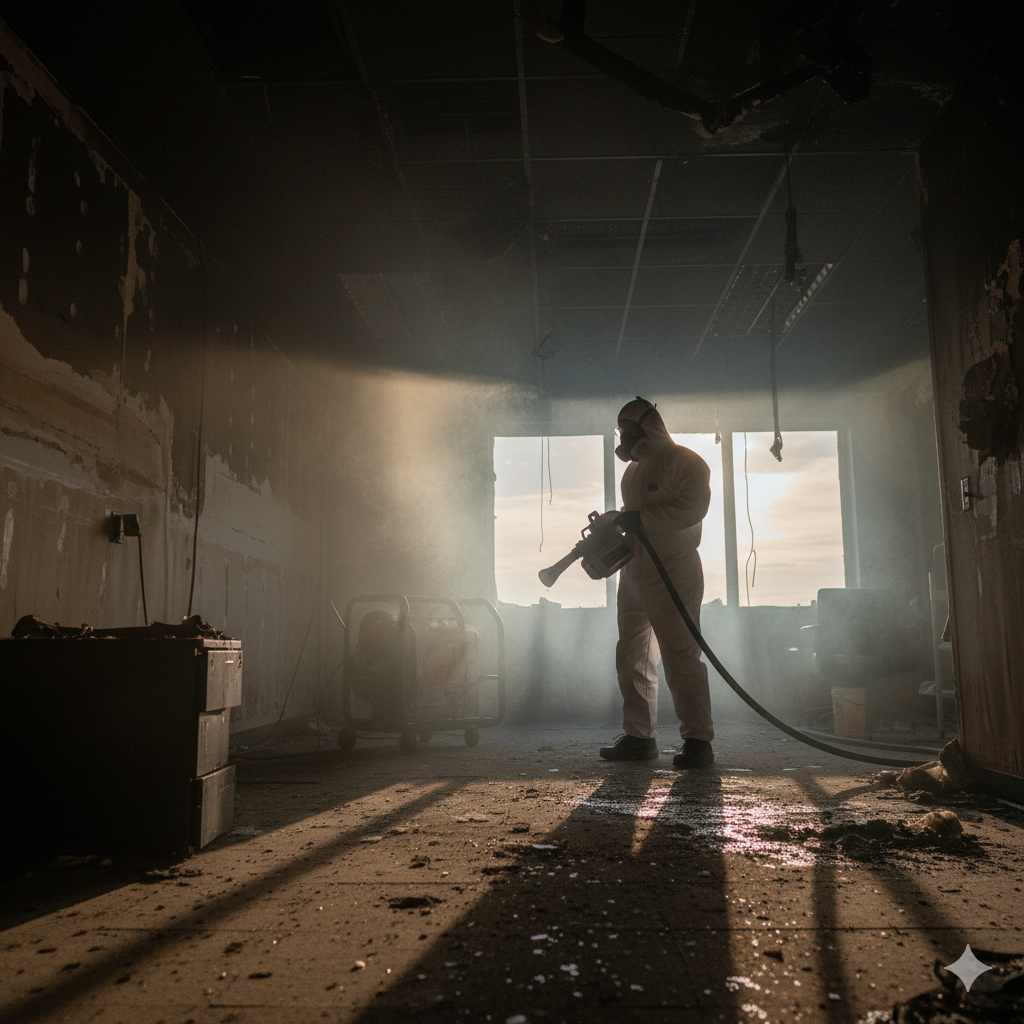
Traditional air fresheners only mask the smell temporarily. Professionals use a process called Thermal Fogging. This involves heating a deodorizing agent until it becomes a fine mist that mimics the behavior of smoke. This mist penetrates the same deep pores that the smoke did, neutralizing the odor molecules on contact.

Hydroxyl and Ozone Technology

For more severe cases, we deploy hydroxyl generators or ozone machines. Ozone is a reactive gas that breaks down the carbon chains in smoke molecules, effectively “killing” the scent. In 2026, the use of hydroxyl technology has become more prevalent in occupied spaces, as it allows for odor removal while people or pets are present, providing a safer and more flexible alternative for certain property types.

fire damage restoration

Structural Integrity and Reconstruction

Once the decontamination is complete, the focus shifts to the physical rebuild. Fire damage often reveals underlying issues or requires that the property be brought up to modern building codes.

  • Electrical Systems: Even if the fire didn’t reach the wiring, the heat can melt insulation or corrode copper contacts. A full inspection is a non-negotiable part of our fire damage restoration services.
  • HVAC Decontamination: Smoke particulates in the ductwork will circulate throughout the house every time the air kicks on. We perform deep cleaning and sealing of the entire HVAC system to ensure the indoor air quality is pristine.
  • Code Compliance: Restoration in 2026 often involves navigating updated local fire and safety codes. We ensure that your reconstruction meets all current regulations, from fire-rated drywall to updated smoke detection systems.

Protecting the Value of Your Property

For many property owners, the financial aspect of fire damage is just as stressful as the physical damage. A professional restoration partner serves as your advocate during the insurance process.

By providing detailed documentation, including thermal imaging, moisture readings, and line-itemized “Scopes of Work,” Redefined Restoration ensures that your insurance adjuster has the data they need to process your claim fairly. We focus on “restoration over replacement” whenever possible, using specialized techniques to save expensive electronics, heirloom furniture, and structural elements that would be costly and time-consuming to replace.

Conclusion: A Path to New Beginnings

A fire is a disruptive event, but with the right approach, it doesn’t have to be a permanent tragedy. The goal of professional fire damage restoration services is to erase the evidence of the disaster and create a space that is once again safe, clean, and welcoming.

By addressing the hidden chemistry of smoke, the structural risks of heat, and the environmental impact of water, we help property owners move from a state of crisis to a state of completion. At Redefined Restoration, we are committed to being the partner you need during this transition.

Beyond the Embers: A Comprehensive Guide to Professional Fire Recovery and Structural Integrity

fire damage restoration service

 Imagine returning to your property after the fire trucks have departed. The air is thick with a heavy, acrid scent, and a layer of fine, grey dust covers every surface. In these initial hours of 2026, the decisions a property owner makes are pivotal. While the fire itself is out, a silent, chemical clock has started ticking. Without immediate intervention, the acidic residues left behind by smoke and soot will begin to permanently etch glass, tarnish metal fixtures, and deeply saturate porous building materials.

Professional fire damage restoration services are not merely about cleaning up a mess; they are about a highly technical intervention designed to stop the progression of secondary damage and return a structure to a safe, habitable state. At Redefined Restoration, we have spent over 15 years navigating these complex recovery scenarios, seeing firsthand how a systematic approach can save properties that initially seemed like total losses.

fire damage restoration service

The Immediate Response: Securing the Perimeter

The first phase of any legitimate restoration project begins with stabilization. A structure that has been compromised by fire is often vulnerable—not just to the elements, but to unauthorized entry.

Emergency Board-Up and Tarping

In the immediate aftermath, our priority is to secure the property. This involves boarding up broken windows and securing damaged doorways. If the roof has been compromised by fire or by the strategic venting performed by firefighters, we implement heavy-duty tarping. This is a critical step in our fire damage restoration services because it prevents rain or debris from entering the building, which would only complicate the recovery process and increase the risk of mold growth.

Assessing Structural Stability

Before any cleaning can begin, the structural integrity of the building must be verified. High heat can weaken wooden trusses, warp steel beams, and cause masonry to spall. Our team works to identify load-bearing compromises early, ensuring that the work environment is safe for our technicians and eventually for the property owners.

The Paradox of Suppression: Managing Water Damage

It is one of the most difficult realities for property owners to grasp: the water used to save the building often causes more widespread damage than the fire itself. Fire hoses can pump hundreds of gallons of water per minute into a structure. This water pools in basements, saturates crawlspaces, and is absorbed by drywall and insulation via capillary action.

Rapid Water Extraction

At Redefined Restoration, we treat fire recovery as a dual-threat project. Our IICRC-certified professionals immediately deploy industrial-grade water extraction units. Removing standing water is the only way to halt the “wicking” effect that pulls moisture up into unaffected walls.

Structural Drying and Dehumidification

Once standing water is removed, the environment remains dangerously humid. This humidity facilitates the spread of smoke odors and creates a prime environment for mold. We utilize high-velocity air movers and LGR (Low Grain Refrigerant) dehumidifiers to stabilize the indoor air quality. By controlling the moisture levels, we protect the “bones” of the house from rot and fungal growth, a cornerstone of high-quality fire damage restoration services.

fire damage restoration service

The Chemistry of Soot and Smoke Residue Removal

Soot is not a uniform substance. Depending on what burned—plastics, wood, proteins, or synthetic fabrics—the residue left behind can be oily, dry, or smeary. Using the wrong cleaning agent on a specific type of soot can actually “set” the stain, making it permanent.

Identifying Residue Types

  • Dry Soot: Usually results from fast-burning wood or paper fires. It is powdery and easier to remove if handled correctly with dry-chem sponges.
  • Oily Soot: Resulting from burnt plastics or rubber, this residue smears easily and requires specialized degreasing agents.
  • Protein Residue: Often invisible but incredibly pungent, this comes from kitchen fires. It discolors paints and finishes over time if not neutralized.

Advanced HEPA Filtration

In 2026, air quality standards are more rigorous than ever. We employ state-of-the-art HEPA filtration systems and “air scrubbers” during the cleaning process. These units cycle the air in the room, trapping microscopic soot particles that are far too small for the human eye to see but large enough to cause respiratory irritation if inhaled.

Content Salvage: Preserving What Matters

A building is more than just its walls; it is filled with the items that make it a home or a functional business. The process of content salvage is one of the most delicate aspects of fire damage restoration services.

The Pack-Out Process

When a property is heavily damaged, we perform a “pack-out.” This involves carefully inventorying, wrapping, and transporting your belongings to a climate-controlled facility. Here, items can be cleaned in a controlled environment using ultrasonic cleaners, specialized laundry systems for textiles, and electronics restoration tools.

What Can Be Saved?

Many property owners are surprised to learn that electronics, fine art, and even delicate upholstery can often be restored if treated quickly. Our experience allows us to provide honest, upfront communication about which items are salvageable and which are “total losses,” helping you navigate the insurance claim process with clarity.

Deodorization: Eliminating the Ghost of the Fire

The smell of smoke is perhaps the most persistent reminder of a fire. It lingers in the pores of wood, deep within the fibers of carpets, and inside the HVAC system. Simply “airing out” the house is rarely effective because smoke molecules are incredibly small and lodge themselves deep within structural substrates.

HVAC Restoration

The ventilation system often acts as a delivery vehicle for smoke during a fire, spreading soot to rooms that weren’t even touched by flames. We perform comprehensive HVAC cleaning, ensuring that when you finally turn on your heat or air conditioning, you aren’t blasting soot and odors back into your clean environment.

Thermal Fogging and Ozone Treatment

To truly eliminate odors, we must reach the same microscopic pores the smoke reached. We utilize thermal fogging—a process that mimics the heat and particle size of smoke—to deliver neutralizing agents deep into the walls. In vacant properties, we may also use ozone or hydroxyl generators to break down odor-causing molecules at a molecular level, a standard practice for premium fire damage restoration services.

The Path to Reconstruction and Restoration

Once the property is clean, dry, and odor-free, the transition to reconstruction begins. This is where the “restoration” in our name truly shines. We don’t just leave you with a clean, gutted shell; we work to return the property to its pre-loss condition or better.

Compliance and Building Codes

In 2026, building codes frequently change. Our team is well-versed in local regulations, ensuring that all repairs and reconstruction efforts are fully compliant. This includes updating electrical systems that may have been heat-damaged and ensuring that insulation and structural repairs meet modern energy and safety standards.

Our Satisfaction Guarantee

We understand that your trust is earned through results. That is why we offer a satisfaction guarantee on our workmanship. Whether it is a minor kitchen fire or a major commercial loss, our 15 years of industry authority mean we stand behind every board replaced and every surface cleaned.

Understanding the Financial and Insurance Landscape

Navigating an insurance claim after a fire is often the most stressful part for a property owner. Detailed documentation is the currency of the insurance world.

Our technicians document every step of the fire damage restoration services with high-resolution photos, moisture maps, and detailed line-item estimates. This transparency ensures that your insurance adjuster has all the information they need to process your claim fairly and efficiently. We act as a professional bridge, providing the technical data required to justify the necessary scope of work.

Why Professional Intervention Outperforms DIY

It is a common mistake for property owners to attempt to clean soot themselves. Using a household vacuum can actually blow fine soot particles back into the air or deeper into the carpet. Household cleaning chemicals can react with acidic soot to create permanent bleach-like stains.

By hiring a professional team like Redefined Restoration, you are investing in:

  1. Specialized Equipment: Tools that are not available at local hardware stores.
  2. Technical Training: IICRC certifications ensure that the latest science is applied to your recovery.
  3. Safety: Protecting yourself from the carcinogenic compounds found in fire ash and soot.

Resilience and Recovery: Your Future in 2026

The moments after a fire are overwhelming, but they do not have to be the end of your property’s story. Through a combination of rapid response, chemical expertise, and structural knowledge, fire damage restoration services can turn a disaster into a manageable recovery.

At Redefined Restoration, we are more than just a cleaning crew; we are your partners in rebuilding. We bring honesty, expertise, and a decade and a half of real-world experience to every project. We know the challenges of local construction, the nuances of regional climate, and the emotional weight of a property loss.

If you find yourself facing the aftermath of a fire, do not wait for the damage to become permanent. Reach out for a professional inspection and let us help you redefine your space.

The Science of Recovery: Navigating the Complexities of Fire Damage Restoration in 2026

fire damage restoration service

The moments following a fire are often a blur of adrenaline and disbelief. Once the sirens fade and the fire department clears the scene, property owners are left standing before a structure that looks—and smells—completely foreign. While the visible charred remains are the most obvious concern, the true challenge of fire damage restoration lies in the invisible chemistry happening within the walls, floors, and air ducts.

At Redefined Restoration, we understand that a fire doesn’t just damage materials; it disrupts lives. In 2026, as modern construction materials become more complex, the methods required to return a home or business to its pre-loss condition safely have evolved. This guide explores the technical, emotional, and structural journey of professional recovery, ensuring that your property is not just cleaned, but truly restored.

The Chemical Aftermath: Why Immediate Action is Non-Negotiable

When fire consumes a building, it isn’t just wood and paper burning. Modern properties are filled with plastics, synthetic fibers, treated woods, and complex polymers. When these materials reach their combustion point, they undergo a chemical reaction that creates highly corrosive soot and toxic vapors.

Within minutes of a fire being extinguished, these residues begin to settle. Because soot is often acidic, it starts to etch into glass, tarnish metal fixtures, and permanently stain porous surfaces like marble or grout. If a professional fire damage restoration team is not on-site quickly, the cost of the project can skyrocket as “cleanable” items transition into “irreplaceable” losses.

The Problem with “DIY” Soot Removal

It is a common instinct for property owners to grab a bucket of soapy water and start scrubbing. However, without the proper training, this often does more harm than good. Soot comes in various forms—oily, dry, or protein-based—and using the wrong cleaning agent can “set” the stain or smear the fine particles deeper into the substrate. Redefined Restoration utilizes industrial-grade HEPA filtration and specialized dry-chem sponges to lift these particles without driving them into the grain of the material.

fire damage restoration service

Evaluating the Timeline: How Long Does Restoration Actually Take?

One of the most frequent questions we receive at Redefined Restoration is: How long will this take? While everyone wants a fast turnaround, a truly authoritative restoration process cannot be rushed without sacrificing safety.

The duration of a project is dictated by three primary variables:

  1. The Scope of Damage: A kitchen “grease fire” that was contained by a hood system might be resolved in a matter of days. A whole-structure fire involving roof failure can take months.
  2. The Nature of the Materials: Restoration of a historic home with lath-and-plaster walls requires a different cadence than a modern commercial warehouse.
  3. Environmental Factors: In our local climate, humidity levels can play a massive role in how quickly a property can be dried out after the thousands of gallons of water used by firefighters have been extracted.

As part of our commitment to transparency, we provide a detailed roadmap after our initial inspection. Drawing from over a decade of experience, our licensed and insured team uses advanced project management tools to ensure we meet milestones efficiently. Our workmanship warranty provides peace of mind that while we work to move you back in swiftly, we never cut corners on the structural integrity or air quality of your home.

The Invisible Threat: Water Damage and Mold Proliferation

It is an irony of the industry that some of the worst damage in a fire is caused by the water used to put it out. Fire hoses can pump hundreds of gallons per minute into a structure. This water pools in crawlspaces, saturates insulation, and wicks up through drywall.

If this moisture isn’t addressed within the first 24 to 48 hours, a secondary disaster begins: mold. In the warm, dark recesses of a fire-damaged building, mold spores find the perfect breeding ground. This is why our approach to fire damage restoration always includes a comprehensive water mitigation phase. We employ professional-grade dehumidifiers and high-velocity air movers to stabilize the environment before the actual fire cleaning begins.

Odor Neutralization: Beyond the Surface

The “smell of smoke” is actually the presence of microscopic particulates trapped in the pores of your property. Masking these smells with fragrances is a temporary fix that fails as soon as the humidity rises.

To achieve true deodorization, we utilize a multi-step process:

  • Source Removal: Removing the charred materials that are actively off-gassing.
  • Thermal Fogging: Using a specialized fog that mimics the particle size of smoke to enter the same pores the smoke did, neutralizing the odor chemically.
  • Ozone or Hydroxyl Generation: Advanced equipment that breaks down odor molecules at a molecular level, ensuring the air is safe and fresh for occupancy.

fire damage restoration service

Navigating Insurance and Compliance in 2026

The administrative side of fire recovery is often as stressful as the physical damage. Navigating building codes and insurance requirements requires a partner who understands the “language” of restoration.

Building Codes and Safety Standards

Structural fires often trigger the need for modern code upgrades. If your electrical system was damaged, simply “fixing the wires” may not be enough to satisfy local building inspectors. Our team stays current on all regional construction regulations to ensure that every repair we perform meets or exceeds current safety standards. This not only protects your family or employees but also preserves the resale value of the property.

Working with Your Adjuster

At Redefined Restoration, we act as a bridge between the property owner and the insurance provider. Our documentation is meticulous—utilizing high-resolution imagery and detailed moisture mapping—to ensure your claim is processed with all the necessary facts. This level of professional authority helps prevent delays and ensures that you receive the full scope of benefits your policy provides.

Structural Integrity: The Foundation of Recovery

A fire can weaken a building in ways that aren’t visible to the untrained eye. Intense heat can cause steel beams to warp and wooden trusses to lose their load-bearing capacity. Part of our fire damage restoration protocol involves a rigorous assessment of the “bones” of the building.

We look for:

  • Spalling: When heat causes concrete to crack or flake.
  • Deflection: Signs that floors or ceilings have begun to sag under the weight of water or heat-weakened supports.
  • Compromised Sheathing: Ensuring the exterior envelope of the building remains airtight and secure.

By addressing these issues early, we prevent long-term structural failures that could manifest years down the road. Our 5-star reviewed projects stand as a testament to our focus on longevity and safety.

The Human Element: Managing the Emotional Toll

While we are technicians and builders, we are also members of this community. We know that walking into a fire-damaged bedroom or office is heartbreaking. Our team is trained to handle your belongings with the utmost respect. We categorize “contents” into those that can be salvaged through professional cleaning and those that must be discarded, helping you make informed decisions about your most sentimental items.

In 2026, the technology of “pack-outs”—where we inventory, move, and clean your items in a controlled facility—has become incredibly sophisticated. Digital inventory tracking ensures you know exactly where your items are at every stage of the restoration process.

Why Professional Restoration is an Investment, Not a Cost

It can be tempting to look for the cheapest possible fix after a fire. However, improper restoration leads to:

  • Diminished Property Value: “Ghost odors” or visible soot staining will drastically reduce the marketability of a home.
  • Health Risks: Lingering soot contains carcinogens and respiratory irritants.
  • Insurance Liability: If a property wasn’t restored by a licensed, insured professional, future claims may be denied.

Choosing Redefined Restoration means choosing a team that values your property’s future as much as you do. Our 24/7 emergency response ensures that no matter when disaster strikes, a team of experts is ready to begin the mitigation process immediately.

Looking Forward: Your Path to a New Start

Fire damage is an ending, but the restoration process is a beginning. It is an opportunity to rebuild stronger, safer, and better. Whether you are dealing with a small kitchen flare-up or a major commercial loss, the goal remains the same: a seamless return to normalcy.

The landscape of fire damage restoration continues to advance, and our team remains at the forefront of those changes. By combining more than a decade of hands-on expertise with a deep commitment to our clients, we ensure that “redefined” isn’t just part of our name—it’s the result of our work.

If you are currently facing the aftermath of a fire, don’t wait for the damage to set. Contact us today to begin a detailed inspection and take the first step toward reclaiming your space.

Fire Damage Restoration Made Easy: How Experts Restore Your Home from Smoke and Fire Damage

fire damage restoration

Experiencing a fire in your home is one of the most overwhelming situations a family can go through. Beyond the destruction of belongings and property, there’s also a huge emotional toll. But once the smoke clears, the question becomes: What happens next? The good news is that professional fire damage restoration services near me exist to bring your home back to life. Skilled experts are trained to assess, clean, and rebuild, ensuring your home becomes safe and livable again.

In this detailed guide, we will walk you through exactly how professionals handle the restoration process, what steps are involved, and why it’s so important to rely on trained experts when dealing with fire and smoke damage. We will also answer common questions homeowners have about fire recovery so you feel prepared for every stage.

Understanding the Impact of Fire and Smoke Damage

When a fire breaks out, the flames aren’t the only thing that causes destruction. Smoke, soot, and even water from firefighting efforts leave behind layers of damage. While some damage is visible—like charred walls or ceilings—other consequences are hidden, such as weakened structural elements or lingering smoke odors buried deep in fabrics and walls.

This is where professional fire damage restoration comes in. Experts don’t just deal with the burn marks; they address odor removal, structural repairs, deep cleaning, and safety inspections. Proper fire damage restoration ensures your home doesn’t only look clean on the surface but is truly safe to live in again.

Step 1: The Initial Inspection and Assessment

The first stage of fire damage restoration is assessment. Professionals arrive on site to evaluate the extent of damage across the home. They look at:

  • The areas most severely burned
  • Hidden smoke penetration in walls, ceilings, or insulation
  • Water damage left behind from sprinklers or hoses
  • Safety hazards like exposed wiring or unstable structures

This inspection results in a clear action plan. Restoration teams document the damage for insurance purposes and create a strategy for efficient cleanup and rebuilding. This ensures everything is addressed instead of only tackling what’s visible.

Step 2: Securing the Property

After a fire, your home may be vulnerable. Broken windows, weakened roofs, or holes in walls can leave it exposed to weather or even trespassers. Restoration experts act quickly to board up windows, tarp over roofs, and stabilize any unsafe areas.

This step is vital in the fire damage restoration process because it prevents further damage from happening while work is ongoing. It also ensures the safety of both the restoration crew and homeowners who may need to access their property during the recovery period.

Step 3: Water Extraction and Drying

It may seem surprising, but water is often one of the biggest issues after a fire. Fire hoses and sprinkler systems soak rooms as they work to extinguish flames. If not properly dealt with, lingering moisture can cause mold growth and structural decay.

To combat this, professionals bring in commercial-grade pumps, fans, and dehumidifiers to extract standing water and dry affected areas. This prevents future problems and prepares the home for the next stage of cleaning.

Step 4: Smoke and Soot Removal

Smoke can infiltrate every nook and cranny, leaving behind stains and odors. Unlike ordinary household smells, smoke residues carry toxins and are extremely difficult to get rid of without the proper tools.

Restoration teams use specialized equipment such as air scrubbers, HEPA vacuums, and chemical sponges to remove soot from walls, ceilings, and furniture. They also treat fabrics, ductwork, and carpets to eliminate odors thoroughly. This isn’t just about appearance—it’s about eliminating harmful particles from the air you breathe.

Step 5: Cleaning and Sanitizing

Once the heavy smoke and soot are cleared, detailed cleaning comes next. Every item that can be restored—appliances, furniture, personal belongings—is carefully cleaned and sanitized. Some items may need to be removed and restored off-site using advanced techniques like ozone treatment or ultrasonic cleaning.

This stage ensures the home feels fresh and livable again. Experts not only focus on cleaning but also on deodorizing and ensuring that bacteria and toxins are fully removed.

Step 6: Restoration and Repairs

The final step is rebuilding. This could mean minor fixes like replacing drywall and repainting—or larger projects such as complete reconstruction of damaged rooms. The goal is to return your space to pre-fire condition, or in many cases, even better than it was originally.

Professional fire damage restoration crews coordinate with contractors and builders to take care of structural repairs, roofing, flooring, plumbing, and electrical systems. Homeowners are left with a property that feels brand-new and safe.

Why Professional Fire Damage Restoration Matters

It can be tempting to handle fire cleanup on your own, but fire and smoke damage are more complex than they appear. Without proper cleaning, smoke odors linger, soot stains reappear, and hidden damage may compromise health and safety.

Experts bring not only technical know-how but also industrial-grade equipment that ordinary homeowners don’t have access to. Processes like thermal fogging, ozone treatment, and advanced drying techniques are critical in fully restoring a home after fire damage.

Using professionals also ensures the documentation process for your insurance claim is thorough, increasing the likelihood of getting the compensation you need for repairs.

Common Challenges in Fire Damage Restoration

While teams work diligently to restore homes, there are unique challenges after every fire. Some of the most common complications include:

  • Lingering smoke odors – especially tricky if they infiltrate insulation or HVAC systems
  • Mold growth – often due to hidden water trapped after firefighting
  • Structural instability – requiring careful repair before anything else can progress
  • Insurance complexities – navigating paperwork and approvals for every restoration step

Professionals anticipate these issues and address them proactively during the restoration process, sparing homeowners from future surprises.

Tips to Help Homeowners During the Process

  1. Don’t enter the home until cleared for safety. Structural damage may not be immediately visible.
  2. Contact professionals immediately. The longer smoke and soot sit, the harder they are to remove.
  3. Document everything for insurance. Photos and lists of damaged items will help with claims.
  4. Don’t attempt DIY cleanup. Some chemicals used incorrectly can permanently set stains or odors.
  5. Plan for temporary housing. Depending on the severity, full restoration can take weeks to months.

This comprehensive process shows that while fire can be devastating, recovery is possible. With the right team, the despair of a burnt property can transform into hope—and eventually, a fully restored and safe home. Fire damage cleanup requires expertise, attention to detail, and the right equipment, making professional help the best option for protecting your investment and your family.


Redefined Restoration – Chicago Water Damage Service

2924 W Armitage Ave Unit 1, Chicago, IL 60647

(708) 722-8778

https://redefinedresto.com/water-damage-restoration-chicago/