
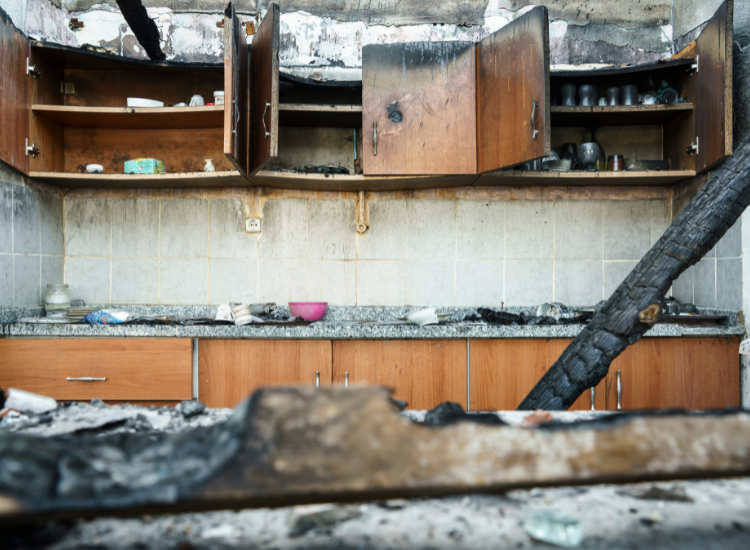
It is three in the morning in the middle of a brutal Chicago January. You are standing on the sidewalk in your bathrobe, watching the flashing blue and red lights of the Chicago Fire Department bounce off the windows of the neighboring brick two-flat. The fire is out, the hoses are being coiled, and the silence that follows is heavier than the smoke hanging in the frigid air. You look at your home—a structure that has stood through a century of Midwestern seasons—and it looks unrecognizable. There is a gaping hole in the roof, the windows are shattered, and a thick, oily scent of burnt plastic is competing with the smell of wet charcoal.
At this moment, most people feel a sense of total paralysis. The damage looks permanent. However, what you see on the surface is only the first chapter of the story. Beneath the soot and the puddles of water used to extinguish the flames, the structure of your home is undergoing a chemical transformation. From the way smoke particles move like tiny “ghosts” through your ventilation system to the way acidic soot begins to eat away at your granite countertops within hours, the clock is ticking. This is why professional fire damage restoration services are not just about cleaning up; they are a high-stakes race against chemistry and time to save your property from becoming a total loss.
The Invisible Chemistry of Fire Damage
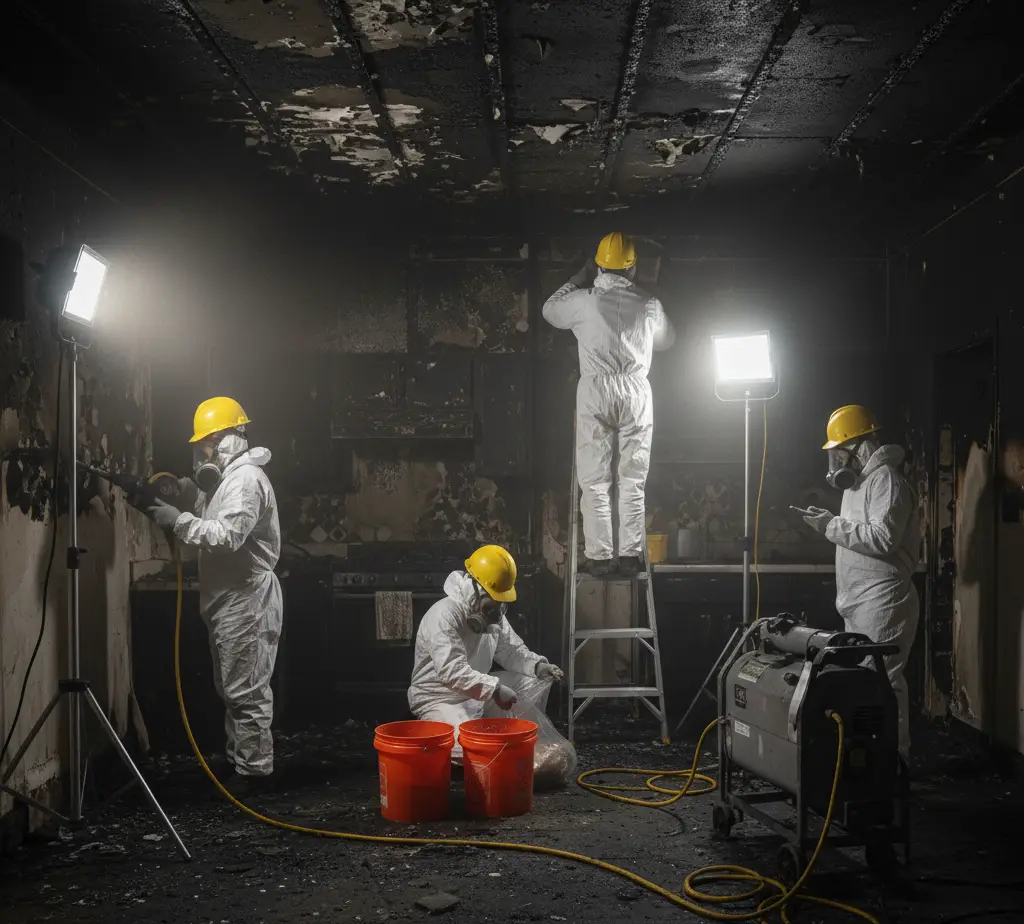
When a fire breaks out in a modern Chicago home, it isn’t just wood and paper burning. We live in an era of synthetic materials. Your couch is likely made of polyurethane foam, your flooring might be a composite laminate, and your electronics are encased in complex plastics. When these burn, they create a “chemical cocktail” of soot.
Soot is not just “dirt.” It is a microscopic, needle-like particle that is often highly acidic. Think of soot like a tiny, invisible army of sandpaper. If it is left to sit on a delicate surface, such as a gold-plated bathroom fixture or an heirloom mirror, it will literally etch the surface, causing permanent pitting and dullness.
In 2026, our understanding of these particles has reached a point where we can categorize them into different types of “smoke behavior.” For example, a “fast-burning” fire fueled by high oxygen creates a dry, powdery soot that is relatively easy to brush off. However, a “slow, smoldering” fire—often caused by an electrical short behind the drywall of an older Lincoln Park greystone—creates a greasy, smeary residue that acts like a glue. Professional fire damage restoration services focus on identifying which “flavor” of smoke hit which room so that the cleaning process doesn’t accidentally cause more damage by rubbing the oils deeper into the pores of the walls.
The Hidden Danger of Extinguishment: Water Damage
One of the most surprising insights for homeowners is that the fire itself might only be responsible for half of the destruction. The other half comes from the thousands of gallons of water used to save the structure. In Chicago, this creates a secondary crisis: the humidity trap.
When that water hits a hot environment, it turns into steam, which carries soot and smoke deep into the “pores” of your home—the tiny gaps in wood framing and the fibers of your attic insulation. If the water isn’t extracted immediately, you aren’t just dealing with fire damage; you are inviting a massive mold outbreak. This is particularly dangerous in 2026 as Chicago’s building codes have made homes “tighter” for energy efficiency. While great for your heating bill, a tight home traps that moisture inside like a greenhouse.
Redefined Restoration approaches this by treating the site as a combined fire and water emergency. We use “thirsty air” technology—industrial-strength dehumidifiers and air movers that act like a giant sponge for the atmosphere—to pull that moisture out of the studs and floorboards before the wood starts to warp or rot.
The Tactical Stages of Restoration
To help you understand what happens once the yellow tape is removed, let’s break down the professional workflow. This isn’t a random process; it is a calculated sequence designed to stabilize the building and prevent “secondary loss.”
Stage 1: Immediate Board-Up and Stabilization
In Chicago, the weather is rarely your friend. If a fire has broken through your roof or blown out your windows, your interior is now exposed to the elements. Whether it’s a sudden thunderstorm or the sub-zero wind off Lake Michigan, “open” property is vulnerable property. We prioritize “wrapping” the building. Think of this like putting a cast on a broken arm. We board up windows and tarp the roof to make sure no more water gets in and to protect the property from “unauthorized visitors.”
Stage 2: The “Triage” of Belongings
Not everything in a fire is a lost cause. We perform a “content pack-out,” where we carefully move your items to a controlled environment. We use a “keep, clean, or discard” system. In 2026, we have access to ultrasonic cleaning tanks. These machines use sound waves to create millions of tiny bubbles in a specialized solution. These bubbles act like a million microscopic scrubbing brushes, reaching into the tiny gears of a watch or the crevices of a piece of jewelry to remove soot that hand-wiping could never touch.
Stage 3: Structural Soot Removal
Cleaning a wall after a fire isn’t like cleaning a kitchen counter. If you use the wrong liquid, you will set the stain permanently. We often use “dry chemical sponges” that act like a giant eraser, lifting the soot off the paint without moisture. For more heavy-duty areas, like the basement of an older brick home where the soot is thick, we might use “media blasting.” This is a process where we spray a soft material—sometimes even dry ice pellets—at the surface. The pellets “explode” on contact, lifting the char and soot away without damaging the original wood underneath.
Stage 4: Deodorization and Molecular Cleaning
The smell of a fire is notoriously difficult to remove because it isn’t just on the surface; it is a gas that has soaked into the materials. In 2026, we have moved beyond simple “air fresheners.” We use “Ozone Generators” or “Hydroxyl Generators.” These machines create a chemical reaction in the air that actually breaks the “odor molecule” apart. It’s the difference between masking a smell with perfume and actually destroying the source of the smell at a molecular level.
Why Chicago Homes Require a Local Perspective
Restoring a home in the Windy City isn’t the same as doing it in a desert or a tropical climate. Our unique architecture and weather patterns dictate the strategy.
The Greystone and Bungalow Challenge
Chicago is famous for its “Bungalow Belt” and historic greystones. These homes often feature “lath and plaster” walls rather than modern drywall. Plaster is much more porous and holds onto heat and moisture longer. A restoration team that doesn’t understand the density of plaster might leave the walls “wet” on the inside, leading to structural cracking months later.
The Winter “Freeze-Thaw” Cycle
If a fire happens in December, the water used by the fire department can actually freeze inside your pipes or within the masonry of your brick walls. When we begin the restoration and start heating the house back up, that ice turns to water, potentially causing a “second flood.” We have to manage the “thaw” carefully, using controlled heat to ensure we don’t cause the very pipes we are trying to save to burst.
High-Density Living and Soot Migration
In Chicago’s condo buildings and high-rises, a kitchen fire in Unit 4B doesn’t stay in Unit 4B. Smoke is a pressurized gas; it looks for “utility chases”—the holes where pipes and wires go between floors. It can travel three floors up and settle in a neighbor’s closet. Our fire damage restoration services involve “mapping” the smoke path, checking the HVAC systems and the common areas to ensure that the soot hasn’t compromised the air quality for the entire building.
Comparison: Professional Services vs. General Cleaning
Many homeowners wonder if they can just hire a standard maid service or do the work themselves. Here is how professional restoration compares to a general approach:
| Feature | General Cleaning / DIY | Professional Restoration Standard (2026) |
| Soot Handling | Often smeared into surfaces with wet rags. | Removed using dry sponges or ultrasonic technology. |
| Odor Control | Masked with scented sprays or candles. | Molecular destruction via Hydroxyl or Ozone. |
| Safety | High risk of inhaling toxic ash and carcinogens. | Use of full PPE and HEPA air scrubbers. |
| Hidden Damage | Ignored (behind walls and in ducts). | Thermal imaging and borescope inspections. |
| Documentation | Hand-written notes or basic photos. | Digital “matterport” scans and insurance-ready data. |
The Emotional and Psychological Impact
We often say that we are in the “peace of mind” business as much as the cleaning business. A fire is a traumatic event. It feels like a violation of your “safe space.”
When you see a professional team walk in with a clear, calm plan, the “chaos” of the event starts to fade. In 2026, the technology of Redefined Restoration allows us to give you a digital “roadmap” of the progress. We can show you exactly which rooms have been cleared and which items have been successfully restored. This transparency is a vital part of the healing process for a family.
The Science of Air Quality: The “Lung” of Your House
The air you breathe after a fire is technically a biohazard. Ash and soot are made of fine particles that can settle deep in the lungs. Furthermore, as things burn, they release “VOCs” (Volatile Organic Compounds) like formaldehyde and benzene.
Professional restoration involves installing “Air Scrubbers.” These are machines that act like a giant, high-powered lung for your house. They pull the air through a series of “HEPA” filters—filters so fine they can catch particles much smaller than a human hair. By the time we are finished, the air inside your home is often cleaner than the air outside on a busy Chicago street.
Managing the Insurance Maze
Navigating an insurance claim in 2026 can be a full-time job. Insurance adjusters are looking for specific data: “proof of loss,” “detailed inventory,” and “documented moisture levels.”
Most homeowners don’t have the technical vocabulary to describe the difference between “protein smoke” and “petroleum soot,” but the insurance company does. When we provide our fire damage restoration services, we act as the technical bridge. We provide the data-driven reports that justify the work being done, ensuring that you get the full value of your policy. We speak the “language” of insurance to make sure no corner is cut in the safety of your home.
Structural Integrity: Is the House Still Safe?
A significant concern after a fire is the “invisible weakness.” Intense heat can actually change the molecular structure of steel beams or cause concrete to “spall” (where chunks of the surface pop off).
Our team doesn’t just look at the paint; we look at the skeleton of the building. We check the “load-bearing” members to ensure that the heat hasn’t made them brittle. In 2026, we use specialized sensors that can detect if a wooden joist has lost its “structural moisture,” which makes it more likely to snap under weight. If a beam is compromised, we reinforce it before we ever start the cosmetic work.
Long-term Value and Property Resale
If fire damage isn’t handled correctly, it can come back to haunt you years later when you try to sell your Chicago home. A savvy home inspector will look in the attic or crawlspace for “char” or smell the vents for a faint odor of smoke. If they find it, it can slash your property value or kill a sale entirely.
By investing in professional fire damage restoration services, you are getting a “Certificate of Completion” that proves the home was professionally remediated to modern standards. It is an investment in your property’s future resale value as much as it is a fix for the current crisis.
Protecting What Matters: A Focus on Heirloom Recovery
While the structure can be rebuilt, the “things” are what make a house a home. We have a saying: “We don’t just clean stuff; we rescue memories.”
Whether it is a box of photos that has been soot-damaged or a wedding dress that smells like smoke, the technology of 2026 gives us a much higher “recovery rate” than we had a decade ago. We use a process called “CO2 cleaning” for delicate fabrics, which uses “liquid carbon dioxide” to lift stains and odors without using any water or harsh chemicals. It is the same technology used to preserve historical artifacts in museums.
The Critical First 24 Hours: A Checklist
If you have just experienced a fire, the steps you take in the first day are vital. Here is the professional recommendation for immediate action: