A persistently musty basement smell after cleaning indicates hidden moisture sources and active mold growth in concealed areas like wall cavities, insulation, beneath flooring, or within HVAC systems. Surface cleaning alone cannot address mold colonies growing in these hidden spaces or resolve the underlying moisture problems feeding them. Chicago-area homes face particular challenges with basement humidity due to our wet springs, humid summers, and the prevalence of below-grade living spaces in our classic bungalows, two-flats, and older housing stock.
Understanding Why Musty Odors Persist
That distinctive musty smell is caused by microbial volatile organic compounds (MVOCs)—gases released by actively growing mold and mildew. When the odor returns quickly after cleaning, it signals that you’ve addressed surface mold but haven’t eliminated the moisture source or reached hidden growth areas.
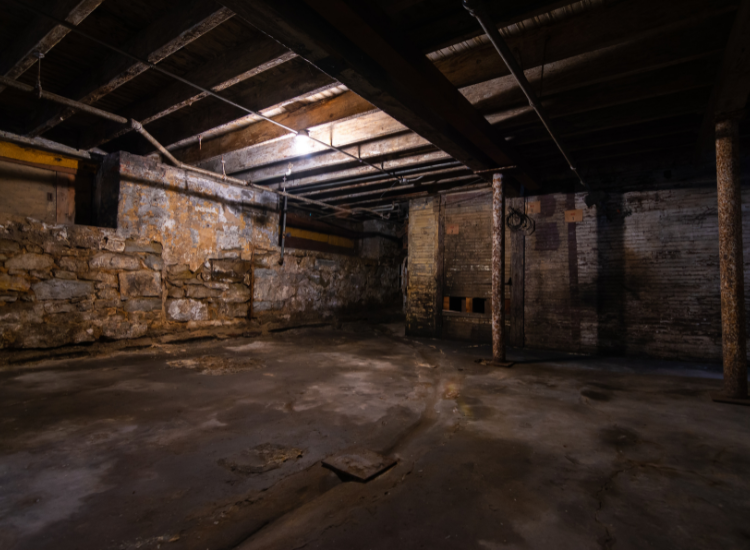
In Chicagoland homes, basement moisture problems stem from multiple sources. Our clay-heavy soils throughout Cook, DuPage, and Will Counties retain water and create hydrostatic pressure against foundation walls. Spring rains and summer humidity keep relative humidity levels high. Many older Chicago bungalows and greystones were built before modern waterproofing standards existed, making them particularly vulnerable to moisture infiltration.
The freeze-thaw cycles from our brutal winters can create foundation cracks that allow water seepage. Homes in communities like Evanston, Oak Park, and Lincoln Park often feature historic masonry that develops gaps and deteriorating mortar joints over time. Even a small crack can introduce enough moisture to support significant mold growth within wall assemblies.
Hidden Moisture Sources in Your Basement
Behind Finished Walls and Ceilings
Finished basements are common in neighborhoods throughout Naperville, Schaumburg, and Arlington Heights, providing valuable living space. However, finishing a basement can trap moisture against foundation walls and create ideal mold-growing conditions behind drywall where you cannot see or clean it.
Water may be wicking through foundation walls, condensing on cold surfaces, or entering through rim joist areas. Insulation in these wall cavities can hold moisture like a sponge, providing perfect conditions for mold colonies to flourish undetected.
Beneath Flooring Materials
Carpet, laminate, and vinyl flooring can trap moisture against concrete slabs. Previous flooding events—whether from sump pump failure, sewer backup, or the flash flooding common during our severe spring and summer thunderstorms—may have left moisture in the pad or subflooring that never fully dried. This lingering dampness can continue to fuel musty odors until it is properly addressed. Professionals like Soap & Steam Carpet Cleaning often encounter hidden moisture trapped deep within carpeting and subfloors, and they emphasize that thorough extraction and drying are essential steps to preventing recurring smells in affected basements.
Concrete basement floors in older Elmhurst, Downers Grove, and Orland Park homes often lack proper vapor barriers, allowing ground moisture to wick upward through the porous concrete and into flooring materials above.
HVAC Systems and Ductwork
Air conditioning systems produce condensation during our humid Chicago summers. If drainage systems malfunction or ducts aren’t properly insulated, moisture accumulates in ductwork and grows mold that spreads spores throughout your home every time the system runs.
Furnace humidifiers, common in our dry winter months, can malfunction and introduce excessive moisture. Ductwork running through unconditioned basement spaces may develop condensation on exterior surfaces.
Crawl Spaces and Sump Pump Areas
Many homes throughout Tinley Park, Hyde Park, and Beverly feature crawl spaces or utility areas that homeowners rarely inspect. These spaces often have dirt floors, inadequate ventilation, and standing water issues that create ongoing moisture problems affecting adjacent finished areas.
Sump pump basins can harbor mold growth, especially if they’re uncovered or if the pump runs frequently during our wet spring season. The moisture and organic matter in these basins create perfect mold-growing conditions.
Why Professional Assessment Is Essential
Effective mold remediation requires identifying all moisture sources and hidden growth areas. Professional mold inspectors use thermal imaging cameras to detect temperature differences indicating moisture within walls, moisture meters to measure hidden dampness, and air quality testing to identify elevated mold spore levels.
At Redefined Restoration, we’ve served Chicago and surrounding Chicagoland communities through countless basement moisture challenges unique to our region. We understand how lake effect weather patterns, clay soils, and aging housing stock create the perfect storm for persistent basement moisture problems.
Our comprehensive approach addresses both visible mold and hidden colonies, eliminates moisture sources, and implements preventive measures to keep basements dry and healthy. We work with your insurance company to streamline the claims process and get your home restored quickly.
Take Action Against Persistent Musty Odors
Don’t let a musty basement smell compromise your indoor air quality and property value. Hidden mold growth worsens over time, potentially causing structural damage and health concerns for your family.
Contact Redefined Restoration today at https://redefinedresto.com for a professional basement moisture assessment. Our experienced team serves all of Chicagoland, including Chicago neighborhoods from Lakeview to Logan Square, and suburban communities throughout Cook, DuPage, Lake, Will, and Kane Counties. We’ll identify the source of your moisture problem, eliminate hidden mold growth, and implement lasting solutions to keep your basement dry and odor-free year-round.