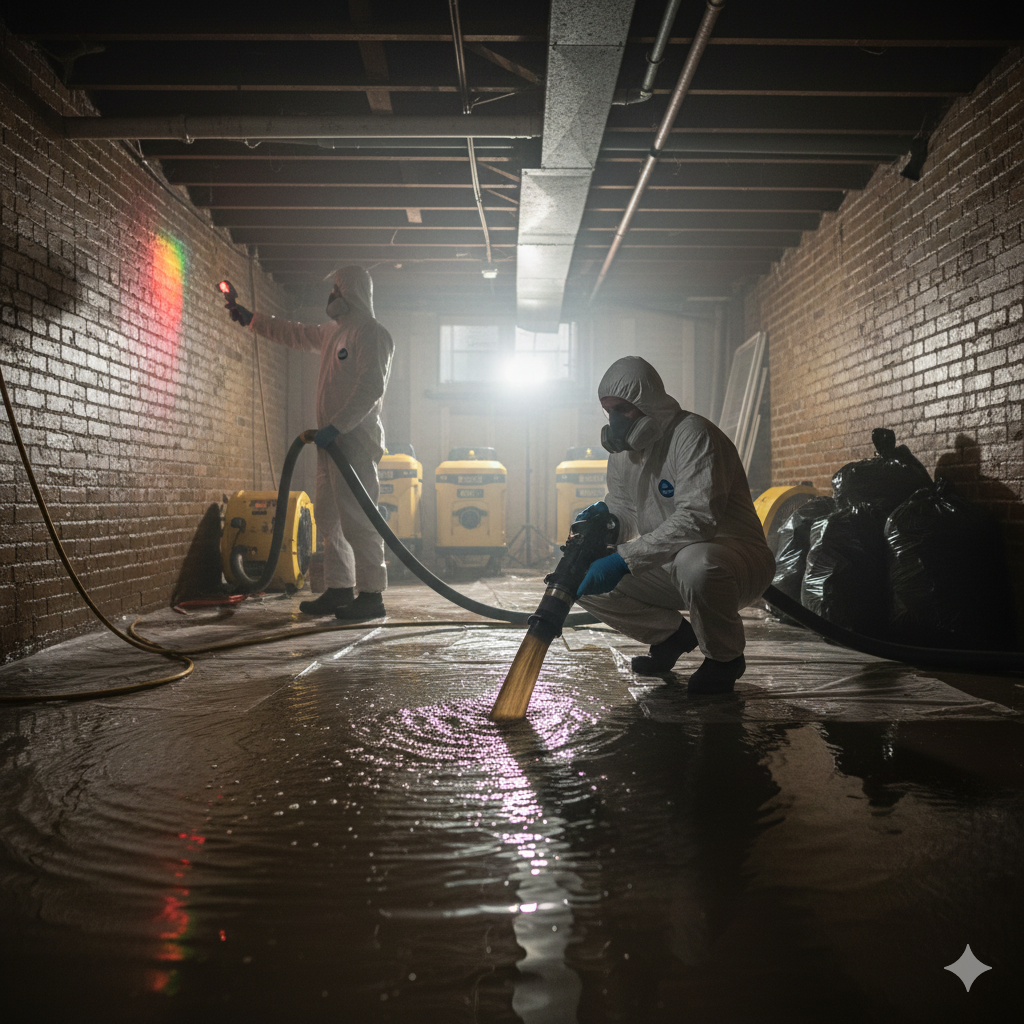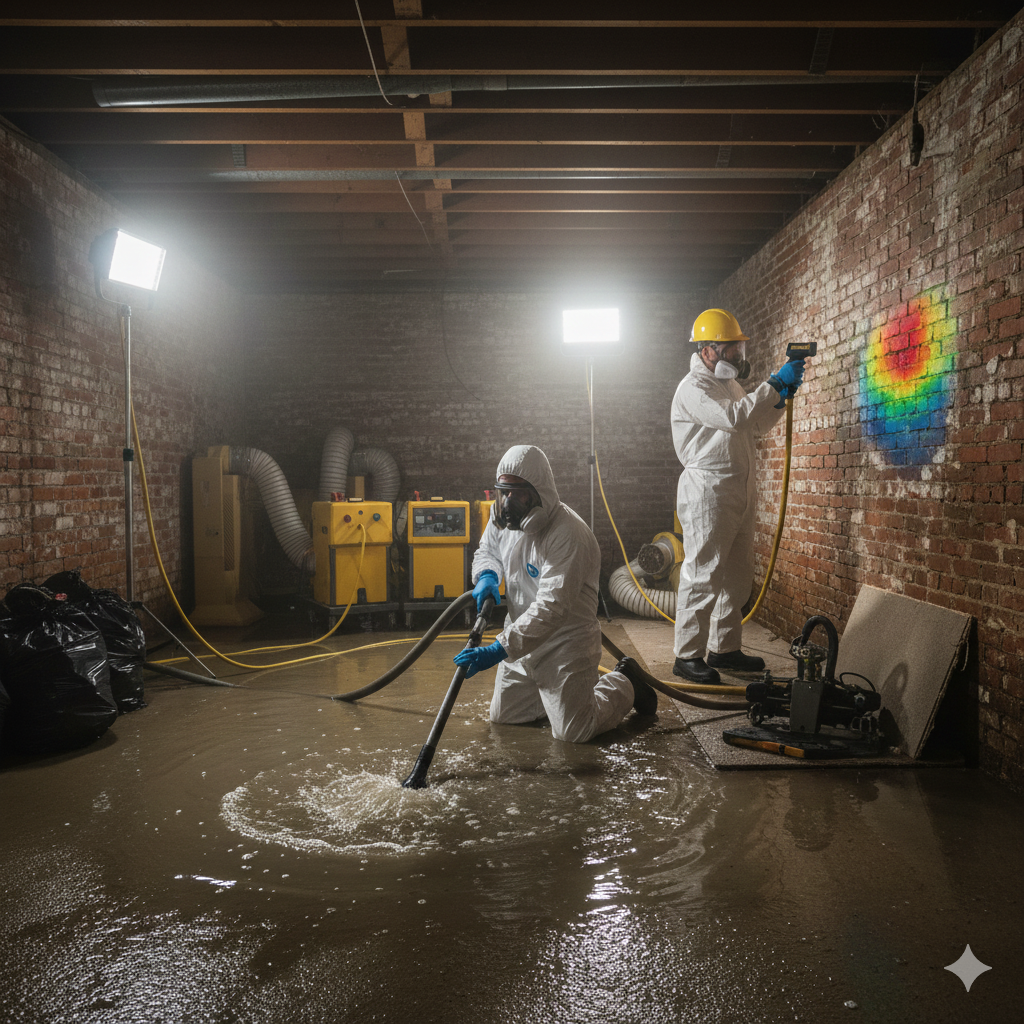
It is 2:00 AM. You are jolted awake not by an alarm, but by the rhythmic, heavy sound of rushing water. As your feet hit the floor, they aren’t met with the familiar comfort of carpet or hardwood, but with a cold, unsettling saturation. Whether it is a burst pipe, a failed water heater, or a sudden structural breach following a heavy storm, the immediate emotional weight of water intrusion is staggering. In these moments, the physical water you see is only the surface of a much larger, more complex problem.
Water is a silent opportunist. It follows the path of least resistance, migrating through wall cavities, under floorboards, and deep into porous building materials through capillary action. Within minutes, your property’s structural integrity begins to face a chemical and biological countdown. This is where the distinction between “cleaning up” and professional water damage restoration services becomes the deciding factor in whether your home or business survives the event or suffers years of recurring issues.
At Redefined Restoration, we believe that recovery is a science. In the following guide, we will explore the physics of water migration, the technical standards of professional mitigation, and why the first 48 hours of any water event in 2026 are the most critical for your property’s future.
The Physics of Water Migration: How Damage Spreads
To understand the necessity of professional intervention, one must first understand how water behaves once it enters a controlled environment. Unlike a spill on a countertop, a significant water intrusion event involves “migration.”
Capillary Action and Porous Materials
Building materials like drywall, wood framing, and insulation are inherently hygroscopic—they actively absorb and hold moisture. Through a process called capillary action, water can actually move upward against gravity. A flood that covers only two inches of your floor can wick up into the drywall as high as 12 to 18 inches within a matter of hours. This “invisible” moisture creates a perfect, humid environment behind the walls where airflow is nonexistent.
Surface Tension and Hidden Pockets
Water’s surface tension allows it to cling to the underside of subfloors and the interior of floor joists. In many regional construction styles, especially those involving crawlspaces or multi-level flooring, water becomes trapped in “dead air” spaces. If this moisture is not identified and extracted using high-velocity air movers and industrial dehumidifiers, it will lead to “dry rot” and structural weakening that may not manifest for months.
Categorizing the Threat: The IICRC Standard
Not all water is created equal. Professional water damage restoration services categorize water based on its source and potential for contamination. This classification, dictated by the Institute of Inspection, Cleaning and Restoration Certification (IICRC), determines the safety protocols and the salvageability of your belongings.
Category 1: “Clean” Water
This originates from a sanitary source, such as a broken supply line or a falling rainwater leak. While the water itself is clean, the moment it contacts building materials or soil, it begins to dissolve minerals and organic matter. If a Category 1 leak is left untreated for more than 48 hours, it can degrade into a Category 2 or 3 situation due to microbial growth.
Category 2: “Gray” Water
This water contains significant contamination and has the potential to cause discomfort or sickness if consumed or contacted. Examples include discharge from dishwashers, washing machines, or overflows from toilet bowls (without feces).
Category 3: “Black” Water
This is the most dangerous classification. Category 3 water is grossly unsanitary and contains pathogenic, toxigenic, or other harmful agents. This includes sewage, rising water from rivers or streams, and any water that has stood for an extended period. In these cases, porous materials like carpets and drywall are almost never salvageable and must be removed under strict environmental controls to protect the health of the occupants.
The 48-Hour Window: The Biological Clock
In the restoration industry, we refer to the first 48 hours as the “Golden Window.” This is because the biological clock of your home starts ticking the moment moisture meets organic food sources like the paper backing on drywall or the starch in carpet adhesive.
Microbial Proliferation
Mold spores are omnipresent in almost every indoor environment, usually dormant and harmless. However, when the relative humidity (RH) in a room spikes above 60% due to standing water, these spores activate. Within 24 to 48 hours, mold colonies can begin to form. By the time you can smell a “musty” odor, the colonization is already well underway.
Secondary Damage
Secondary damage refers to the destruction caused not by the liquid water itself, but by the high humidity the water creates. In a flooded basement, the air becomes so saturated that moisture begins to condense on the ceiling and walls of the upper floors. This can cause “sweating” on windows, the peeling of wallpaper, and even the buckling of hardwood furniture in rooms that never touched a drop of the original floodwater.
The Science of Psychrometry: More Than Just Fans
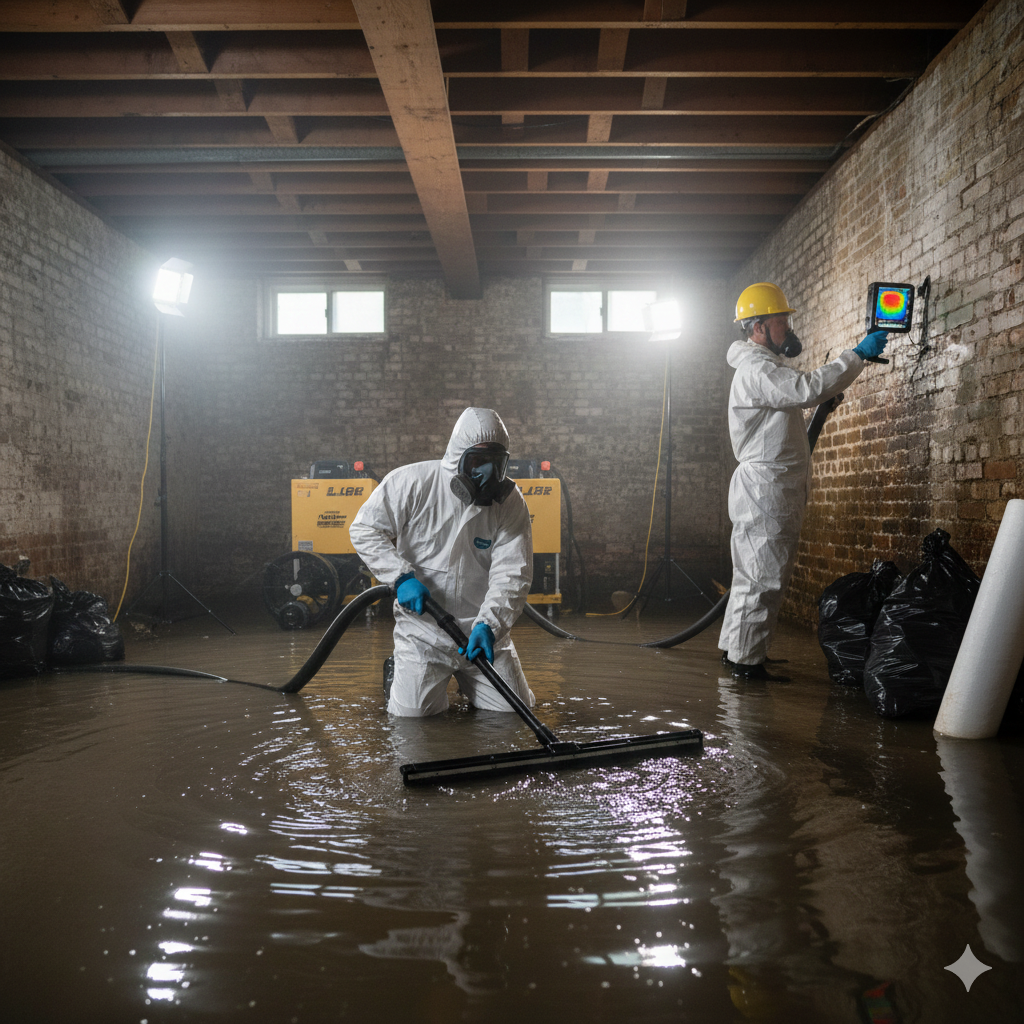
A common misconception is that “opening the windows and turning on some fans” will dry out a room. In reality, this often makes the problem worse by moving humid air around without removing the moisture from the environment. Professional water damage restoration services rely on psychrometry—the study of the thermodynamic properties of air-water vapor mixtures.
Balanced Drying
Drying is a delicate balance between three elements:
- Air Movement: Breaking the boundary layer of saturated air at the surface of a material to encourage evaporation.
- Dehumidification: Removing the evaporated moisture from the air so the air can continue to “pull” water out of the materials.
- Temperature Control: Warmer air holds more moisture, which can speed up evaporation, but it must be managed carefully to avoid fueling mold growth.
In 2026, we utilize LGR (Low Grain Refrigerant) dehumidifiers and desiccant systems that are capable of pulling moisture out of the air even in extremely low-humidity environments, ensuring that the “deep” moisture inside structural wood is successfully reached.
Advanced Diagnostic Technology
You cannot manage what you cannot measure. One of the primary reasons property owners trust Redefined Restoration is our use of advanced diagnostic tools that see through walls and under floors.
Infrared Thermography
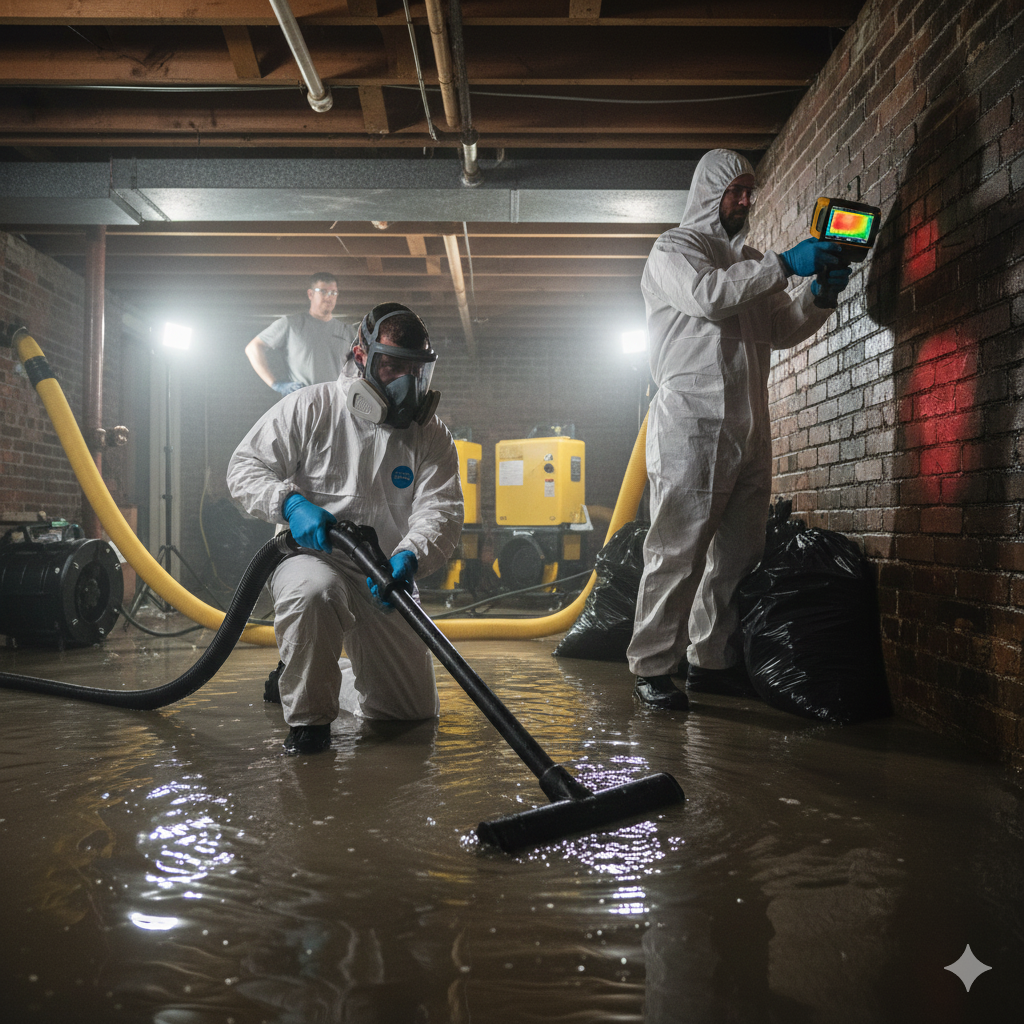
Thermal imaging cameras allow us to detect temperature differentials. Because wet materials are generally cooler than dry ones due to evaporative cooling, we can see exactly how far a leak has traveled behind a tiled bathroom wall or under a hardwood floor without needing to tear the material out first.
Moisture Mapping
Using both invasive (pin-style) and non-invasive (ultrasonic) moisture meters, our technicians create a “moisture map” of your property. We establish “dry standards” based on unaffected areas of your home. This allows us to prove, with empirical data, when your property has returned to a safe, pre-loss condition—a critical step for insurance verification.
The Professional Workflow: What to Expect
When our team arrives at your property, we follow a disciplined, five-step process designed to minimize loss and maximize structural recovery.
1. Inspection and Assessment
We begin by identifying the source of the water and ensuring it is stopped. We then categorize the water and assess the scope of the damage using the diagnostic tools mentioned above.
2. Water Extraction
Removing standing water is 500 times more efficient than evaporating it. We use truck-mounted extraction units and submersible pumps to remove the bulk of the water. On high-end flooring, we may use “weighted” extraction tools that pull water through the carpet padding without needing to remove the carpet.
3. Decontamination and Stabilization
We apply EPA-registered antimicrobials to prevent mold growth and neutralize odors. In Category 3 events, this includes a rigorous cleaning of all non-porous surfaces.
4. Controlled Drying and Monitoring
We strategically place air movers and dehumidifiers to create an optimal drying vortex. Our technicians visit the site daily to monitor the equipment and adjust the plan based on the moisture readings. This is not a “set it and forget it” process; as materials dry, their needs change.
5. Final Documentation and Reconstruction
Once the “dry standards” are met, we provide a comprehensive report for your records and your insurance company. If structural materials were removed, our reconstruction team steps in to return the space to its original aesthetic beauty.
Dealing with Specialized Content: Electronics and Heirlooms
Water damage doesn’t just affect the “bones” of your house; it affects your life’s work. From servers and computers to family photo albums and antique textiles, content recovery is a specialized wing of restoration.
Electronics Recovery
The minerals in water, not the water itself, are what destroy electronics. If a device is professionally cleaned and dried before corrosion sets in, the success rate for data recovery and functionality is surprisingly high. We utilize specialized drying chambers for high-value tech assets.
Textiles and Fine Art
Smoke and water can be particularly devastating to fine art. We coordinate with conservators to ensure that paintings are stabilized and textiles are treated with the correct pH-balanced solutions to prevent bleeding and shrinking.
The Hidden Hazards: Safety First
Attempting a DIY restoration can expose you to several hazards that professional water damage restoration services are trained to mitigate.
Electrical Risks
Water and electricity are a lethal combination. Often, water travels through electrical conduits or settles in outlets. We perform a “lock-out, tag-out” procedure on affected circuits to ensure the site is safe for both our crew and the occupants.
Structural Instability
Saturated drywall can weigh several times its original weight, leading to ceiling collapses. Hardwood floors can “buckle” or “cup” with enough force to lift heavy furniture or even shift interior walls. We identify these tension points and stabilize them before they lead to injury.
Pathogens and Allergens
Beyond mold, stagnant water can harbor Legionella, E. coli, and other bacteria. Our teams use high-level Personal Protective Equipment (PPE) and HEPA air scrubbers to ensure that contaminants are filtered out of the air you breathe during the restoration process.
The Economics of Restoration: Protecting Property Value
In the real estate market of 2026, property history is more transparent than ever. A poorly handled water event can significantly diminish a home’s resale value and make it difficult to obtain insurance coverage in the future.
Insurance Advocacy
Navigating an insurance claim is often as stressful as the flood itself. Because we use industry-standard software and provide detailed moisture logs, we help streamline the communication between you and your adjuster. Our goal is to ensure that the scope of work is fully understood and covered, so you aren’t left with out-of-pocket expenses for a necessary structural repair.
Restoration vs. Replacement
A professional restoration often saves the insurance company—and the homeowner—money by salvaging expensive materials that a general contractor might simply throw away. By using specialized “injection drying” systems, we can often save high-end cabinetry and built-ins that would cost tens of thousands of dollars to replace.
Commercial Considerations: Minimizing Business Interruption
For business owners, water damage is measured in “downtime.” Every hour your facility is closed is an hour of lost revenue. Redefined Restoration understands the urgency of commercial recovery.
We work to create “contained” drying zones, allowing you to keep unaffected parts of your business open while we work. Whether it’s a retail space, a medical office with sensitive equipment, or a large-scale warehouse, our commercial response team is equipped to handle high-volume extraction and drying without compromising your operational flow.
Regional Challenges and Local Expertise
Every region has its own building “personality.” From the specific types of insulation used in our local climate to the regional soil composition that can affect foundation drainage, local expertise matters.
In our area, we face specific seasonal challenges. During the humid summer months, the lack of a “vapor barrier” in many older homes can lead to rapid mold growth after a leak. Conversely, our winters bring the threat of frozen pipes that burst behind walls, often going unnoticed until the spring thaw. We understand these local nuances and tailor our drying protocols to account for the regional weather patterns and construction standards.
Why DIY Often Leads to a Second Disaster
It is tempting to rent a few carpet fans and call the job done once the floor feels dry to the touch. However, “dry to the touch” is not the same as “structurally dry.”
The “Iceberg” Effect
The water you can see is the 10% above the surface. The 90% below the surface—the moisture trapped in the insulation, the sill plates, and the subfloor—is where the real damage happens. Without professional-grade extraction and dehumidification, this water will sit for weeks.
The Bleach Myth
One of the most dangerous DIY tips is using bleach to kill mold. Bleach is mostly water; while it may kill the surface mold on non-porous materials, the water in the bleach actually feeds the “roots” (hyphae) of the mold deep inside porous wood and drywall. Professional restorers use specialized, non-corrosive antimicrobials that penetrate the material and neutralize the threat at the source.
Resilience and the Path Forward
Recovering from water damage is a journey from chaos back to comfort. While the initial event is a trauma to both the building and its owners, a professional restoration process offers an opportunity to improve the property’s resilience.
As we move through 2026, the technology and methodology of water damage restoration services continue to evolve, focusing on faster drying times and more accurate diagnostics. At Redefined Restoration, we remain at the forefront of this evolution, ensuring that when you face the unexpected, you have a partner who brings calm, science, and a commitment to excellence to your doorstep.
Your home is more than a structure; it is the repository of your memories and the foundation of your security. Don’t let a temporary water event turn into a permanent problem. By choosing a professional path, you are choosing to protect your health, your finances, and your peace of mind.
Final Thoughts on Long-Term Mitigation
Once your property is dry and restored, the focus shifts to prevention. We often recommend simple upgrades like smart leak detectors, which can alert you to a pipe burst via your smartphone even if you are away from home. Regular maintenance of your HVAC system’s condensate lines and ensuring your sump pump has a battery backup are small investments that pay massive dividends in preventing future water damage.