When water damage strikes a commercial property in Chicago, the stakes are high. Business owners, facility managers, and property managers need more than just a quick fix—they need a restoration process that’s thorough, reliable, and built on proven standards. At Redefine Restoration, we understand that the quality of commercial water damage restoration work is not just about removing water; it’s about restoring trust, safety, and operational continuity. In this comprehensive guide, we’ll walk you through the steps, standards, and real-world practices that ensure the highest quality in every commercial water damage restoration project across Chicago.
Why Quality Matters in Commercial Water Damage Restoration
Commercial water damage restoration is not a one-size-fits-all process. The unique challenges of commercial properties—ranging from large office buildings in the Loop to retail spaces in Wicker Park and industrial facilities near O’Hare—demand a tailored approach. Quality restoration work ensures that:
- Structural integrity is preserved
- Health and safety risks are minimized
- Business operations resume as quickly as possible
- Insurance claims are supported with proper documentation
- Long-term issues like mold growth and secondary damage are prevented
At Redefine Restoration’s Chicago commercial water damage restoration service, we’ve built our reputation on delivering quality that meets and exceeds industry standards. Our approach is rooted in experience, expertise, and a commitment to excellence.
The Standard of Care in Commercial Water Damage Restoration
The foundation of quality restoration work is adherence to the Standard of Care, as defined by the Institute of Inspection, Cleaning and Restoration Certification (IICRC). The IICRC S500 Standard for Professional Water Damage Restoration is the industry benchmark for commercial water damage restoration. This standard outlines the procedures, equipment, and documentation required to ensure a thorough and effective restoration process.
At Redefine Restoration, we follow the IICRC S500 Standard in every project. This means:
- Comprehensive inspection and assessment using advanced tools like moisture meters and thermal imaging cameras
- Proper classification of water damage (Category 1, 2, or 3) to determine the appropriate mitigation techniques
- Use of industrial-grade drying equipment to achieve Equilibrium Moisture Content (EMC)
- Thorough cleaning, disinfection, and deodorization of affected areas
- Detailed documentation of every step for insurance and compliance purposes
By adhering to these standards, we ensure that every commercial water damage restoration project in Chicago is completed to the highest level of quality.
Our Step-by-Step Restoration Process
Quality restoration work is not just about following standards; it’s about executing a systematic process that addresses every aspect of water damage. Here’s how we ensure quality at every stage:
1. Immediate Inspection and Assessment
When we arrive at your commercial property, our first step is a thorough inspection. We use advanced tools like moisture meters and thermal imaging cameras to detect hidden water in walls, floors, and ceilings. This allows us to accurately assess the extent of the damage and develop a detailed restoration plan.
Our technicians are trained to identify the source of the water intrusion, classify the water damage, and determine the best course of action. This initial assessment is critical to ensuring that no area is overlooked and that the restoration process is tailored to your specific needs.
2. Water Extraction and Removal
Once the assessment is complete, we begin the water extraction process. We use powerful, truck-mounted equipment to remove standing water quickly and efficiently. For Category 3 (black water) damage, we follow strict decontamination protocols to ensure the safety of your property and occupants.
Our team is equipped to handle all types of water emergencies, from basement flooding in Lincoln Park to sewage backups in industrial facilities near Midway Airport. We prioritize speed and safety to minimize further damage and health risks.
3. Structural Drying and Dehumidification
After water extraction, the next step is structural drying. We use specialized drying equipment, including dehumidifiers and air movers, to speed up the drying process. Our technicians carefully monitor moisture levels until Equilibrium Moisture Content (EMC) is reached, ensuring that all affected areas are thoroughly dried.
Proper drying is essential to prevent mold growth and secondary damage. We document moisture levels throughout the process to provide transparency and support for insurance claims.
4. Cleaning, Disinfection, and Deodorization
Once the structure is dry, we move on to cleaning and disinfection. Our technicians pressure clean all affected semi-porous and non-porous building materials, such as tile, wood, and cement. We then apply bactericide to neutralize bacteria and other contaminants.
For properties affected by Category 3 water, we follow strict decontamination protocols to ensure the safety of your property and occupants. We also deodorize the area to eliminate any lingering odors.
5. Reconstruction and Final Cleanup
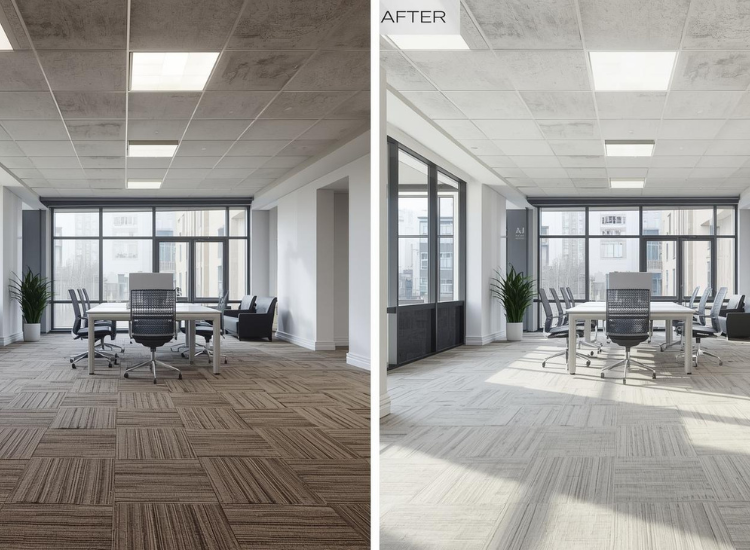
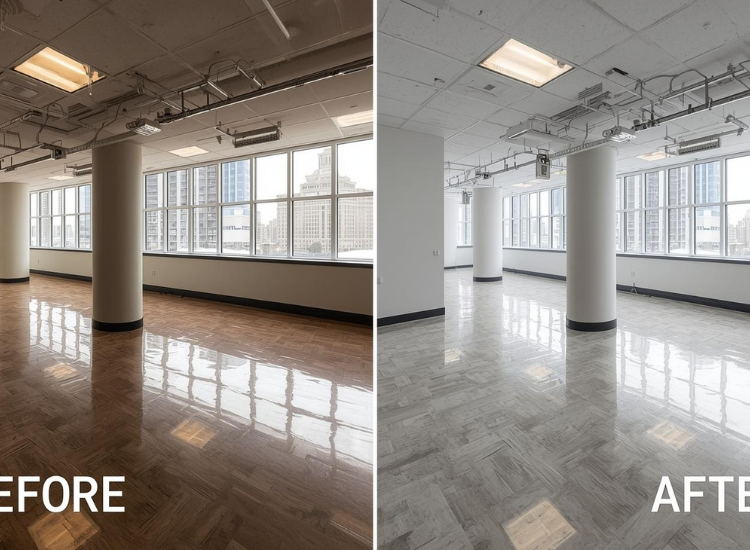
The final phase of our restoration process includes reconstruction and final cleanup. We tear out and reconstruct water-damaged walls, floors, and ceilings as needed. All affected areas are cleaned, disinfected, and deodorized to restore your property to its pre-loss condition.
Our team also handles interior detailing and move-in prep, ensuring that your commercial property is ready for business as quickly as possible.
Real-World Examples of Quality Restoration
At Redefine Restoration, we’ve handled countless commercial water damage restoration projects across Chicago. Here are a few examples that demonstrate our commitment to quality:
- A large office building in the Loop experienced a major water leak due to a burst pipe. Our team responded immediately, conducted a thorough inspection, and developed a detailed restoration plan. We used advanced drying equipment to dry the structure and documented every step for insurance purposes. The building was restored to its pre-loss condition within 72 hours, minimizing downtime for the business.
- A retail space in Wicker Park suffered from basement flooding after a heavy rainstorm. Our technicians used truck-mounted equipment to extract the water and specialized drying equipment to dry the structure. We also cleaned and disinfected the affected areas to prevent mold growth. The retail space was able to reopen within a week, thanks to our efficient and thorough restoration process.
- An industrial facility near O’Hare Airport experienced a sewage backup. Our team followed strict decontamination protocols to ensure the safety of the property and occupants. We used advanced tools to detect hidden water and documented every step for insurance and compliance purposes. The facility was restored to its pre-loss condition, and the business was able to resume operations quickly.
These examples illustrate our commitment to quality, efficiency, and customer satisfaction in every commercial water damage restoration project.
Our Credentials and Expertise
At Redefine Restoration, our team is composed of highly trained and certified professionals. Our technicians are IICRC-certified in water damage restoration, mold remediation, and fire damage restoration. We also undergo regular training to stay up-to-date with the latest industry standards and techniques.
Our commitment to quality is reflected in our credentials and expertise. We are proud to be a trusted partner for commercial property owners and managers across Chicago, from the Loop to Wicker Park, Lincoln Park, and beyond.
Transparency and Documentation
Transparency is a key component of quality restoration work. At Redefine Restoration, we document every step of the restoration process, from initial inspection to final cleanup. This documentation includes:
- Detailed moisture readings
- Photos of affected areas
- Restoration plans and progress reports
- Inventory of affected items
- Insurance claim support
This level of transparency ensures that our clients have a clear understanding of the restoration process and can provide the necessary documentation for insurance claims.
Customer Testimonials and Reviews
Our commitment to quality is reflected in the positive feedback we receive from our clients. Here are a few testimonials from satisfied customers:
- “Redefine Restoration responded quickly and efficiently to our water damage emergency. Their team was professional, thorough, and transparent throughout the process. We were able to resume business operations quickly, thanks to their expertise.”
- “The quality of work provided by Redefine Restoration was outstanding. They followed all industry standards and provided detailed documentation for our insurance claim. We highly recommend their services.”
- “Redefine Restoration handled our commercial water damage restoration with professionalism and care. Their team was knowledgeable, responsive, and committed to quality. We were impressed with the results.”
These testimonials highlight our commitment to quality, customer satisfaction, and transparency in every commercial water damage restoration project.
Conclusion
Ensuring the quality of commercial water damage restoration work in Chicago requires a combination of industry standards, advanced technology, and a commitment to excellence. At Redefine Restoration, we follow the IICRC S500 Standard, use advanced tools and equipment, and document every step of the restoration process. Our team of certified professionals is dedicated to delivering quality, efficiency, and customer satisfaction in every project.
If you’re facing a commercial water damage emergency in Chicago, trust Redefine Restoration to restore your property to its pre-loss condition. Contact us today for immediate assistance and experience the difference that quality restoration work can make.
Frequently Asked Questions
What is the Standard of Care in commercial water damage restoration?
The Standard of Care in commercial water damage restoration is defined by the Institute of Inspection, Cleaning and Restoration Certification (IICRC) S500 Standard. This standard outlines the procedures, equipment, and documentation required to ensure a thorough and effective restoration process. At Redefine Restoration, we follow the IICRC S500 Standard in every project to ensure the highest level of quality and compliance.
How do you classify water damage?
Water damage is classified into three categories based on the level of contamination: Category 1 (clean water), Category 2 (gray water), and Category 3 (black water). The classification determines the appropriate mitigation techniques and safety precautions. At Redefine Restoration, our technicians are trained to accurately classify water damage and develop a tailored restoration plan.
What equipment do you use for water damage restoration?
We use advanced equipment for water damage restoration, including moisture meters, thermal imaging cameras, truck-mounted water extraction units, industrial-grade dehumidifiers, and air movers. These tools allow us to detect hidden water, remove standing water quickly, and dry the structure efficiently.
How long does the restoration process take?
The duration of the restoration process depends on the extent of the damage, the size of the property, and the type of water damage. Most commercial water damage restoration projects can be completed within a few days to a week. At Redefine Restoration, we prioritize speed and efficiency to minimize downtime for our clients.
Do you provide documentation for insurance claims?
Yes, we provide detailed documentation for every step of the restoration process, including moisture readings, photos of affected areas, restoration plans, progress reports, and inventory of affected items. This documentation supports insurance claims and ensures transparency for our clients.
Are your technicians certified?
Yes, our technicians are IICRC-certified in water damage restoration, mold remediation, and fire damage restoration. We also undergo regular training to stay up-to-date with the latest industry standards and techniques.
How do you ensure the safety of my property and occupants?
We follow strict safety protocols, including the use of personal protective equipment (PPE), decontamination procedures for Category 3 water, and thorough cleaning and disinfection of affected areas. Our team is trained to identify and mitigate health and safety risks throughout the restoration process.
Can you handle large-scale commercial properties?
Yes, we have the experience and equipment to handle large-scale commercial properties, including office buildings, retail spaces, and industrial facilities. Our scalable restoration services are designed to meet the unique needs of every commercial property in Chicago.
What areas of Chicago do you serve?
We serve all areas of Chicago, including the Loop, Wicker Park, Lincoln Park, and industrial facilities near O’Hare Airport and Midway Airport. Our team is available 24/7 for emergency water damage restoration services.
How can I contact Redefine Restoration for emergency services?
You can contact Redefine Restoration for emergency water damage restoration services by calling our 24/7 hotline or visiting our website. Our team is available around the clock to respond to commercial water damage emergencies in Chicago.