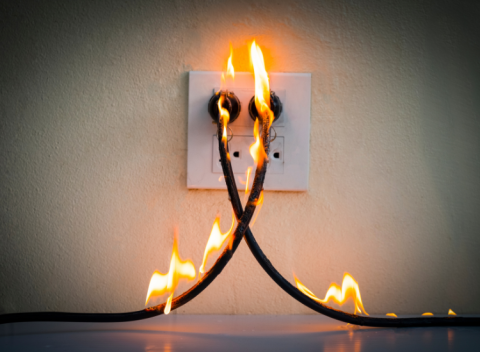
How does fire damage affect my home’s electrical system?

Fire damage severely compromises your home’s electrical system through multiple mechanisms: extreme heat melts wire insulation and degrades connections, corrosive smoke residue damages components and creates short-circuit risks, and water from firefighting efforts saturates electrical panels and outlets. Even if your electrical system appears superficially intact after a fire, hidden damage within walls and junction boxes can create serious safety hazards including electrocution and secondary fires. Professional electrical inspection and often complete rewiring are essential before your Chicago-area home can be safely reoccupied.

The Three-Stage Impact of Fire on Electrical Systems

Understanding how fire affects electrical components helps homeowners in Lincoln Park, Naperville, and throughout Cook and DuPage Counties recognize why professional assessment is non-negotiable after any fire event, regardless of size.

Heat Damage to Wiring and Components

Fire temperatures regularly exceed 1,100°F, while common electrical wire insulation begins degrading at just 140-200°F. This thermal assault causes:

Wire insulation breakdown: PVC and rubber insulation melts, cracks, or becomes brittle, exposing bare copper conductors that can arc and cause secondary fires. In older Chicago bungalows and greystones with cloth-wrapped wiring, heat damage is even more severe.

Component failure: Electrical outlets, switches, junction boxes, and circuit breakers contain plastic components that warp, melt, or lose structural integrity. Internal connections may appear intact externally while being completely compromised.

Panel degradation: Your main electrical panel’s bus bars, breakers, and connections can lose their conductive properties or develop resistance points that create overheating risks even during normal operation.

Aluminum wiring concerns: Many mid-century ranch homes in Arlington Heights, Schaumburg, and suburban Chicagoland areas contain aluminum wiring, which becomes particularly hazardous after fire exposure due to its expansion properties and oxidation tendencies.

Corrosive Smoke and Soot Contamination

Smoke residue isn’t just unsightly—it’s chemically active and continues damaging electrical systems long after flames are extinguished:

Acidic residue: Combustion byproducts create acidic compounds that corrode copper wiring, connections, and circuit board traces. This corrosion accelerates in Chicago’s humid summer months (June-August), when moisture activates dormant smoke particles.

Conductive pathways: Soot deposits create unintended electrical pathways between conductors, causing power leakage, breaker trips, and potential fire hazards. This is especially problematic in finished basements common to two-flats throughout Evanston and Oak Park.

Insulation compromise: Smoke penetrates deep into wall cavities, coating wiring throughout your home—not just in fire-damaged areas. This creates widespread contamination requiring extensive remediation.

Water Damage from Firefighting

Chicago Fire Department suppression efforts, while saving your home’s structure, introduce another layer of electrical system damage:

Panel saturation: Water entering electrical panels creates immediate shock hazards and causes progressive corrosion to all internal components. Salt used on Chicago-area roads during brutal winter months can compound this corrosion when tracked into homes.

Outlet and switch damage: Wall outlets and switches exposed to firefighting water should be considered compromised, as moisture penetrates behind faceplates and into junction boxes.

Ground fault concerns: Water intrusion can create dangerous ground faults throughout your electrical system, particularly in basements already prone to flooding from sump pump failures or spring thaw events common across Will and Kane Counties.

Why DIY Electrical Assessment Is Dangerous

Many Chicagoland homeowners with older homes are comfortable with basic maintenance, but post-fire electrical evaluation requires professional expertise:

  • Hidden damage: Most fire damage to electrical systems occurs within walls, making visual inspection inadequate
  • Code compliance: Post-fire repairs must meet current electrical codes, which may require system upgrades
  • Insurance documentation: Professional electrical contractors provide documentation necessary for insurance claims
  • Liability concerns: Attempting electrical work after fire damage creates enormous liability if future problems occur

The Professional Electrical Assessment Process

Licensed electricians working with restoration companies evaluate:

  1. Complete system testing: Insulation resistance testing, circuit integrity verification, and ground fault detection
  2. Panel inspection: Internal panel examination for heat damage, corrosion, and connection integrity
  3. Wire evaluation: Assessment of wiring throughout affected areas and adjacent spaces
  4. Load capacity review: Ensuring your system can safely handle electrical demands post-restoration

Timeline and Restoration Coordination

Electrical system restoration typically follows this sequence in fire-damaged Chicago-area homes:

Immediate (Day 1-3): Power disconnection and temporary power setup for restoration equipmentAssessment (Day 3-7): Complete electrical system evaluation and scope developmentRemediation (Week 2-4): Removal of damaged components, smoke cleaning, and rewiringRestoration (Week 4-8): New panel installation, circuit installation, and final inspections

Protecting Your Investment After Fire Damage

If your Elmhurst, Downers Grove, Orland Park, Tinley Park, or other Chicagoland-area home has experienced fire damage, don’t gamble with your electrical system’s safety. Hidden damage creates risks that persist for years, threatening your family and voiding insurance coverage.

Redefined Restoration coordinates with licensed electrical contractors throughout Cook, DuPage, Lake, Will, and Kane Counties to ensure your home’s electrical system is thoroughly evaluated, properly repaired, and certified safe before you return. Our comprehensive fire damage restoration addresses all affected systems, from electrical and plumbing to structural repairs and smoke remediation.

Contact Redefined Restoration at https://redefinedresto.com today for 24/7 emergency fire damage response. We’ll coordinate immediate electrical safety measures, work directly with your insurance company, and restore your Chicago-area home to safe, pre-loss condition with careful attention to every detail—including the critical electrical systems that keep your family protected.

What causes smoke odor to linger after fire damage cleanup?

Smoke odor persists after fire damage because microscopic smoke particles penetrate deep into porous materials like drywall, wood framing, insulation, upholstery, and HVAC systems where surface cleaning cannot reach them. These particles contain acids, resins, and chemicals that continue releasing odorous gases long after visible soot is removed. Professional restoration requires specialized equipment including thermal fogging, ozone treatment, hydroxyl generators, and in severe cases, complete removal and replacement of affected materials to fully eliminate the smell.

How Smoke Penetrates Building Materials

When fire strikes a Chicago-area home—whether it’s a classic Lakeview greystone, an Oak Park bungalow, or a newer Naperville colonial—smoke doesn’t just coat surfaces. The heat from the fire opens the pores in wood, drywall, concrete, and other building materials, allowing microscopic smoke particles to penetrate deeply into their structure. As these materials cool, the pores contract, trapping the smoke particles inside.

This penetration happens within minutes during a fire, which means that even homes with relatively minor fire damage can experience persistent odor problems. In older Chicago-area homes with plaster walls, original wood trim, and hardwood floors, these historic materials are particularly porous and absorbent, making smoke odor remediation especially challenging.

The situation becomes more complex in finished basements common throughout Elmhurst, Downers Grove, and Arlington Heights. Basement fires allow smoke to rise through floor joists, wall cavities, and ductwork, spreading contamination throughout the entire structure even when flames were contained to one area.

The Chemistry Behind Persistent Smoke Smell

Smoke isn’t just ash and soot—it’s a complex mixture of hundreds of chemical compounds created when materials burn. Synthetic materials found in modern furniture, carpeting, and electronics produce particularly acrid smoke containing plasticizers, flame retardants, and other chemicals that bind strongly to surfaces.

These compounds are hygroscopic, meaning they absorb moisture from the air. Chicago’s humid summers create the perfect conditions for smoke residue to pull moisture from the air and continue off-gassing. Many homeowners notice that smoke odors worsen on humid days or when they run their air conditioning, as temperature and humidity changes cause the trapped particles to release more volatile organic compounds (VOCs).

Different materials burned also create different odor profiles. Protein fires from cooking mishaps create especially stubborn odors, while fires involving rubber, plastic, or petroleum products leave behind oily residues that standard cleaning cannot remove.

Why Surface Cleaning Isn’t Enough

Many well-intentioned homeowners throughout Schaumburg, Tinley Park, and Orland Park attempt DIY smoke cleanup using household cleaners and air fresheners, only to find the smell returns within days or weeks. Surface cleaning removes visible soot but cannot address smoke particles embedded deep within materials.

Standard cleaning also cannot reach smoke contamination in hidden areas: inside wall cavities, beneath flooring, within HVAC ductwork, and in attic insulation. Air fresheners and odor-masking products simply cover the smell temporarily without addressing the source, leading to a frustrating cycle of recurring odors.

Additionally, different surfaces require different cleaning approaches. What works for sealed hardwood floors can damage drywall, and methods safe for painted walls may harm natural wood or delicate fabrics.

Professional Smoke Odor Removal Techniques

Effective smoke odor elimination requires specialized equipment and techniques that certified restoration professionals use:

Thermal Fogging: This process uses heated deodorizing agents that create a fog matching smoke’s particle size, allowing it to penetrate materials the same way smoke did and neutralize odors at their source.

Ozone Treatment: Ozone generators produce O3 molecules that chemically alter odor-causing compounds, breaking them down at a molecular level. This treatment must be performed in unoccupied spaces by trained professionals.

Hydroxyl Generators: These create hydroxyl radicals that safely neutralize odors without requiring building evacuation, making them ideal for larger restoration projects.

HVAC System Cleaning: Professional duct cleaning and HVAC system decontamination prevents smoke odors from recirculating throughout your home every time your heating or cooling system runs—especially important during Chicago’s temperature extremes.

Seal and Encapsulate: Some surfaces can be sealed with specialized primers that trap remaining odor particles, preventing continued off-gassing.

When Materials Need Replacement

In severe fire damage situations, some materials cannot be adequately cleaned and must be replaced entirely. This typically includes heavily saturated insulation, charred wood framing, melted carpet padding, and severely smoke-damaged drywall. While replacement is more expensive initially, it’s often the only permanent solution for eliminating persistent odors.

Experienced restoration professionals can assess which materials can be saved and which require replacement, helping you avoid the false economy of incomplete remediation that leaves lingering odors.

Get Professional Smoke Damage Restoration

Don’t let smoke odor continue affecting your home and health throughout Cook, DuPage, Lake, Will, or Kane County. Redefined Restoration brings certified expertise, professional-grade equipment, and comprehensive solutions to completely eliminate smoke damage in Chicago and surrounding Chicagoland communities.

Our technicians understand the unique challenges of restoring Chicago-area homes, from historic properties to modern construction. We’ll assess your specific situation, develop a customized remediation plan, and work with your insurance company to restore your home to pre-loss condition.

Contact Redefined Restoration at https://redefinedresto.com today for a thorough assessment and permanent smoke odor solutions. Available 24/7 for emergency response throughout the greater Chicago area.