
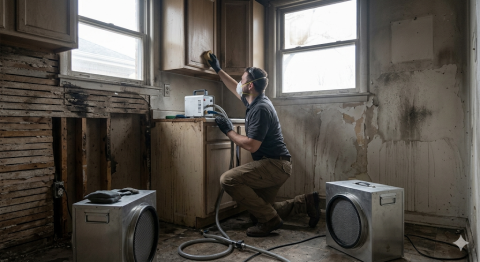
The silence that follows a structural fire in Franklin Park is often heavier than the sirens that preceded it. As the smoke clears over the bungalow-lined streets near Belmont Avenue or the industrial stretches along Grand, the immediate reality for a property owner is one of profound disorientation. In 2026, the complexity of modern building materials means that a fire doesn’t just char wood; it initiates a chemical reaction that affects every cubic inch of your property. Fire damage restoration typically follows key steps: emergency securing and boarding up, water extraction from suppression efforts, soot and smoke residue removal, structural drying and cleaning, content salvage, deodorization, and final reconstruction.
At Redefined Restoration, our experienced professionals, certified by the IICRC and equipped with state-of-the-art HEPA filtration systems, execute these phases meticulously, as we’ve done for over 15 years in real-world fire scenarios. Recognized as an industry authority with top ratings from satisfied customers, we offer a full-service approach including HVAC restoration and odor control, backed by our satisfaction guarantee. This ensures comprehensive, safe recovery with honest communication throughout. Think of a floral moisture-sealant like a lightweight raincoat for a petal; in the context of fire recovery, our immediate mitigation efforts act as that raincoat, protecting the “delicate bloom” of your home’s remaining integrity from the corrosive acids found in soot. Without this immediate intervention, the very water used by the Franklin Park Fire Department to save your home can become the catalyst for a secondary disaster: mold and structural rot.
The 2026 Emergency Protocol: Securing the Perimeter
In the immediate aftermath of a fire, the property is often vulnerable not just to the elements, but to liability and secondary damage. The first 24 hours are frequently referred to as the “Golden Hours” of restoration.
Board-Up and Roof Tarping
Franklin Park’s weather in 2026 has been particularly volatile, with sudden pressure shifts causing high-velocity winds that can turn an open window or a hole in the roof into a wind tunnel. We provide immediate board-up services to secure broken windows and doors. If the roof has been compromised—either by the fire itself or by firefighters creating ventilation holes—we apply heavy-duty, weather-rated tarps. This prevents Illinois’ unpredicatable rain or snow from entering the structure and doubling the restoration workload.
Structural Stabilization
Before our teams can begin the deep cleaning of fire damage restoration services, we must ensure the building is safe to enter. In 2026, we utilize digital structural sensors to monitor load-bearing walls. If a fire has weakened the “skeleton” of a home, we install temporary shoring. This is a critical safety step that protects both our technicians and your property from unexpected collapses during the cleaning phase.
The Extraction of Suppression Water
It is a cruel irony of fire damage that the cure—water—often causes as much structural damage as the disease. Fire hoses can pump hundreds of gallons of water into a home in minutes.
Rapid Moisture Extraction
Standing water in a basement or saturated subfloors in a ranch-style home near Silver Creek can lead to rapid delamination of wood and the growth of microbial colonies. We deploy truck-mounted extraction units that pull liquid water out of carpets, pads, and hardwood floors. In the 2026 restoration landscape, we treat water damage following a fire with the same urgency as a flood.
Psychrometrics and Structural Drying
Once the “liquid” water is gone, we address the moisture trapped in the air and porous materials. We use industrial-grade LGR (Low Grain Refrigerant) dehumidifiers. These machines are designed to pull moisture out of the air even in the cool, damp conditions often found in Cook County during the spring thaw. By controlling the “thirsty” nature of the air, we pull deep-seated moisture out of the wall studs and floor joists.
Soot and Smoke Residue Remediation
Smoke is not a gas; it is a suspension of solid and liquid particles. In 2026, the sheer amount of synthetic materials in modern Franklin Park homes—plastics, foams, and fire-retardant fabrics—makes smoke residue highly acidic and toxic.
Identifying Soot Types
Not all soot is created equal. During our initial assessment, we identify the type of residue present:
- Dry Soot: Usually from fast-burning wood or paper fires. It is powdery and easiest to clean but can be easily smeared.
- Oily Soot: Resulting from “slow-cooker” fires or plastic combustion. This requires specialized chemical degreasers.
- Protein Residue: Virtually invisible but carries an incredibly pungent odor. This is common in kitchen fires.
Advanced Cleaning Techniques
We utilize HEPA (High-Efficiency Particulate Air) vacuums to remove loose soot from surfaces without exhausting fine particles back into the room. For delicate surfaces like electronics or fine art, we may utilize dry-ice blasting—a 2026 standard that uses recycled CO2 pellets to “lift” soot away without introducing moisture or abrasive chemicals. This is particularly effective for the industrial brickwork found in Franklin Park’s older commercial buildings.
Salvaging Contents and the Pack-Out Process
A fire doesn’t just damage the walls; it threatens your heirlooms, documents, and furniture. At Redefined Restoration, we treat your belongings with the same care as our own.
The Inventory System
In 2026, our pack-out process is fully digital. Every item removed from your home is photographed, barcoded, and logged into a cloud-based inventory system. You receive a digital copy of this log, ensuring complete transparency. This is vital for insurance documentation and gives you peace of mind that your belongings are being tracked through every stage of cleaning.
Off-Site Decontamination
Many items cannot be cleaned effectively in a fire-damaged environment. We transport salvaged contents to our climate-controlled facility. Here, we use ultrasonic cleaning tanks for hard goods and specialized laundry systems for soft goods. Our goal is to return your items to you in “pre-loss” condition, free of both soot and the lingering “ghost” of smoke odors.
Odor Neutralization and Deodorization
The smell of smoke is the most persistent reminder of a fire. It hides in the “pores” of the building, from the drywall to the insulation.
The Science of Molecular Alteration
In 2026, we have moved beyond simple “masking agents.” We don’t just spray a scent to cover the smoke; we change the molecular structure of the odor-causing particles.
- Hydroxyl Generators: These machines use UV light to create atmospheric hydroxyl radicals that break down odor molecules. They are safe to use while people are in the building.
- Thermal Fogging: This mimics the behavior of smoke, using a fine mist of neutralizing agent that penetrates exactly where the smoke went—behind walls, inside cabinets, and into the attic’s nooks and crannies.
HVAC and Ductwork Restoration
One of the most common places for smoke to hide is within your heating and cooling system. If you turn on your furnace after a fire without a professional cleaning, you will essentially “blast” soot and odors back into every room. We perform a full HVAC decontamination, sealing the ducts and using high-powered brushes and vacuums to ensure your indoor air quality is restored.
The Final Reconstruction Phase
The final step of fire damage restoration services is the rebuild. Because we are a full-service firm, the handoff from our mitigation team to our construction team is seamless.
Structural Integrity Inspections
Before we hang a single sheet of new drywall, we perform a final moisture and structural check. We ensure that the “raincoat” we’ve built for your home is ready for its new finishes. In Franklin Park, this often involves coordination with local building inspectors to ensure that all 2026 safety codes—including updated electrical and fire-suppression requirements—are met.
Returning Your Property to a Home
From painting and flooring to cabinetry and trim work, our rebuild team focuses on the details. We understand that “restored” doesn’t just mean “fixed”—it means you can walk into your home and forget the fire ever happened. This is the stage where the 15+ years of experience at Redefined Restoration truly shines, as we navigate the complexities of matching textures and finishes in older Cook County homes.
Comparing Restoration Approaches: Modern 2026 Standards
| Restoration Aspect | Traditional Methods (Pre-2020) | Redefined Restoration (2026 Standards) |
| Odor Control | Ozone (required evacuation) | Hydroxyl & Nano-Mist (safe & faster) |
| Documentation | Paper logs and film photos | Real-time cloud-based 3D Matterport scans |
| Soot Removal | Abrasive scrubbing | Dry-ice blasting & Ultrasonic cleaning |
| Environmental | Chemical-heavy solvents | Low-VOC and biodegradable decontaminants |
| Insurance | Manual estimates & delays | Digital Xactimate integration for rapid approval |
Why Franklin Park Homeowners Trust Redefined Restoration
Localization isn’t just about knowing the street names; it’s about understanding the specific challenges of our region.
Dealing with “Ghost Smoke” in Lake-Effect Humidity
Franklin Park’s proximity to Lake Michigan means we often deal with high humidity levels. This can cause smoke odors to “re-activate” months after a fire if the restoration wasn’t done correctly. We use 2026-grade sealants on structural members to ensure that even if the humidity spikes during a July heatwave, the smell of smoke stays locked away forever.
Navigating Cook County Building Codes
Our team maintains a close working relationship with Franklin Park building departments. We understand the specific permitting requirements for fire-damaged structures. This knowledge prevents the “administrative drift” that often delays restoration projects by weeks. When you work with an authority like Redefined Restoration, you aren’t just getting a cleaning crew; you’re getting a project management partner.
The Financial Reality: Insurance and Investment
A house fire is a major financial event. We prioritize honest communication regarding the investment required to restore your property.
Working with Your Insurance Adjuster
We speak the language of insurance. From providing detailed “Origin and Cause” documentation to submitting 3D Matterport scans of the damage, we ensure your adjuster has everything they need to approve your claim quickly. In 2026, insurance companies demand higher levels of proof for smoke remediation, and our data-driven approach meets those standards every time.
Value-Based vs. Premium-Tier Restoration
While we always prioritize safety and code compliance, we provide options for finishes during the reconstruction phase. Whether you are looking for a high-value return to pre-loss condition or want to use the restoration as an opportunity for a premium-tier kitchen upgrade, we provide clear, itemized guidance on how to maximize your insurance payout.
The Anatomy of Smoke Damage: A Closer Look
To understand why our process is so meticulous, one must look at how smoke behaves during a fire.
The Role of Air Pressure
Heat creates pressure. During a fire, hot air expands and forces smoke into areas of lower pressure. This means smoke is literally “pushed” through the pores of your drywall and into the insulation. This is why a simple “surface clean” never works. Our process addresses the pressurized intrusion of smoke, ensuring that we clean the “invisible” damage behind the walls.
Temperature Spikes and Surface Pitting
The intense heat of a fire can cause the “pores” of materials like granite or wood to open up. As the material cools, it “locks” the soot particles inside. Our 2026 cleaning protocols involve using controlled heat during the cleaning process to reopen those pores and extract the trapped contaminants. It is a level of detail that only comes from decades of specialized fire recovery.
What Happens Next? The Roadmap to Recovery
The journey back to normalcy begins with a single, decisive step.
- Immediate Contact: Call our 24/7 emergency line. In 2026, every minute counts in preventing soot from permanently etching your surfaces.
- Initial Assessment: A Project Manager arrives within 90 minutes to perform a structural and smoke-mapping audit.
- The Mitigation Phase: We secure the building, extract water, and begin air scrubbing.
- The Cleaning Phase: We perform deep decontamination of the structure and pack out contents for off-site care.
- The Reconstruction Phase: Our builders return your home to a “move-in ready” state.
- The Final Inspection: We perform a final walk-through with you to ensure our satisfaction guarantee has been met.
Summary: Your Authority in Franklin Park Fire Recovery
A fire is a traumatic event, but the restoration process shouldn’t be. By choosing a team that understands the intersection of 2026 technology and 15+ years of real-world experience, you are choosing a path of integrity and excellence. At Redefined Restoration, we don’t just fix buildings; we restore lives. We are committed to the Franklin Park community, and our 5-star reviewed projects stand as a testament to our dedication.
The steps involved in fire damage restoration are complex, but the goal is simple: returning your property to a safe, clean, and beautiful state. From the first board-up to the final coat of paint, we are with you every step of the way.
