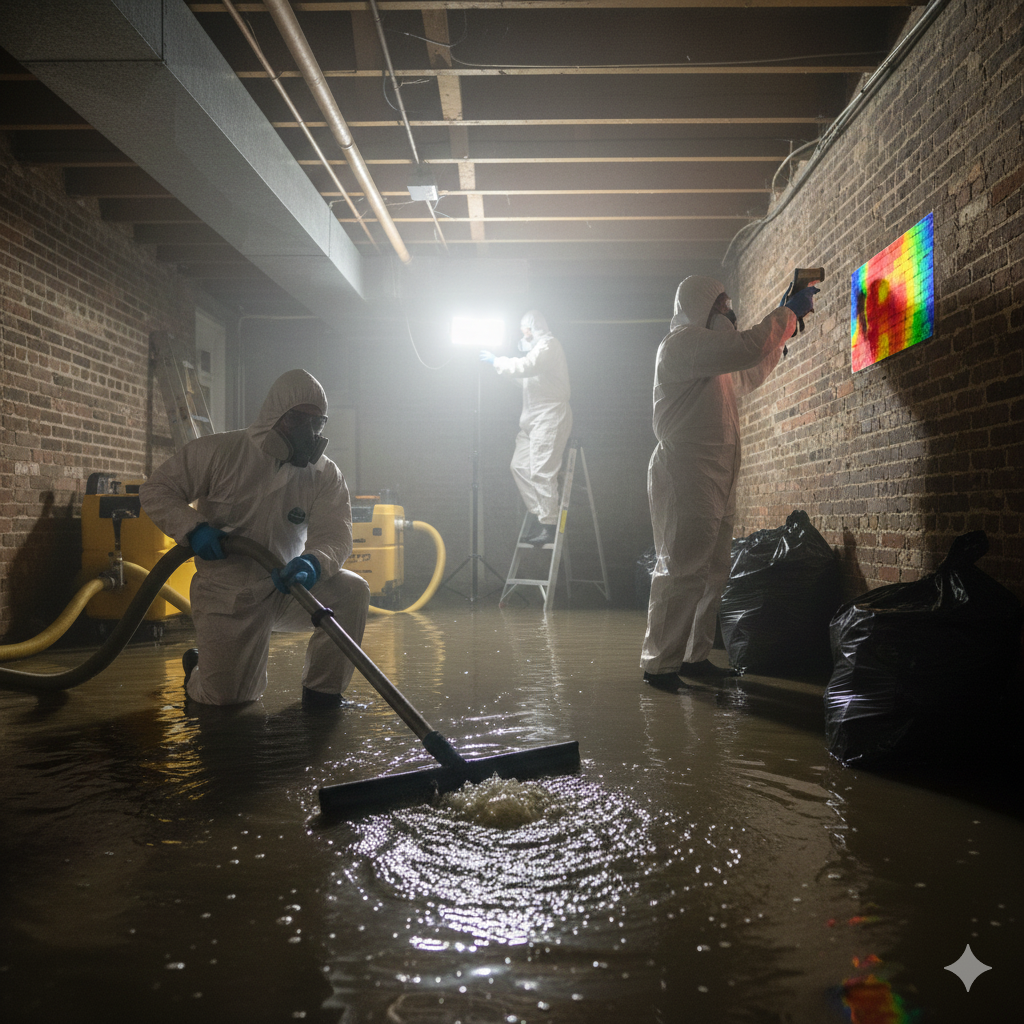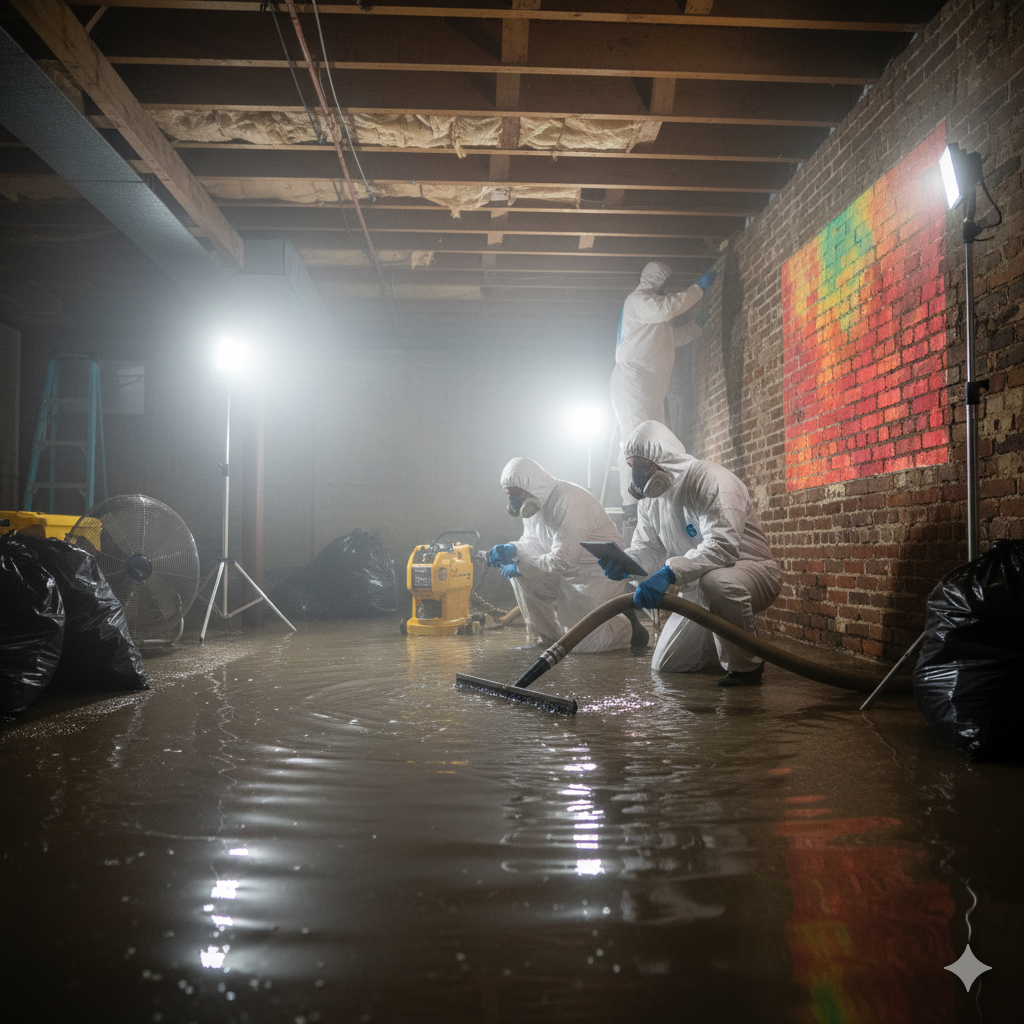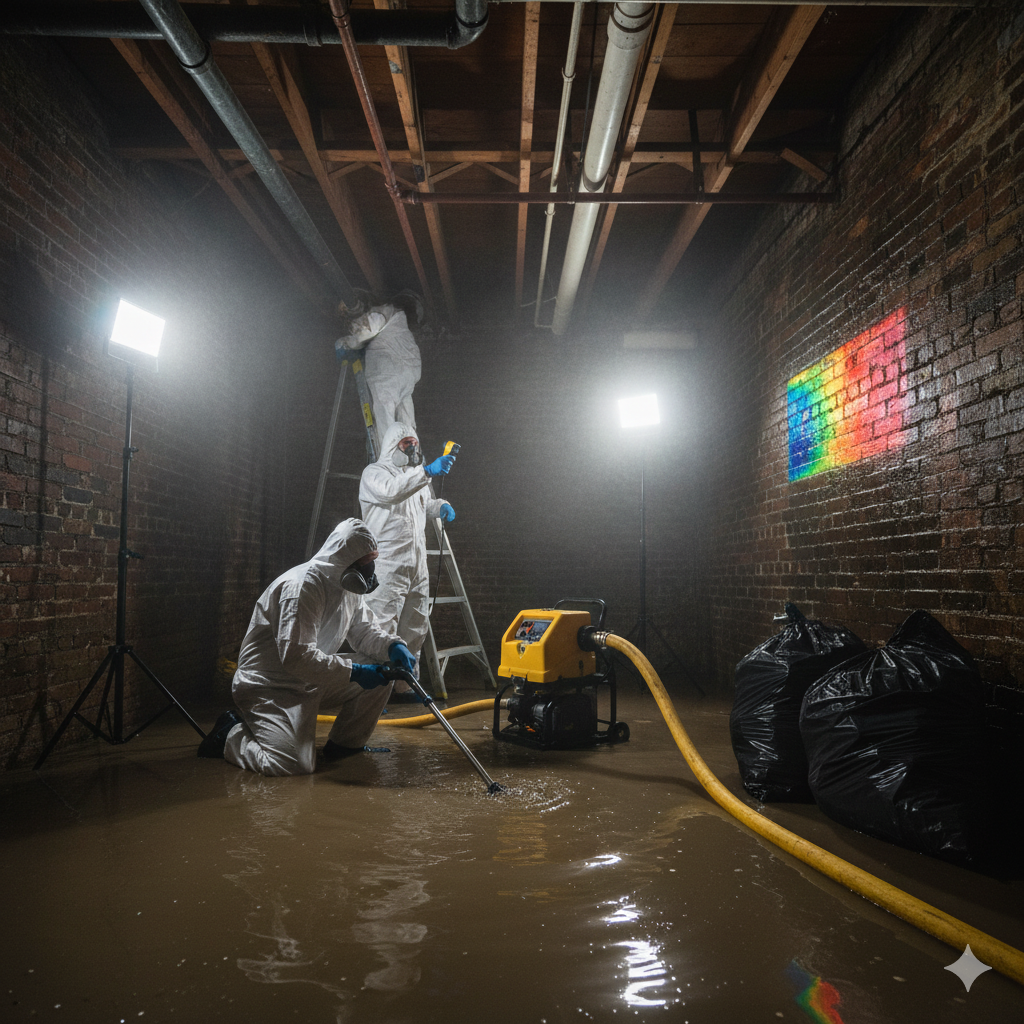
It is a silent, cold Tuesday in January 2026. Outside, the wind whips off Lake Michigan, pushing the wind chill into the negative double digits. Inside a beautifully restored greystone in Lincoln Park, the heat is humming, and everything seems secure. But deep within a north-facing wall, a copper supply line—weakened by decades of Chicago’s relentless freeze-thaw cycles—finally reaches its breaking point. A hairline fracture forms. At first, it is a mist, then a drip, and finally, a steady torrent of pressurized water cascading into the wall cavity, soaking the lath and plaster, and pooling beneath the original oak flooring.
By the time the homeowners return from work, the damage has migrated. What started as a plumbing failure is now a structural crisis. This scenario is a reality for thousands of residents across the Chicagoland area every year. When facing such an event, the difference between a minor inconvenience and a permanent loss of property value lies in the immediate actions taken and the caliber of the water damage restoration company selected to manage the recovery.
At Redefined Restoration, we understand that residential recovery is not merely about “drying out” a room. It is a complex engineering challenge that requires a deep understanding of psychrometry, microbiology, and the specific architectural nuances of Chicago’s diverse building stock.
The Chicago Context: Why Our Architecture is Specifically Vulnerable
Chicago is a city of architectural marvels, but its homes face environmental stressors that are rare in other parts of the country. To effectively manage water intrusion here, one must understand the interplay between local construction methods and the regional climate.
The Problem of Chicago Common Brick
Many of our historic homes are built with “Chicago Common Brick.” While iconic, this material is notoriously porous. Unlike the harder, denser face bricks used in other regions, common brick acts like a ceramic sponge. When a flood occurs—whether from a burst pipe or a heavy spring deluge—these bricks can wick moisture deep into the structure via capillary action. If a restoration firm does not account for this “wicking” effect, moisture can remain trapped inside the masonry for weeks, leading to “spalling” (where the brick face flakes off) and long-term structural instability.
The Bungalow Belt and Basement Seepage
Chicago’s famous “Bungalow Belt” presents its own set of challenges. These homes often feature finished basements that sit just above a high water table. During the heavy rains of 2026, the hydrostatic pressure around these foundations increases dramatically. Water is forced through microscopic cracks in the concrete or through the “cove joint” (where the wall meets the floor). For a homeowner, this often results in saturated drywall and ruined carpeting. A professional water damage restoration company must address not just the standing water, but the source of the pressure and the humidity trapped behind the finished walls.
High-Rise Challenges and the “Stack Effect”
In modern high-rise residences along the lakefront, water damage takes on a vertical dimension. A leak on the 40th floor doesn’t stay on the 40th floor. Gravity pulls moisture down through electrical conduits, elevator shafts, and fire-rated wall assemblies. Furthermore, the “stack effect”—the movement of air into and out of buildings—can complicate the drying process by pulling humid, contaminated air upward through the building’s “lungs,” potentially spreading mold spores to unaffected units.
The Physics of Drying: Moving Beyond Fans and Mops
A common misconception among property owners is that “opening the windows and turning on some fans” is sufficient to handle a leak. In reality, this often exacerbates the problem. True restoration is a science known as psychrometry—the study of the thermodynamic properties of moist air.
The Drying Triangle
To dry a home effectively, a technician must balance three critical elements:
- Air Movement: High-velocity air movers are used to disturb the “boundary layer” of saturated air sitting on the surface of wet materials. This encourages evaporation.
- Dehumidification: As water evaporates, the relative humidity in the room spikes. If this moisture is not removed from the air, evaporation stops. Professional-grade LGR (Low Grain Refrigerant) dehumidifiers are required to “pull” the water out of the air.
- Temperature Control: Warmer air holds more moisture, which speeds up evaporation. However, if the temperature is not managed correctly, it can create a “sauna” effect that fuels rapid mold growth.
In 2026, we utilize advanced moisture-tracking technology to monitor these variables in real-time. We establish “dry standards” based on unaffected areas of the home, ensuring that your property is returned to its specific pre-loss equilibrium.
Categorizing the Threat: The IICRC Standard
Not all water is equal. The IICRC (Institute of Inspection, Cleaning and Restoration Certification) S500 standard provides the framework we use to categorize water based on its level of contamination.
Category 1: “Clean” Water
This originates from a sanitary source, such as a broken water supply line or a bathtub overflow. While it is the least hazardous initially, it is a ticking clock. If Category 1 water is not mitigated within 24 to 48 hours, it can quickly degrade into Category 2 or 3 as it dissolves minerals and interacts with organic matter in the home.
Category 2: “Gray” Water
This water contains a significant degree of chemical, biological, or physical contamination. Examples include discharge from dishwashers, washing machines, or overflows from toilet bowls (without feces). This category requires more aggressive sanitization to ensure the home is safe for occupancy.
Category 3: “Black” Water
This is grossly unsanitary and contains pathogenic, toxigenic, or other harmful agents. In Chicago, this most commonly occurs during “combined sewer overflows” where heavy rain forces raw sewage back through basement floor drains. Category 3 events are high-risk biohazard situations that require the removal of all porous materials (carpets, drywall, insulation) and the use of hospital-grade antimicrobials.
The 48-Hour Window: The Biological Reality of Mold
In the world of residential restoration, time is the enemy. Mold spores are omnipresent; they exist in every home in Chicago, usually in a dormant state. However, they only need two things to colonize: moisture and a food source (cellulose, found in drywall and wood).
Microbial Proliferation
Once a material becomes saturated, mold can begin to grow in as little as 24 to 48 hours. By the time you see a dark spot on the wall or smell a “musty” odor, the colony is already well-established and releasing spores into your indoor air. This is why a rapid response from a water damage restoration company is non-negotiable.
Secondary Damage
Delayed mitigation leads to “secondary damage.” This occurs when the high humidity in the air causes moisture to condense on surfaces that were never even touched by the original leak. We often see this in Chicago homes where a basement flood leads to peeling paint on the first floor or the buckling of expensive hardwood furniture due to the sustained high humidity.
The Professional Workflow: What to Expect During Mitigation
When you contact Redefined Restoration, you are initiating a disciplined, multi-phase process designed to minimize loss and maximize safety.
1. Emergency Assessment and Stabilization
Our first priority is safety. We inspect for electrical hazards (standing water and outlets are a lethal combination) and structural instabilities. We then identify the source of the water to ensure the “intrusion” has stopped.
2. Extraction: The Most Important Step
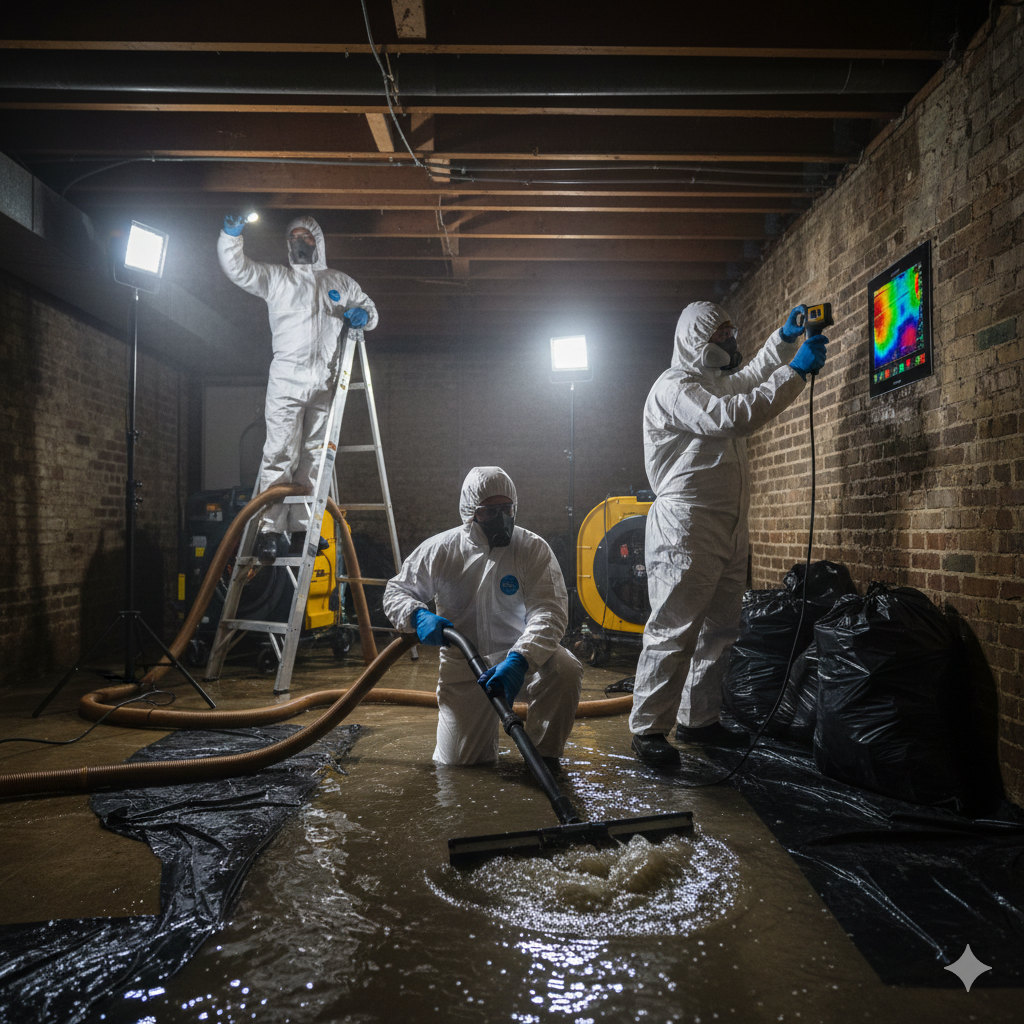
Removing water in its liquid state is 500 times more efficient than trying to evaporate it. We use truck-mounted extraction units and submersible pumps to remove the bulk of the water. For saturated carpeting, we may use “weighted” extraction tools that pull water from the deep padding beneath.
3. Moisture Mapping and Documentation
We use infrared thermography (thermal imaging) to see through walls. Wet materials are cooler than dry ones, and these cameras allow us to map exactly where the water has traveled, even if the drywall looks dry to the naked eye. This documentation is vital for your insurance claim.
4. Controlled Demolition
To dry the “bones” of the house, we sometimes need to remove “obstructions.” This might include taking off baseboards to drill “weep holes” in the drywall or performing a “flood cut” (removing the bottom 12 inches of drywall) to allow air to circulate behind the walls.
5. Sanitization and Deodorization
We use EPA-registered antimicrobials to stabilize the environment and prevent microbial growth. Our deodorization process doesn’t just “mask” smells; it neutralizes the volatile organic compounds (VOCs) that cause odors at the molecular level.
Navigating the Insurance Maze in 2026
For many Chicago homeowners, the insurance claim is the most stressful part of the process. In 2026, the landscape of residential insurance has become increasingly data-driven. Adjusters no longer accept “estimates” based on guesswork; they require empirical evidence of the drying process.
The Role of Detailed Documentation
As your chosen water damage restoration company, Redefined Restoration acts as your technical advocate. We provide:
- Daily Moisture Logs: Proving that the materials are reaching their dry standards.
- Psychrometric Readings: Documenting that the drying environment was maintained correctly.
- Photo Documentation: Capturing every stage from the initial “loss” to the final “dry.”
This level of detail ensures that your claim is processed fairly and that you have the resources needed to rebuild. We work with all major carriers, speaking their language to ensure that nothing is overlooked in the scope of work.
Material-Specific Restoration Challenges
Every material in a Chicago home reacts differently to water, and a “one-size-fits-all” approach can lead to disaster.
Hardwood Flooring (Oak and Maple)
Chicago’s historic homes often feature 100-year-old oak floors. When these get wet, they “cup”—the edges of the boards become higher than the centers. Many people think these floors are ruined. However, if we are called in quickly, we can often save them using specialized “floor mats” that create a vacuum, pulling moisture directly through the wood grain. This can save the homeowner tens of thousands of dollars in replacement costs.
Plaster vs. Drywall
Older homes in neighborhoods like Gold Coast or Hyde Park often have lath and plaster walls. Plaster is much more resilient than drywall, but it takes significantly longer to dry. If you dry it too fast, it can crack; if you dry it too slow, the wooden lath behind it will rot. We use specialized desiccant dehumidifiers for these delicate environments.
Modern Laminates and Luxury Vinyl Plank (LVP)
While LVP is often marketed as “waterproof,” it is a disaster in a flood. The planks themselves won’t warp, but water gets trapped under them, sitting on the subfloor with no way to evaporate. This leads to a hidden mold “sandwich.” In almost all cases of significant flooding, these floors must be removed to dry the subfloor beneath.
The Hidden Threat: Health and Indoor Air Quality
Water damage is not just a property issue; it is a public health issue. Saturated materials can release a variety of pollutants into the home.
Endotoxins and Bacteria
In Category 2 and 3 losses, the primary concern is bacterial pathogens. Even after the water is gone, dried bacteria can become airborne and be inhaled. This can cause respiratory distress, skin infections, and gastrointestinal issues.
Volatile Organic Compounds (VOCs)
As building materials like particle board, adhesives, and paints get wet, they undergo chemical reactions that release VOCs. This is that “sick” smell often associated with old water damage. We utilize HEPA-filtered air scrubbers to clean the air during the restoration process, ensuring your family isn’t breathing in these contaminants.
Longevity and Prevention: Looking Beyond the Loss
Once the home is dry and restored, the focus should shift to the future. At Redefined Restoration, we believe in helping homeowners build resilience.
Maintenance as Mitigation
In Chicago, the most common causes of water damage are preventable.
- Sump Pump Maintenance: If you have a basement, your sump pump is the heart of your home’s defense. We recommend a battery backup system, as Chicago’s storms often knock out power exactly when you need the pump most.
- Gutter and Downspout Management: Ensuring that water is diverted at least 10 feet away from your foundation can prevent 90% of basement seepage issues.
- Appliance Hose Replacement: Replace rubber washing machine hoses with braided stainless steel. These are much less likely to burst under the pressure of Chicago’s municipal water system.
The Value of Professional Restoration
When you go to sell your home in the future, you will likely have to disclose any major water damage. If you can show a “Certificate of Completion” from a reputable water damage restoration company, it turns a potential liability into a strength. It proves to the buyer that the home was handled by professionals, that the structure is dry, and that there are no hidden mold issues.
Choosing the Right Partner in a Crisis
In the wake of a flood, your doorstep will likely be flooded with “storm chasers”—companies that follow heavy rains to sign up as many clients as possible. Choosing a local, specialized firm like Redefined Restoration is critical for several reasons:
- Local Knowledge: We understand the specific plumbing and structural quirks of Chicago homes.
- Accountability: We aren’t a national franchise that will disappear once the storm passes. We are part of the Chicago community.
- Technical Depth: We invest in the latest 2026 drying technology and ongoing education for our technicians. We don’t just “show up”; we arrive with a strategy.
The Project Management Aspect of Restoration
Restoring a home is a multi-trade endeavor. It often involves plumbers to fix the leak, mitigation specialists to dry the structure, and reconstruction experts to put the drywall and flooring back together.
At Redefined Restoration, we simplify this by providing comprehensive project management. We coordinate the timing of each phase to ensure your life returns to normal as quickly as possible. We understand the emotional toll that having your home torn apart can take. Our team is trained not just in technical drying, but in empathetic communication. We walk you through every step, so you are never left wondering what comes next.
Regional Climate Trends: The 2026 Outlook
Meteorologists have noted that the Great Lakes region is seeing a shift toward more “intense precipitation events.” This means that instead of a steady rain over several days, we are getting several inches of rain in a matter of hours. This overwhelms our city’s “combined sewer” system.
When the city’s sewers reach capacity, the water has nowhere to go but back up into residential basements. This is why “Backwater Valves” have become such a popular installation in Chicago homes recently. These valves allow water to flow out of your home but prevent sewer water from flowing in. If you are undergoing a restoration after a sewer backup, now is the time to discuss these preventative upgrades with your contractor.
Conclusion: Reclaiming Your Home
Water is the most destructive force on earth, and when it enters your home, it doesn’t wait for a convenient time. Whether it’s a slow leak in the middle of a Hyde Park greystone or a flash flood in a Naperville basement, the consequences are immediate and profound.
However, water damage doesn’t have to mean the end of your home’s beauty or its structural integrity. With the right science, the right technology, and the right partner, you can reclaim your space. The goal of a water damage restoration company is to make the event a distant memory, leaving behind a home that is safe, dry, and healthy.
At Redefined Restoration, we take pride in being the experts Chicagoans turn to when the unexpected happens. We aren’t just restoring buildings; we are restoring peace of mind. We are redefining what it means to recover.