
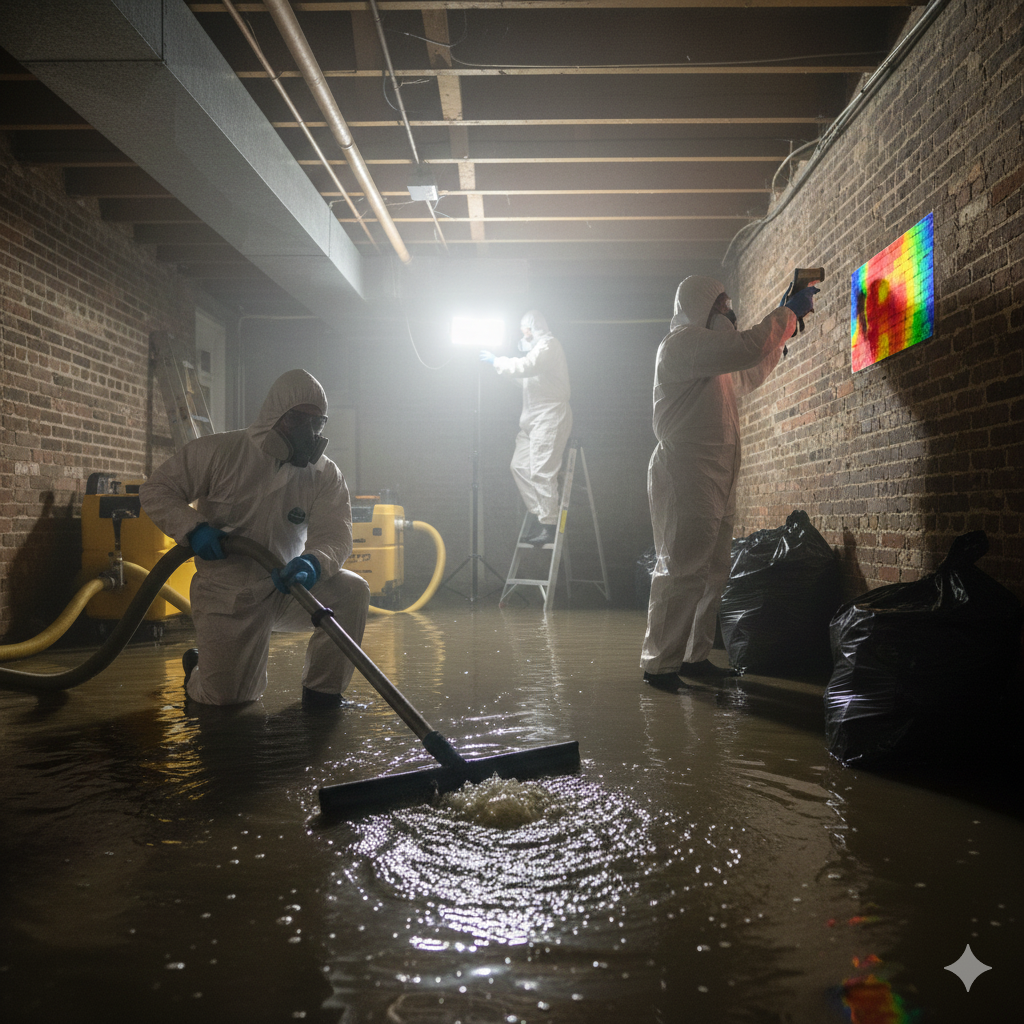
Imagine a typical Tuesday evening in June 2026. The Chicago skyline is bruised with purple clouds as a classic Midwestern microburst rolls in off Lake Michigan. Within minutes, the gutters of your historic bungalow are overwhelmed, and the streets of your neighborhood are slick with runoff. You head downstairs to swap a load of laundry, only to feel the chilling squelch of saturated carpet beneath your feet. The realization hits instantly: you are facing basement water damage.
This scenario is a reality for thousands of property owners across Chicago, IL, every year. Because our city is built on a high water table and relies on aging infrastructure, the basement is often the most vulnerable point of any structure. However, the true danger isn’t just the water you see; it is the silent, structural degradation and microbial growth that begins the moment moisture enters a controlled environment.
At Redefined Restoration, we view water mitigation as a precise science. Recovering a basement requires more than just a shop-vac and a few fans; it requires an understanding of psychrometry, structural integrity, and the unique architectural challenges of the Chicago landscape. This guide explores the complexities of water intrusion and the professional standards required to ensure your property remains safe, healthy, and valuable for decades to come.
The Chicago Context: Why Our Basements are at Risk
Chicago presents a unique set of challenges for subterranean structures. From the “Deep Tunnel” system to the specific soil composition of the region, understanding the “why” behind the flooding is the first step in long-term prevention.
The Clay Soil and Hydrostatic Pressure
Much of Chicago sits on a thick layer of clay soil. Unlike sandy soil, which allows water to drain away relatively quickly, clay acts like a sponge. It absorbs water, expands, and holds moisture directly against your foundation walls. This creates intense hydrostatic pressure. When the ground becomes oversaturated during a heavy storm, this pressure forces water through tiny fissures in concrete or the “cove joint”—the seam where the basement floor meets the wall.
The Combined Sewer System
Many Chicago neighborhoods still utilize a combined sewer system, where stormwater and sanitary sewage flow through the same pipes. When a massive rain event occurs, these pipes can reach capacity. If the pressure becomes too great, the system can back up, pushing mixed sewage and stormwater into the lowest points of nearby buildings—usually the basement floor drains. This turns a simple water issue into a high-risk biohazard situation.
Architectural Diversity
Whether you own a classic “Chicago Box” bungalow, a vintage greystone, or a modern high-rise in the West Loop, each structure reacts differently to water.
- Bungalows: Often feature older concrete that may be more porous.
- Greystones: Frequently have limestone foundations that require specialized drying techniques to avoid stone degradation.
- Modern Garden Units: These are particularly at risk because they are often finished with drywall and flooring that can trap moisture against the foundation.
The Classification of Water: Identifying the Hazard
Professional restoration begins with identifying exactly what kind of water we are dealing with. The IICRC (Institute of Inspection, Cleaning and Restoration Certification) S500 standard classifies water into three categories based on the level of contamination.
| Category | Description | Potential Sources |
| Category 1 (Clean Water) | Originates from a sanitary source. Poses no substantial risk to humans initially. | Broken supply lines, tub overflows, melting snow. |
| Category 2 (Gray Water) | Contains significant contamination and has the potential to cause discomfort or sickness. | Sump pump failures, dishwasher or washing machine discharge. |
| Category 3 (Black Water) | Grossly unsanitary. Contains pathogenic agents, sewage, or toxic chemicals. | Sewer backups, rising river water, seawater, or wind-driven rain. |
In Chicago, a significant portion of basement water damage cases involves Category 3 water due to the combined sewer overflows mentioned earlier. This requires specialized PPE and hospital-grade antimicrobials to ensure the space is safe for occupancy.
The Physics of Saturation: How Water Moves Through Your Home
When water enters a basement, it doesn’t just sit on the floor. It is a dynamic force that migrates through materials via capillary action.
The Wicking Effect
Think of a sugar cube dipped in coffee; the liquid travels upward far beyond the initial contact point. Drywall, wooden studs, and insulation act in the same way. If you have two inches of standing water on your basement floor, that moisture can “wick” up into the drywall 12 to 18 inches or higher within hours. This is why professional restorers often perform a “flood cut,” removing the bottom two feet of drywall to ensure the wall cavity is properly ventilated and dried.
Hidden Reservoirs
Water often finds its way under floorboards or behind baseboards. In finished Chicago basements, luxury vinyl plank (LVP) or laminate flooring can trap moisture against the concrete slab. Without professional-grade extraction and dehumidification, this trapped moisture becomes a breeding ground for mold that you may not see or smell for weeks.
The Golden Window: Why the First 48 Hours Matter
In the restoration industry, the first 48 hours are critical. This is the “Golden Window” during which we can often prevent secondary damage and microbial colonization.
- Microbial Growth: Mold spores are omnipresent. They only need moisture and an organic food source (like the paper on drywall) to activate. In a humid Chicago basement, mold can begin to colonize in as little as 24 to 72 hours.
- Structural Warping: Long-term exposure to moisture can cause wooden floor joists to swell and warp. Once the cellular structure of the wood is permanently altered, it may lose its load-bearing capacity.
- Secondary Damage: This occurs when the air becomes so saturated with moisture that the water begins to condense on the ceiling or upper floors, leading to peeling paint, warped furniture, and damaged electronics in rooms that weren’t even flooded.
The Professional Restoration Workflow
At Redefined Restoration, we follow a systematic, science-based approach to basement recovery. This ensures that the property is not just “dry to the touch,” but structurally sound and safe.
1. Emergency Assessment and Safety Inspection
Before extraction begins, we must ensure the site is safe. This includes:
- Electrical Hazards: Checking if water has reached outlets or the circuit breaker.
- Structural Integrity: Ensuring saturated ceilings aren’t at risk of collapse.
- Biohazard Check: Identifying if the water is Category 3 sewage.
2. High-Volume Water Extraction
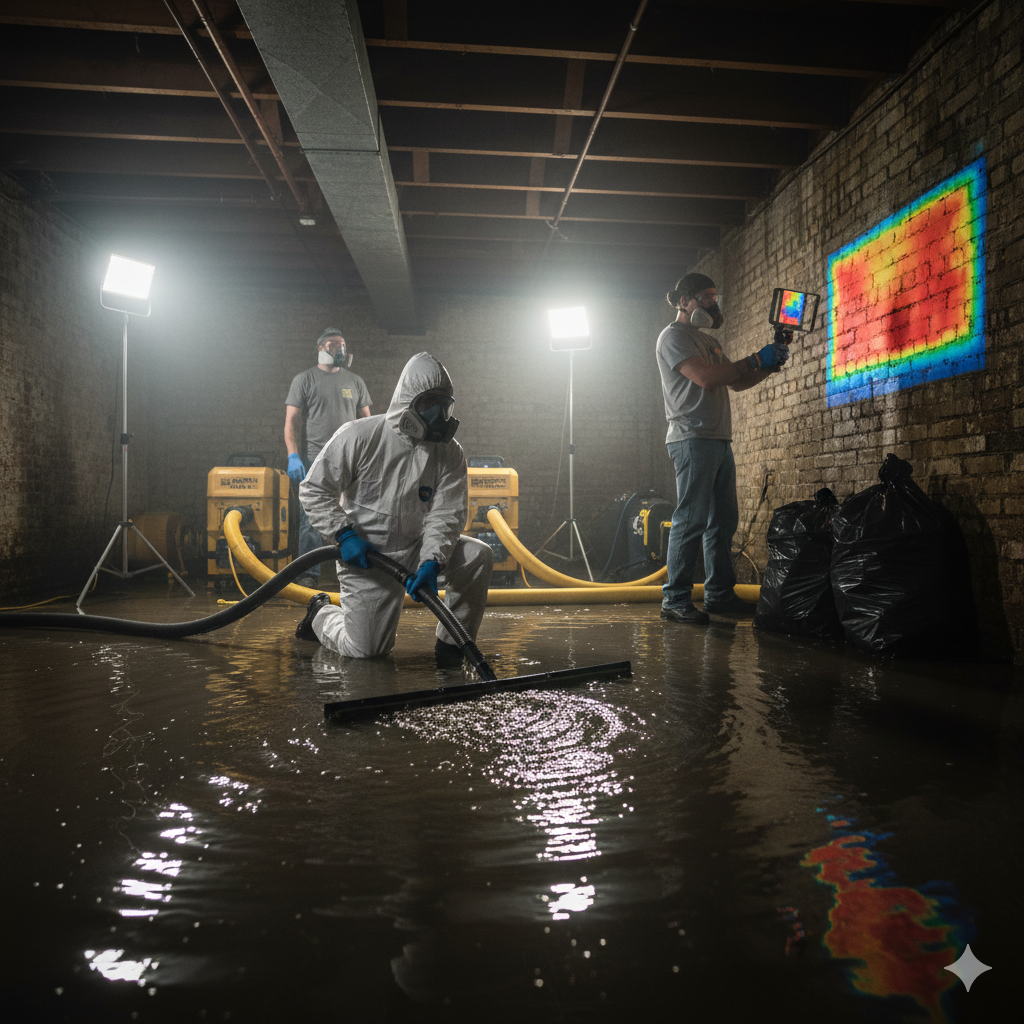
Removing standing water is 500 times more efficient than evaporating it. We use truck-mounted extraction units that pull thousands of gallons of water out of the structure quickly. This minimizes the time materials spend in a saturated state.
3. Antimicrobial Application
In cases of Category 2 or 3 water, we apply EPA-registered antimicrobials to “stabilize” the environment. This stops the clock on bacterial and fungal growth while we move into the drying phase.
4. Psychrometry: The Science of Drying
This is where professional expertise is most visible. Drying a basement isn’t just about moving air; it’s about managing the vapor pressure of the environment. We use:
- LGR (Low Grain Refrigerant) Dehumidifiers: These are far more powerful than retail units. They pull moisture out of the air even in very low humidity, which in turn “pulls” moisture out of deep structural materials like wood and concrete.
- Axial Air Movers: These create high-velocity airflow across surfaces, speeding up the rate of evaporation.
- Moisture Mapping: We use infrared cameras and moisture meters to track the “drying curve” of the building, ensuring every stud and subfloor has returned to its “dry standard.”
5. Cleaning and Deodorization
Once the structure is dry, we clean all affected surfaces. In Chicago, where many basements are used for storage, this often involves cleaning contents and using hydroxyl generators or ozone machines to remove the “musty” smell associated with water damage.
Health Implications of Improper Basement Drying
A basement that hasn’t been professionally dried is a liability to the health of everyone in the building. Because of the “Stack Effect,” air from the basement naturally rises and circulates through the rest of the home.
Respiratory Issues and Mold
If mold is allowed to grow behind basement walls, its spores and mycotoxins can trigger asthma, allergic rhinitis, and other respiratory distress. For children and the elderly, this risk is significantly higher.
Bacterial Pathogens
Sewer backups introduce E. coli, Salmonella, and various viruses into the living space. If these aren’t neutralized with the correct chemicals, they can survive on surfaces for extended periods, posing a long-term risk of gastrointestinal and skin infections.
Longevity and Property Value: Protecting Your Asset
From a longevity perspective, basement water damage is a major threat to your home’s equity. In the 2026 Chicago real estate market, buyers are increasingly savvy about moisture issues.
- Foundation Health: Constant moisture against concrete can lead to “spalling” and a weakened foundation.
- Resale Value: A basement with a history of mold or structural rot can decrease property value by 10-20%.
- Insurance Records: Having a professional “Certificate of Completion” from a reputable firm like Redefined Restoration proves the job was done correctly, which is vital for maintaining insurance coverage and property disclosures.
Navigating Insurance Claims in Chicago
Managing a claim for water damage can be as stressful as the flood itself. Many Chicago policies have specific “Sewer Backup” endorsements that are separate from standard flood insurance.
Documentation is Key
To ensure your claim is paid, you need empirical evidence. Our team provides:
- Daily Moisture Logs: Proving the drying progress.
- Thermal Images: Showing the extent of the water migration.
- Detailed Inventories: Cataloging non-salvageable items for replacement.
We work closely with adjusters to ensure that the scope of work meets the necessary “Standard of Care,” so you aren’t left with out-of-pocket expenses for a necessary structural repair.
Preventative Strategies for Chicago Homeowners
While we are always ready to help when a disaster strikes, our goal is the long-term longevity of your property. Consider these preventative measures:
- Sump Pump Maintenance: In the Chicago climate, a sump pump is your first line of defense. Ensure it has a battery backup for when the heavy storms knock out power.
- Overhead Sewers: If you live in an area prone to sewer backups, converting to an overhead sewer system can physically prevent city sewage from entering your home.
- Grading and Gutters: Ensure your gutters are clean and your downspouts extend at least 6-10 feet away from your foundation. Chicago’s clay soil makes proper drainage away from the house essential.
- Humidity Monitoring: Keep a hygrometer in your basement. If the relative humidity stays above 60%, you are at risk for mold, even without a standing water event.
The Commercial Perspective: Minimizing Business Interruption
For Chicago business owners, a flooded bas