The rhythmic hum of the nearby O’Hare flight path is a sound every Franklin Park resident knows by heart, but there is a different, much more unsettling sound that can keep a homeowner awake at night: the slow, steady drip of a burst pipe in the basement or the sudden rush of water from a failed sump pump during a heavy Des Plaines River overflow. In the early months of 2026, Franklin Park has seen a shift in weather patterns, with rapid freeze-thaw cycles putting immense pressure on the aging infrastructure of our local neighborhoods. Whether you live in a classic mid-century ranch near Grand Avenue or manage an industrial warehouse near the railroad hubs, water does not discriminate. It finds the path of least resistance, migrating through porous concrete and wicking up drywall like a sponge.
When disaster strikes, the immediate reaction is often a mix of adrenaline and overwhelm. This is where water damage restoration transitions from a simple cleanup task to a complex engineering project. At Redefined Restoration, we treat every gallon of unwanted water as a biological and structural threat. In a village known for its “Proud Past and Progressive Future,” our restoration protocols in 2026 reflect that same spirit—combining old-school Chicago work ethics with the most advanced moisture-tracking technology available.
The Science of Water Migration: Why “Dry” is a Relative Term
To the naked eye, a floor might look dry after you’ve spent three hours with a shop-vac. However, in the professional world of Redefined Restoration, we know that “surface dry” is often a dangerous illusion. Water is an opportunistic traveler. In Franklin Park’s typical brick-and-mortar construction, moisture can hide in the “interstitial” spaces—the gaps between your wall studs and the exterior facade.
The Wick Effect and Structural Integrity
Think of your drywall like a giant, vertical piece of chalk. If you dip the bottom of that chalk in water, the moisture doesn’t stay at the bottom; it climbs. In 2026, we are seeing more advanced synthetic building materials that can trap this moisture internally, leading to “hidden rot.” If this moisture isn’t extracted using high-velocity air movers and LGR (Low Grain Refrigerant) dehumidifiers, it begins to weaken the structural “skeleton” of your home.
Thermal Imaging: Seeing the Invisible
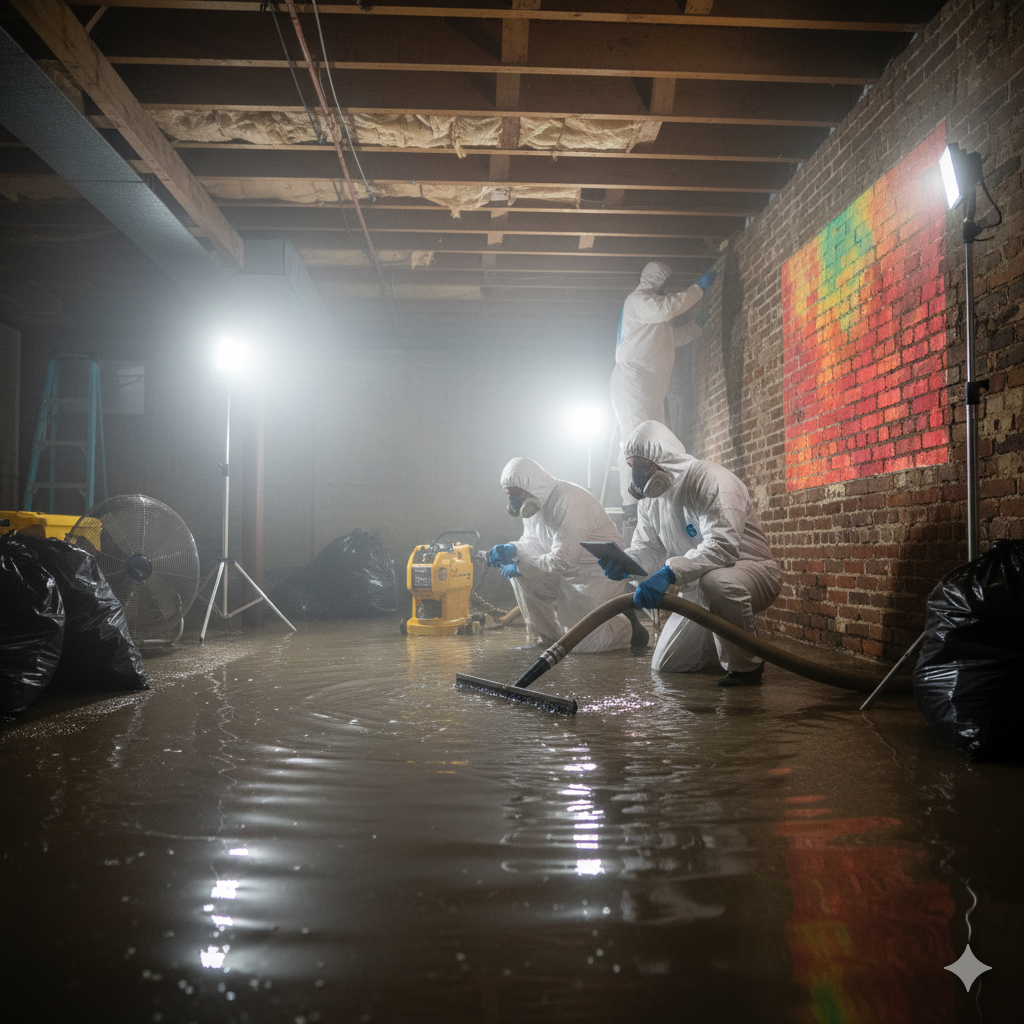
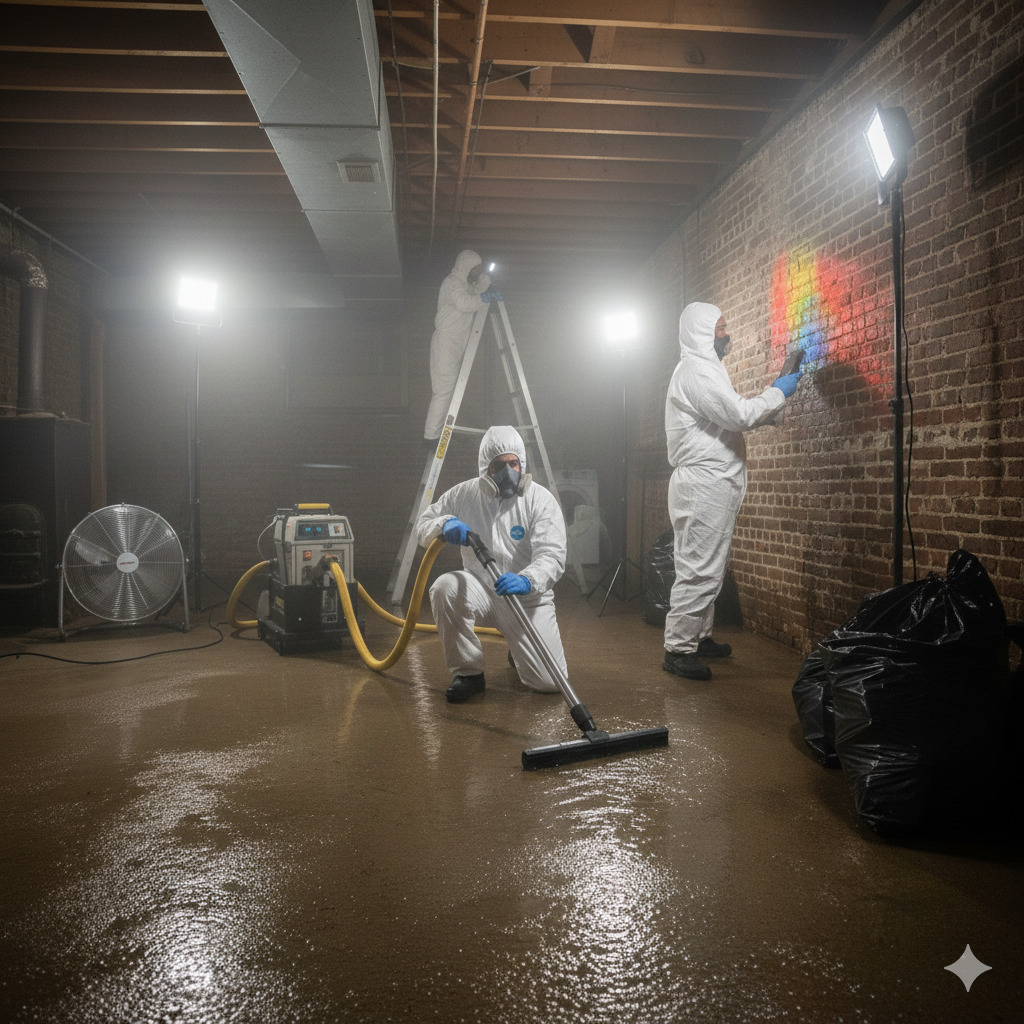
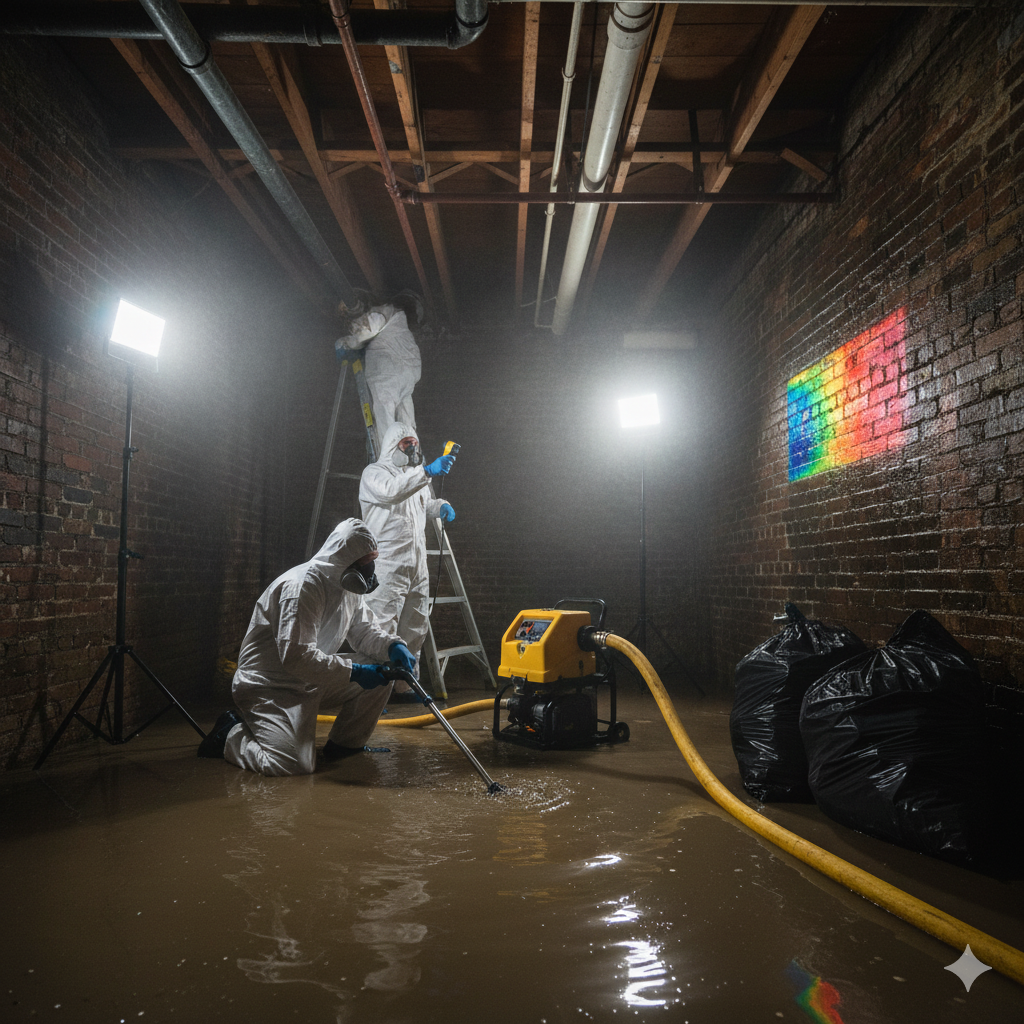
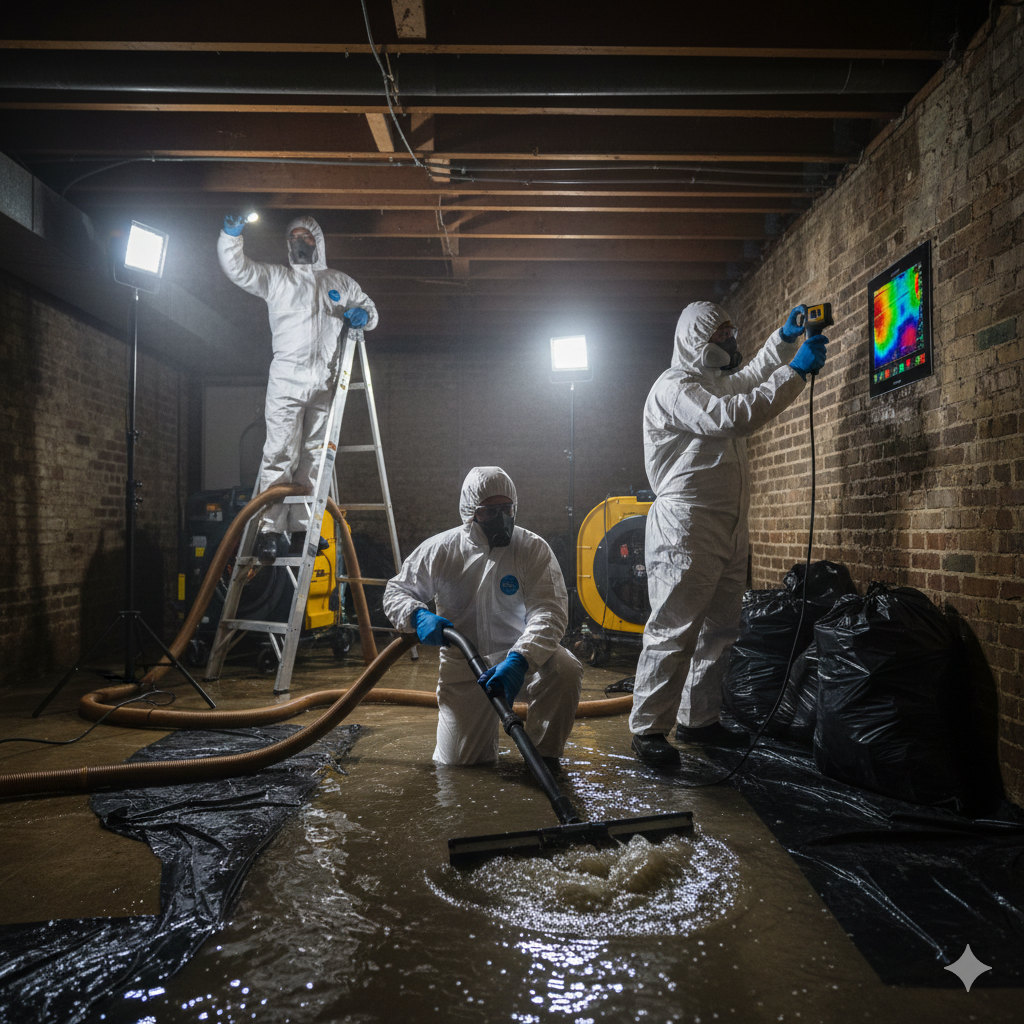
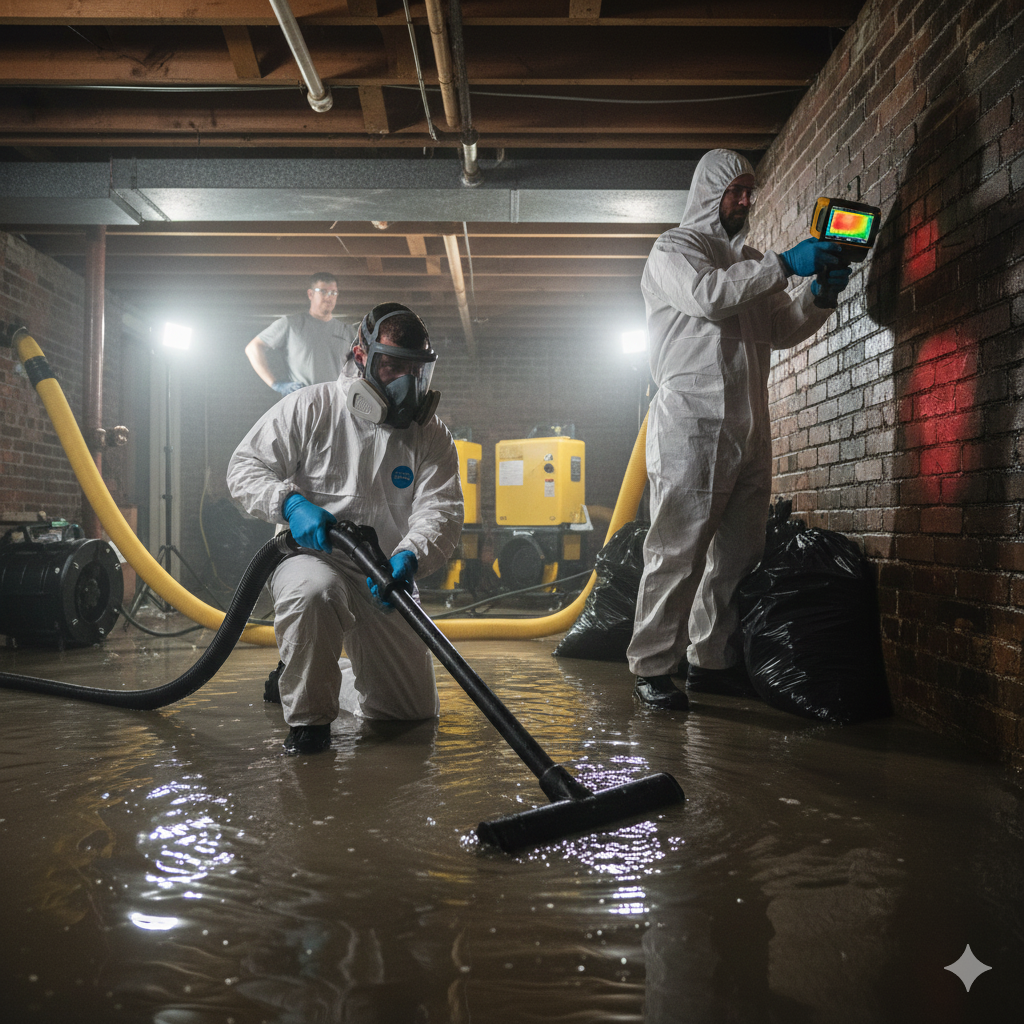
We utilize FLIR thermal imaging cameras that act like X-ray vision for your property. These cameras don’t see the water itself; they see temperature differences. Because evaporating water is cooler than dry materials, wet pockets appear as dark, cold “bruises” on our screens. This allows us to map the damage with surgical precision without having to tear down every wall in your house.
The Redefined Partnership: Navigating the Restoration Journey
When you find yourself standing in two inches of water, the technical details matter less than the human connection. Redefined Restoration is your partner throughout the restoration process. From initial damage assessment to mitigation and rebuild, the team guides you step by step so you know exactly what to expect. This role is built on a foundation of transparency and advocacy. In the 2026 insurance landscape, documentation is everything. Our role is to act as the bridge between your physical reality and your insurance carrier’s requirements. We don’t just “fix things”; we provide a detailed roadmap. This partnership begins the moment we arrive on-site in Franklin Park. We explain the “why” behind the extraction, the “how” behind the structural drying, and the “what’s next” of the final reconstruction. Having a dedicated partner means you aren’t just a claim number; you are a neighbor whose sanctuary needs to be restored. We manage the heavy lifting of logistics, from coordinating with adjusters to selecting replacement materials that meet 2026 Chicago building codes, ensuring that your path from “disaster” to “done” is clearly illuminated.
Seasonal Vulnerabilities in Franklin Park: A 2026 Perspective
Living in Cook County means preparing for four distinct seasons, each of which brings a unique set of challenges for property owners. In 2026, these challenges have become more pronounced due to fluctuating humidity levels and intensified storm cells.
Spring: The Des Plaines River and Sump Pump Stress
Franklin Park’s proximity to the Des Plaines River watershed means that spring thaws are more than just a sign of warmer weather—they are a test for your home’s defense systems. When the ground becomes saturated, hydrostatic pressure pushes against your foundation. If your sump pump is even a few years old, the 2026 “spring surges” can overwhelm it in minutes.
- Hydrostatic Pressure: This is the force of water in the soil pushing against your basement walls. Think of it like a giant invisible hand trying to crush an empty soda can.
- Secondary Backups: When city sewers are overwhelmed, “black water” can back up through floor drains. This is a Category 3 loss that requires immediate professional decontamination.
Winter: The Polar Vortex and Pipe Expansion
January in Franklin Park often brings sub-zero temperatures that can freeze water inside copper or PEX pipes in a matter of hours. When water freezes, it expands with enough force to split metal. The real damage, however, happens during the thaw. As the ice melts, it releases hundreds of gallons of pressurized water behind your walls. In 2026, we are using “Targeted Heat Drying” to thaw pipes safely and dry the surrounding insulation before mold can take root.
Comparing Mitigation and Reconstruction: A Value-Based Approach
Many homeowners are confused about where “cleaning up” ends and “repairing” begins. In the 2026 restoration industry, we categorize these into two distinct phases.
| Feature | Mitigation Phase (The Triage) | Reconstruction Phase (The Build-Back) |
| Primary Goal | Stop further damage and stabilize | Restore aesthetic and structural beauty |
| Key Actions | Extraction, sanitization, dehumidification | Drywall, flooring, painting, carpentry |
| Duration | Usually 3 to 5 days | Varies based on material availability |
| Equipment | Air movers, LGR dehumidifiers, HEPA scrubbers | Standard construction tools |
| Insurance Priority | High (Emergency services) | Secondary (Replacement coverage) |
The “Sinking Ship” Analogy
Think of mitigation like a crew on a sinking ship. Their first job isn’t to repaint the deck; it’s to patch the hole and pump out the water. If you skip the mitigation and go straight to reconstruction, you are essentially painting a rotting structure. At Redefined Restoration, we ensure the “hull” of your home is bone-dry and sanitized before a single piece of new flooring is laid down.
Categories of Water Damage: Assessing the Risk
In 2026, we follow strict IICRC (Institute of Inspection Cleaning and Restoration Certification) standards to determine the safety level of the water in your home.
Category 1: “Clean” Water
This comes from a broken supply line or a bathtub overflow. While it is “clean” initially, it doesn’t stay that way. Once clean water touches a dusty floor or seeps into a carpet, it begins to degrade.
- Treatment: Rapid extraction and drying of porous materials.
Category 2: “Gray” Water
This is water that contains a significant degree of chemical, biological, or physical contamination. Think of a dishwasher or washing machine discharge. It has “food” for microorganisms (like soap scum or skin cells).
- Treatment: Requires the removal of carpet padding and heavy application of antimicrobial agents.
Category 3: “Black” Water
This is the most dangerous level. It includes sewage, seawater, and rising river water. In Franklin Park, this often comes from sewer backups. This water is teeming with pathogens and bacteria.
- Treatment: This is not a “drying” project; it is a “demolition and decontamination” project. Porous materials like drywall and carpeting must be removed and disposed of as biohazardous waste.
The Psychological Toll of Water Loss: Restoring Peace of Mind
At Redefined Restoration, we recognize that we aren’t just moving equipment; we are moving through someone’s life at its most stressful moment. The “smell” of water damage—that musty, earthy odor—can trigger anxiety for years after a loss.
Odor Neutralization vs. Masking
We don’t believe in “floral sprays.” In 2026, we use Hydroxyl generators and Ozone machines (when the property is vacant) to break down odor molecules at a molecular level. Think of a Hydroxyl generator like a “light-powered air cleaner” that mimics the sun’s ability to break down pollutants. This ensures that when we leave, your home doesn’t just look clean—it smells “new.”
Digital Documentation and Transparency
One of the biggest stressors in 2026 is the insurance claim. We use “Matterport” 3D scanning to create a virtual “dollhouse” of your loss. This allows your insurance adjuster to “walk through” the damage from their office, which significantly speeds up the approval of your value-based claim. We provide a transparent paper trail of moisture readings, proving that the home was returned to its “Dry Standard.”
The 2026 Environmental Footprint: Sustainable Restoration
As we look toward the future of Franklin Park, sustainability has become a key part of our restoration philosophy. In 2026, we prioritize “In-Place” drying whenever safely possible.
Reducing Landfill Waste
In the past, the standard response was to “rip it out.” Today, if a hardwood floor is “cupped” (curled at the edges due to moisture), we use specialized floor mat systems that create a high-pressure vacuum, pulling moisture out of the wood fibers themselves. This saves thousands of pounds of premium materials from ending up in the landfill and preserves the original character of your home.
High-Efficiency Equipment
The air movers and dehumidifiers we deploy in 2026 are nearly 40% more energy-efficient than those used just a decade ago. This means we can dry your home faster while putting less strain on your property’s electrical system and the environment.
Advanced Techniques: The “In-Place” Drying Revolution
The 2026 standard for water damage restoration in Franklin Park is about finesse rather than brute force. We use several premium-tier techniques to save your property.
Injectidry Systems: Saving the “Hidden” Structures
For kitchen cabinets or intricate trim work, we use the Injectidry system. This involves tiny hoses that “inject” warm, dry air into the cavities behind the cabinetry. Imagine trying to dry the inside of a wet boot—you can’t just point a fan at the outside; you have to get the air inside. This system saves expensive custom kitchens from being torn out.
HEPA Filtration and Air Scrubbing
When water sits, it releases spores and dust into the air. We use HEPA (High-Efficiency Particulate Air) scrubbers that act like a giant “lung” for your home. They pull air in, filter out 99.97% of particles, and exhaust clean, filtered air. This is critical for families in Franklin Park who suffer from asthma or allergies, especially during the humid Illinois summers.
The Anatomy of a Professional Mitigation Workflow
If you’ve never experienced a professional Redefined Restoration response, here is the technical breakdown of what happens in the first 24 hours.
- Safety Assessment: We check for electrical hazards (water and outlets don’t mix) and structural stability.
- Source Identification: We ensure the leak has stopped. If it’s a village water main issue, we coordinate with Franklin Park public works.
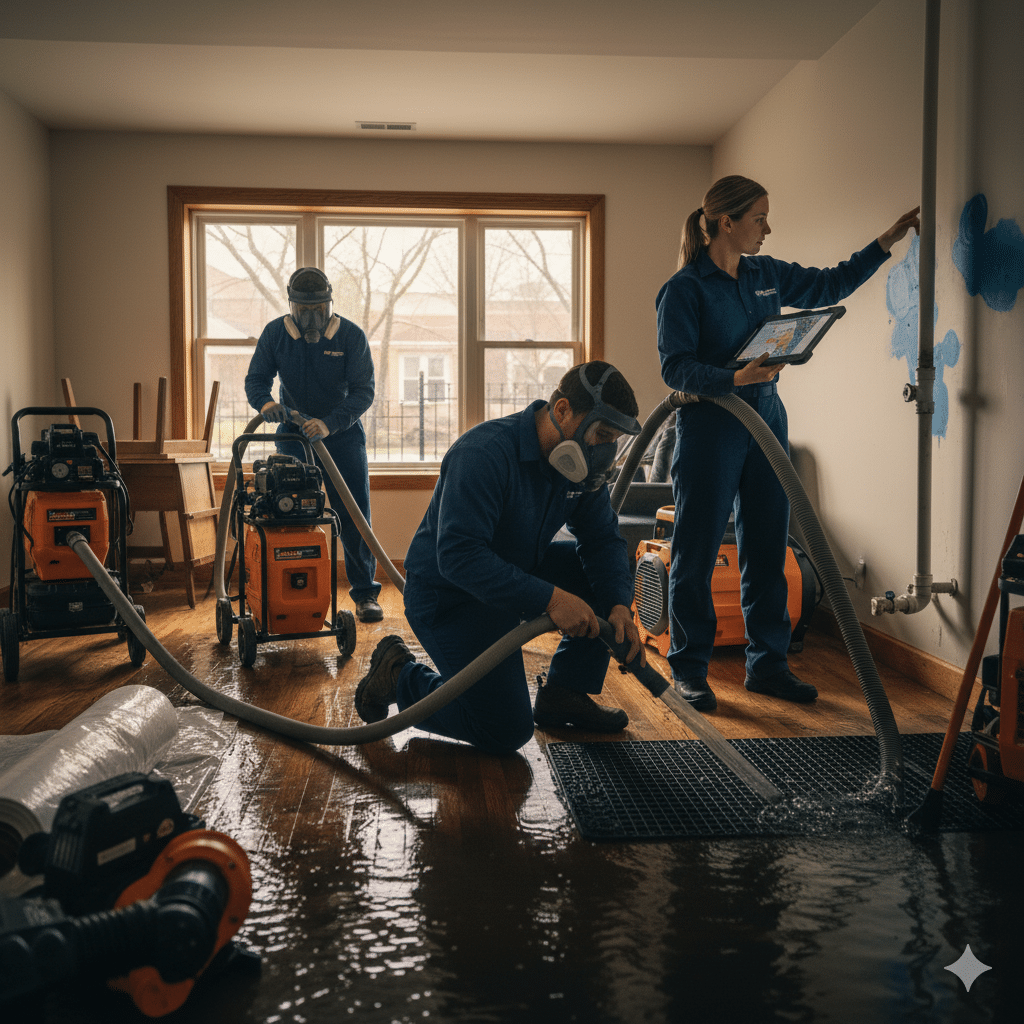
- Extraction: This is the most critical step. We use truck-mounted extraction units that are 10 times more powerful than a standard shop-vac. Every gallon we extract is a gallon we don’t have to “evaporate.”
- Anti-Microbial Application: We apply botanical disinfectants that are safe for pets and children but lethal to mold spores.
- Equipment Deployment: We strategically place air movers to create a “cyclone” of airflow across wet surfaces.
- Monitoring: We return every 24 hours to take “psychrometric” readings—measuring the temperature and relative humidity of the air to ensure the drying is on track.
Understanding Humidity: The Invisible Enemy
In the Chicago suburbs, humidity is the silent partner of water damage. If the “Relative Humidity” in your home exceeds 60%, mold can grow even on surfaces that were never touched by the water.
The “Raincoat” Analogy for Porous Surfaces
Think of your home’s paint and finish like a lightweight raincoat. It can handle a little spray, but once the water gets “under” the coat, the fabric (the drywall) gets soaked. Our job is to remove the “coat” if necessary or use high-pressure air to get behind it. In 2026, we use “Desiccant Dehumidifiers” for large-scale losses. These machines work like a giant bag of silica gel, pulling moisture out of the air even in freezing temperatures.
Why Franklin Park Properties Require Local Expertise
Every village has its quirks. Franklin Park’s history as a hub for industry and transportation means that many residential homes are located near heavy-duty infrastructure.
The “Vibration” Factor
Homes near the rail lines often experience micro-vibrations. Over decades, these vibrations can cause tiny “hairline” cracks in basement foundations. During a heavy 2026 rain event, these cracks become “highways” for groundwater. We specialize in identifying these entry points and providing solutions that account for the local soil composition—predominantly clay, which holds water much longer than sandy soils.
Industrial vs. Residential Response
Franklin Park is home to a massive industrial corridor. A water loss in a 50,000-square-foot warehouse requires a completely different logistical “engine” than a 1,200-square-foot bungalow. We have the high-capacity pumps and large-scale dehumidification fleets necessary to keep a local business operational while the restoration is underway.
The Rebuild: Transitioning Back to Normalcy
Once the moisture meters hit “zero,” the “Redefined” part of our name truly shines. Reconstruction in 2026 is about more than just matching paint; it’s about improving the resilience of the property.
Future-Proofing Your Home
When we rebuild your basement or kitchen, we suggest “moisture-resistant” upgrades.
- Vinyl Planking vs. Laminate: 2026-grade luxury vinyl is nearly 100% waterproof, making it a premium-tier choice for Franklin Park basements.
- Closed-Cell Spray Foam: This insulation acts as a vapor barrier, preventing future “pipe sweat” from causing hidden mold.
- Smart Leak Detectors: We often install WiFi-enabled sensors that can shut off your main water valve the moment a leak is detected, preventing a 2027 disaster.
Legal and Ethical Standards in 2026
The restoration industry in Illinois has seen significant regulatory changes in 2026. At Redefined Restoration, we pride ourselves on exceeding these authoritative standards. We are fully insured and bonded, but more importantly, we adhere to the “Clean Air Act” protocols regarding the disposal of materials that may contain asbestos or lead—common in Franklin Park’s older housing stock.
The “Conflict of Interest” Guarantee
Some companies “find” damage that isn’t there to inflate a claim. Our partnership with you is based on data. We show you the moisture readings. We show you the thermal images. If a wall is dry, we don’t tear it down. Our goal is to return you to your “pre-loss condition” as efficiently as possible.
Summary: From Chaos to Calm
Water damage is a “progressive” disaster. It doesn’t stay the same; it gets worse with every passing hour. In Franklin Park, IL, where the weather can turn from a frozen tundra to a humid swamp in a single week, the “Speed of Professional Intervention” is your most valuable asset.
Choosing Redefined Restoration means choosing a partner who understands the molecular science of drying, the administrative complexity of 2026 insurance claims, and the emotional weight of a home in crisis. We don’t just extract water; we restore the foundation of your life. Whether it’s a small leak in a laundry room or a catastrophic flood, we are here to guide you through the process, step by step, until your home is once again a place of comfort and security.