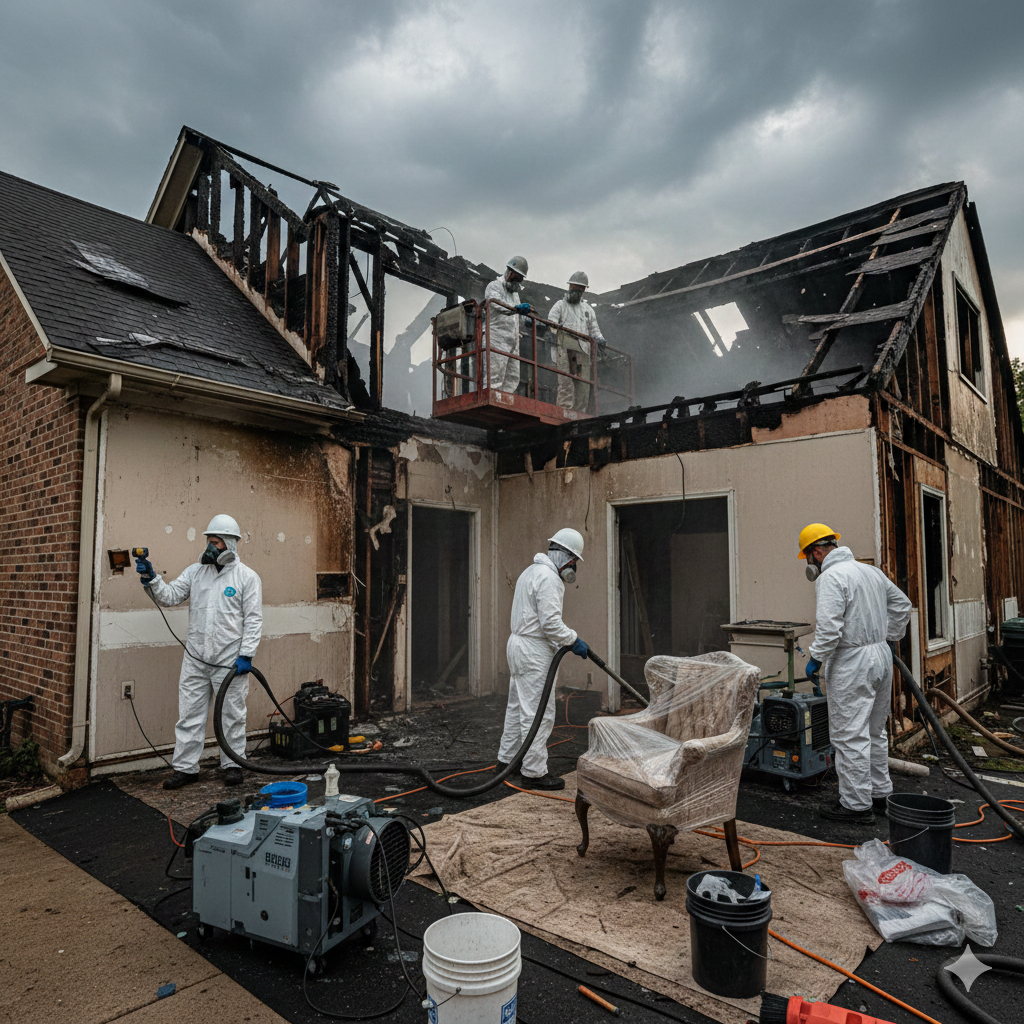
The moments following a fire are often defined by a disorienting silence. Once the sirens fade and the first responders depart, property owners are left standing before a structure that looks—and smells—entirely foreign. Whether it was a small kitchen flare-up or a significant electrical fire, the visible charring is only the surface of a much deeper, more complex chemical and structural event.
In the wake of such a crisis, the path forward requires more than just a cleanup crew; it demands a sophisticated, multi-phase approach to fire damage restoration services. At Redefined Restoration, we understand that recovery isn’t just about removing debris—it’s about reversing the microscopic and systemic damage that fire, smoke, and even the water used to extinguish the flames leave behind.
The Hidden Chemistry of Post-Fire Environments
Fire is a chemical reaction that creates a domino effect of secondary damage. When synthetic materials, wood, plastics, and fabrics burn, they release a cocktail of corrosive gasses and particulates. Understanding this chemistry is the first step in effective restoration.
The Role of Soot and Acidic Residue
Soot is not just “dust.” It is a highly acidic byproduct that begins to etch and pit surfaces within minutes of contact. On metal fixtures, soot causes rapid oxidation; on stone or marble, it can cause permanent staining. Within hours, the yellowing of porous plastics and the tarnishing of chrome become irreversible if not addressed by professional fire damage restoration services.
The Complexity of Smoke Migration
Smoke is driven by heat and pressure. It seeks out the coolest parts of a building, often traveling through plumbing stacks, electrical conduits, and HVAC systems to settle in areas far removed from the actual fire. This “hidden” smoke is why a property owner might smell a pungent odor in the basement even if the fire was contained to the second floor.
Thermal Shock and Structural Integrity
The intense heat of a fire can reach temperatures that alter the molecular structure of building materials. Steel beams can lose their load-bearing capacity, and masonry can become brittle. Furthermore, the rapid cooling of these materials—often by high-pressure water from fire hoses—can lead to “thermal shock,” causing cracks in foundations or support walls that aren’t immediately visible to the untrained eye.
Navigating the Critical First 48 Hours
In the restoration industry, we refer to the “Golden Hours” of recovery. This is the window where professional intervention can make the difference between a total loss and a successful restoration.
1. Emergency Board-Up and Site Securing
Before any cleaning begins, the property must be secured. Fires often result in broken windows and compromised roofs. Unsecured properties are vulnerable to theft, vandalism, and further weather damage. Establishing a secure perimeter and weather-tight seals is the foundational step in the Redefined Restoration protocol.
2. Moisture Management and Dehumidification
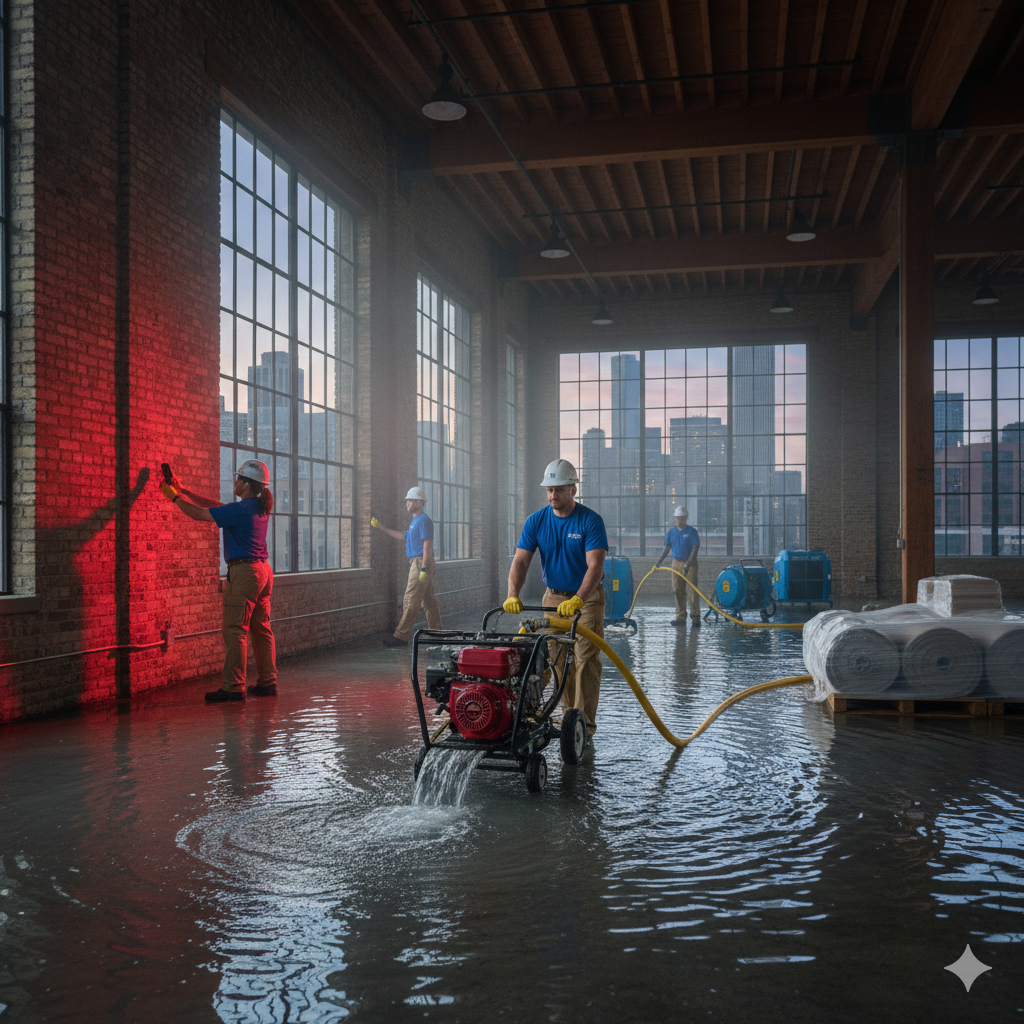
It is a cruel irony that the water used to save a building often causes the most long-term damage. High-volume water saturation leads to warped subfloors, ruined drywall, and the immediate threat of mold growth. Professional fire damage restoration services prioritize water extraction and industrial-grade dehumidification to stabilize the interior climate before secondary damage takes hold.
3. Immediate Corrosion Mitigation
To save high-value electronics, machinery, or heirloom metalwork, a “pre-cleaning” process is necessary. By applying a corrosion inhibitor to these surfaces, restorers can stop the acidic soot from eating through protective coatings while the larger structural issues are being addressed.
Sophisticated Odor Neutralization: Moving Beyond “Masking”
One of the most persistent challenges for property owners is the smell of smoke. Many attempt to solve this with store-bought deodorizers or ozone machines rented from local hardware stores. However, smoke odor is a molecular problem, not a surface one.
Thermal Fogging
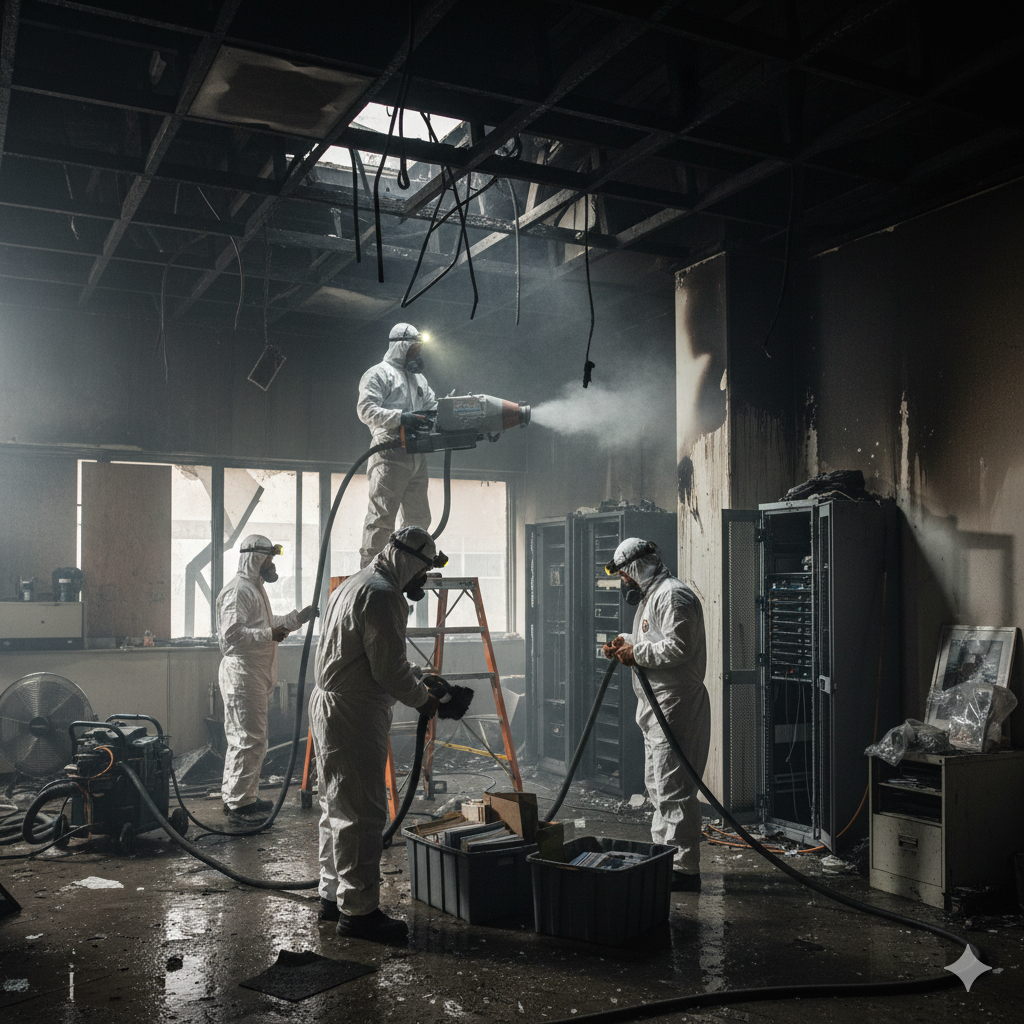
This process replicates the fire’s behavior. A specialized deodorizer is heated until it becomes a fine mist (fog). This mist penetrates the same porous materials—drywall, insulation, wood framing—that the smoke did, neutralizing the odor at the source rather than just layering a scent over it.
Hydroxyl Generators
In environments where occupants or sensitive materials (like fine art or plants) must remain present, hydroxyl generators are used. These machines use UV light to create atmospheric hydroxyl radicals that break down odor molecules through a natural oxidative process.
Encapsulation
In some instances, particularly with structural framing that remains sound but retains a slight scent, professional restorers use encapsulation. This involves sealing the wood with a specialized vapor-barrier coating that locks in any remaining particulates, ensuring they never off-gas into the living space.
The Nuances of Material-Specific Restoration
Every surface in a modern home or commercial building reacts differently to fire. A blanket approach to cleaning often does more harm than good.
Textiles and Upholstery
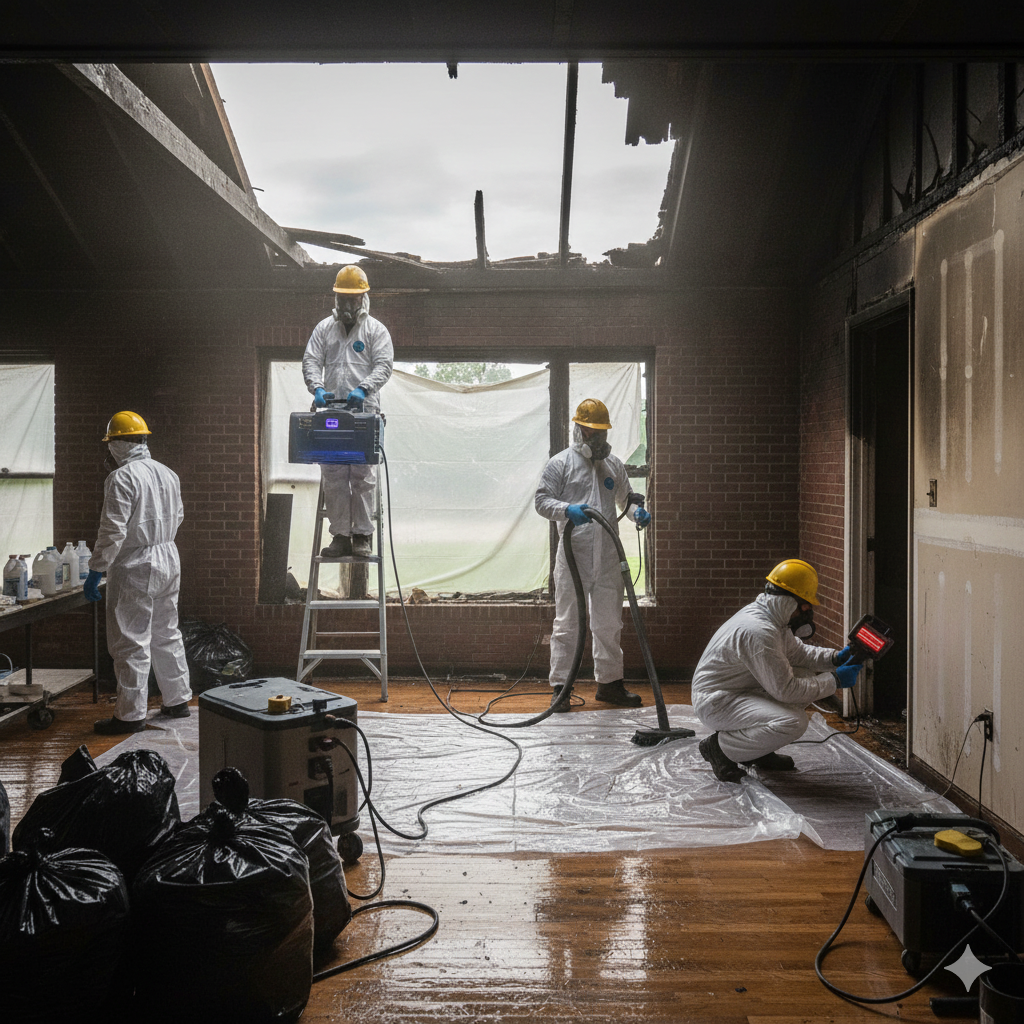
Smoke particulates are jagged at a microscopic level. If you attempt to vacuum soot off a sofa with a standard vacuum, you are essentially grinding those shards into the fibers. Professional fire damage restoration services utilize HEPA-filtered extraction and specialized dry-cleaning fluids to lift soot without setting the stain.
Electronics and Data Recovery
The soot from burnt plastic is conductive. If it settles on a circuit board and moisture is present, it can cause a short circuit even after the power is turned back on. Restoring electronics involves precision cleaning with deionized water and specialized solvents in a controlled environment.
Documents and Fine Art
For businesses, the loss of physical records can be catastrophic. Through a process called “freeze-drying” (sublimation), wet and soot-damaged documents can be stabilized. Fine art restoration requires a background in chemistry and art history to ensure that cleaning agents don’t react with the pigments or glazes used by the artist.
Structural Reconstruction: Integrating Restoration and Building
Once the cleaning and decontamination are complete, the focus shifts to reconstruction. This is where the distinction between a “cleaning company” and a full-service restoration partner becomes clear.
Code Compliance and Upgrades
When a building is damaged by fire, the restoration often triggers a requirement to bring the affected areas up to current 2026 building codes. This might include updated electrical panels, fire-rated drywall, or modern insulation standards. A professional restoration team coordinates these updates seamlessly with the rebuild.
Managing the Insurance Claim
The paperwork involved in a fire claim is immense. It requires a detailed “Scope of Work” that accounts for every stud, nail, and gallon of paint. Professional restorers use industry-standard software like Xactimate to ensure that the property owner receives a fair settlement that covers the true cost of returning the property to “pre-loss condition.”
Why Professional Intervention is Non-Negotiable
It is tempting for a property owner to try and manage the cleanup themselves to save on costs. However, the risks of “DIY” fire restoration are significant:
- Health Hazards: Inhaling fine soot particles can lead to long-term respiratory issues.
- Structural Failure: Without a professional assessment, you may be living in a building with a compromised foundation or ceiling joists.
- Voided Warranties: Improper cleaning of appliances or HVAC systems can void manufacturer warranties.
- Recurring Odors: If the “hidden” smoke isn’t neutralized, the smell will return every time the humidity rises or the heat is turned on.
The Redefined Restoration Difference
When you partner with Redefined Restoration, you aren’t just hiring a contractor; you are enlisting a team of specialists dedicated to the science of recovery. Our approach to fire damage restoration services combines technical precision with deep empathy. We know that we are not just fixing a building; we are restoring a home or a livelihood.
We utilize the latest in 2026 restoration technology, from infrared thermal imaging (to find hidden pockets of heat or moisture) to advanced ultrasonic cleaning for contents restoration. Our goal is to minimize your downtime and maximize the salvageability of your assets.
Conclusion
Fire damage is a trauma for both the building and its occupants. While the immediate aftermath is overwhelming, a systematic, professional approach can turn a site of devastation back into a place of comfort and productivity. The key is acting fast, choosing a partner with structural expertise, and never settling for surface-level cleaning.