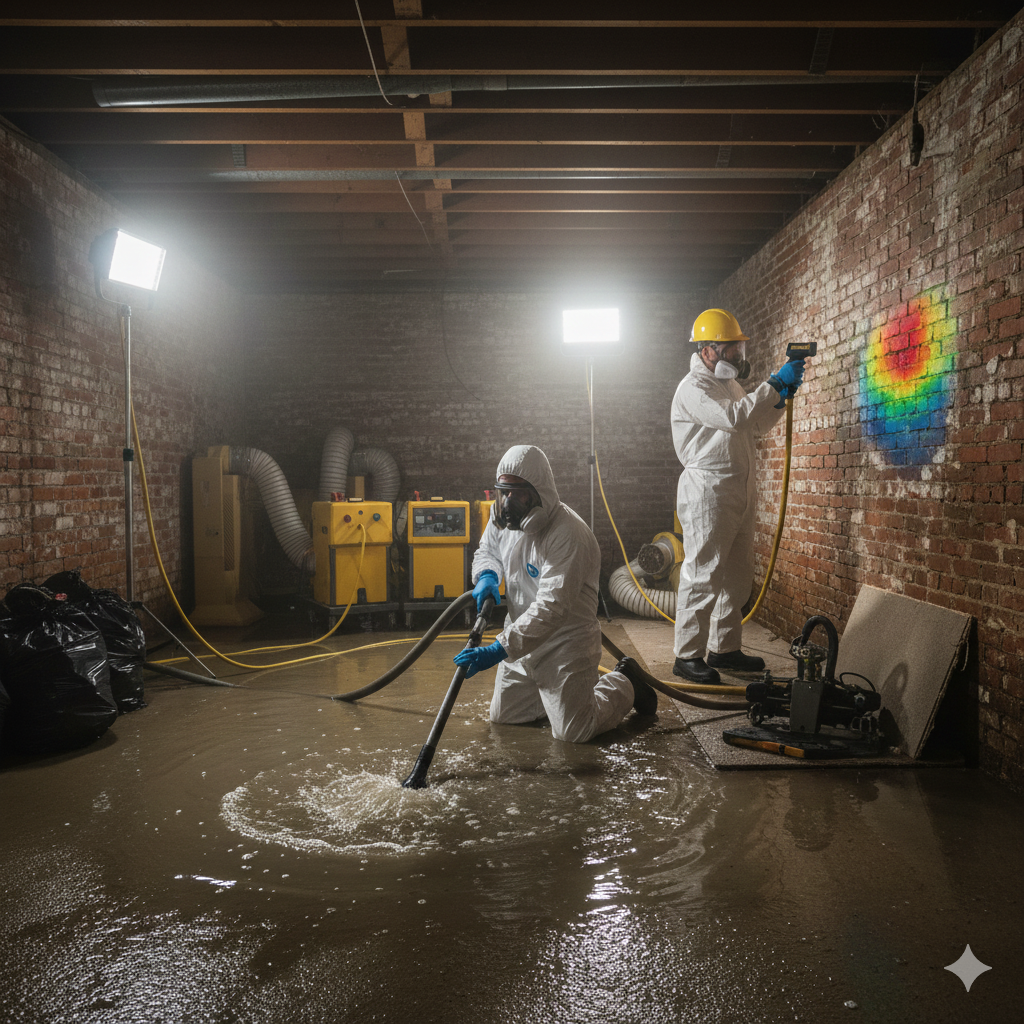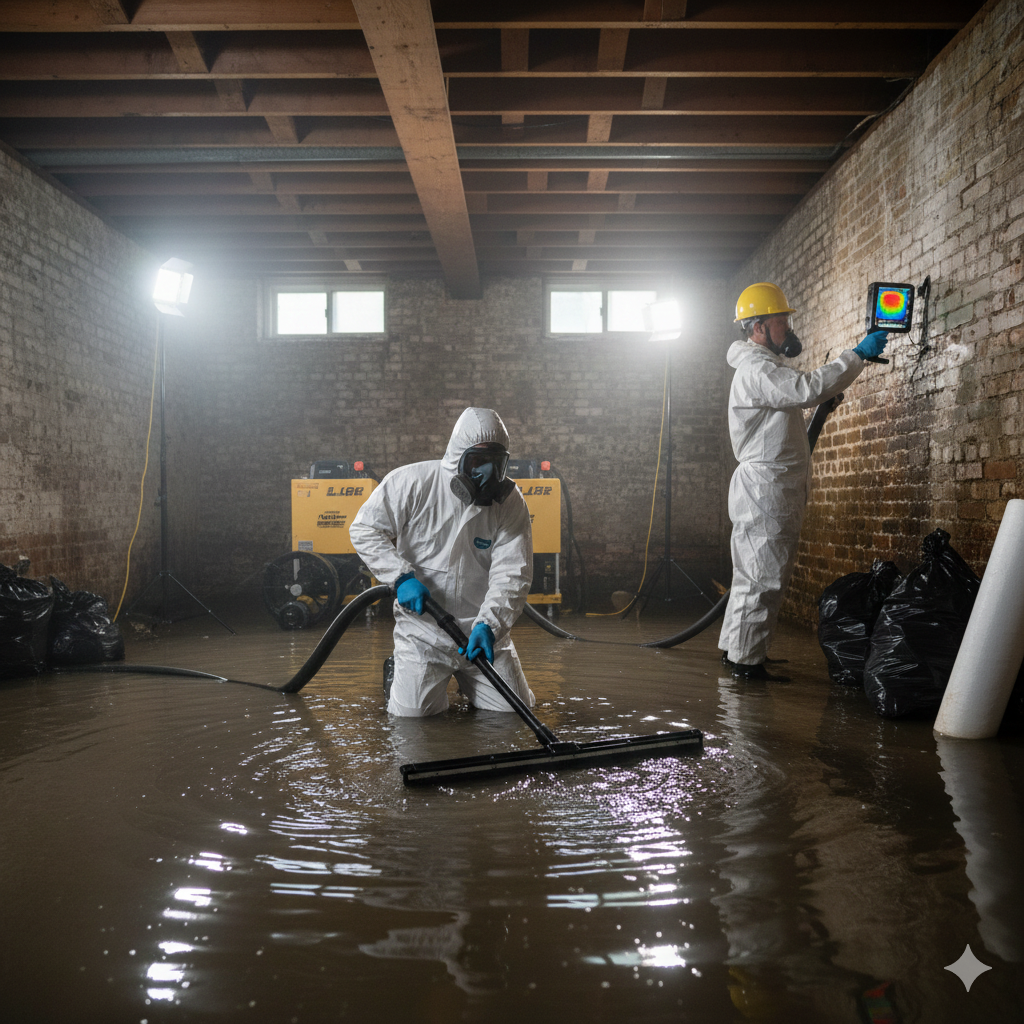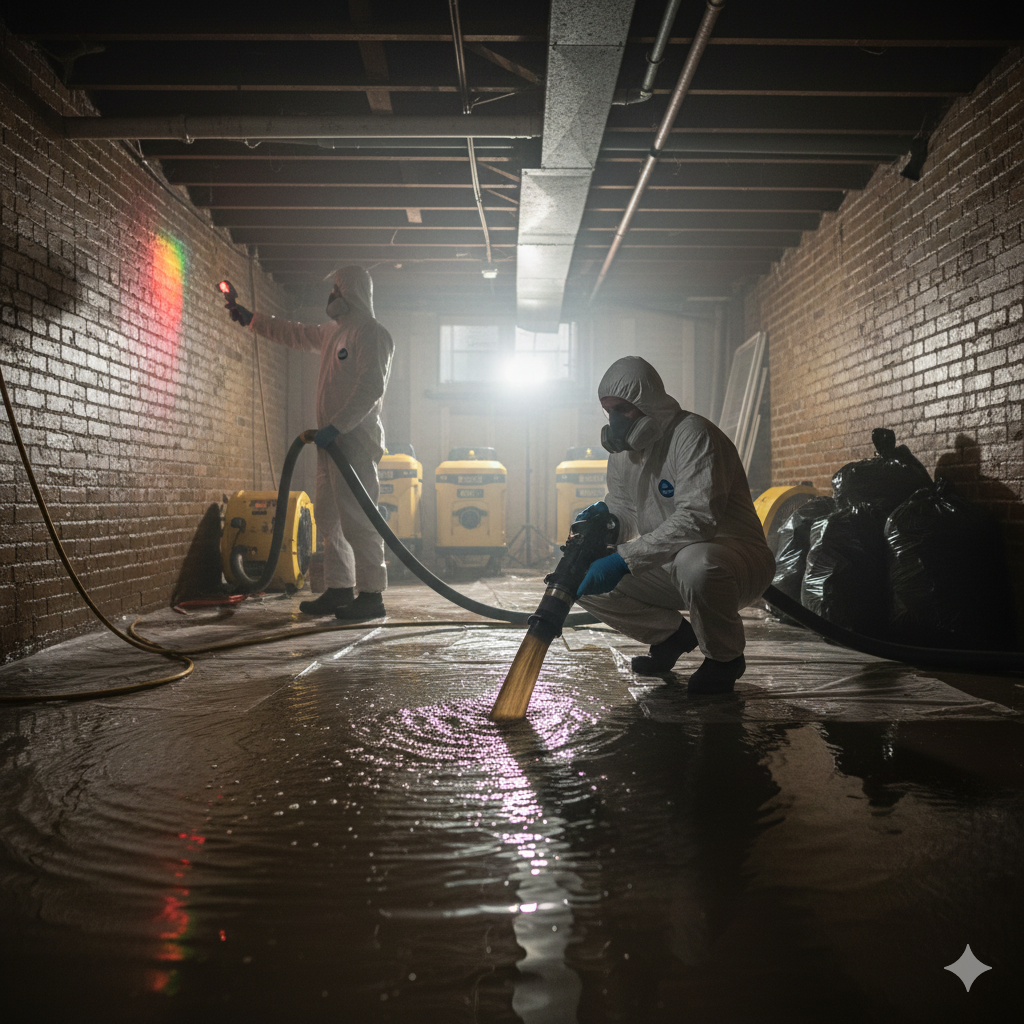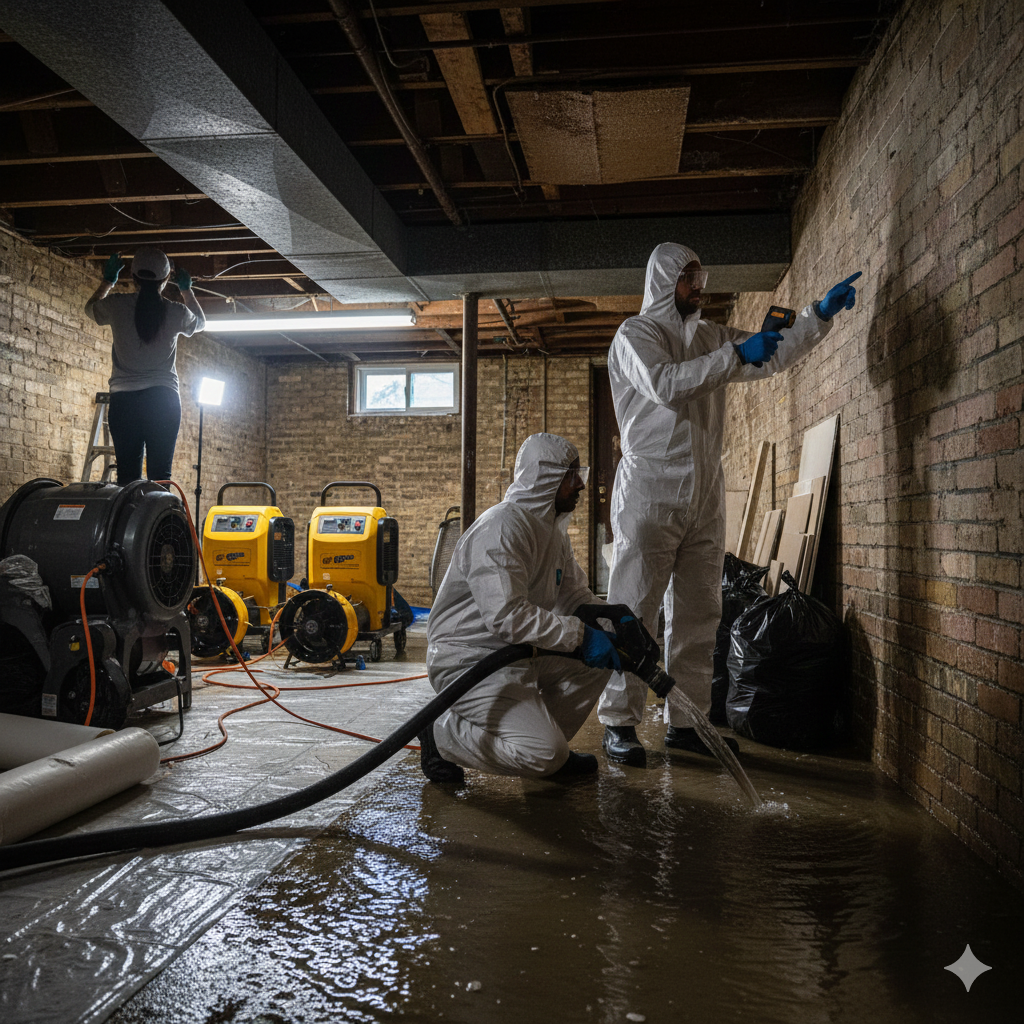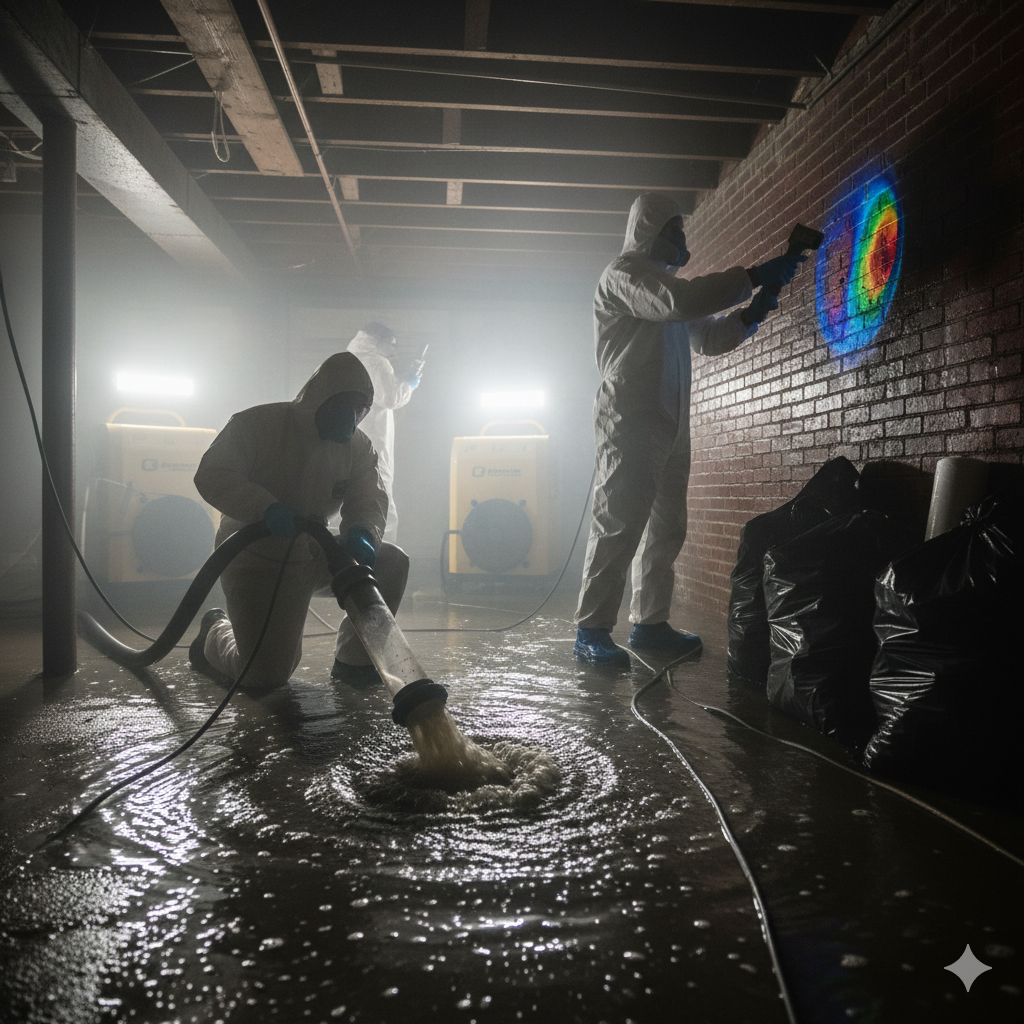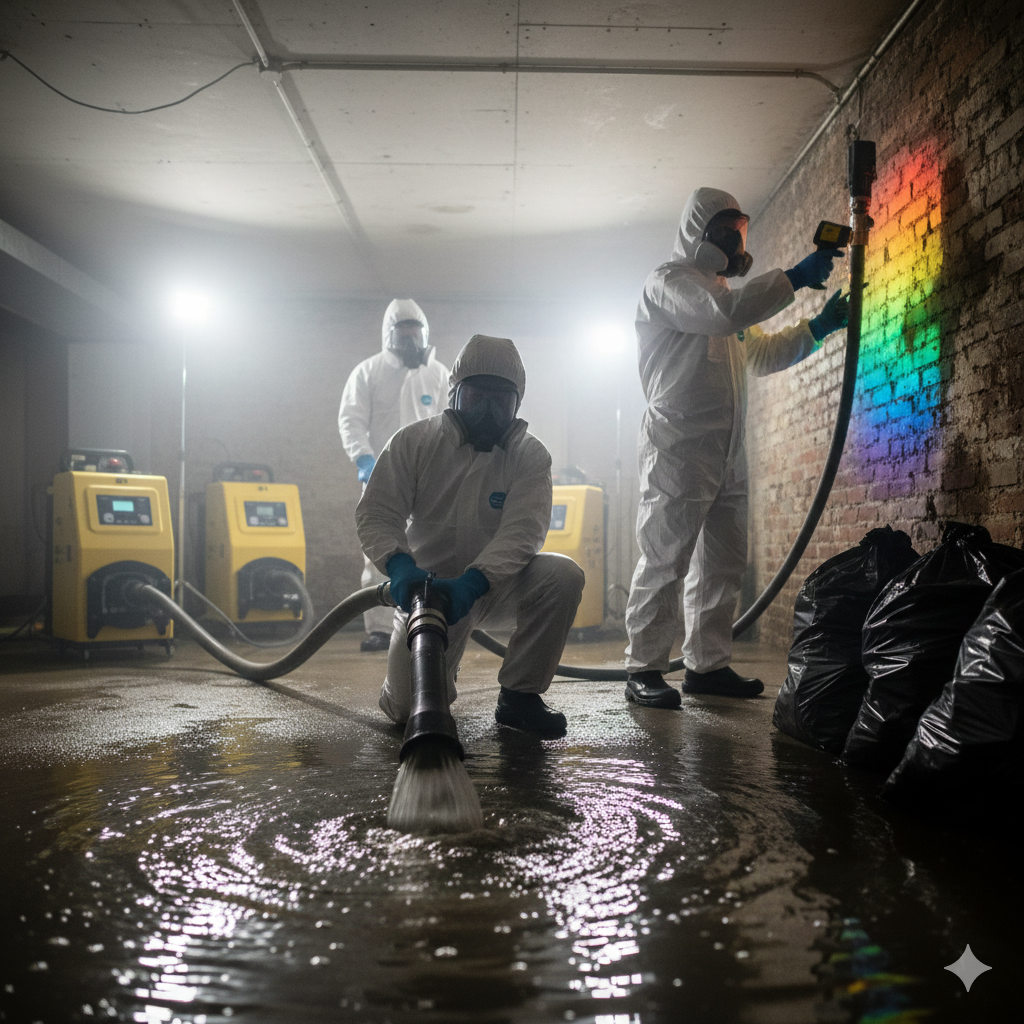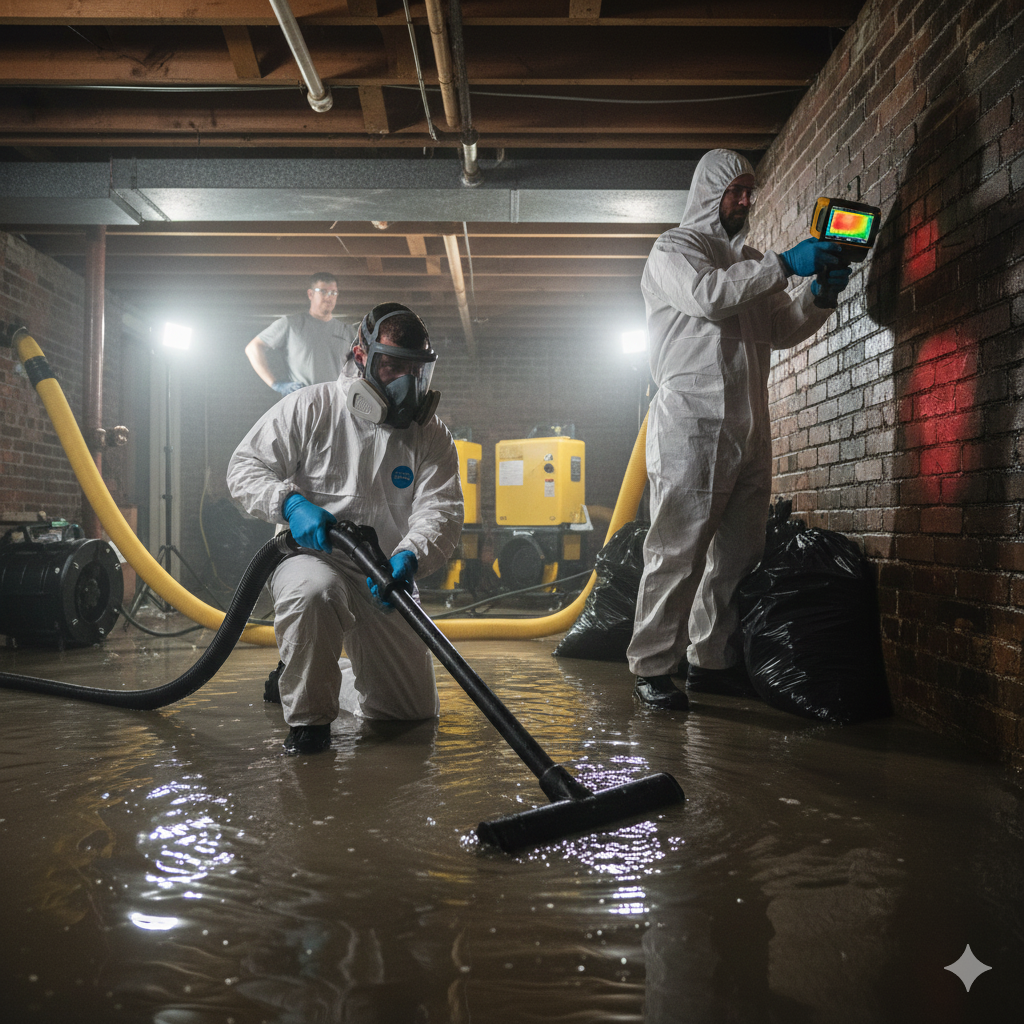
The sound of water where it shouldn’t be—a rhythmic drip behind a vanity, the sudden rush of a failed supply line, or the heavy squelch of saturated carpet—is a sound that triggers an immediate, visceral response in any property owner. In that moment of crisis, the instinct is often to reach for the nearest mop, a stack of towels, or a residential shop vacuum. However, the physical water you can see represents only a fraction of the actual threat. Water is an invasive force that follows the path of least resistance, migrating through wall cavities, under subfloors, and deep into the porous “bones” of a building.
In our region, where seasonal shifts can range from heavy spring deluges to freezing winter temperatures that threaten aging plumbing, the complexity of structural recovery cannot be overstated. Managing these events requires more than just a cleanup crew; it demands a scientific approach to moisture equilibrium. At Redefined Restoration, we recognize that every hour water sits in a structure, the chemical and biological environment of that building begins to shift. True recovery lies in the nuances of psychrometry—the science of drying—and the deployment of advanced water damage restoration services to ensure the long-term health and value of your property.
The Physics of Water Migration: How Damage Spreads Unseen
To understand the necessity of professional-grade intervention, one must first look at how water behaves once it breaches the building envelope. Most modern construction materials are hygroscopic, meaning they possess a natural affinity for water. Drywall, insulation, wood framing, and even concrete act as sponges, pulling moisture deep into their cellular structures through capillary action.
The Problem of Surface Tension
Water’s surface tension allows it to cling to the underside of horizontal surfaces and travel vertically up walls. This means that a flood on the ground floor can lead to moisture wicking up several inches—or even feet—into the drywall. This “wicking” effect creates a hidden reservoir of moisture behind baseboards and inside wall cavities where airflow is non-existent. Without specialized equipment to “pull” this moisture out, the surface may feel dry to the touch while the structural studs remain dangerously saturated.
Vapor Pressure and Evaporation
Drying is essentially the management of vapor pressure. When a room is flooded, the air becomes saturated, reaching a high relative humidity. Evaporation slows down because the air can no longer “hold” any more moisture. Professional water damage restoration services solve this by using industrial-grade dehumidifiers to lower the vapor pressure of the air, creating a “thirsty” environment that aggressively draws moisture out of wet materials.
The 48-Hour Window: The Biological Countdown
In the restoration industry, we live by a strict timeline. The first 48 hours following a water intrusion event are the most critical. This is not just because of the structural weakening of materials, but because of the biological shift that occurs when moisture meets organic food sources.
Microbial Proliferation
Mold spores are omnipresent; they exist in nearly every indoor and outdoor environment in a dormant state. However, they require three things to thrive: moisture, an organic food source (like the paper backing on drywall or wood fibers), and a stable temperature. In a typical home or office in 2026, all three are present the moment a pipe bursts. Within 24 to 48 hours, these spores can activate and begin to colonize. Once mold becomes established, the restoration process transitions from a drying project to a much more invasive mold remediation project.
Secondary Damage
Secondary damage refers to the destruction caused not by the liquid water itself, but by the high-humidity environment created by the standing water. High relative humidity can cause “sweating” on walls in rooms that weren’t even flooded, leading to peeling wallpaper, buckling hardwood furniture, and even the corrosion of sensitive electronics. Professional mitigation focuses on stabilizing the entire environment to prevent these costly secondary effects.
The Categorization of Water: Knowing the Risk
Not all water events carry the same health risks. The IICRC S500—the standard for professional water restoration—categorizes water based on its source and potential for contamination. Identifying the category is the first step in our protocol at Redefined Restoration.
Category 1: Clean Water
This is water from a sanitary source, such as a broken supply line or a falling rainwater leak. While the water itself is “clean,” it can quickly degrade. Once Category 1 water contacts building materials or stands for more than a few hours, it begins to dissolve minerals and organic matter, transitioning into more dangerous categories.
Category 2: Gray Water
Gray water contains significant contamination and has the potential to cause discomfort or sickness if contacted. Common sources include discharge from dishwashers, washing machines, or toilet overflows that do not contain fecal matter. This category requires more rigorous cleaning and sanitization protocols.
Category 3: Black Water
Black water is grossly unsanitary and contains pathogenic, toxigenic, or other harmful agents. This includes sewage, rising water from rivers or streams, and wind-driven rain from hurricanes or tropical storms. In a Category 3 event, porous materials like carpets, pads, and even some furniture are generally considered non-salvageable and must be removed to ensure the safety of the occupants.
Advanced Diagnostic Technology: Seeing the Invisible
In 2026, we no longer guess whether a wall is dry. We prove it. The hallmark of authoritative water damage restoration services is the use of non-invasive diagnostic tools that provide a clear picture of the moisture’s path.
Infrared Thermography
Thermal imaging cameras allow our technicians to see temperature differentials on surfaces. Because wet materials are generally cooler than dry ones due to evaporative cooling, infrared cameras can pinpoint moisture pockets behind tiled walls, under hardwood floors, or inside ceiling assemblies without the need for destructive testing.
Moisture Mapping
Using both invasive (pin-style) and non-invasive (ultrasonic) moisture meters, we create a comprehensive moisture map of the affected area. This allows us to establish “dry standards”—baseline readings from unaffected areas of the property—which we use as our target goals. Throughout the drying process, we document the progress of each material, ensuring that every stud and subfloor has returned to its pre-loss moisture content.
The Professional Restoration Workflow: A Systematic Approach
When you engage Redefined Restoration, you aren’t just getting a crew with fans; you are getting a team following a disciplined, multi-stage recovery plan.
1. Emergency Assessment and Hazard Mitigation
The first priority is safety. This involves identifying electrical hazards, ensuring the structural stability of saturated ceilings, and stopping the source of the water if it hasn’t already been addressed.
2. High-Volume Water Extraction
Removing water in its liquid state is 500 times more efficient than trying to evaporate it. We use truck-mounted extraction units and submersible pumps to remove the bulk of the water. On high-end carpeting, we may use “weighted” extraction tools that pull water through the pad without needing to remove the carpet itself, provided the water is Category 1.
3. Antimicrobial Application and Sanitization
To prevent microbial growth and neutralize odors, we apply EPA-registered antimicrobials. This is a crucial step in maintaining indoor air quality and ensuring that the property remains a healthy environment for its inhabitants.
4. Structural Drying and Stabilization
This is where the science of psychrometry comes into play. We strategically place high-velocity air movers to create a “vortex” of air across surfaces, while industrial-grade LGR (Low Grain Refrigerant) dehumidifiers pull the moisture out of the air. This cycle continues until our moisture meters confirm that the materials have reached their dry standards.
5. Monitoring and Documentation
A restoration project is not a “set it and forget it” task. Our technicians visit the site daily to take psychrometric readings (temperature, relative humidity, and grains per pound of air) and adjust equipment as needed to maintain the most efficient drying environment possible.
The Economics of Restoration: Protecting Your Asset Value
Many property owners hesitate to call for professional water damage restoration services due to concerns about cost. However, a scientific approach to restoration is almost always a more cost-effective solution than the alternative: neglect.
Avoiding “The Mold Clause”
In many real estate markets, a history of water damage that wasn’t professionally mitigated can be a major hurdle during a sale. By having a certified firm like Redefined Restoration document the “dry-out” with a final certificate of completion, you protect your property’s resale value. You provide future buyers with peace of mind that the structure is sound and free of hidden microbial issues.
Restoration vs. Replacement
Professional drying often allows us to save materials that a general contractor might simply tear out and replace. High-end cabinetry, specialized hardwood floors, and architectural millwork can often be salvaged using specialized “injection drying” systems that push dry air into hidden cavities. This not only saves money on reconstruction but preserves the historic or aesthetic character of your property.
Structural Impacts: Hardwood, Concrete, and Beyond
Every material reacts to water differently, and a “one size fits all” drying approach can lead to permanent damage.
The Nuance of Hardwood
When hardwood floors get wet, they “cup” (the edges of the boards become higher than the centers). Many people assume the floor is ruined. However, if addressed quickly, we can use vacuum-seal mats to pull moisture directly through the wood fibers. Often, as the wood dries to its original moisture content, the boards will flatten back out, saving thousands of dollars in replacement costs.
The Complexity of Concrete
Concrete is often viewed as impervious to water, but it is actually a very porous material. Water can travel deep into a concrete slab and sit there for weeks. If you install new flooring (like luxury vinyl plank or carpet) over a slab that hasn’t been professionally dried, the moisture will eventually rise, leading to adhesive failure and mold growth under your brand-new floor.
Local Challenges: Climate and Construction in Our Region
Our local environment presents unique hurdles for property owners. From the high-water tables that can lead to basement seepage during heavy rains to the rapid temperature fluctuations that can cause thermal expansion and contraction in plumbing, our region demands local expertise.
Seasonal Flooding and Storm Runoff
During our heavy rain seasons, the ground can become saturated, leading to hydrostatic pressure that forces water through foundation cracks. This water is often Category 3 (black water) due to its contact with soil and outdoor contaminants. Professional water damage restoration services in our area are specifically equipped to handle the large-scale extraction and heavy-duty decontamination required after a ground-water intrusion event.
Aging Infrastructure and Frozen Pipes
In the winter months, older homes and commercial buildings are particularly vulnerable to pipe bursts. A pipe that bursts in an attic can go unnoticed for hours, causing damage to multiple floors. We understand the local building codes and the common construction methods used in our area’s historic and modern neighborhoods, allowing us to navigate wall assemblies and insulation types with precision.
Health and Safety: The Human Side of Restoration
Beyond the structural integrity of the building, the primary concern of Redefined Restoration is the health of the people who live and work inside.
Respiratory Health and Air Quality
Water damage significantly impacts indoor air quality. As materials dry, they can release particulates, spores, and volatile organic compounds (VOCs). We utilize HEPA-filtered air scrubbers on our job sites to continuously clean the air, ensuring that even the most sensitive occupants—such as children, the elderly, or those with asthma—are protected during the process.
Chemical Sensitivities
We recognize that many property owners are concerned about the use of harsh chemicals. In 2026, we utilize botanical antimicrobials and other eco-friendly solutions whenever possible. These products are highly effective at neutralizing pathogens while remaining safe for pets and families.
Navigating the Insurance Process: Advocacy and Documentation
One of the most stressful parts of a water loss is dealing with the insurance claim. Professional water damage restoration services act as a vital bridge between the property owner and the insurance adjuster.
The Language of Claims
Adjusters require specific data to approve a claim: moisture maps, daily drying logs, and proof of the water’s source. We provide a comprehensive documentation package that uses industry-standard software (like Xactimate) to ensure that every necessary step of the restoration is accounted for. This transparency helps expedite the claims process and ensures you receive the coverage you are entitled to under your policy.
Mitigation vs. Reconstruction
It is important to understand that “mitigation” (the drying and cleanup) is often covered under a different part of your policy than “reconstruction” (the rebuilding). By moving quickly with mitigation, you can often stay within your policy limits by preventing the damage from spreading, leaving more resources available for the aesthetic finish of your choice.
Commercial Recovery: Minimizing Business Interruption
For business owners and facility managers, water damage is measured in downtime. Every day your doors are closed is a day of lost revenue. Redefined Restoration specializes in commercial recovery, where the scale and speed of the response are paramount.
We work to create “contained” work zones, allowing you to keep unaffected parts of your business operational while we restore the damaged areas. Whether it’s a retail space, a medical office with sensitive equipment, or a large-scale warehouse, our team is equipped to handle the high-power requirements and complex logistics of commercial drying.
Why “DIY” Drying Often Leads to a Second Disaster
It is tempting to try and save money by handling the drying yourself. However, without professional tools, you are likely leaving the most dangerous moisture behind.
The “Iceberg” Effect
The water you can see and feel is the 10% above the surface. The 90% that is trapped in the insulation, the sill plates, and the subfloor is the real problem. Household fans simply move air; they do not remove moisture from the environment. Without a professional-grade dehumidifier, you are essentially creating a greenhouse for mold.
The Bleach Myth
One of the most persistent—and dangerous—pieces of advice is to use bleach to kill mold after water damage. Bleach is mostly water. While it may kill surface mold on non-porous materials, it cannot penetrate porous materials like wood or drywall. In fact, the water in the bleach can actually feed the “roots” of the mold (hyphae) that are deep inside the material, causing it to return even stronger once the surface appears clean.
Resilience and Peace of Mind
The goal of professional water damage restoration services is to return your life to normal as quickly as possible. But beyond speed, the goal is resilience. We want to ensure that once we leave, your property is stronger, drier, and healthier than it was before the event occurred.
As we move through 2026, the technology behind restoration continues to advance, but the core principle remains the same: a deep respect for the science of the building and an unwavering commitment to the property owner’s well-being. At Redefined Restoration, we pride ourselves on being a steady hand in the midst of a crisis. We are more than just a contractor; we are your partners in property recovery.
Conclusion: Taking the First Step Toward Recovery
Water damage is a disruptive, emotional experience. It challenges your sense of security and threatens your most significant financial investment. However, by choosing a path of professional, scientific restoration, you are taking control of the narrative. You are ensuring that this event is a temporary setback, not a permanent scar on your property’s history.
The path to a dry, healthy home starts with a phone call. While the water may have moved fast, we move faster. Let us put our expertise, our technology, and our dedication to work for you. From the first gallon extracted to the final moisture reading, we are with you every step of the way.