The Science of Structural Drying: Why Your Choice of a Water Damage Restoration Company Determines Your Home’s Future

Water Damage Restoration Company

Is your home truly dry, or is it merely dry to the touch? This question haunts many property owners in Chicago, IL, long after the visible puddles have been mopped away. In a city where architectural history meets some of the most punishing climate conditions in North America, the answer to that question often dictates the long-term structural integrity and market value of your residence. Whether it is a burst pipe during a January deep freeze or a flash flood from a Lake Michigan microburst in mid-July, water is an invasive force that follows the path of least resistance, wicking into materials and hiding in wall cavities where it can do the most damage.

Navigating the aftermath of a flood is a race against the clock. Within hours, the chemistry of your home begins to shift. Porous materials swell, dyes bleed, and the biological clock for microbial growth begins to tick. Selecting a professional water damage restoration company is not just about hiring a crew with shop vacuums; it is about engaging experts who understand psychrometry—the science of drying—and who can execute a precision-based recovery plan. At Redefined Restoration, we believe that an informed homeowner is a protected homeowner. This guide explores the complexities of structural moisture, the regional challenges unique to the Chicago area, and the rigorous standards required for a successful recovery in 2026.

The Chicago Context: Geography, Climate, and Architectural Vulnerability

Chicago’s geography is a double-edged sword. Our proximity to the Great Lakes provides beauty and economic vitality, but it also creates a high water table and a unique set of weather-related risks. Understanding these local factors is essential for any water damage restoration company operating in the city.

The Problem of Chicago Common Brick and Porous Masonry

Many of the historic greystones and bungalows that define our neighborhoods are constructed with “Chicago Common Brick.” While aesthetically iconic, this material is significantly more porous than modern face brick. When water infiltrates a basement or a crawlspace, these bricks act like a ceramic sponge, pulling water upward through capillary action. If a technician does not account for this “wicking” effect, moisture remains trapped deep within the masonry, leading to “spalling”—where the brick face flakes off—and eventual structural weakening.

The Deep Tunnel and Sewer Backups

Chicago’s infrastructure relies on the Tunnel and Reservoir Plan (TARP), commonly known as the Deep Tunnel. While this system is an engineering marvel, 2026 has seen increasingly intense, localized rain events that can overwhelm city sewers before they can reach the reservoir. For homeowners in lower-lying neighborhoods, this often results in sewer backups. This is not merely a water problem; it is a Category 3 biohazard event. Professional intervention is required to ensure that pathogens, bacteria, and viruses are neutralized, not just dried out.

The Freeze-Thaw Cycle

The expansion and contraction caused by our extreme temperature swings put immense stress on residential plumbing. A pipe burst in a Chicago attic or wall cavity can go unnoticed for hours, allowing thousands of gallons of water to cascade through multiple levels of the home. This vertical migration requires a sophisticated drying strategy that accounts for the “stack effect” and the way moisture moves between floor assemblies.

Categorizing the Threat: The IICRC Standard of Care

Not all water is equal, and the protocols used by a reputable water damage restoration company must reflect the specific type of contamination present. We follow the IICRC S500 standards, which classify water into three distinct categories.

Category 1: Clean Water

This is water from a sanitary source, such as a broken supply line or a bathtub overflow. While it carries the lowest risk to human health initially, it is a “ticking clock.” Once Category 1 water makes contact with building materials like drywall or insulation, it begins to dissolve minerals and organic matter. Within 24 to 48 hours, it can degrade into Category 2 or 3.

Category 2: Gray Water

Gray water contains a significant degree of chemical, biological, or physical contamination. This often comes from dishwasher or washing machine discharge, or sump pump failures. Contact with Category 2 water can cause discomfort or illness, and it requires aggressive sanitization of all surfaces it touches.

Category 3: Black Water

Black water is grossly unsanitary and carries pathogenic agents. In Chicago, this most commonly occurs during sewage backups or rising water from rivers and the lake. In a Category 3 loss, all porous materials—including carpets, pads, and often drywall—must be removed and disposed of. There is no middle ground when it comes to the safety of the occupants.

The Physics of Drying: Psychrometry in 2026

Modern restoration is a data-driven discipline. It is no longer enough to set up fans and hope for the best. A professional water damage restoration company uses psychrometry to monitor and manipulate the environment for optimal drying.

Vapor Pressure and Evaporation

Drying is the process of moving moisture from a material (high vapor pressure) to the air (lower vapor pressure). If the air in the room is already saturated (high humidity), the water has nowhere to go. We use industrial-grade LGR (Low Grain Refrigerant) dehumidifiers to create “thirsty” air that actively pulls moisture out of deep structural members like floor joists and wall studs.

CFM and Air Movement

CFM (Cubic Feet per Minute) is the measure of air movement. We strategically place high-velocity air movers to create a vortex that disturbs the “boundary layer” of air directly above wet surfaces. This constant agitation prevents the air from becoming stagnant and saturated, allowing the dehumidifiers to work at peak efficiency.

Temperature Control

Temperature is a critical variable. Warmer air holds more moisture, which can accelerate drying. However, if the environment becomes too warm, it can trigger rapid microbial growth. A skilled technician balances temperature and humidity to stay within the “drying window” without compromising the home’s air quality.

The Invisible Enemy: Microbiology and the 48-Hour Window

The primary goal of any mitigation effort is the prevention of mold. Mold spores are omnipresent in the Chicago air; they only require three elements to thrive: moisture, an organic food source (like the paper on drywall or wood fibers), and a stable temperature.

The Risk of DIY “Air Drying”

Many homeowners believe that if they open the windows, the problem will solve itself. In reality, our local humidity levels—especially during a humid Chicago summer—often prevent effective evaporation. When materials remain wet for more than 48 hours, the likelihood of microbial colonization increases exponentially. Once mold becomes established, the project shifts from a relatively straightforward “dry-out” to a complex “remediation,” which is significantly more invasive and expensive.

Secondary Damage

Secondary damage occurs when the high humidity from the primary flood causes moisture to condense on unaffected materials. We have seen cases where a basement flood leads to peeling wallpaper on the first floor or the buckling of expensive hardwood furniture due to sustained high humidity levels. A professional water damage restoration company stabilizes the entire environment, not just the wet floor.

The Professional Workflow: What to Expect from Redefined Restoration

When you call Redefined Restoration, you are initiating a disciplined, multi-phase recovery process designed to minimize loss and maximize safety.

1. Assessment and Hazard Identification

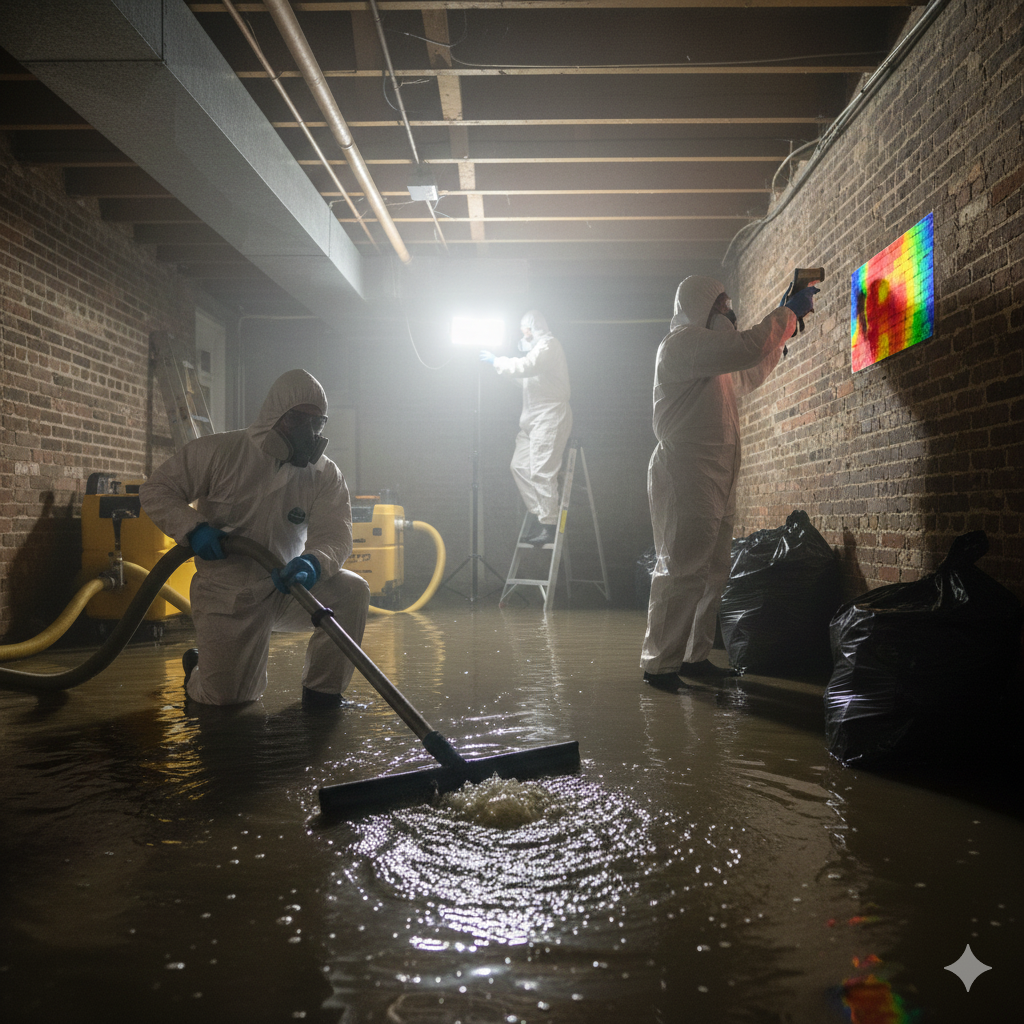
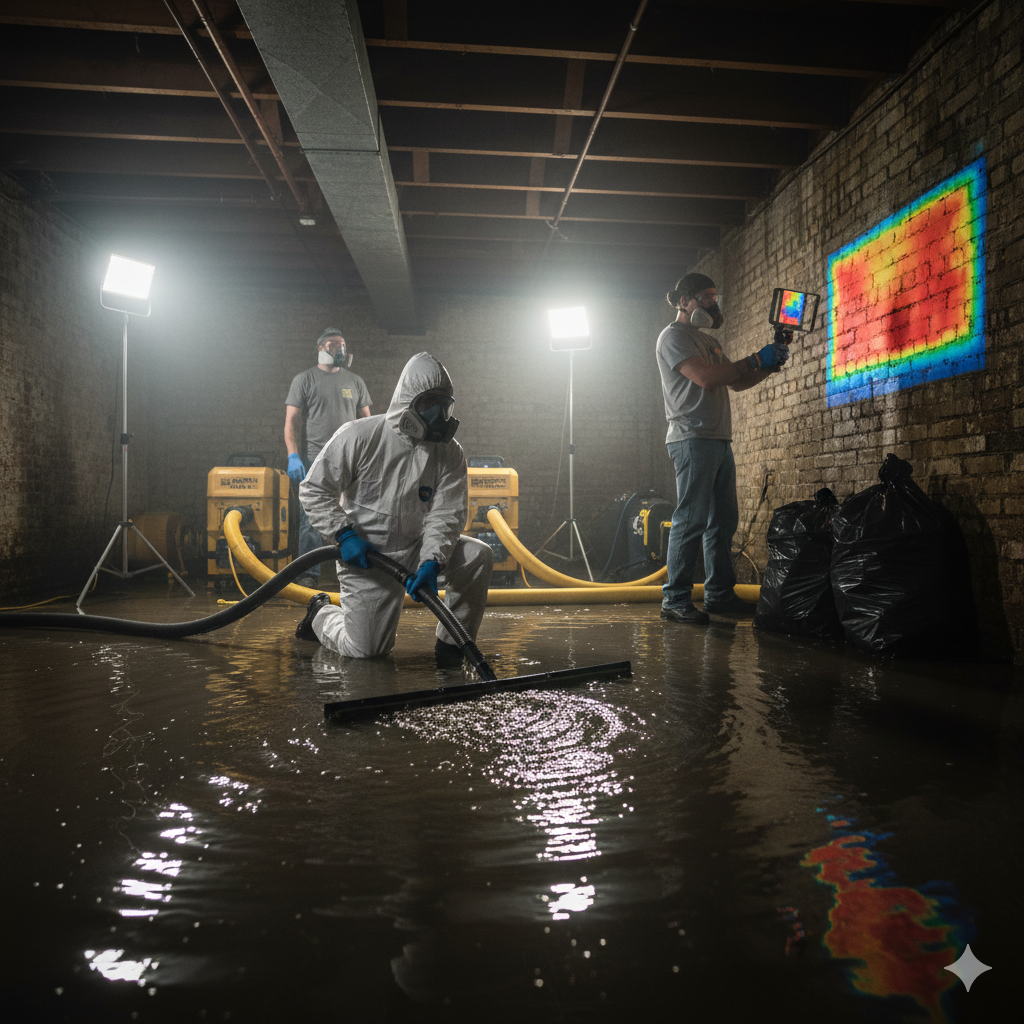
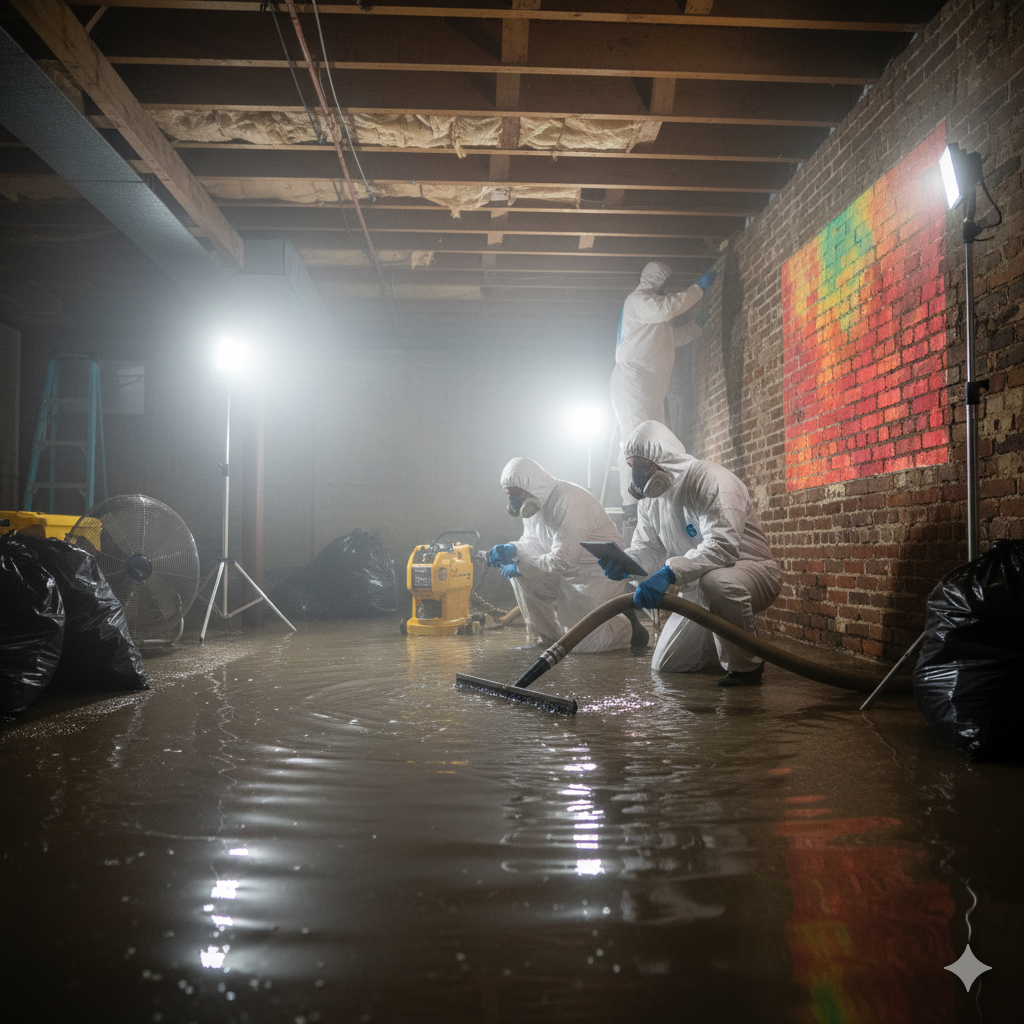
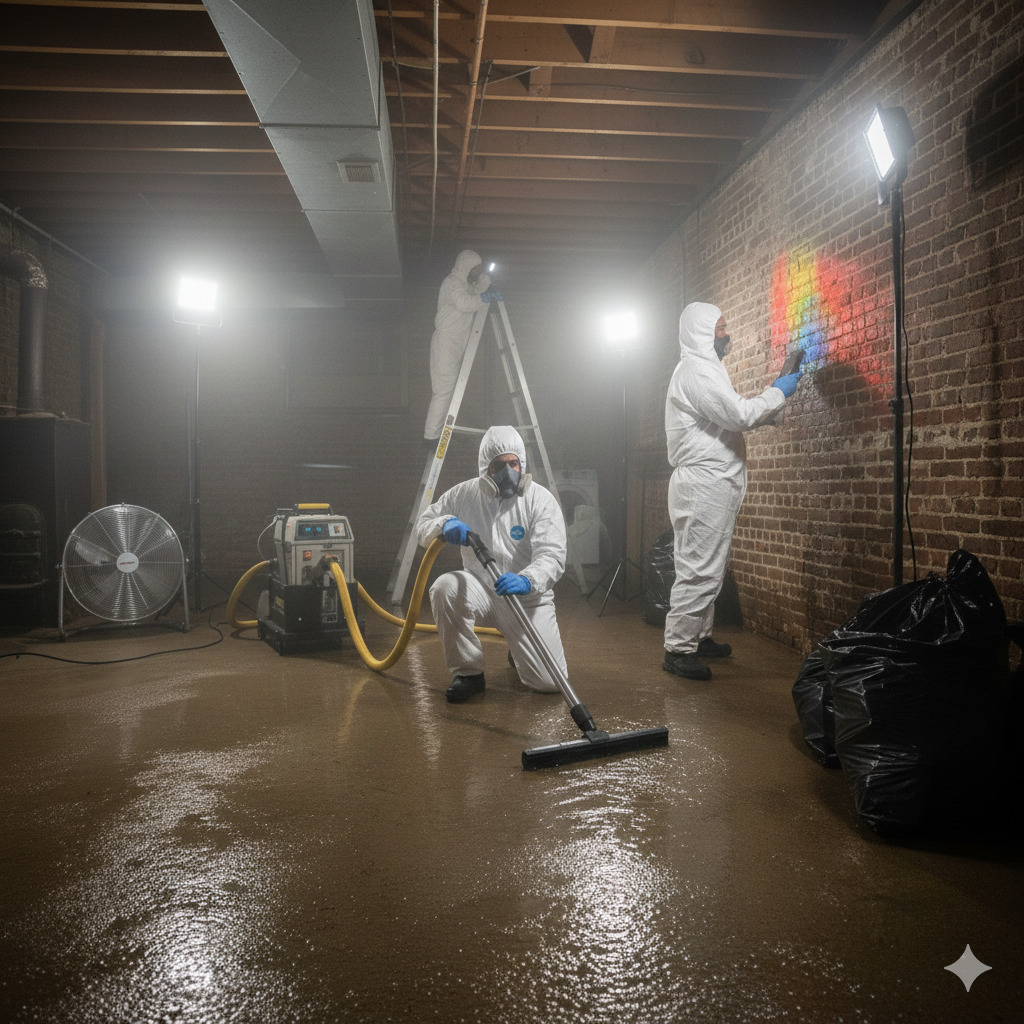
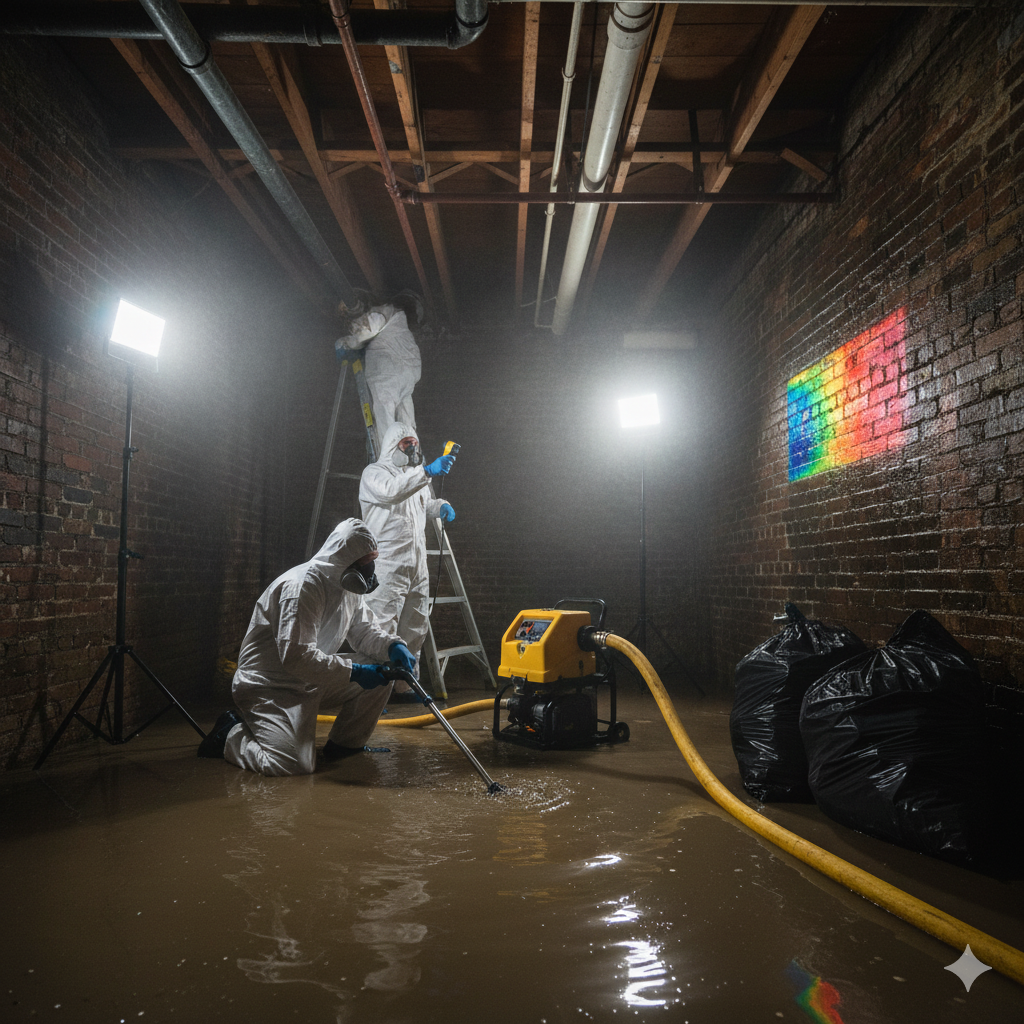
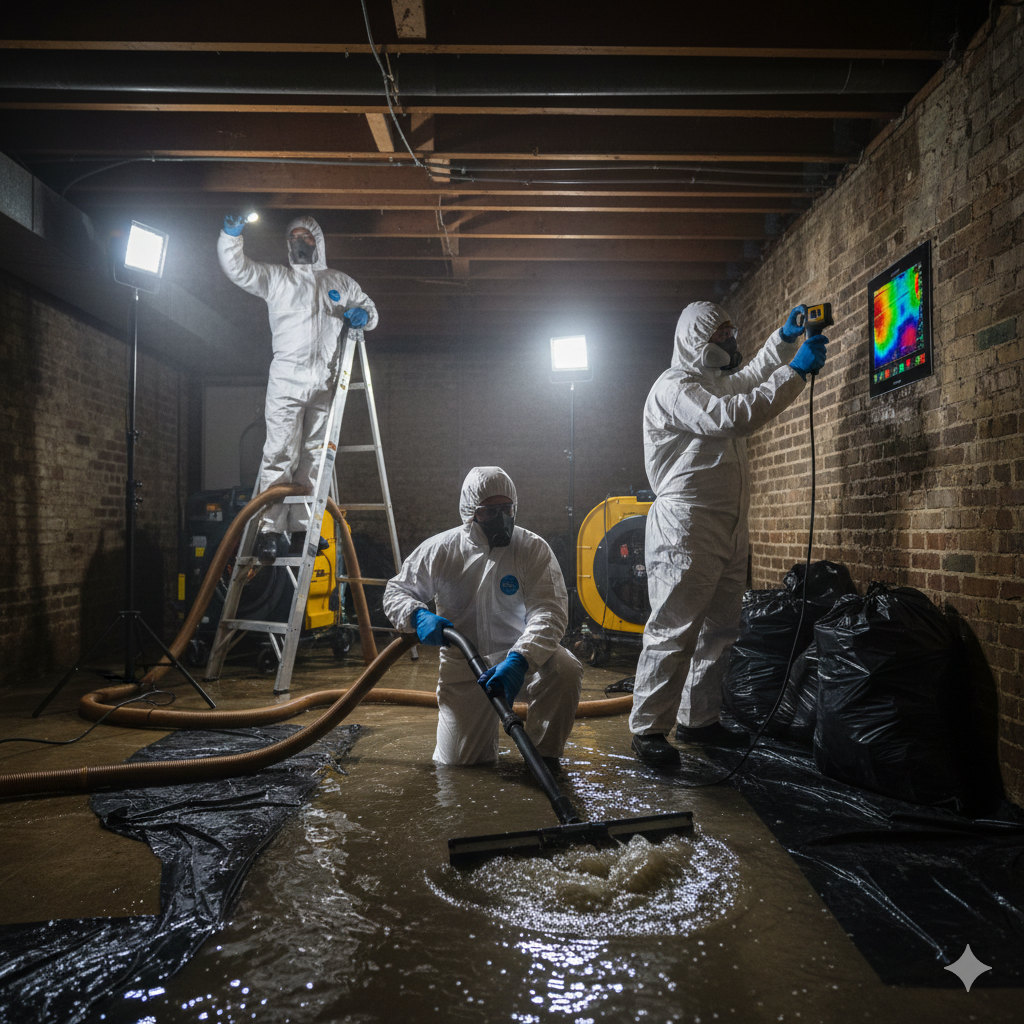
Upon arrival, we perform a site-safety survey. We check for electrical hazards, structural instabilities, and the source of the intrusion. Using infrared thermography (thermal imaging cameras), we map the migration of the water. These cameras allow us to “see” the water hidden behind tiled walls or under hardwood floors without having to tear the house apart prematurely.

2. High-Volume Water Extraction

Removing water in its liquid state is 500 times more efficient than trying to evaporate it. We use truck-mounted extraction units that pull thousands of gallons of water out of the structure quickly. This step is the “heavy lifting” of the mitigation process.

3. Stabilization and Antimicrobial Application

To prevent the degradation of air quality, we apply EPA-registered antimicrobials to the affected areas. This “stops the clock” on microbial growth while we move into the drying phase. We also utilize HEPA-filtered air scrubbers to clean the air of particulates and spores during the process.

4. Structural Drying and Monitoring

This is the scientific heart of the project. We deploy our fleet of dehumidifiers and air movers based on the cubic footage of the space and the “moisture load” of the materials. Our technicians visit the property daily to take psychrometric readings and adjust equipment as the drying curve progresses.

5. Documentation and Final Verification

We don’t guess when a home is dry. We use moisture meters to compare the affected materials against “dry standards” (readings taken from unaffected parts of the home). We provide a comprehensive documentation package, including moisture maps and drying logs, which is vital for your insurance claim.
Water Damage Restoration Company

Navigating the Insurance Maze: Advocacy and Professionalism

One of the most stressful aspects of a water loss is the insurance claim. In 2026, insurance adjusters require empirical evidence to justify the cost of mitigation. A reputable water damage restoration company acts as your technical advocate during this process.

The Language of Claims

We use Xactimate, the industry-standard software for estimating, which ensures that our pricing is transparent and aligned with what insurance carriers expect. By providing daily logs and photo documentation, we reduce the friction between the homeowner and the adjuster, speeding up the approval process and ensuring that no necessary step of the recovery is overlooked.

Mitigation vs. Reconstruction

It is important to understand the difference between mitigation (stopping the damage) and reconstruction (putting it back together). Mitigation is often covered under a different part of your policy. By moving quickly and professionally during the mitigation phase, you can often save expensive finishes like cabinetry and hardwood, reducing the overall cost of the claim and the time your life is disrupted.

Material-Specific Recovery: Saving the Irreplaceable

Every material in a residence reacts differently to moisture. A “one-size-fits-all” approach can lead to unnecessary demolition.

Hardwood Floors: Oak and Maple

Chicago homes are famous for their original hardwood. When these floors get wet, they “cup”—the edges of the boards swell and become higher than the centers. Many people assume these floors are a total loss. However, using specialized “rescue mats” and high-pressure vacuum systems, we can often pull moisture directly through the wood fibers, allowing the boards to flatten out and be saved.

Plaster and Lath

Unlike modern drywall, plaster and lath are extremely resilient but take a long time to dry. If you dry them too quickly, they can crack; if you dry them too slowly, the wooden lath behind them can rot. We utilize specialized desiccant dehumidification for these delicate historic materials.

Modern Laminates and LVP

While Luxury Vinyl Plank (LVP) is often marketed as “waterproof,” it is actually one of the most difficult materials to dry. While the planks themselves won’t warp, water gets trapped underneath them, sitting on the subfloor with no way to evaporate. Without removing the flooring to dry the subfloor, a hidden mold colony is almost a certainty.

Health and Safety: The Human Side of Restoration

Beyond the structural integrity of the building, we are deeply concerned with the health of the occupants. Water damage creates an environment that can trigger allergies, asthma, and other respiratory issues.

Volatile Organic Compounds (VOCs)

As building materials like particleboard and adhesives get wet, they can release VOCs into the air. This is that “sick” smell often associated with water-damaged buildings. Our use of air scrubbers and hydroxyl generators neutralizes these compounds at the molecular level, ensuring that the indoor air quality is returned to a healthy state.

Lead and Asbestos Concerns

In older Chicago neighborhoods, water damage can disturb lead-based paint or asbestos-containing materials (like floor tiles or pipe insulation). A professional water damage restoration company is trained to recognize these hazards and ensure that the mitigation process does not create a hazardous dust situation.

Longevity and Resale Value: Protecting Your Investment

A home is more than a shelter; it is an asset. In the Chicago real estate market of 2026, buyers are increasingly savvy about moisture issues.

The Value of Professional Documentation

When you eventually go to sell your home, you will likely have to disclose any major water events. Having a professional “Certificate of Completion” from Redefined Restoration is a powerful tool. It proves that the home was dried to industry standards by a certified firm, eliminating the fear of “hidden mold” for potential buyers and preserving your home’s resale value.

Preventing Future Losses

As part of our service, we perform a post-loss inspection to identify why the water intrusion happened. Was it a failed sump pump? Poor exterior grading? Or a pipe that was improperly insulated? By addressing the root cause, we help you avoid the trauma of a second flood.

Why Redefined Restoration is the Preferred Chicago Partner

Choosing a water damage restoration company in the heat of a crisis is difficult. You need a partner that combines local expertise with world-class technology.

  • Local Ownership: We aren’t a national franchise that will disappear after the storm. We are members of the Chicago community, and our reputation is our most valuable asset.
  • Response Time: We understand that every minute matters. Our crews are stationed across the Chicagoland area to ensure we can be on-site when you need us most.
  • Technical Training: Our technicians are IICRC-certified and undergo continuous training in the latest drying technologies of 2026.
  • Compassionate Service: We know that a flood is an emotional event. We pride ourselves on clear communication and empathetic service, walking you through every step of the process.

The Commercial Perspective: Minimizing Business Downtime

While our focus is often on residences, we apply the same scientific rigor to commercial facilities in Chicago. Whether it is a retail space on the Magnificent Mile or a professional office in the West Loop, we understand that “time is money.” We utilize large-scale desiccant drying and containment strategies to keep as much of your business operational as possible while we restore the affected areas.

Maintenance and Mitigation: A Proactive Approach

The most effective way to deal with water damage is to prevent it from happening. We encourage all Chicago residents to take several proactive steps:

  1. Sump Pump Health: Test your sump pump every spring and fall. In 2026, we highly recommend a battery-backup system, as our heavy storms often knock out power just when the pump is needed most.
  2. Gutter and Downspout Management: Ensure your gutters are clear of debris and that downspouts extend at least six to ten feet away from your foundation.
  3. Appliance Hoses: Replace rubber washing machine hoses with braided stainless steel. These are much less likely to burst under the pressure of Chicago’s municipal water system.
  4. Know Your Shut-off: Every adult in the household should know where the main water shut-off valve is. Being able to stop the flow of water in seconds rather than minutes can save thousands of dollars in damage.

Resilience in the Face of the Unexpected

The reality of property ownership in Chicago is that water events are not a matter of if, but when. The city’s aging infrastructure and dramatic climate shifts demand a higher level of preparedness. By choosing a professional water damage restoration company that prioritizes science, documentation, and safety, you are choosing to be resilient.

Water is a powerful force, but it is not an invincible one. With the right technology and a disciplined approach to structural drying, your home can be returned to its pre-loss condition, free of hidden moisture and microbial threats. At Redefined Restoration, we are dedicated to redefining what it means to recover from a disaster. We are your partners in property preservation, ensuring that the legacy of your home is protected for years to come.

Conclusion: Taking the First Step Toward Recovery

The sound of dripping water is a call to action. While the immediate impulse may be to grab a mop, the true recovery begins with a professional assessment. By understanding the categories of water, the physics of evaporation, and the necessity of rapid response, you are already ahead of the curve.

Don’t let a temporary flood become a permanent structural liability. The difference between a successful dry-out and a long-term mold problem is the expertise of the team you bring into your home. Let Redefined Restoration bring the science, the technology, and the dedication needed to reclaim your space.
The Science of Structural Preservation: Navigating Residential Moisture Mitigation in Chicago’s Unique Architecture

water damage restoration company

It is a silent, cold Tuesday in January 2026. Outside, the wind whips off Lake Michigan, pushing the wind chill into the negative double digits. Inside a beautifully restored greystone in Lincoln Park, the heat is humming, and everything seems secure. But deep within a north-facing wall, a copper supply line—weakened by decades of Chicago’s relentless freeze-thaw cycles—finally reaches its breaking point. A hairline fracture forms. At first, it is a mist, then a drip, and finally, a steady torrent of pressurized water cascading into the wall cavity, soaking the lath and plaster, and pooling beneath the original oak flooring.

By the time the homeowners return from work, the damage has migrated. What started as a plumbing failure is now a structural crisis. This scenario is a reality for thousands of residents across the Chicagoland area every year. When facing such an event, the difference between a minor inconvenience and a permanent loss of property value lies in the immediate actions taken and the caliber of the water damage restoration company selected to manage the recovery.

At Redefined Restoration, we understand that residential recovery is not merely about “drying out” a room. It is a complex engineering challenge that requires a deep understanding of psychrometry, microbiology, and the specific architectural nuances of Chicago’s diverse building stock.

The Chicago Context: Why Our Architecture is Specifically Vulnerable

Chicago is a city of architectural marvels, but its homes face environmental stressors that are rare in other parts of the country. To effectively manage water intrusion here, one must understand the interplay between local construction methods and the regional climate.

The Problem of Chicago Common Brick

Many of our historic homes are built with “Chicago Common Brick.” While iconic, this material is notoriously porous. Unlike the harder, denser face bricks used in other regions, common brick acts like a ceramic sponge. When a flood occurs—whether from a burst pipe or a heavy spring deluge—these bricks can wick moisture deep into the structure via capillary action. If a restoration firm does not account for this “wicking” effect, moisture can remain trapped inside the masonry for weeks, leading to “spalling” (where the brick face flakes off) and long-term structural instability.

The Bungalow Belt and Basement Seepage

Chicago’s famous “Bungalow Belt” presents its own set of challenges. These homes often feature finished basements that sit just above a high water table. During the heavy rains of 2026, the hydrostatic pressure around these foundations increases dramatically. Water is forced through microscopic cracks in the concrete or through the “cove joint” (where the wall meets the floor). For a homeowner, this often results in saturated drywall and ruined carpeting. A professional water damage restoration company must address not just the standing water, but the source of the pressure and the humidity trapped behind the finished walls.

High-Rise Challenges and the “Stack Effect”

In modern high-rise residences along the lakefront, water damage takes on a vertical dimension. A leak on the 40th floor doesn’t stay on the 40th floor. Gravity pulls moisture down through electrical conduits, elevator shafts, and fire-rated wall assemblies. Furthermore, the “stack effect”—the movement of air into and out of buildings—can complicate the drying process by pulling humid, contaminated air upward through the building’s “lungs,” potentially spreading mold spores to unaffected units.

The Physics of Drying: Moving Beyond Fans and Mops

A common misconception among property owners is that “opening the windows and turning on some fans” is sufficient to handle a leak. In reality, this often exacerbates the problem. True restoration is a science known as psychrometry—the study of the thermodynamic properties of moist air.

The Drying Triangle

To dry a home effectively, a technician must balance three critical elements:

  1. Air Movement: High-velocity air movers are used to disturb the “boundary layer” of saturated air sitting on the surface of wet materials. This encourages evaporation.
  2. Dehumidification: As water evaporates, the relative humidity in the room spikes. If this moisture is not removed from the air, evaporation stops. Professional-grade LGR (Low Grain Refrigerant) dehumidifiers are required to “pull” the water out of the air.
  3. Temperature Control: Warmer air holds more moisture, which speeds up evaporation. However, if the temperature is not managed correctly, it can create a “sauna” effect that fuels rapid mold growth.

In 2026, we utilize advanced moisture-tracking technology to monitor these variables in real-time. We establish “dry standards” based on unaffected areas of the home, ensuring that your property is returned to its specific pre-loss equilibrium.

Categorizing the Threat: The IICRC Standard

Not all water is equal. The IICRC (Institute of Inspection, Cleaning and Restoration Certification) S500 standard provides the framework we use to categorize water based on its level of contamination.

Category 1: “Clean” Water

This originates from a sanitary source, such as a broken water supply line or a bathtub overflow. While it is the least hazardous initially, it is a ticking clock. If Category 1 water is not mitigated within 24 to 48 hours, it can quickly degrade into Category 2 or 3 as it dissolves minerals and interacts with organic matter in the home.

Category 2: “Gray” Water

This water contains a significant degree of chemical, biological, or physical contamination. Examples include discharge from dishwashers, washing machines, or overflows from toilet bowls (without feces). This category requires more aggressive sanitization to ensure the home is safe for occupancy.

Category 3: “Black” Water

This is grossly unsanitary and contains pathogenic, toxigenic, or other harmful agents. In Chicago, this most commonly occurs during “combined sewer overflows” where heavy rain forces raw sewage back through basement floor drains. Category 3 events are high-risk biohazard situations that require the removal of all porous materials (carpets, drywall, insulation) and the use of hospital-grade antimicrobials.

water damage restoration company

The 48-Hour Window: The Biological Reality of Mold

In the world of residential restoration, time is the enemy. Mold spores are omnipresent; they exist in every home in Chicago, usually in a dormant state. However, they only need two things to colonize: moisture and a food source (cellulose, found in drywall and wood).

Microbial Proliferation

Once a material becomes saturated, mold can begin to grow in as little as 24 to 48 hours. By the time you see a dark spot on the wall or smell a “musty” odor, the colony is already well-established and releasing spores into your indoor air. This is why a rapid response from a water damage restoration company is non-negotiable.

Secondary Damage

Delayed mitigation leads to “secondary damage.” This occurs when the high humidity in the air causes moisture to condense on surfaces that were never even touched by the original leak. We often see this in Chicago homes where a basement flood leads to peeling paint on the first floor or the buckling of expensive hardwood furniture due to the sustained high humidity.

The Professional Workflow: What to Expect During Mitigation

When you contact Redefined Restoration, you are initiating a disciplined, multi-phase process designed to minimize loss and maximize safety.

1. Emergency Assessment and Stabilization

Our first priority is safety. We inspect for electrical hazards (standing water and outlets are a lethal combination) and structural instabilities. We then identify the source of the water to ensure the “intrusion” has stopped.

2. Extraction: The Most Important Step

Removing water in its liquid state is 500 times more efficient than trying to evaporate it. We use truck-mounted extraction units and submersible pumps to remove the bulk of the water. For saturated carpeting, we may use “weighted” extraction tools that pull water from the deep padding beneath.

3. Moisture Mapping and Documentation

We use infrared thermography (thermal imaging) to see through walls. Wet materials are cooler than dry ones, and these cameras allow us to map exactly where the water has traveled, even if the drywall looks dry to the naked eye. This documentation is vital for your insurance claim.

4. Controlled Demolition

To dry the “bones” of the house, we sometimes need to remove “obstructions.” This might include taking off baseboards to drill “weep holes” in the drywall or performing a “flood cut” (removing the bottom 12 inches of drywall) to allow air to circulate behind the walls.

5. Sanitization and Deodorization

We use EPA-registered antimicrobials to stabilize the environment and prevent microbial growth. Our deodorization process doesn’t just “mask” smells; it neutralizes the volatile organic compounds (VOCs) that cause odors at the molecular level.

Navigating the Insurance Maze in 2026

For many Chicago homeowners, the insurance claim is the most stressful part of the process. In 2026, the landscape of residential insurance has become increasingly data-driven. Adjusters no longer accept “estimates” based on guesswork; they require empirical evidence of the drying process.

The Role of Detailed Documentation

As your chosen water damage restoration company, Redefined Restoration acts as your technical advocate. We provide:

  • Daily Moisture Logs: Proving that the materials are reaching their dry standards.
  • Psychrometric Readings: Documenting that the drying environment was maintained correctly.
  • Photo Documentation: Capturing every stage from the initial “loss” to the final “dry.”

This level of detail ensures that your claim is processed fairly and that you have the resources needed to rebuild. We work with all major carriers, speaking their language to ensure that nothing is overlooked in the scope of work.

Material-Specific Restoration Challenges

Every material in a Chicago home reacts differently to water, and a “one-size-fits-all” approach can lead to disaster.

Hardwood Flooring (Oak and Maple)

Chicago’s historic homes often feature 100-year-old oak floors. When these get wet, they “cup”—the edges of the boards become higher than the centers. Many people think these floors are ruined. However, if we are called in quickly, we can often save them using specialized “floor mats” that create a vacuum, pulling moisture directly through the wood grain. This can save the homeowner tens of thousands of dollars in replacement costs.

Plaster vs. Drywall

Older homes in neighborhoods like Gold Coast or Hyde Park often have lath and plaster walls. Plaster is much more resilient than drywall, but it takes significantly longer to dry. If you dry it too fast, it can crack; if you dry it too slow, the wooden lath behind it will rot. We use specialized desiccant dehumidifiers for these delicate environments.

Modern Laminates and Luxury Vinyl Plank (LVP)

While LVP is often marketed as “waterproof,” it is a disaster in a flood. The planks themselves won’t warp, but water gets trapped under them, sitting on the subfloor with no way to evaporate. This leads to a hidden mold “sandwich.” In almost all cases of significant flooding, these floors must be removed to dry the subfloor beneath.

The Hidden Threat: Health and Indoor Air Quality

Water damage is not just a property issue; it is a public health issue. Saturated materials can release a variety of pollutants into the home.

Endotoxins and Bacteria

In Category 2 and 3 losses, the primary concern is bacterial pathogens. Even after the water is gone, dried bacteria can become airborne and be inhaled. This can cause respiratory distress, skin infections, and gastrointestinal issues.

Volatile Organic Compounds (VOCs)

As building materials like particle board, adhesives, and paints get wet, they undergo chemical reactions that release VOCs. This is that “sick” smell often associated with old water damage. We utilize HEPA-filtered air scrubbers to clean the air during the restoration process, ensuring your family isn’t breathing in these contaminants.

Longevity and Prevention: Looking Beyond the Loss

Once the home is dry and restored, the focus should shift to the future. At Redefined Restoration, we believe in helping homeowners build resilience.

Maintenance as Mitigation

In Chicago, the most common causes of water damage are preventable.

  • Sump Pump Maintenance: If you have a basement, your sump pump is the heart of your home’s defense. We recommend a battery backup system, as Chicago’s storms often knock out power exactly when you need the pump most.
  • Gutter and Downspout Management: Ensuring that water is diverted at least 10 feet away from your foundation can prevent 90% of basement seepage issues.
  • Appliance Hose Replacement: Replace rubber washing machine hoses with braided stainless steel. These are much less likely to burst under the pressure of Chicago’s municipal water system.

The Value of Professional Restoration

When you go to sell your home in the future, you will likely have to disclose any major water damage. If you can show a “Certificate of Completion” from a reputable water damage restoration company, it turns a potential liability into a strength. It proves to the buyer that the home was handled by professionals, that the structure is dry, and that there are no hidden mold issues.

Choosing the Right Partner in a Crisis

In the wake of a flood, your doorstep will likely be flooded with “storm chasers”—companies that follow heavy rains to sign up as many clients as possible. Choosing a local, specialized firm like Redefined Restoration is critical for several reasons:

  1. Local Knowledge: We understand the specific plumbing and structural quirks of Chicago homes.
  2. Accountability: We aren’t a national franchise that will disappear once the storm passes. We are part of the Chicago community.
  3. Technical Depth: We invest in the latest 2026 drying technology and ongoing education for our technicians. We don’t just “show up”; we arrive with a strategy.

The Project Management Aspect of Restoration

Restoring a home is a multi-trade endeavor. It often involves plumbers to fix the leak, mitigation specialists to dry the structure, and reconstruction experts to put the drywall and flooring back together.

At Redefined Restoration, we simplify this by providing comprehensive project management. We coordinate the timing of each phase to ensure your life returns to normal as quickly as possible. We understand the emotional toll that having your home torn apart can take. Our team is trained not just in technical drying, but in empathetic communication. We walk you through every step, so you are never left wondering what comes next.

Regional Climate Trends: The 2026 Outlook

Meteorologists have noted that the Great Lakes region is seeing a shift toward more “intense precipitation events.” This means that instead of a steady rain over several days, we are getting several inches of rain in a matter of hours. This overwhelms our city’s “combined sewer” system.

When the city’s sewers reach capacity, the water has nowhere to go but back up into residential basements. This is why “Backwater Valves” have become such a popular installation in Chicago homes recently. These valves allow water to flow out of your home but prevent sewer water from flowing in. If you are undergoing a restoration after a sewer backup, now is the time to discuss these preventative upgrades with your contractor.

Conclusion: Reclaiming Your Home

Water is the most destructive force on earth, and when it enters your home, it doesn’t wait for a convenient time. Whether it’s a slow leak in the middle of a Hyde Park greystone or a flash flood in a Naperville basement, the consequences are immediate and profound.

However, water damage doesn’t have to mean the end of your home’s beauty or its structural integrity. With the right science, the right technology, and the right partner, you can reclaim your space. The goal of a water damage restoration company is to make the event a distant memory, leaving behind a home that is safe, dry, and healthy.

At Redefined Restoration, we take pride in being the experts Chicagoans turn to when the unexpected happens. We aren’t just restoring buildings; we are restoring peace of mind. We are redefining what it means to recover.

The Subterranean Science: A Comprehensive Guide to Managing Basement Water Damage in Chicago

Basement Water Damage

Imagine a typical Tuesday evening in June 2026. The Chicago skyline is bruised with purple clouds as a classic Midwestern microburst rolls in off Lake Michigan. Within minutes, the gutters of your historic bungalow are overwhelmed, and the streets of your neighborhood are slick with runoff. You head downstairs to swap a load of laundry, only to feel the chilling squelch of saturated carpet beneath your feet. The realization hits instantly: you are facing basement water damage.

This scenario is a reality for thousands of property owners across Chicago, IL, every year. Because our city is built on a high water table and relies on aging infrastructure, the basement is often the most vulnerable point of any structure. However, the true danger isn’t just the water you see; it is the silent, structural degradation and microbial growth that begins the moment moisture enters a controlled environment.

At Redefined Restoration, we view water mitigation as a precise science. Recovering a basement requires more than just a shop-vac and a few fans; it requires an understanding of psychrometry, structural integrity, and the unique architectural challenges of the Chicago landscape. This guide explores the complexities of water intrusion and the professional standards required to ensure your property remains safe, healthy, and valuable for decades to come.

The Chicago Context: Why Our Basements are at Risk

Chicago presents a unique set of challenges for subterranean structures. From the “Deep Tunnel” system to the specific soil composition of the region, understanding the “why” behind the flooding is the first step in long-term prevention.

The Clay Soil and Hydrostatic Pressure

Much of Chicago sits on a thick layer of clay soil. Unlike sandy soil, which allows water to drain away relatively quickly, clay acts like a sponge. It absorbs water, expands, and holds moisture directly against your foundation walls. This creates intense hydrostatic pressure. When the ground becomes oversaturated during a heavy storm, this pressure forces water through tiny fissures in concrete or the “cove joint”—the seam where the basement floor meets the wall.

The Combined Sewer System

Many Chicago neighborhoods still utilize a combined sewer system, where stormwater and sanitary sewage flow through the same pipes. When a massive rain event occurs, these pipes can reach capacity. If the pressure becomes too great, the system can back up, pushing mixed sewage and stormwater into the lowest points of nearby buildings—usually the basement floor drains. This turns a simple water issue into a high-risk biohazard situation.

Architectural Diversity

Whether you own a classic “Chicago Box” bungalow, a vintage greystone, or a modern high-rise in the West Loop, each structure reacts differently to water.

  • Bungalows: Often feature older concrete that may be more porous.
  • Greystones: Frequently have limestone foundations that require specialized drying techniques to avoid stone degradation.
  • Modern Garden Units: These are particularly at risk because they are often finished with drywall and flooring that can trap moisture against the foundation.

The Classification of Water: Identifying the Hazard

Professional restoration begins with identifying exactly what kind of water we are dealing with. The IICRC (Institute of Inspection, Cleaning and Restoration Certification) S500 standard classifies water into three categories based on the level of contamination.

Category Description Potential Sources
Category 1 (Clean Water) Originates from a sanitary source. Poses no substantial risk to humans initially. Broken supply lines, tub overflows, melting snow.
Category 2 (Gray Water) Contains significant contamination and has the potential to cause discomfort or sickness. Sump pump failures, dishwasher or washing machine discharge.
Category 3 (Black Water) Grossly unsanitary. Contains pathogenic agents, sewage, or toxic chemicals. Sewer backups, rising river water, seawater, or wind-driven rain.

In Chicago, a significant portion of basement water damage cases involves Category 3 water due to the combined sewer overflows mentioned earlier. This requires specialized PPE and hospital-grade antimicrobials to ensure the space is safe for occupancy.

The Physics of Saturation: How Water Moves Through Your Home

When water enters a basement, it doesn’t just sit on the floor. It is a dynamic force that migrates through materials via capillary action.

The Wicking Effect

Think of a sugar cube dipped in coffee; the liquid travels upward far beyond the initial contact point. Drywall, wooden studs, and insulation act in the same way. If you have two inches of standing water on your basement floor, that moisture can “wick” up into the drywall 12 to 18 inches or higher within hours. This is why professional restorers often perform a “flood cut,” removing the bottom two feet of drywall to ensure the wall cavity is properly ventilated and dried.

Hidden Reservoirs

Water often finds its way under floorboards or behind baseboards. In finished Chicago basements, luxury vinyl plank (LVP) or laminate flooring can trap moisture against the concrete slab. Without professional-grade extraction and dehumidification, this trapped moisture becomes a breeding ground for mold that you may not see or smell for weeks.

The Golden Window: Why the First 48 Hours Matter

In the restoration industry, the first 48 hours are critical. This is the “Golden Window” during which we can often prevent secondary damage and microbial colonization.

  1. Microbial Growth: Mold spores are omnipresent. They only need moisture and an organic food source (like the paper on drywall) to activate. In a humid Chicago basement, mold can begin to colonize in as little as 24 to 72 hours.
  2. Structural Warping: Long-term exposure to moisture can cause wooden floor joists to swell and warp. Once the cellular structure of the wood is permanently altered, it may lose its load-bearing capacity.
  3. Secondary Damage: This occurs when the air becomes so saturated with moisture that the water begins to condense on the ceiling or upper floors, leading to peeling paint, warped furniture, and damaged electronics in rooms that weren’t even flooded.

Basement Water Damage

The Professional Restoration Workflow

At Redefined Restoration, we follow a systematic, science-based approach to basement recovery. This ensures that the property is not just “dry to the touch,” but structurally sound and safe.

1. Emergency Assessment and Safety Inspection

Before extraction begins, we must ensure the site is safe. This includes:

  • Electrical Hazards: Checking if water has reached outlets or the circuit breaker.
  • Structural Integrity: Ensuring saturated ceilings aren’t at risk of collapse.
  • Biohazard Check: Identifying if the water is Category 3 sewage.

2. High-Volume Water Extraction

Removing standing water is 500 times more efficient than evaporating it. We use truck-mounted extraction units that pull thousands of gallons of water out of the structure quickly. This minimizes the time materials spend in a saturated state.

3. Antimicrobial Application

In cases of Category 2 or 3 water, we apply EPA-registered antimicrobials to “stabilize” the environment. This stops the clock on bacterial and fungal growth while we move into the drying phase.

4. Psychrometry: The Science of Drying

This is where professional expertise is most visible. Drying a basement isn’t just about moving air; it’s about managing the vapor pressure of the environment. We use:

  • LGR (Low Grain Refrigerant) Dehumidifiers: These are far more powerful than retail units. They pull moisture out of the air even in very low humidity, which in turn “pulls” moisture out of deep structural materials like wood and concrete.
  • Axial Air Movers: These create high-velocity airflow across surfaces, speeding up the rate of evaporation.
  • Moisture Mapping: We use infrared cameras and moisture meters to track the “drying curve” of the building, ensuring every stud and subfloor has returned to its “dry standard.”

5. Cleaning and Deodorization

Once the structure is dry, we clean all affected surfaces. In Chicago, where many basements are used for storage, this often involves cleaning contents and using hydroxyl generators or ozone machines to remove the “musty” smell associated with water damage.

Health Implications of Improper Basement Drying

A basement that hasn’t been professionally dried is a liability to the health of everyone in the building. Because of the “Stack Effect,” air from the basement naturally rises and circulates through the rest of the home.

Respiratory Issues and Mold

If mold is allowed to grow behind basement walls, its spores and mycotoxins can trigger asthma, allergic rhinitis, and other respiratory distress. For children and the elderly, this risk is significantly higher.

Bacterial Pathogens

Sewer backups introduce E. coli, Salmonella, and various viruses into the living space. If these aren’t neutralized with the correct chemicals, they can survive on surfaces for extended periods, posing a long-term risk of gastrointestinal and skin infections.

Longevity and Property Value: Protecting Your Asset

From a longevity perspective, basement water damage is a major threat to your home’s equity. In the 2026 Chicago real estate market, buyers are increasingly savvy about moisture issues.

  • Foundation Health: Constant moisture against concrete can lead to “spalling” and a weakened foundation.
  • Resale Value: A basement with a history of mold or structural rot can decrease property value by 10-20%.
  • Insurance Records: Having a professional “Certificate of Completion” from a reputable firm like Redefined Restoration proves the job was done correctly, which is vital for maintaining insurance coverage and property disclosures.

Navigating Insurance Claims in Chicago

Managing a claim for water damage can be as stressful as the flood itself. Many Chicago policies have specific “Sewer Backup” endorsements that are separate from standard flood insurance.

Documentation is Key

To ensure your claim is paid, you need empirical evidence. Our team provides:

  • Daily Moisture Logs: Proving the drying progress.
  • Thermal Images: Showing the extent of the water migration.
  • Detailed Inventories: Cataloging non-salvageable items for replacement.

We work closely with adjusters to ensure that the scope of work meets the necessary “Standard of Care,” so you aren’t left with out-of-pocket expenses for a necessary structural repair.

Preventative Strategies for Chicago Homeowners

While we are always ready to help when a disaster strikes, our goal is the long-term longevity of your property. Consider these preventative measures:

  • Sump Pump Maintenance: In the Chicago climate, a sump pump is your first line of defense. Ensure it has a battery backup for when the heavy storms knock out power.
  • Overhead Sewers: If you live in an area prone to sewer backups, converting to an overhead sewer system can physically prevent city sewage from entering your home.
  • Grading and Gutters: Ensure your gutters are clean and your downspouts extend at least 6-10 feet away from your foundation. Chicago’s clay soil makes proper drainage away from the house essential.
  • Humidity Monitoring: Keep a hygrometer in your basement. If the relative humidity stays above 60%, you are at risk for mold, even without a standing water event.

The Commercial Perspective: Minimizing Business Interruption

For Chicago business owners, a flooded basement isn’t just a repair bill—it’s downtime. Whether it’s a retail basement on Michigan Avenue or a warehouse in the West Loop, every hour your facility is out of commission is lost revenue.

Commercial basement water damage recovery requires a different scale of equipment. We utilize large-scale desiccant dehumidifiers that can dry massive amounts of cubic footage much faster than standard refrigerant units. Our priority is to get your business back to operational status while ensuring the safety of your employees and customers.

Common Myths About DIY Water Cleanup

Many property owners try to handle basement flooding themselves to save money. Unfortunately, this often leads to much more expensive repairs later.

Myth 1: “I can just use bleach on the mold.”

Bleach is mostly water. While it may kill mold on non-porous surfaces like tile, it cannot penetrate porous materials like wood or drywall. In fact, the water in the bleach can actually feed the “roots” (hyphae) of the mold deep inside the material, causing it to return even stronger.

Myth 2: “If it feels dry to the touch, it’s dry.”

The human hand is a poor moisture meter. Materials like wooden studs can feel dry on the outside while the core remains at 30% moisture content. Professional meters are required to ensure the “equilibrium moisture content” has been reached.

Myth 3: “Opening the windows will dry it out.”

In the humid Chicago summer, opening the windows often introduces more moisture into the building. Professional drying requires a “closed drying system” where we control the environment’s temperature and humidity levels precisely.

Why Choose a Specialist for Chicago Recovery?

Chicago’s building codes and regional climate require a local expert. At Redefined Restoration, we live and work in the same neighborhoods we serve. We understand the specific stresses that a brutal Chicago winter or a sudden spring thaw puts on your foundation.

We don’t just “cleanup.” We restore. We look at the building as a whole system, ensuring that your HVAC, electrical, and structural components are all functioning correctly before we call the job finished. Our commitment to technical accuracy and professional authority is what allows us to stand behind our work and provide peace of mind to Chicago property owners.

Conclusion: Reclaiming Your Home’s Foundation

Facing basement water damage is an overwhelming experience, but it doesn’t have to be a permanent scar on your property’s history. By understanding the science behind the saturation and acting quickly, you can protect the structural integrity of your home and the health of your loved ones.

The transition from a flooded disaster to a dry, safe, and restored space requires a partner who understands the nuances of Chicago architecture and the physics of moisture. At Redefined Restoration, we are dedicated to that mission. We use the most advanced technology available in 2026 to ensure that your home is returned to its pre-loss condition, or better.

Don’t let the water win. Whether you are dealing with a slow seepage or a major pipe burst, remember that the clock is ticking. The sooner you professionalize the recovery, the more likely you are to save your belongings and your home’s long-term value.

Subterranean Vulnerability: A Strategic Guide to Managing Basement Water Damage in Chicago

Basement Water Damage

The rhythmic sound of heavy rain against a windowpane is often considered soothing, but for property owners in Chicago, it frequently triggers a familiar sense of anxiety. As we navigate the early months of 2026, the unique architectural and geographical landscape of the Windy City continues to present significant challenges for below-grade structures. When the sky opens up over neighborhoods from Rogers Park to Beverly, the battle against basement water damage begins in earnest.

In a city built on a marsh, the transition from a dry, functional lower level to a saturated disaster zone can happen in a matter of minutes. Whether it is a slow seepage through a foundation crack or a catastrophic sewer backup during a Lake Michigan-effect storm, the implications for your property’s structural integrity and your family’s health are profound. At Redefined Restoration, we understand that recovering from these events requires more than just a shop vacuum and a few fans; it requires a scientific approach to moisture equilibrium and a deep familiarity with the specific building codes and climate conditions of Chicago, IL.

The Geography of Risk: Why Chicago Basements Flood

To effectively address water intrusion, one must first understand why it is so prevalent in our region. Chicago’s geography is a double-edged sword. While our proximity to the lake provides beauty and commerce, it also creates a high water table.

The Clay Dilemma

Much of the soil in the Chicago area is composed of heavy clay. Unlike sandy soils that allow water to percolate downward quickly, clay acts like a sponge. It absorbs water, expands, and holds that moisture against your foundation walls. This creates tremendous hydrostatic pressure. When the ground is saturated, the water seeks the path of least resistance, which is often a tiny fissure in your concrete floor or the seam where the wall meets the floor (the cove joint).

The Combined Sewer System

Chicago’s infrastructure is a marvel of 19th-century engineering, but its “combined sewer” system is a primary culprit for basement water damage. In many parts of the city, stormwater and sanitary sewage flow through the same pipes. During an intense 2026 downpour, these pipes can reach capacity. When the city’s Deep Tunnel system (the Tunnel and Reservoir Plan) is overwhelmed, the excess pressure can push mixed sewage back through the floor drains of residential and commercial basements. This is not just a water problem; it is a biohazard event that requires professional decontamination.

Categorizing the Threat: Not All Water is Equal

In the restoration industry, we don’t just see “wet” or “dry.” We categorize water based on its source and its potential to cause harm. Understanding these categories is essential for determining the scope of the cleanup and what materials can be salvaged.

Category 1: Clean Water

This originates from a sanitary source, such as a broken supply line or a leaking faucet. While initially “clean,” Category 1 water can quickly degrade into more dangerous categories if left untreated. In the humid environment of a Chicago basement, clean water can begin to support microbial growth in as little as 24 to 48 hours.

Category 2: Gray Water

This water contains significant contamination and has the potential to cause discomfort or sickness if contacted. Common examples include discharge from washing machines, sump pump failures (depending on the source), and dishwasher overflows. Gray water contains nutrients that act as “food” for mold and bacteria, accelerating the degradation of building materials.

Category 3: Black Water

This is the most dangerous classification and is common during Chicago floods. Black water is grossly unsanitary and contains pathogenic, toxigenic, or other harmful agents. This includes all sewage backups, rising water from rivers or the lake, and wind-driven rain from storms. When black water enters a basement, porous materials like carpets, pads, and even some drywall are generally considered non-salvageable.

The Hidden Chemistry of Foundation Seepage

Many homeowners notice a damp smell or white, powdery stains on their basement walls long before a major flood occurs. This is the result of capillary action and efflorescence.

Capillary Action

Concrete is porous. Even without a visible crack, water can be pulled through the wall on a molecular level. This constant moisture migration can weaken the concrete over decades, leading to structural spalling.

Efflorescence

Those white crystals you see on your foundation walls are salts. As water moves through the concrete, it dissolves minerals. When the water evaporates on the interior side of the wall, it leaves the salt behind. While efflorescence itself isn’t mold, it is a definitive warning sign that your basement is under constant hydrostatic pressure and is a prime candidate for future basement water damage.

Psychrometry: The Science of Structural Drying

When Redefined Restoration arrives at a site, our goal is not just to “remove the water.” Our goal is to achieve “dry standards.” This is accomplished through psychrometry—the study of the thermodynamic properties of air and water vapor.

The Drying Triangle

To dry a basement effectively, we must balance three elements:

  1. Air Movement: High-velocity air movers are used to disturb the “boundary layer” of saturated air sitting on the surface of wet materials, encouraging evaporation.
  2. Dehumidification: As water evaporates, the relative humidity in the room spikes. If we don’t remove that moisture from the air using industrial LGR (Low Grain Refrigerant) dehumidifiers, the air becomes “full,” and drying stops.
  3. Temperature: Heat increases the vapor pressure of the moisture trapped inside wood and drywall, making it easier to pull out.

In a typical Chicago basement, which is often cooler than the rest of the house, managing these three variables is a delicate dance. If we move too much air without sufficient dehumidification, we risk “secondary damage”—where moisture from the floor ends up condensing on the ceiling or inside electronics on the upper floors.

Basement Water Damage

Structural Impacts on Chicago’s Unique Architecture

Chicago is home to a diverse array of building types, each of which reacts differently to water intrusion.

The Historic Chicago Bungalow

The iconic bungalow often features solid masonry construction. While brick is durable, it is also highly absorbent. If a bungalow basement floods, the “Chicago Common Brick” can wick water several feet above the actual flood line. This requires specialized drying techniques to ensure the moisture doesn’t rot the wooden floor joists above.

The Modern West Loop High-Rise

In newer commercial or residential high-rise basements, we often deal with post-tensioned concrete and complex fire-rated wall assemblies. Water can travel long distances through the voids in these structures, often appearing far from the actual source of the leak. Our team utilizes infrared thermography in these environments to “see” the water behind the walls without having to tear down the entire structure.

Greystones and Limestone Foundations

Older greystones often have foundations made of limestone blocks. Over a century of Chicago winters, the mortar between these blocks can become sandy and porous. When the ground saturates, water doesn’t just seep—it flows. Restoring these basements often involves a careful balance of drying and structural stabilization to ensure the heavy stone walls don’t shift.

The Health Implications of a Saturated Basement

A flooded basement is not just an aesthetic or financial problem; it is a health crisis waiting to happen. In 2026, we have a much deeper understanding of how “Sick Building Syndrome” is often rooted in the lower levels of a property.

Mold and Mycotoxins

Mold spores are everywhere, but they need moisture to activate. Once a basement is wet, mold can begin to colonize in less than 48 hours. Some species of mold produce mycotoxins—microscopic chemicals that can cause respiratory distress, neurological issues, and skin irritation. Because of the “stack effect,” air from the basement naturally rises through the rest of the house, meaning a mold problem in the basement is a mold problem in every room.

Bacteria and Endotoxins

In cases of sewer backup, the basement becomes a reservoir for E. coli, Salmonella, and various viruses. Even after the water is gone, bacteria can leave behind endotoxins—fragments of bacterial cell walls that can trigger severe inflammatory responses in humans and pets. This is why professional sanitization is a non-negotiable step in basement water damage recovery.

The Insurance Maze: Navigating Claims in 2026

Insurance coverage for basement flooding is one of the most misunderstood aspects of property ownership. Many Chicago residents assume their standard homeowners’ policy covers everything, only to find out otherwise when it’s too late.

Flood Insurance vs. Sewer Backup Riders

Standard homeowners’ insurance typically covers “sudden and accidental” water damage, like a burst pipe. However, it rarely covers “rising ground water” (which requires a separate FEMA-backed flood policy) or “sewer backup” (which requires a specific endorsement or rider). Given Chicago’s infrastructure challenges, we always recommend that property owners verify they have a robust sewer backup rider with a high enough limit to cover both mitigation and the reconstruction of a finished basement.

The Importance of Documentation

To ensure a successful claim, meticulous documentation is required. At Redefined Restoration, we provide our clients and their adjusters with comprehensive “dry logs.” These include:

  • Initial moisture readings of all affected materials.
  • Daily atmospheric readings (Temperature and Relative Humidity).
  • Thermal images showing the extent of the migration.
  • A detailed inventory of non-salvageable contents.

This empirical data is the difference between a claim that is paid in full and one that is contested.

The Restoration Workflow: A Systematic Approach

When you call Redefined Restoration, you are initiating a disciplined, multi-stage process designed to return your life to normal as quickly as possible.

1. Emergency Assessment and Safety Check

Our first priority is safety. This involves identifying electrical hazards (standing water and outlets don’t mix), checking for gas leaks if the water reached the furnace, and assessing the structural stability of the ceiling if there is sagging drywall.

2. Water Extraction

Removing standing water is 500 times more efficient than evaporating it. We use truck-mounted extraction units and submersible pumps to remove the bulk of the water. On high-end carpeting, we may use “weighted” extraction tools that pull water through the pad to save the carpet if the water is Category 1.

3. Antimicrobial Stabilization

Once the bulk water is gone, we apply EPA-registered antimicrobials. This “stabilizes” the environment, inhibiting the growth of mold and bacteria while the drying process takes place. This is especially critical in finished basements where water is trapped behind baseboards.

4. Strategic Demolition (The “Flood Cut”)

If the water was Category 2 or 3, or if the drywall is highly saturated, we may perform a “flood cut.” This involves removing the bottom 12 to 24 inches of drywall. This allows us to remove saturated insulation (which acts like a wet sponge) and allows air to reach the wooden studs behind the wall.

5. Industrial Drying and Monitoring

We deploy our fleet of LGR dehumidifiers and axial air movers. Our technicians visit the site daily to “monitor the air,” taking readings to ensure the equipment is operating at peak efficiency. We don’t guess when it’s dry; we use moisture meters to verify that every material has reached its pre-loss equilibrium.

Long-term Prevention: Protecting Your Investment

Recovery is only the first step. To prevent a recurrence of basement water damage, Chicago property owners should consider several proactive upgrades.

The Sump Pump “Heart”

If your basement relies on a sump pump, it is the heart of your home’s defense system. In 2026, we recommend a “triple-redundant” system:

  • Primary Pump: High-capacity AC pump.
  • Secondary Pump: A backup pump that sits slightly higher in the pit.
  • Battery Backup: Essential for Chicago storms that frequently knock out power.

Overhead Sewers

For those in neighborhoods prone to main-line backups, converting to an “overhead sewer” system is the gold standard. This involves rerouting the basement drains so that the water must be pumped up and out, making it physically impossible for the city’s sewer to back up into your living space.

Interior Drain Tile and Window Wells

Ensuring that your window wells are covered and clear of debris is a simple but effective step. For older homes, installing an interior drain tile system can help manage the hydrostatic pressure by giving the ground water a place to go (the sump pit) rather than forcing its way through your floor.

Commercial Basement Challenges

For facility managers of Chicago commercial properties, a flooded basement can mean massive business interruption. Lower levels often house critical infrastructure:

  • Electrical switchgear and transformers.
  • HVAC boilers and chillers.
  • Server rooms and networking hubs.
  • Inventory storage.

Our commercial response team at Redefined Restoration is equipped to handle large-scale desiccant drying. Desiccant dehumidifiers are different from standard ones; they use chemical attraction to pull moisture from the air and can achieve extremely low humidity levels—essential for protecting sensitive electronics and massive inventories.

The Economics of Professional Restoration

Many people hesitate to call a professional restoration company, fearing the cost. However, the cost of not calling a professional is almost always higher.

Avoiding Reconstruction Rework

If you install new flooring or drywall over studs that haven’t been professionally dried, the moisture will eventually cause the new materials to warp, fail, or grow mold. You will end up paying for the same repair twice.

Preserving Property Value

In the Chicago real estate market of 2026, buyers are savvy. They look for signs of past water issues. Having a “Certificate of Completion” from a reputable firm like Redefined Restoration proves that the property was handled correctly, preserving your home’s resale value and ensuring you won’t have issues with “disclosure” during a sale.

Resilience in the Face of the Chicago Storm

As we look toward the remainder of 2026, the weather patterns in the Great Lakes region remain unpredictable. We are seeing more “high-intensity, short-duration” rainfall events—the kind of storms that dump three inches of rain in an hour. These are exactly the types of events that overwhelm gutters and sewer lines.

Being a Chicagoan means being resilient, but it also means being prepared. Knowing the layout of your basement, where your main water shut-off is, and having the number of a trusted restoration partner saved in your phone are essential parts of modern property ownership.

Conclusion: A Partner in Your Recovery

Basement flooding is a traumatic experience. It is a violation of your home’s sanctuary and a threat to your financial security. But you don’t have to face it alone. The science of restoration has advanced significantly, and even the most severely flooded Chicago basement can be returned to a safe, dry, and beautiful state.

At Redefined Restoration, we combine high-tech diagnostic tools with a compassionate, neighborly approach. We are more than just a contractor; we are your advocates in the recovery process. From the first gallon of water extracted to the final moisture reading that proves your home is safe, we are committed to redefining what it means to be a restoration professional in Chicago.

If you have discovered water in your lower level, the clock is already ticking. The transition from a salvageable situation to a total loss happens in the dark, damp corners of your basement where you can’t see it. Take the first step toward reclaiming your space and protecting your property’s longevity.