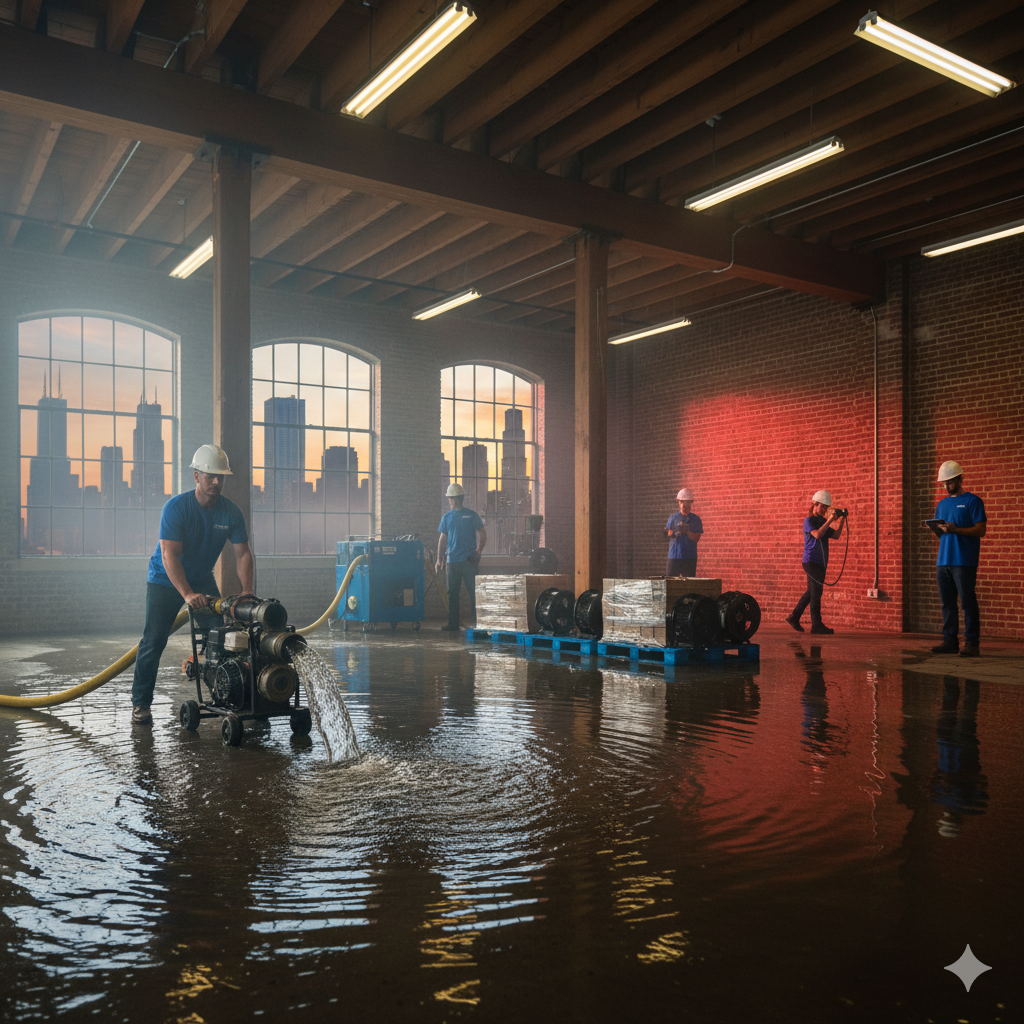
The Comprehensive Recovery Blueprint: Navigating Professional Water Damage Restoration Service in Chicago

water damage restoration service

When the temperature drops below zero on a January night in Hyde Park or a sudden spring deluge overwhelms the infrastructure near River North, the integrity of a property is immediately at risk. Water is a patient destroyer. In the context of Chicago’s unique urban landscape—ranging from historic greystones to modern glass high-rises—a water intrusion is not merely a mess to be mopped; it is a complex biological and structural emergency.

Securing a professional water damage restoration service in 2026 requires more than just calling a contractor with a shop-vac. It requires a partner who understands the specific atmospheric demands of the Midwest, the technical rigors of high-capacity drying, and the intricate bureaucracy of the insurance industry. For property owners, the goal is not just to “get the water out,” but to ensure that the building remains structurally sound and biologically safe for years to come.

The Physics of a Flooded Environment

Water damage is progressive. To understand why professional intervention is necessary, one must look at the physics of how moisture interacts with common Chicago building materials. When a pipe bursts or a foundation fails, water moves from areas of high concentration to low concentration through capillary action and vapor pressure.

The Porosity Factor

In many Chicago neighborhoods like Logan Square, older homes feature lath-and-plaster walls and solid oak flooring. These materials are highly porous. Unlike modern drywall, which can often be “cut and tossed,” historic materials require a specialized drying approach to prevent permanent warping or “cupping.” A professional water damage restoration service utilizes moisture mapping—using non-penetrating meters and thermal imaging—to track exactly how deep the water has traveled into the “skeletal” components of the house.

Secondary Damage and Humidity

As water sits, it evaporates into the air, raising the relative humidity (RH) of the indoor environment. When RH exceeds 60%, secondary damage begins. This manifests as peeling wallpaper, sagging ceilings in rooms far from the original leak, and the activation of dormant mold spores. Professional restoration is essentially a battle against the “dew point,” using industrial-grade dehumidification to pull moisture out of the air faster than the materials can release it.

The Logistics of a Chicago Emergency: 60-Minute Response Realities

In a city defined by its traffic and density, the speed of arrival is a primary indicator of a successful outcome. Redefined Restoration has built its operational model around the “Chicago hour”—the understanding that an emergency in the Loop requires different logistics than one in the quiet suburbs.

Why the First 90 Minutes Matter

Within the first hour of a major water event, wood finishes begin to swell and dyes from rugs can permanently stain flooring. By the 90-minute mark, the saturation of insulation begins to compromise the R-value of the walls, a critical concern during a Chicago winter. By dispatching IICRC-certified crews equipped with high-capacity pumps immediately, the goal is to shift the property from a “state of loss” to a “state of stabilization” before the next business day begins.

Neighborhood-Specific Challenges

Every Chicago neighborhood presents different structural hurdles:

  • The Loop & River North: High-rise water damage often involves “vertical migration,” where a leak on the 20th floor affects a dozen units below. This requires coordination with building engineers and the use of portable, high-efficiency equipment that fits into service elevators.
  • Hyde Park & Historic Districts: Vintage plumbing and thick masonry walls require slower, more controlled drying to prevent “over-drying,” which can cause antique wood to crack.
  • Lakefront Properties: Seepage from high water tables near Lake Michigan requires constant extraction and heavy-duty sanitization to combat the microbes found in lake-proximate groundwater.

Strategic Advocacy: Navigating the Insurance Claim Process

For most Chicago homeowners, the financial burden of a flood is as stressful as the physical cleanup. One of the most significant advantages of hiring an established water damage restoration service is the administrative support provided during the claims process.

The Role of the Dedicated Project Manager

At Redefined Restoration, the technical work is only half the battle. We assign a dedicated Project Manager to every loss. This individual acts as the primary point of communication between the homeowner and the insurance adjuster. Rather than the homeowner trying to explain “wicking” or “microbial growth” to an adjuster, the Project Manager provides a professional, documented scope of work that speaks the language of the insurance industry.

Industry-Standard Documentation

Insurance companies require specific “proof of loss” to approve a claim. In 2026, this documentation has become highly technical. It includes:

  1. Moisture Logs: Daily readings showing the progression of the drying process.
  2. Psychrometric Charts: Calculations of temperature and humidity that prove the drying environment was managed according to IICRC protocols.
  3. Photographic Evidence: “Before, during, and after” photos of every affected area, including hidden spaces like wall cavities and subfloors.
  4. Direct Billing: Simplifying the process by submitting industry-standard estimates directly to major carriers, which often results in faster settlements and less out-of-pocket stress for the client.

water damage restoration service

The Technical Execution: Phases of Professional Restoration

A professional water damage restoration service follows a rigorous, scientific sequence. Skipping a step in this process is what leads to “recurrent mold” or “mystery smells” months after the event.

Phase 1: Extraction and Physical Removal

The most efficient way to dry a building is to remove water in its liquid state. We use truck-mounted extraction units that are exponentially more powerful than a standard wet-vac. This phase isn’t just about the floor; it’s about extracting moisture from carpet padding and deep within upholstery.

Phase 2: Sanitization and Antimicrobial Application

In Chicago, water damage is rarely “clean.” Even a broken freshwater pipe becomes “gray water” once it touches a dusty floor or travels through a wall cavity. We apply EPA-approved, hospital-grade antimicrobials to prevent the “amplification” of mold and bacteria. This is especially vital in basement floods near Lake Shore Drive, where groundwater may carry urban contaminants.

Phase 3: High-Efficiency Dehumidification (LGR Technology)

We utilize Low Grain Refrigerant (LGR) dehumidifiers. Unlike standard units, LGR dehumidifiers are designed to continue removing water vapor even when the air is already quite dry. In the high-density environment of a Chicago apartment, this is the only way to ensure that moisture is pulled from deep inside the wooden studs and sill plates.

Phase 4: Controlled Airflow and Temperature Management

Air movers are not just “fans.” They are strategically placed to create a vortex of high-velocity air that breaks the “boundary layer” of moisture on surface materials. By controlling the temperature of the room, we maximize the air’s ability to hold vapor, which the dehumidifiers then remove.

Longevity and Value: Why Technical Accuracy Matters

A house is often a Chicagoan’s most significant asset. Cutting corners on a water damage restoration service can result in a permanent decrease in property value.

Avoiding the “Mold Disclosure” Trap

When you sell a home in Illinois, you are often required to disclose past water damage and mold remediation. A professionally managed restoration—complete with a “Certificate of Dryness” and third-party lab testing if necessary—is a valuable asset during a real estate transaction. It proves to future buyers that the issue was handled with technical accuracy and that the structural integrity was never compromised.

Preserving Structural Materials

“Dry rot” is a misnomer; wood rot requires moisture. When water is left in the subfloor or the bottom plate of a wall, it invites wood-decaying fungi. Over time, this can lead to sagging floors and compromised load-bearing walls. Professional drying ensures the moisture content (MC) of the wood is returned to its “dry standard”—typically between 8% and 12% for the Chicago climate.

Frequently Asked Questions in the Field

While we do not list these as a Q&A, these points address the primary concerns we hear from Chicago property owners every day.

Can I just dry it myself with fans?

The short answer is: you can dry the surface, but you cannot dry the structure. Household fans move air, but they do not remove moisture from the environment. Without industrial dehumidification, you are simply moving wet air around, which often results in mold growth on the ceiling or inside the walls. Furthermore, without professional moisture meters, you have no way of knowing if the water has reached the insulation or the subfloor.

Is the smell permanent?

The “musty” odor associated with water damage is actually the off-gassing of mold or bacteria. If the restoration is handled correctly—including deep sanitization and the use of HEPA air scrubbers—the smell will not be permanent. However, if the water is allowed to sit for more than 48 hours, the odor can permeate porous materials like drywall and wood, requiring more aggressive “odor counteraction” treatments.

How do I know when it’s truly dry?

“Dry” is a scientific measurement, not a feeling. We use “moisture points” and comparison readings from dry parts of the building. We do not remove our equipment until the readings show that the affected materials have reached equilibrium with the rest of the home. This data-driven approach is what allows Redefined Restoration to offer a 100% satisfaction guarantee.

Chicago’s Seasonal Vulnerabilities: What to Watch For

Our local climate in 2026 continues to present seasonal challenges that require property owners to remain vigilant.

  • Winter (The Freeze-Thaw Cycle): Pipes in Chicago often freeze not because the whole house is cold, but because a tiny draft in the basement or an outer wall lets in a “jet” of sub-zero air. If you see a faucet with a reduced flow during a cold snap, it is a sign of an impending burst.
  • Spring (Overloaded Sewer Systems): Chicago’s combined sewer system can become overwhelmed during heavy rains, leading to “backflow” into basements. This water is Category 3 (highly contaminated) and requires immediate professional extraction and heavy sanitization.
  • Summer (High Humidity and AC Failures): High-rise buildings often see water damage from air conditioning condensate lines that clog, leading to water dripping behind walls for weeks before it is noticed.

Building a Relationship of Trust

Redefined Restoration was founded on the principle that property owners deserve transparency during a crisis. In an industry where “storm chasers” often appear after a disaster, we take pride in our deep local roots and our 15 years of Chicago experience.

Trust is built through:

  • Transparent Pricing: No hidden “emergency fees” that aren’t explained upfront.
  • Professional Conduct: Crews that respect your property, use floor protection, and maintain a clean job site.
  • Technical Authority: Technicians who can explain the why behind every piece of equipment they place in your home.
  • Accountability: Standing behind our work with documented proof of dryness and a commitment to your total satisfaction.

Conclusion: Turning the Tide on Water Damage

A water loss is a disruption, but it does not have to be a permanent tragedy. By choosing a water damage restoration service that prioritizes rapid local response, scientific drying protocols, and aggressive insurance advocacy, you are taking the most important step toward protecting your Chicago property.

The “Redefined” approach is about more than just drying a floor; it is about restoring the rhythm of your life and the safety of your home. Whether you are dealing with a burst pipe in a Logan Square bungalow or a major commercial flood in River North, remember that the clock is ticking. Professional help is not just an option—it is the difference between a minor repair and a total structural loss.

If you are facing a water emergency in Chicago today, don’t wait for the damage to become permanent. Contact a team that understands the city, the science, and the stakes.

The Science of Dry: Navigating Professional Water Damage Restoration in the Chicago Climate

water damage restoration service

Imagine returning to your River North loft or your family home in Logan Square after a long weekend, only to be met by the unmistakable, heavy scent of damp drywall and the sound of a slow, persistent drip. In the high-stakes environment of Chicago real estate, water is a silent predator. Whether it is a frozen pipe that finally gave way during a January deep freeze or a basement surge following a torrential Midwestern spring rain, the clock begins ticking the moment moisture meets your structural materials.

For property owners in 2026, understanding the mechanics of water damage restoration is not merely about cleanup; it is about preservation, liability mitigation, and the technical precision required to return a building to a pre-loss condition. This isn’t a task for a shop-vac and an open window. In a city where humidity levels fluctuate wildly and historic architecture meets modern high-rises, the restoration process requires a sophisticated blend of thermodynamics, microbiology, and structural engineering.

The Critical Window: Why Minutes Matter in Chicagoland

In the restoration industry, we often speak about the “Golden Hours”—the first 24 to 48 hours following a water intrusion. This is the period during which damage can still be contained. Beyond this window, a Category 1 loss (clean water from a broken pipe) can rapidly degrade into a Category 3 loss (highly contaminated water) due to the proliferation of microbial growth and the chemical breakdown of building materials.

In Chicago, geography plays a significant role in response times. Traffic congestion on Lake Shore Drive or the Danbury can turn a minor leak into a major flood if your restoration partner is coming from the far suburbs. This is why Redefined Restoration prioritizes a logistical model that allows for an emergency arrival within 60 to 90 minutes for most neighborhoods. When high-capacity pumps and IICRC-certified crews arrive on the scene quickly, the “wicking” effect—where water travels up drywall and into wooden studs—is significantly curtailed.

The Physics of Absorption

Water doesn’t just sit on the floor; it seeks equilibrium. Through capillary action, moisture moves into porous materials like gypsum board, hardwood, and concrete. In Hyde Park, where many homes feature vintage lath and plaster, this absorption can lead to structural sagging or the permanent warping of historical architectural details. Professional water damage restoration stops this progression by creating a controlled environment that encourages evaporation faster than the material can absorb the liquid.

Chicago’s Unique Challenges: From Deep Freezes to Lakefront Seepage

Chicago’s climate is uniquely hostile to plumbing and structural integrity. Our seasoned technicians have spent over 15 years witnessing the specific ways water destroys property in the Windy City.

The “Big Freeze” and Burst Pipes

Winter in Chicago isn’t just a seasonal shift; it’s a structural stress test. When temperatures plummet, the water inside poorly insulated pipes in outer walls can freeze, expand, and exert thousands of pounds of pressure per square inch. When that pipe inevitably bursts, the resulting flood is often high-volume and high-pressure. Restoration in these conditions requires more than just water extraction; it requires managed heating to ensure that the drying equipment can operate effectively in sub-zero ambient temperatures.

Basement Flooding and Lake Level Pressures

For properties near Lake Shore Drive or in lower-lying areas, hydrostatic pressure is a constant concern. When the ground becomes saturated, water is pushed through foundation cracks or up through floor drains. This water is rarely “clean.” It often carries silt, urban runoff, and potential pathogens. Dealing with basement floods in 2026 requires a high degree of technical accuracy in sanitization, ensuring that the space is not just dry, but also biologically safe for habitation.

The Technical Phases of Professional Restoration

A comprehensive water damage restoration project is a multi-stage operation. Each phase must be documented and executed with precision to satisfy both building safety codes and insurance requirements.

Phase 1: Emergency Assessment and Documentation

Upon arrival, the first priority is safety—identifying electrical hazards and gas leaks. Following safety protocols, the crew begins a moisture mapping process. Using non-penetrating moisture meters and thermal imaging cameras, technicians identify the hidden migration of water behind tiles or under laminate flooring. This data is critical for the Project Manager, who manages the communication with your insurance provider, ensuring that every destroyed square foot is accounted for in the claim.

Phase 2: High-Volume Extraction

The most efficient way to dry a building is to remove water in its liquid state. We utilize industrial-grade, truck-mounted extraction units and high-capacity submersible pumps. This is particularly vital in large-scale commercial losses or flooded basements where thousands of gallons may be present. Every gallon pumped out is a gallon that doesn’t have to be evaporated, saving days of drying time.

Phase 3: Stabilizing the Environment (Dehumidification)

Once standing water is gone, the air becomes the enemy. High humidity in a closed space will lead to secondary damage—mold growth on ceilings, the peeling of wallpaper, and the “cupping” of expensive hardwood floors. By deploying LGR (Low Grain Refrigerant) dehumidifiers, we pull moisture out of the air, creating a “thirsty” environment that draws deep-seated water out of the building’s skeleton.

Phase 4: Controlled Evaporation and Airflow

Large axial air movers are positioned strategically to create a vortex of high-velocity airflow across wet surfaces. This disrupts the stagnant “boundary layer” of saturated air sitting on surfaces, accelerating the transition of water from liquid to vapor. In Chicago’s high-rise apartments, where natural ventilation is often impossible, these mechanical systems are the only way to ensure structural drying.

water damage restoration service

Beyond the Surface: Hidden Dangers and Long-Term Health

One of the most common mistakes property owners make is assuming a space is “dry” because it feels dry to the touch. This misconception is where the most expensive long-term damage occurs.

Structural Integrity and “Dry Rot”

Wood that remains at a moisture content above 16-20% for an extended period becomes a breeding ground for wood-decay fungi. Over time, this weakens floor joists and wall studs. Professional water damage restoration involves “drying to a standard,” which means measuring the moisture content of the wood against a “dry goal” established from an unaffected area of the building.

The Mold Threshold

In the humid summers of Chicago, mold spores can begin to colonize in as little as 24 hours. Once mold is established in the paper backing of drywall or the fibers of carpet padding, simple drying is no longer enough; remediation and demolition of affected materials become necessary. Rapid response from a team like Redefined Restoration is designed specifically to beat this microbial clock.

Navigating the Insurance Maze in 2026

Water damage is almost always an unplanned expense. For many, the financial stress is as significant as the physical damage. A hallmark of a professional restoration firm is their ability to act as a liaison between the property owner and the insurance company.

The Role of the Project Manager

When you engage a professional service, you aren’t just hiring technicians; you are hiring a Project Manager. This individual is responsible for documenting the loss using industry-standard software like Xactimate. They provide the itemized “proof of loss” that insurance adjusters require to process a claim efficiently. By offering 100% satisfaction guarantees and maintaining transparent communication, a restoration partner reduces the “friction” of the claims process.

Mitigating Secondary Damage

Insurance policies generally include a “Duty to Mitigate” clause. This means the policyholder is required to take reasonable steps to prevent further damage after a loss occurs. Hiring a professional restoration team immediately is considered a primary step in mitigation. If a homeowner waits several days to call for help, an insurer may argue that the resulting mold or structural rot was preventable and, therefore, not covered.

Choosing a Restoration Partner in Chicago

Not all restoration companies are created equal. When evaluating providers for water damage restoration, property owners should look for specific indicators of professional authority:

  • IICRC Certification: The Institute of Inspection, Cleaning and Restoration Certification is the industry’s gold standard. It ensures that the technicians on your property are trained in the latest scientific drying methods.
  • Local Testimonials: A company’s reputation in neighborhoods like River North or Logan Square is a testament to its ability to handle the local infrastructure.
  • Availability of Specialized Equipment: Ask if the company owns their own high-capacity pumps and HEPA air scrubbers. Subcontracting these items can lead to delays that your property cannot afford.
  • Insurance Coordination: A firm that refuses to work directly with your insurer may leave you with a massive out-of-pocket bill and the headache of reimbursement.

The Path to Recovery: What to Expect

The restoration process can be intrusive. Expect the presence of loud machinery (dehumidifiers and fans) that must run 24/7 until the drying goals are met. Expect technicians to return daily to take moisture readings and adjust equipment. While this may be a temporary inconvenience, it is a surgical necessity to prevent the permanent loss of your property’s value.

In 2026, the technology behind Redefined Restoration allows for faster, quieter, and more efficient drying than ever before. However, the fundamental principle remains the same: the faster the response, the better the outcome.

Restoration vs. Reconstruction

Once the “dry-out” is complete, the restoration phase ends and the reconstruction phase begins. This may involve hanging new drywall, painting, or installing new flooring. By ensuring the “bones” of the house are perfectly dry before these finishing touches are applied, you guarantee that you aren’t just covering up a problem that will resurface as mold or rot in six months.

Conclusion: Protecting Your Chicago Investment

Water damage is an emotionally and physically taxing event. Whether you are a business owner in the Loop or a homeowner in the suburbs, the threat of water intrusion is a reality of urban living in a four-season climate. By understanding the phases of water damage restoration and the importance of a rapid, 60-90 minute local response, you can transform a potential disaster into a manageable repair.

The goal of professional restoration is to restore not just your property, but your peace of mind. In 2026, don’t leave your most valuable asset to chance. When the water rises, ensure you have a team backed by 15 years of Chicago experience, the right certifications, and the high-capacity equipment required to win the battle against moisture.

How do I prevent frozen pipes during Chicago winters?

Icicles hanging from frozen pipes in a crawlspace.

Keep your heat at a minimum of 55°F throughout your home, open cabinet doors under sinks to allow warm air circulation, let faucets drip slightly during extreme cold snaps, and insulate exposed pipes in unheated areas like basements, crawl spaces, and garages. These preventive measures are especially critical during Chicago’s brutal winter months when temperatures routinely plunge below zero and polar vortex events can create emergency conditions. Taking action before the cold arrives can save you from thousands of dollars in water damage and the headache of dealing with burst pipes during the coldest days of the year.

Why Frozen Pipes Are a Serious Threat in Chicagoland

Chicago winters are notoriously harsh, with subfreezing temperatures lasting for weeks and occasional polar vortex events driving thermometers well below zero. When water inside your pipes freezes, it expands, creating immense pressure that can crack or burst the pipe. Once temperatures rise and the ice thaws, water comes rushing out, flooding basements, damaging walls, and destroying personal belongings.

Homes throughout Cook, DuPage, Lake, Will, and Kane Counties face unique vulnerabilities. Classic Chicago bungalows, historic greystones in neighborhoods like Lincoln Park and Hyde Park, and mid-century ranch homes in suburbs like Naperville, Schaumburg, and Arlington Heights often have pipes running through exterior walls or unheated spaces. Finished basements—common in area homes—can sustain significant damage when pipes burst, affecting not just the plumbing but also drywall, flooring, furniture, and irreplaceable personal items.

At Redefined Restoration, we respond to countless frozen pipe emergencies each winter across communities from Evanston to Orland Park. The good news? Most of these disasters are entirely preventable with the right precautions.

Essential Prevention Steps for Chicago Homeowners

Maintain Adequate Heat Throughout Your Home

Never let your thermostat drop below 55°F, even when you’re away from home or trying to save on heating costs. This minimum temperature helps ensure that pipes in exterior walls and unheated spaces don’t reach freezing temperatures. If you’re leaving town during winter months, ask a neighbor to check on your home daily to confirm the heat is working properly—furnace failures during cold snaps are a leading cause of frozen pipe disasters.

Insulate Vulnerable Pipes

Identify pipes in unheated or poorly insulated areas: basements, crawl spaces, attics, garages, and along exterior walls. Foam pipe insulation is inexpensive and available at any hardware store throughout the Chicagoland area. Pay special attention to pipes on north-facing walls, which receive less sunlight and stay colder. For homes in older neighborhoods like Oak Park, Elmhurst, or Beverly with original plumbing configurations, professional insulation may be worth the investment.

Let Faucets Drip During Extreme Cold

When temperatures are forecast to drop below 10°F or during polar vortex warnings, allow faucets to drip slightly—both hot and cold water. Moving water is much harder to freeze than standing water. Focus on faucets served by pipes running through exterior walls or unheated spaces. The small amount of water you’ll use costs far less than repairing water damage from a burst pipe.

Open Cabinet Doors

Kitchen and bathroom sinks are often located against exterior walls. Opening the cabinet doors beneath these sinks allows warm air from your home to circulate around the pipes, keeping them above freezing temperatures. This simple step is particularly important during overnight hours when temperatures drop to their lowest points.

Seal Cracks and Openings

Inspect your home’s exterior for cracks, gaps, or openings near pipes. Cold air flowing through these openings can quickly freeze nearby pipes. Seal openings with caulk or expanding foam. Check basement windows, dryer vents, and anywhere pipes enter your home. The freeze-thaw cycles common in Chicagoland winters can create new cracks each season, so make this an annual inspection task.

Disconnect Outdoor Hoses and Shut Off Exterior Faucets

Before the first hard freeze—typically by late November in the Chicago area—disconnect all garden hoses and drain outdoor faucets. If your home has shut-off valves for exterior faucets, close them and drain the remaining water from the lines. Frozen exterior faucets can cause pipes to burst inside your walls.

What to Do If Pipes Freeze

If you turn on a faucet and only a trickle comes out, you likely have a frozen pipe. Act immediately:

  • Keep the faucet open—as the ice melts, water needs somewhere to flow
  • Apply gentle heat to the frozen section using a hair dryer, heating pad, or warm towels (never use open flames or high-heat devices)
  • Open cabinet doors and increase heat in the affected area
  • If you cannot locate the freeze or if a pipe has burst, shut off your main water valve immediately

When Disaster Strikes: Professional Water Damage Restoration

Even with the best prevention efforts, pipe bursts can happen. If you experience frozen pipe damage in Chicago, Lincoln Park, Lakeview, Logan Square, Wicker Park, Naperville, Downers Grove, Tinley Park, or anywhere across the Chicagoland area, immediate action is critical.

Redefined Restoration provides 24/7 emergency response for frozen pipe disasters throughout Cook, DuPage, Lake, Will, and Kane Counties. Our team quickly extracts water, dries affected areas, and begins restoration to prevent mold growth and structural damage. We work directly with insurance companies to streamline your claim process during an already stressful time.

Prepare Now for Winter Peace of Mind

Don’t wait until the next polar vortex warning to protect your home. Taking preventive steps now—before December’s deep freeze arrives—gives you peace of mind throughout the harsh Chicago winter season.

Need help assessing your home’s vulnerability to frozen pipes or dealing with winter water damage? Contact Redefined Restoration at https://redefinedresto.com or call us 24/7 for emergency service throughout Chicagoland. Our experienced team serves all Chicago neighborhoods and surrounding communities with fast, professional restoration services you can trust.

Should I run my dehumidifier in winter?

A portable heater getting soaked with water.

Generally no, you don’t need to run your dehumidifier during Chicago winters since cold air naturally holds less moisture and indoor heating systems dry out the air considerably. However, basements in older homes may still experience dampness issues even in winter, particularly if you have water seepage, poor ventilation, or an active moisture source. Monitor your indoor humidity levels with a hygrometer, and only run your dehumidifier if readings consistently exceed 50-60%.

Why Winter Air Is Naturally Drier

During Chicagoland’s brutal winter months—especially during those sub-zero polar vortex events we experience from December through February—outdoor air contains very little moisture. When this cold air enters your home and gets heated, its relative humidity drops significantly. This is why many Chicago-area residents experience dry skin, static electricity, and irritated sinuses during winter rather than humidity problems.

Your furnace or heating system further reduces indoor moisture as it cycles, often dropping humidity levels to 20-30% or even lower in well-insulated homes. For most households in neighborhoods from Lincoln Park to Naperville, the challenge in winter is adding moisture, not removing it. Many homeowners actually run humidifiers during these months to combat the excessive dryness that can damage wood furniture and flooring.

When You Might Need a Dehumidifier in Winter

Despite the general dryness of Chicago winters, certain situations may still warrant running a dehumidifier:

Basement Moisture Problems

Chicago bungalows, classic greystones, and older two-flats throughout Evanston, Oak Park, and surrounding Cook County communities often have basement moisture issues year-round. If you notice condensation on basement walls, musty odors, or readings above 50% humidity, you may have water seeping through your foundation due to groundwater pressure or aging waterproofing systems.

These moisture problems don’t take winter vacations. The freeze-thaw cycles that Chicago experiences can actually worsen foundation cracks, allowing more water infiltration even when temperatures drop. Homes in communities like Elmhurst, Downers Grove, and Arlington Heights with high water tables may experience basement dampness regardless of the season.

Poor Ventilation Issues

Finished basements without adequate ventilation can trap moisture from everyday activities like doing laundry, showering in basement bathrooms, or simply from concrete foundation walls that never fully dry. Even in winter, these spaces may maintain humidity levels that promote mold growth if air circulation is insufficient.

Active Water Problems

If you’re dealing with ongoing water intrusion—perhaps from a crack in your foundation, condensation from uninsulated pipes, or a plumbing leak—you’ll need dehumidification even during cold months. Water damage doesn’t care about the season, and mold can develop within 24-48 hours when conditions are right.

Monitoring Your Indoor Humidity Levels

The ideal indoor humidity range for Chicago-area homes is 30-50% year-round. Purchase an inexpensive hygrometer (humidity meter) to monitor levels in problem areas, particularly basements. Place the meter away from walls and moisture sources to get an accurate reading.

Check humidity levels weekly during winter. If readings consistently stay below 40%, you definitely don’t need a dehumidifier. If levels exceed 50-60%, investigate the moisture source and consider running your dehumidifier intermittently.

Energy Efficiency Considerations

Running a dehumidifier unnecessarily during winter wastes energy and money—something every Chicagoland homeowner wants to avoid during those expensive heating months. Dehumidifiers work by cooling air to condense moisture, then reheating it. This process fights against your furnace, making both systems work harder and driving up utility costs.

If you must run a dehumidifier in winter, set it to 45-50% rather than the 30-40% you might target in summer. Use a model with an auto-shutoff feature and energy-efficient rating to minimize unnecessary operation.

Addressing the Root Cause

Rather than continuously running a dehumidifier in winter, identify and fix the underlying moisture problem. Common culprits in older Chicago-area homes include:

  • Foundation cracks allowing water seepage
  • Poor exterior grading directing water toward your foundation
  • Missing or damaged gutters and downspouts
  • Unvented dryers or bathroom fans
  • Plumbing leaks or condensation on pipes
  • Sump pump issues

Fixing these problems permanently protects your home from water damage, prevents mold growth, and saves energy costs.

Professional Help for Persistent Moisture Problems

If you’re running your dehumidifier year-round to manage basement humidity, you likely have a water intrusion or ventilation problem that requires professional attention. Persistent moisture can lead to mold growth, structural damage, and unhealthy indoor air quality throughout homes in Schaumburg, Tinley Park, Orland Park, and across DuPage, Lake, Will, and Kane Counties.

Get Expert Moisture Assessment Today

Don’t let winter humidity problems lead to costly water damage or mold issues. Redefined Restoration provides comprehensive moisture assessments and water damage solutions throughout Chicagoland, from Chicago neighborhoods like Lakeview, Logan Square, Wicker Park, Hyde Park, and Beverly to surrounding suburban communities. Our certified technicians identify moisture sources, implement lasting solutions, and restore your peace of mind.

Contact Redefined Restoration at https://redefinedresto.com or call us today for a professional evaluation of your winter humidity concerns. We’re available 24/7 for emergency water damage situations and offer free consultations for moisture problems affecting your home.