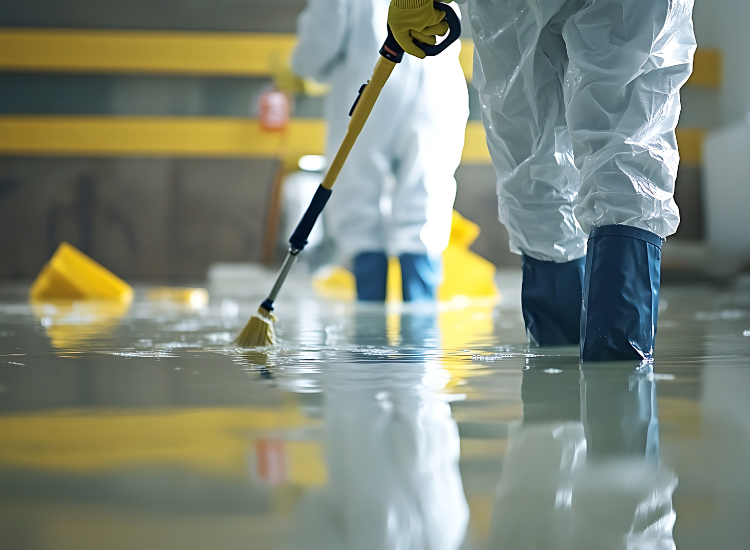
The Invisible Path of Water: A Comprehensive Guide to Structural Recovery and Long-Term Property Health

water damage restoration services

It is 2:00 AM. You are jolted awake not by an alarm, but by the rhythmic, heavy sound of rushing water. As your feet hit the floor, they aren’t met with the familiar comfort of carpet or hardwood, but with a cold, unsettling saturation. Whether it is a burst pipe, a failed water heater, or a sudden structural breach following a heavy storm, the immediate emotional weight of water intrusion is staggering. In these moments, the physical water you see is only the surface of a much larger, more complex problem.

Water is a silent opportunist. It follows the path of least resistance, migrating through wall cavities, under floorboards, and deep into porous building materials through capillary action. Within minutes, your property’s structural integrity begins to face a chemical and biological countdown. This is where the distinction between “cleaning up” and professional water damage restoration services becomes the deciding factor in whether your home or business survives the event or suffers years of recurring issues.

At Redefined Restoration, we believe that recovery is a science. In the following guide, we will explore the physics of water migration, the technical standards of professional mitigation, and why the first 48 hours of any water event in 2026 are the most critical for your property’s future.

The Physics of Water Migration: How Damage Spreads

To understand the necessity of professional intervention, one must first understand how water behaves once it enters a controlled environment. Unlike a spill on a countertop, a significant water intrusion event involves “migration.”

Capillary Action and Porous Materials

Building materials like drywall, wood framing, and insulation are inherently hygroscopic—they actively absorb and hold moisture. Through a process called capillary action, water can actually move upward against gravity. A flood that covers only two inches of your floor can wick up into the drywall as high as 12 to 18 inches within a matter of hours. This “invisible” moisture creates a perfect, humid environment behind the walls where airflow is nonexistent.

Surface Tension and Hidden Pockets

Water’s surface tension allows it to cling to the underside of subfloors and the interior of floor joists. In many regional construction styles, especially those involving crawlspaces or multi-level flooring, water becomes trapped in “dead air” spaces. If this moisture is not identified and extracted using high-velocity air movers and industrial dehumidifiers, it will lead to “dry rot” and structural weakening that may not manifest for months.

Categorizing the Threat: The IICRC Standard

Not all water is created equal. Professional water damage restoration services categorize water based on its source and potential for contamination. This classification, dictated by the Institute of Inspection, Cleaning and Restoration Certification (IICRC), determines the safety protocols and the salvageability of your belongings.

Category 1: “Clean” Water

This originates from a sanitary source, such as a broken supply line or a falling rainwater leak. While the water itself is clean, the moment it contacts building materials or soil, it begins to dissolve minerals and organic matter. If a Category 1 leak is left untreated for more than 48 hours, it can degrade into a Category 2 or 3 situation due to microbial growth.

Category 2: “Gray” Water

This water contains significant contamination and has the potential to cause discomfort or sickness if consumed or contacted. Examples include discharge from dishwashers, washing machines, or overflows from toilet bowls (without feces).

Category 3: “Black” Water

This is the most dangerous classification. Category 3 water is grossly unsanitary and contains pathogenic, toxigenic, or other harmful agents. This includes sewage, rising water from rivers or streams, and any water that has stood for an extended period. In these cases, porous materials like carpets and drywall are almost never salvageable and must be removed under strict environmental controls to protect the health of the occupants.

The 48-Hour Window: The Biological Clock

In the restoration industry, we refer to the first 48 hours as the “Golden Window.” This is because the biological clock of your home starts ticking the moment moisture meets organic food sources like the paper backing on drywall or the starch in carpet adhesive.

Microbial Proliferation

Mold spores are omnipresent in almost every indoor environment, usually dormant and harmless. However, when the relative humidity (RH) in a room spikes above 60% due to standing water, these spores activate. Within 24 to 48 hours, mold colonies can begin to form. By the time you can smell a “musty” odor, the colonization is already well underway.

Secondary Damage

Secondary damage refers to the destruction caused not by the liquid water itself, but by the high humidity the water creates. In a flooded basement, the air becomes so saturated that moisture begins to condense on the ceiling and walls of the upper floors. This can cause “sweating” on windows, the peeling of wallpaper, and even the buckling of hardwood furniture in rooms that never touched a drop of the original floodwater.

water damage restoration services

The Science of Psychrometry: More Than Just Fans

A common misconception is that “opening the windows and turning on some fans” will dry out a room. In reality, this often makes the problem worse by moving humid air around without removing the moisture from the environment. Professional water damage restoration services rely on psychrometry—the study of the thermodynamic properties of air-water vapor mixtures.

Balanced Drying

Drying is a delicate balance between three elements:

  1. Air Movement: Breaking the boundary layer of saturated air at the surface of a material to encourage evaporation.
  2. Dehumidification: Removing the evaporated moisture from the air so the air can continue to “pull” water out of the materials.
  3. Temperature Control: Warmer air holds more moisture, which can speed up evaporation, but it must be managed carefully to avoid fueling mold growth.

In 2026, we utilize LGR (Low Grain Refrigerant) dehumidifiers and desiccant systems that are capable of pulling moisture out of the air even in extremely low-humidity environments, ensuring that the “deep” moisture inside structural wood is successfully reached.

Advanced Diagnostic Technology

You cannot manage what you cannot measure. One of the primary reasons property owners trust Redefined Restoration is our use of advanced diagnostic tools that see through walls and under floors.

Infrared Thermography

Thermal imaging cameras allow us to detect temperature differentials. Because wet materials are generally cooler than dry ones due to evaporative cooling, we can see exactly how far a leak has traveled behind a tiled bathroom wall or under a hardwood floor without needing to tear the material out first.

Moisture Mapping

Using both invasive (pin-style) and non-invasive (ultrasonic) moisture meters, our technicians create a “moisture map” of your property. We establish “dry standards” based on unaffected areas of your home. This allows us to prove, with empirical data, when your property has returned to a safe, pre-loss condition—a critical step for insurance verification.

The Professional Workflow: What to Expect

When our team arrives at your property, we follow a disciplined, five-step process designed to minimize loss and maximize structural recovery.

1. Inspection and Assessment

We begin by identifying the source of the water and ensuring it is stopped. We then categorize the water and assess the scope of the damage using the diagnostic tools mentioned above.

2. Water Extraction

Removing standing water is 500 times more efficient than evaporating it. We use truck-mounted extraction units and submersible pumps to remove the bulk of the water. On high-end flooring, we may use “weighted” extraction tools that pull water through the carpet padding without needing to remove the carpet.

3. Decontamination and Stabilization

We apply EPA-registered antimicrobials to prevent mold growth and neutralize odors. In Category 3 events, this includes a rigorous cleaning of all non-porous surfaces.

4. Controlled Drying and Monitoring

We strategically place air movers and dehumidifiers to create an optimal drying vortex. Our technicians visit the site daily to monitor the equipment and adjust the plan based on the moisture readings. This is not a “set it and forget it” process; as materials dry, their needs change.

5. Final Documentation and Reconstruction

Once the “dry standards” are met, we provide a comprehensive report for your records and your insurance company. If structural materials were removed, our reconstruction team steps in to return the space to its original aesthetic beauty.

Dealing with Specialized Content: Electronics and Heirlooms

Water damage doesn’t just affect the “bones” of your house; it affects your life’s work. From servers and computers to family photo albums and antique textiles, content recovery is a specialized wing of restoration.

Electronics Recovery

The minerals in water, not the water itself, are what destroy electronics. If a device is professionally cleaned and dried before corrosion sets in, the success rate for data recovery and functionality is surprisingly high. We utilize specialized drying chambers for high-value tech assets.

Textiles and Fine Art

Smoke and water can be particularly devastating to fine art. We coordinate with conservators to ensure that paintings are stabilized and textiles are treated with the correct pH-balanced solutions to prevent bleeding and shrinking.

The Hidden Hazards: Safety First

Attempting a DIY restoration can expose you to several hazards that professional water damage restoration services are trained to mitigate.

Electrical Risks

Water and electricity are a lethal combination. Often, water travels through electrical conduits or settles in outlets. We perform a “lock-out, tag-out” procedure on affected circuits to ensure the site is safe for both our crew and the occupants.

Structural Instability

Saturated drywall can weigh several times its original weight, leading to ceiling collapses. Hardwood floors can “buckle” or “cup” with enough force to lift heavy furniture or even shift interior walls. We identify these tension points and stabilize them before they lead to injury.

Pathogens and Allergens

Beyond mold, stagnant water can harbor Legionella, E. coli, and other bacteria. Our teams use high-level Personal Protective Equipment (PPE) and HEPA air scrubbers to ensure that contaminants are filtered out of the air you breathe during the restoration process.

The Economics of Restoration: Protecting Property Value

In the real estate market of 2026, property history is more transparent than ever. A poorly handled water event can significantly diminish a home’s resale value and make it difficult to obtain insurance coverage in the future.

Insurance Advocacy

Navigating an insurance claim is often as stressful as the flood itself. Because we use industry-standard software and provide detailed moisture logs, we help streamline the communication between you and your adjuster. Our goal is to ensure that the scope of work is fully understood and covered, so you aren’t left with out-of-pocket expenses for a necessary structural repair.

Restoration vs. Replacement

A professional restoration often saves the insurance company—and the homeowner—money by salvaging expensive materials that a general contractor might simply throw away. By using specialized “injection drying” systems, we can often save high-end cabinetry and built-ins that would cost tens of thousands of dollars to replace.

Commercial Considerations: Minimizing Business Interruption

For business owners, water damage is measured in “downtime.” Every hour your facility is closed is an hour of lost revenue. Redefined Restoration understands the urgency of commercial recovery.

We work to create “contained” drying zones, allowing you to keep unaffected parts of your business open while we work. Whether it’s a retail space, a medical office with sensitive equipment, or a large-scale warehouse, our commercial response team is equipped to handle high-volume extraction and drying without compromising your operational flow.

Regional Challenges and Local Expertise

Every region has its own building “personality.” From the specific types of insulation used in our local climate to the regional soil composition that can affect foundation drainage, local expertise matters.

In our area, we face specific seasonal challenges. During the humid summer months, the lack of a “vapor barrier” in many older homes can lead to rapid mold growth after a leak. Conversely, our winters bring the threat of frozen pipes that burst behind walls, often going unnoticed until the spring thaw. We understand these local nuances and tailor our drying protocols to account for the regional weather patterns and construction standards.

Why DIY Often Leads to a Second Disaster

It is tempting to rent a few carpet fans and call the job done once the floor feels dry to the touch. However, “dry to the touch” is not the same as “structurally dry.”

The “Iceberg” Effect

The water you can see is the 10% above the surface. The 90% below the surface—the moisture trapped in the insulation, the sill plates, and the subfloor—is where the real damage happens. Without professional-grade extraction and dehumidification, this water will sit for weeks.

The Bleach Myth

One of the most dangerous DIY tips is using bleach to kill mold. Bleach is mostly water; while it may kill the surface mold on non-porous materials, the water in the bleach actually feeds the “roots” (hyphae) of the mold deep inside porous wood and drywall. Professional restorers use specialized, non-corrosive antimicrobials that penetrate the material and neutralize the threat at the source.

Resilience and the Path Forward

Recovering from water damage is a journey from chaos back to comfort. While the initial event is a trauma to both the building and its owners, a professional restoration process offers an opportunity to improve the property’s resilience.

As we move through 2026, the technology and methodology of water damage restoration services continue to evolve, focusing on faster drying times and more accurate diagnostics. At Redefined Restoration, we remain at the forefront of this evolution, ensuring that when you face the unexpected, you have a partner who brings calm, science, and a commitment to excellence to your doorstep.

Your home is more than a structure; it is the repository of your memories and the foundation of your security. Don’t let a temporary water event turn into a permanent problem. By choosing a professional path, you are choosing to protect your health, your finances, and your peace of mind.

Final Thoughts on Long-Term Mitigation

Once your property is dry and restored, the focus shifts to prevention. We often recommend simple upgrades like smart leak detectors, which can alert you to a pipe burst via your smartphone even if you are away from home. Regular maintenance of your HVAC system’s condensate lines and ensuring your sump pump has a battery backup are small investments that pay massive dividends in preventing future water damage.

Navigating Flood Damage Restoration in Chicago: Essential Insights for Property Owners

flood damage restoration

Chicago property owners face unique flood threats from Lake Michigan surges, heavy spring rains, and aging infrastructure in neighborhoods like Albany Park or the South Loop. Flood damage restoration demands swift, expert action to prevent mold, structural decay, and costly rebuilds. This guide unpacks the process, local challenges, and strategies to safeguard your investment.

Chicago’s Flood Risks Exposed

The Windy City’s flat terrain and combined sewer system amplify flooding during intense storms, often overwhelming basements in historic brownstones or modern condos. Properties near the Chicago River or in low-lying areas like Pilsen experience rapid water intrusion, saturating carpets, drywall, and electrical systems within hours. These events spike in spring and fall, when Lake Michigan levels rise and rainfall exceeds 2 inches in a day, turning routine maintenance into emergencies.

Local building codes require elevated HVAC units in flood zones, yet many pre-1980s structures lack these protections, leading to contaminated air systems post-flood. Property managers of multi-unit buildings in Logan Square report that undetected moisture behind walls fosters black mold, a health hazard exacerbated by Chicago’s humid summers. Restoration teams prioritize these vulnerabilities, using thermal imaging to detect hidden damage before it compromises tenant safety or property value.

Immediate Response: First 24 Hours Matter Most

Act within the first hour to minimize harm—shut off electricity at the breaker and avoid wading through water that may carry sewage from overflowing city drains. Extract standing water using wet vacuums if safe, but never bypass professionals for deep floods common in Chicago’s clay-heavy soil, which retains moisture longer than sandy substrates. Delays beyond 48 hours allow Category 3 contaminated water to seep into subfloors, breeding bacteria like E. coli prevalent in urban runoff.

Document everything with photos and videos for insurance claims, noting water levels and affected areas like warped hardwood in Lincoln Park rowhouses. Contact certified restorers immediately; in Chicago, IICRC standards dictate rapid response to comply with city health regulations. This phase sets the tone—poor handling escalates minor incidents into six-figure repairs.

Step-by-Step Flood Damage Restoration Breakdown

Restoration unfolds in precise phases, each tailored to Chicago’s variable climate where post-flood humidity can prolong drying.

Emergency Water Extraction

Technicians deploy high-capacity truck-mounted pumps to remove gallons per minute, followed by industrial extractors for carpets and upholstery. In Chicago high-rises, submersible pumps navigate tight elevator shafts, preventing water migration to lower floors. This step alone can extract 90% of visible water, critical before mold spores activate in warm indoor temps.

Comprehensive Drying and Dehumidification

Air movers and desiccant dehumidifiers circulate 500-1000 CFM to evaporate trapped moisture, monitored via moisture meters targeting under 15% in wood framing. Chicago’s cold snaps complicate this; teams use propane heaters to maintain 70-90°F, countering winter floods from burst pipes in uninsulated bungalows. Progress checks every 24 hours ensure no secondary damage, like rusting steel beams in West Side warehouses.

Mold Mitigation and Antimicrobial Treatment

Floodwaters introduce microbes; pros apply EPA-approved antimicrobials to all surfaces, then remove porous materials like swollen drywall if saturation exceeds 16%. In humid Chicago basements, HEPA vacuums capture 99.97% of airborne spores during containment with plastic sheeting. This prevents “sick building syndrome” reported in flood-hit commercial spaces along the Magnificent Mile.

Structural Cleaning and Inspection

Non-salvageable items—insulation, subfloors—get discarded per OSHA guidelines, while salvageable hardwood receives specialized drying. Electricians inspect wiring for corrosion, vital in Chicago’s older grid prone to surges. Odor control via ozone generators or hydroxyl units neutralizes musty smells lingering in HVAC ducts.

Why Chicago Properties Demand Specialized Expertise

The city’s freeze-thaw cycles weaken foundations, making flood-damaged concrete slabs prone to cracking under weight. Brick rowhouses in Uptown absorb water into mortar joints, leading to efflorescence and spalling if not addressed. Commercial facilities like Loop office towers face downtime costs exceeding $10,000 daily, underscoring the need for 24/7 responders familiar with Chicago’s permitting process through the Department of Buildings.

Regional construction favors slab-on-grade in bungalows, trapping water underneath and necessitating crawlspace ventilation upgrades. Property owners in flood-prone Englewood prioritize restorers with Chicago-specific experience, as generic teams overlook sump pump failures common during Nor’easters. Learn more about tailored solutions at Redefined Restoration’s flood damage repair page.

Health Hazards Lurking After Floods

Stagnant water breeds Aspergillus and Stachybotrys, triggering respiratory issues, especially in children or elderly tenants in dense Bronzeville apartments. Contaminants from Chicago’s industrial past—lead, asbestos disturbed in floods—require hazmat protocols. HVAC systems recirculate moldy air, dropping indoor air quality below EPA thresholds.

Restorers conduct post-clean air sampling, ensuring levels below 500 spores per cubic meter. Vulnerable groups like asthmatics in Humboldt Park benefit from HEPA filtration during recovery, reducing hospital visits by up to 40% per local health studies. Ignoring these risks invites lawsuits under Chicago’s strict habitability codes.

Insurance Navigation: Claims and Coverage Pitfalls

Standard homeowners policies cover sudden floods like appliance failures but exclude external flooding—necessitating NFIP or private riders for Lake Michigan overflows. Commercial owners in River North document pre-existing conditions to avoid denials, as adjusters scrutinize unsealed cracks.

File claims promptly, providing psychrometric charts from restorers proving drying efficacy. Chicago’s high claim volume delays payouts; pros like those at Redefined Restoration expedite with detailed reports. Expect deductibles of $5,000+ for basements, offset by preventive credits for backflow valves.

Preventive Measures Tailored to Chicago Homes

Install battery-backup sump pumps in basements, rated for 1/3 HP to handle 2,500 gallons/hour—essential for Edgewater properties near the lake. Elevate utilities 18 inches above grade per city code, and seal foundation cracks with hydraulic cement to block groundwater during rainy seasons.

Smart leak detectors integrated with apps alert owners to slow drips in condos, preventing escalation. For commercial spaces in Wicker Park, annual HVAC inspections catch coil corrosion early. Landscape grading slopes away from foundations, reducing runoff by 30% in sloped lots.

flood damage restoration

Commercial vs. Residential: Key Differences in Chicago

Residential bungalows emphasize family safety and quick habitability, focusing on carpet replacement and drywall demo. Commercial high-rises prioritize minimal disruption—phased drying allows partial occupancy in Fulton Market lofts while extracting from server rooms.

Inventory loss hits restaurants harder; contents restoration salvages $50,000+ in equipment via ultrasonic cleaning. Multi-tenant buildings require coordination with landlords, adhering to Chicago’s smoke-free ordinances during ozone treatments. Scale dictates equipment: trucks for single-family vs. generators for block-long facilities.

Timeline Realities: From Chaos to Normalcy

Minor floods (under 1 foot) restore in 3-5 days; severe events like 2026’s projected spring deluges take 2-4 weeks, factoring Chicago permitting delays. Drying dominates 40-60% of time, monitored to prevent over-drying brittle wood.

Full rebuilds for gutted Rogers Park homes span months, involving architects for code-compliant elevations. Interim solutions like antimicrobial sealants enable temporary use, buying time for insurers.

Cost Factors Influencing Your Bottom Line

Expect $3.50-$7 per square foot for basic drying, escalating to $15+ with mold remediation in Chicago’s labor market. Basement floods average $10,000-$30,000 due to access challenges; whole-house hits $50,000+. Factors like Category 2 gray water add 20% for antimicrobials.

Value-focused owners invest in infrared inspections ($500) to avoid $20,000 surprises. Longevity tip: Post-restoration warranties from pros like Redefined Restoration ensure callbacks don’t recur.

Choosing the Right Restoration Partner in Chicago

Vet for IICRC certification, Chicago business licenses, and 100+ local reviews—avoid out-of-state firms unfamiliar with union labor rates. 24/7 availability trumps low bids, as does fleet size for rapid deployment during citywide events.

References from similar properties—e.g., condos in Lakeview—reveal reliability. Transparency in scoping prevents upcharges; request detailed bids itemizing labor, equipment, and disposables.

Long-Term Resilience: Beyond the Flood

Post-restoration audits verify moisture equilibrium, with warranties covering reinfestations. Upgrade to permeable pavers in driveways, channeling stormwater legally under Chicago’s green infrastructure push.

Annual flood drills for commercial teams minimize response time, integrating with city alerts via NotifyChicago app. Resilient materials like elevated drywall alternatives future-proof against rising lake levels projected through 2030.

Structural Integrity Checks You Can’t Skip

Floods compromise load-bearing walls; engineers assess shear strength in Chicago’s masonry-heavy stock. Rebar corrosion in slabs demands epoxy injection, preventing settlement cracks.

Roof-to-foundation scans via drones identify overlooked vulnerabilities, like clogged leaders exacerbating interior floods. Compliance with 2026 IBC updates ensures seismic resilience alongside water resistance.

HVAC and Plumbing: Hidden Flood Victims

Submerged ducts harbor biofilms, slashing efficiency 25%; pros disassemble and fog with EPA biocides. Copper pipes pit from acidic runoff, risking pinhole leaks—ultrasonic testing detects early.

Chicago’s hard water accelerates scaling post-flood; whole-house softeners maintain flow. Boiler resets prevent bursts in winter, a common Hyde Park woe.

Contents Recovery: Salvaging Valuables

Pack-out services catalog items via apps, freeze-wetting electronics for lab drying. Textiles ozone in chambers, restoring 70% of soft goods without shrinkage.

Sentimental items like family photos digitize first, then air-dry flat. Commercial docs shred if Category 3 exposed, with backups mitigating data loss.

Legal and Regulatory Hurdles in Chicago

City mandates 72-hour notifications for commercial floods over 1,000 sq ft; non-compliance fines $1,000+. Demolition permits for condemned structures follow DOB inspections.

Tenant rights under RLTO protect habitability—restorers coordinate relocations. Flood disclosure laws impact sales; full remediation reports boost resale by 5-10%.

Case Study: Albany Park Basement Revival

A 1920s bungalow flooded 18 inches from sewer backup; extraction removed 4,000 gallons in 4 hours. Drying spanned 72 hours amid 80% humidity, mold treatment saved 80% of cabinets. Total cost $18,500, back to occupancy in 10 days—owner avoided $40,000 gut job via early intervention.

Eco-Friendly Restoration Practices Rising

Low-VOC antimicrobials and HEPA filtration minimize environmental impact, aligning with Chicago’s sustainability goals. Recycled content drywall and soy-based foams reduce carbon footprint 20%.

Water recycling in extraction cuts usage 50%, appealing to green-certified Loop offices. Biodiesel trucks lower emissions during hauls.

When DIY Fails: Lessons from Chicago Floods

Bucket brigades work for drips but fail deep water, spreading contaminants. Store-bought fans dry surfaces only, ignoring joists—mold recurs 90% of cases. Pros’ psychrometers guide precise humidity drops, unavailable to amateurs.

Safety overrides savings; electrocution risks soar in standing water near panels.

Future-Proofing Against Climate Shifts

Chicago’s 20% rainfall increase demands French drains and cisterns, capturing 1,000 gallons per storm. Elevated first floors in new builds set precedents for retrofits.

Smart sensors predict floods via IoT, alerting before basements submerge. Community pumps in Englewood share costs, enhancing resilience.

Property owners reclaim control through informed restoration, turning disasters into fortified homes. Explore expert flood damage restoration at Redefined Restoration, Chicago’s trusted partner for comprehensive recovery.

The Silent Threat: Navigating Structural Integrity and Environmental Safety in Chicago Flood Recovery

flood damage restoration

When the heavy spring rains saturate the Chicago soil or a sudden lake-effect storm overwhelms the city’s aging combined sewer system, the transition from a dry basement to a rising water level happens in a matter of heartbeats. For many property owners in the Windy City, the sight of water encroaching upon a finished basement or a commercial warehouse floor is met with an immediate sense of urgency. However, the true complexity of flood damage restoration lies not in the water you can see, but in the microscopic and structural shifts occurring within the building’s envelope.

At Redefined Restoration, we have witnessed how the unique architectural landscape of Chicago—from historic brick bungalows in Portage Park to modern high-rises in the Loop—reacts to water intrusion. Floodwater is never “just water.” It is a chemically complex, biologically active solution that begins to degrade building materials the moment contact is made. Navigating the recovery process requires more than a shop-vac and a few fans; it requires a scientific understanding of psychrometry, structural load-bearing capacities, and microbial ecology.

The Anatomy of a Chicago Flood: Beyond the Surface

Chicago’s geography presents specific challenges for property owners. Built on what was originally marshland, the city relies on a sophisticated but often strained infrastructure to manage runoff. When the ground becomes oversaturated, hydrostatic pressure builds up around foundations. This pressure can force water through tiny fissures in concrete, a process known as seepage, or lead to catastrophic sewer backups.

The Categorization of Water Intrusion

In the professional world of flood damage restoration, we categorize water to determine the level of PPE required and the salvageability of materials:

  1. Category 1 (Clean Water): Originates from a sanitary source, like a broken supply line. While “clean,” it can quickly degrade if left untreated.
  2. Category 2 (Gray Water): Contains significant contamination, such as discharge from a washing machine or a sump pump failure.
  3. Category 3 (Black Water): This is the primary concern during Chicago floods. It includes rising river water, seawater, and sewage backup. It contains pathogenic agents and heavy metals.

For Chicagoans, most significant flooding events fall into Category 3. The city’s combined sewer system means that when heavy rains occur, stormwater and sewage mix. This makes professional flood damage restoration a matter of public health, not just property maintenance.

The 48-Hour Micro-Climate: Why Time is the Enemy

The internal climate of a flooded building becomes a high-speed laboratory for microbial growth. In the 2026 restoration landscape, we understand that the “golden window” for intervention is roughly 24 to 48 hours. Beyond this point, the likelihood of secondary damage—such as mold colonization and permanent structural warping—increases exponentially.

The Science of Psychrometry

Psychrometry is the study of the thermodynamic properties of air-water vapor mixtures. In a flooded Chicago basement, the relative humidity can spike to 90% or higher. When the air is saturated, evaporation stops. Without industrial-grade dehumidification, the moisture in the air will seek out the driest materials in the room, which are often the upper reaches of the drywall, wooden studs, and ceiling tiles. This is how a flood on the floor can lead to mold on the ceiling.

Structural Vulnerabilities in Local Architecture

Chicago’s building stock is diverse, and each era of construction responds differently to water.

Historic Brick and Mortar

The iconic Chicago bungalow and many “two-flats” utilize old-growth wood and porous brick. While these materials are incredibly durable, they are also highly absorbent. When floodwater sits against a brick foundation, the brick absorbs the water through capillary action—much like a sponge. Even after the standing water is gone, the moisture remains trapped inside the masonry, leading to “efflorescence” (the white, powdery salt deposits) and the eventual crumbling of the mortar.

Modern High-Rise Construction

In newer commercial or residential buildings in the West Loop or River North, the challenges are different. Large-scale buildings often use complex fire-rated assemblies and multi-layered flooring. Water can travel laterally under expansive areas of luxury vinyl tile (LVT) or commercial-grade carpeting, becoming trapped against the concrete slab. If not extracted through specialized injection drying systems, this trapped moisture can cause the concrete to “sweat,” leading to long-term adhesive failure and indoor air quality issues.

flood damage restoration

The Professional Restoration Workflow: A Scientific Approach

When Redefined Restoration arrives at a site, our process is governed by the IICRC S500 standards, the “bible” of our industry. This ensures that every step is documented and verified.

1. Thermal Imaging and Moisture Mapping

The first step isn’t extraction; it’s assessment. We use infrared thermography to identify the “hidden” water. Because wet materials are typically cooler than dry ones due to evaporative cooling, thermal cameras allow us to see water traveling behind finished walls without needing to tear them down immediately.

2. High-Volume Extraction

Removing standing water is a game of physics. We use truck-mounted extraction units that pull thousands of gallons of water out of the building. This is far more effective than pumping, as it removes the water from the fibers of the carpet and the pores of the concrete, not just the surface.

3. Antimicrobial Stabilization

In a Category 3 flood event, the building must be sanitized. We use EPA-registered, hospital-grade antimicrobials to neutralize bacteria, viruses, and fungi. This step is critical in Chicago, where sewer overflows introduce E. coli and other dangerous pathogens into the living space.

4. Controlled Demolition (The “Flood Cut”)

Sometimes, saving the material is impossible. For example, drywall is highly porous and contains paper, which is a food source for mold. We often perform a “flood cut,” removing the bottom 12 to 24 inches of drywall. This allows us to dry the wooden studs behind the wall and ensures no contaminated water is trapped in the insulation.

5. Industrial Dehumidification and Air Movement

This is where the real work happens. We calculate the “pints per day” removal requirement based on the cubic footage of the space and the types of materials present. We use LGR (Low Grain Refrigerant) dehumidifiers, which are capable of pulling moisture out of the air even in very low humidity conditions, effectively “pulling” the water out of the structural wood.

The Evolution of Materials: Salvageability in 2026

As building materials evolve, so do our restoration techniques. In the past, a flooded carpet was almost always a total loss. Today, depending on the category of water and the speed of response, some high-value materials can be saved using “in-place drying.”

  • Hardwood Flooring: Chicago’s beautiful oak and maple floors are prone to “cupping” when they absorb moisture. We use specialized floor mats that create a vacuum, pulling moisture through the wood fibers to flatten the boards back out.
  • Documents and Electronics: For commercial facilities, the loss of paper records or servers can be devastating. We utilize vacuum freeze-drying for documents and specialized cleaning for electronics to recover data and functionality.

Navigating the Insurance Maze in Chicago

A significant part of flood damage restoration is the administrative side. Chicago property owners often struggle with the distinction between “flood insurance” (rising water from the ground) and “water damage” (burst pipes or sewer backup).

At Redefined Restoration, we provide the meticulous documentation required by adjusters. This includes:

  • Daily moisture logs.
  • Photographic evidence of the source.
  • Detailed inventories of non-salvageable items.
  • Verification of “dry standards”—proving that the building has been returned to its pre-loss moisture equilibrium.

Health Implications of Improper Restoration

The danger of a flood doesn’t end when the carpets are dry to the touch. Inadequately dried structures become breeding grounds for:

  • Stachybotrys chartarum (Black Mold): Which can cause severe respiratory distress.
  • Endotoxins: Fragments of bacteria that can trigger inflammatory responses in humans.
  • Structural Instability: Rotting floor joists or compromised foundation piers.

This is why “DIY” restoration is often a costly mistake. Household fans and bleach are insufficient for the deep-seated saturation found in a typical Chicago flood event.

Chicago’s Climate and Seasonal Risks

Our city’s weather plays a massive role in flood risk.

  • The Spring Thaw: When the winter snow melts rapidly and is met with April rains, the frozen ground cannot absorb the water, leading to massive surface runoff.
  • Summer Microbursts: Intense, localized storms can drop three inches of rain in an hour, flash-flooding neighborhoods like Albany Park or North Center.
  • Winter Pipe Bursts: While not technically a “flood” from the ground, the volume of water from a frozen 2-inch pipe in a commercial ceiling can mimic a flood, requiring the same level of professional flood damage restoration.

Conclusion: Partnering for a Resilient Recovery

Recovering from a flood is a journey of restoration, not just repair. It is about reclaiming the safety and value of your property through a disciplined, scientific approach. Whether you are a homeowner in Beverly or a facility manager in the West Loop, the goal remains the same: a dry, healthy, and structurally sound building.

The professionals at Redefined Restoration are deeply embedded in the Chicago community. We understand the stress of these moments, but we also know the path forward. By combining cutting-edge technology with a commitment to industry standards, we ensure that your property’s story doesn’t end with the flood.

If you are currently facing water intrusion, remember that every hour matters. The transition from a manageable situation to a total loss happens quickly in the high-humidity environment of a flooded structure. Trust the science, trust the process, and let us help you redefine your restoration experience.

Resilience and Recovery: The Definitive Guide to Professional Fire Damage Restoration Services

fire damage restoration

Standing amidst the wreckage of a fire is a singular, overwhelming experience. Even after the flames are extinguished, the silence that follows is heavy with the scent of charred materials and the sight of a property transformed by heat. For property owners, the instinct is often to begin cleaning immediately. However, the chemistry of a post-fire environment is volatile. What looks like simple soot is often a complex, acidic residue that continues to damage the building every hour it remains untreated.

In our region, the challenges of property recovery are compounded by local factors—from the specific humidity levels that can set smoke odors into porous wood, to the unique architectural styles that define our neighborhoods. Navigating this process requires more than a general contractor; it requires a specialist. At Redefined Restoration, we provide the technical precision and structural expertise necessary to navigate the complexities of fire damage restoration services and return your property to its pre-loss condition.

The Hidden Dynamics of Fire and Smoke

To effectively restore a property, one must first understand that fire damage is not just a surface-level issue. It is a multi-dimensional event that affects the air quality, the structural skeleton, and the chemical composition of the interior environment.

The Behavior of “Pressurized” Smoke

During a fire, the intense heat creates pressure that drives smoke deep into the infrastructure of a building. It travels through wall cavities, floor joists, and electrical conduits. This is why a fire in a first-floor kitchen can result in heavy smoke damage in a third-floor attic. Smoke is also attracted to cooler surfaces, often settling behind cabinets or inside the insulation of exterior walls. Without professional fire damage restoration services, these hidden deposits will continue to off-gas, causing recurring odors for years.

The Acidic Nature of Soot

Soot is the byproduct of incomplete combustion, and its composition varies depending on what burned. When synthetic materials like plastics or electronics burn, they create “wet” soot—a greasy, smeary, and highly acidic residue. On the other hand, wood and paper produce “dry” soot. If left for more than 48 hours, these acidic particulates begin to etch glass, pit metal fixtures, and permanently stain marble or granite surfaces.

Thermal Shock and Masonry

While brick and stone are fire-resistant, they are not fire-proof. The rapid expansion caused by extreme heat, followed by the rapid contraction when hit with cold water from fire hoses, can cause “thermal shock.” This leads to micro-cracks in the masonry that can compromise the structural load-bearing capacity of chimneys or foundation walls.

A Strategic Framework for Total Restoration

Recovery is a phased process that requires a delicate balance of aggressive cleaning and surgical precision. At Redefined Restoration, we follow a rigorous protocol designed to stabilize the environment and prevent secondary losses.

Phase 1: Emergency Stabilization and Site Protection

The first few hours are critical. A property with a breached roof or broken windows is vulnerable to the elements and unauthorized entry. Our team prioritizes immediate board-up and tarping services. In our local climate, where unexpected rain or high humidity can exacerbate smoke damage, sealing the building envelope is the first step in successful fire damage restoration services.

Phase 2: Comprehensive Water Extraction

It is a common irony that water damage is often a primary component of fire recovery. Standing water from fire suppression efforts must be extracted immediately. We utilize industrial-grade dehumidifiers and high-speed air movers to stabilize the relative humidity. In the 2026 restoration landscape, we use advanced moisture-mapping technology to ensure that moisture hasn’t migrated into subfloors or behind baseboards, where it could trigger a mold outbreak.

Phase 3: Soot and Residue Decontamination

Cleaning soot requires a “top-down” approach. We begin at the highest point of the structure and work downward to prevent re-contamination. Using specialized HEPA vacuums, we remove loose particulates before they can be ground into surfaces. For stubborn residues, we utilize “dry-ice blasting” or specialized chemical sponges that lift soot without the use of water, which can sometimes drive the stain deeper into porous materials.

The Science of Odor Neutralization

Perhaps the most difficult part of fire recovery is the removal of the “smoke smell.” This is because the odor is trapped at a molecular level within the building’s materials.

Beyond Masking Agents

Traditional air fresheners only mask the smell temporarily. Professionals use a process called Thermal Fogging. This involves heating a deodorizing agent until it becomes a fine mist that mimics the behavior of smoke. This mist penetrates the same deep pores that the smoke did, neutralizing the odor molecules on contact.

Hydroxyl and Ozone Technology

For more severe cases, we deploy hydroxyl generators or ozone machines. Ozone is a reactive gas that breaks down the carbon chains in smoke molecules, effectively “killing” the scent. In 2026, the use of hydroxyl technology has become more prevalent in occupied spaces, as it allows for odor removal while people or pets are present, providing a safer and more flexible alternative for certain property types.

fire damage restoration

Structural Integrity and Reconstruction

Once the decontamination is complete, the focus shifts to the physical rebuild. Fire damage often reveals underlying issues or requires that the property be brought up to modern building codes.

  • Electrical Systems: Even if the fire didn’t reach the wiring, the heat can melt insulation or corrode copper contacts. A full inspection is a non-negotiable part of our fire damage restoration services.
  • HVAC Decontamination: Smoke particulates in the ductwork will circulate throughout the house every time the air kicks on. We perform deep cleaning and sealing of the entire HVAC system to ensure the indoor air quality is pristine.
  • Code Compliance: Restoration in 2026 often involves navigating updated local fire and safety codes. We ensure that your reconstruction meets all current regulations, from fire-rated drywall to updated smoke detection systems.

Protecting the Value of Your Property

For many property owners, the financial aspect of fire damage is just as stressful as the physical damage. A professional restoration partner serves as your advocate during the insurance process.

By providing detailed documentation, including thermal imaging, moisture readings, and line-itemized “Scopes of Work,” Redefined Restoration ensures that your insurance adjuster has the data they need to process your claim fairly. We focus on “restoration over replacement” whenever possible, using specialized techniques to save expensive electronics, heirloom furniture, and structural elements that would be costly and time-consuming to replace.

Conclusion: A Path to New Beginnings

A fire is a disruptive event, but with the right approach, it doesn’t have to be a permanent tragedy. The goal of professional fire damage restoration services is to erase the evidence of the disaster and create a space that is once again safe, clean, and welcoming.

By addressing the hidden chemistry of smoke, the structural risks of heat, and the environmental impact of water, we help property owners move from a state of crisis to a state of completion. At Redefined Restoration, we are committed to being the partner you need during this transition.