The sound of rushing water in a Chicago basement at 2:00 AM on a Tuesday is a sound that triggers an immediate, visceral fight-or-flight response. In the spring of 2026, the Windy City has experienced a series of “flash-thaw” events, where rapid temperature swings from frozen tundra to a balmy fifty degrees have put unprecedented pressure on municipal drainage and aging residential plumbing. When the inevitable happens, and you find yourself standing ankle-deep in a flooded laundry room, the fog of panic can make the recovery process seem like an insurmountable mountain.
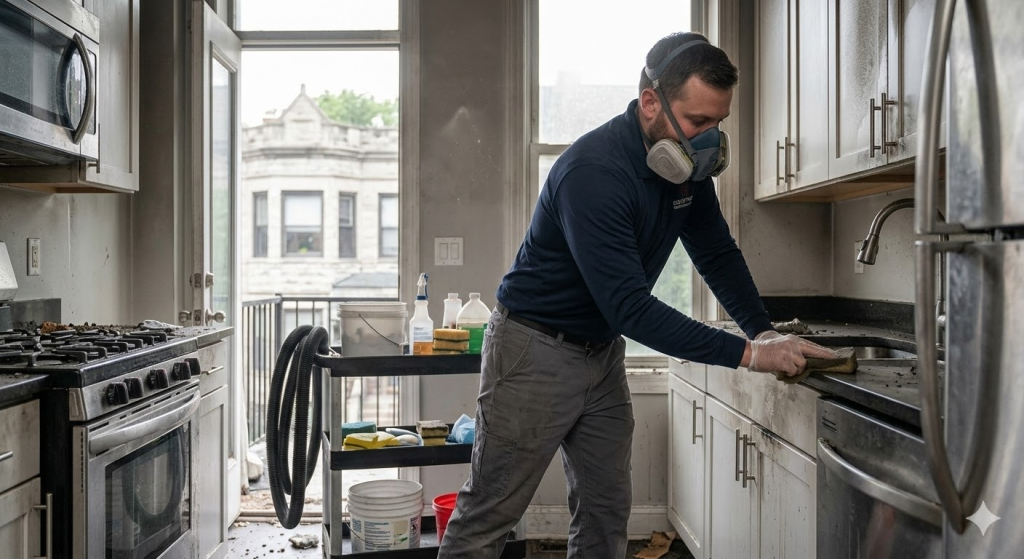
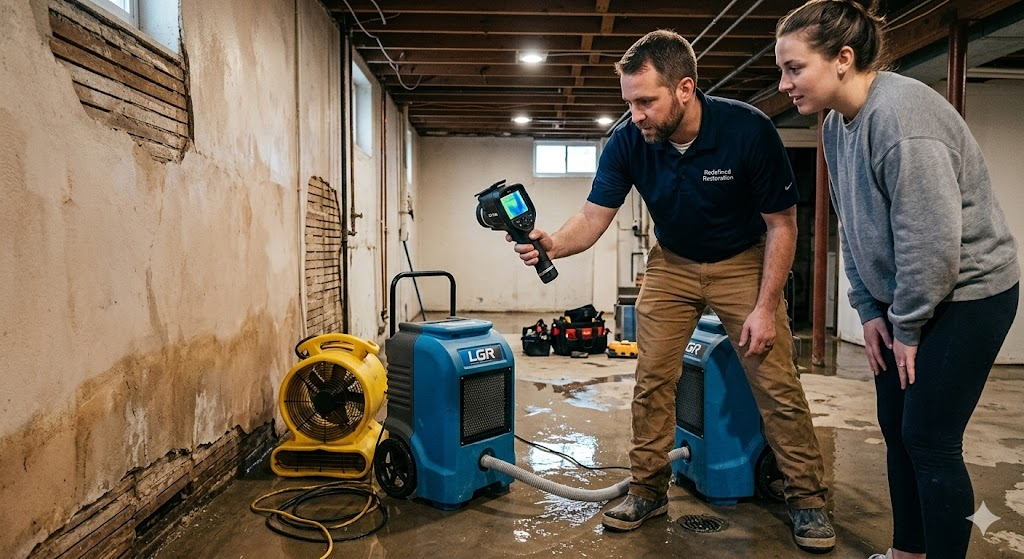
At Redefined Restoration, we understand that the first hour of a flood is a period of high-stakes decision-making. The “initial assessment” is not just a formality; it is a forensic deep dive into the structural integrity of your home. When our team arrives, a dedicated Project Manager (PM) takes the lead. This specialist doesn’t just look for puddles; they map the invisible journey of moisture through your property. The PM will meticulously assess the damage, identifying the “class” and “category” of the water—distinguishing between a clean pipe burst and the more hazardous groundwater intrusions common near the Des Plaines River.
During this walkthrough, the PM explains the strategic water mitigation plan tailored to your specific architectural needs. Whether you own a historic greystone in Lincoln Park or a modern high-rise unit in the Loop, the physics of drying are different. Once the scope of work is clearly defined, the PM provides a work authorization. This document is the roadmap for your property’s recovery, outlining the essential steps to halt structural decay and microbial growth. Reviewing and signing this authorization is the critical “green light” that allows our technicians to deploy high-velocity air movers and industrial-grade dehumidifiers, ensuring that the moisture doesn’t have the time to settle into a permanent problem.
The Forensic Science of Chicago Water Mitigation
In 2026, we view water mitigation as a race against biological timelines. Water is a persistent traveler; it doesn’t just sit on the floor. It climbs. Through a process called capillary action, moisture can travel up drywall like a paper towel dipped in a glass of water.
Understanding the Chicago Greystone Challenge
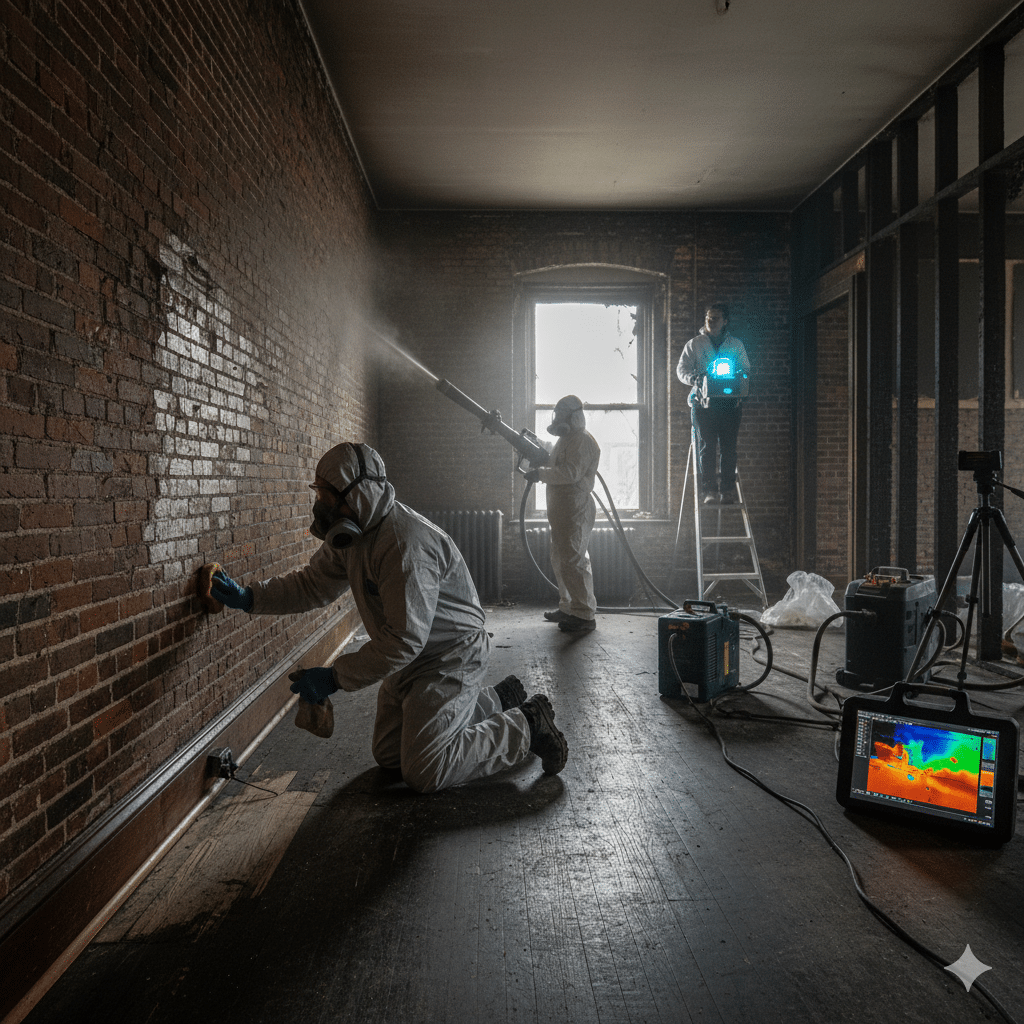
Many Chicago properties feature traditional masonry and plaster. Plaster is incredibly durable, but it is also porous. Think of plaster like a hard sponge; it can hold an immense amount of moisture without showing a single drip on the surface. Our PMs use thermal imaging cameras to “see” through these historic walls. This allows us to identify moisture pockets that would otherwise turn into a mold colony by the weekend. Without this forensic assessment, you might dry the floor but leave the “bones” of your home saturated.
The Dynamics of Modern High-Rise Leaks
In 2026, high-rise living in Chicago has its own set of hydraulic risks. A failure in a multi-stack plumbing system three floors above you can send water cascading through fire-rated walls and utility chases. Mitigation in these environments requires a surgical approach to prevent vertical damage from spreading through the entire building’s core.
The Critical Transition from Assessment to Action
Once the PM has completed the initial assessment, the speed of implementation becomes the primary factor in salvaging your investment. Redefined Restoration prioritizes “structural drying” over “demolition” whenever possible, but this is only viable if work begins immediately after the authorization is signed.
Why Work Authorization Cannot Wait
Water is a universal solvent. The longer it sits, the more it breaks down the glues in your subflooring and the binders in your drywall. By signing the work authorization promptly, you are authorizing the deployment of specialized equipment designed to “wick” moisture out of the air. This lowers the vapor pressure in the room, literally pulling water out of the wood and into the air where it can be captured and removed.
The Role of the Project Manager as an Advocate
Your PM is more than a technician; they are your primary link between the damage and the recovery. During the assessment, they document everything with a level of detail required for 2026 insurance standards. This documentation includes moisture readings, atmospheric conditions (relative humidity and temperature), and photo evidence that serves as a “before” snapshot for your claim.
Classifying the Threat: The Three Categories of Water
Not all water is created equal. During the initial assessment at your Chicago property, the PM must determine the “Category” of the water to ensure the safety of the occupants and the crew.
|
Water Category |
Source |
Risk Level |
Mitigation Strategy |
|
Category 1 (White) |
Supply lines, broken faucets |
Low |
Direct drying and salvaging of materials. |
|
Category 2 (Grey) |
Dishwashers, washing machines |
Moderate |
Sanitization required; some porous materials removed. |
|
Category 3 (Black) |
Sewage, river flooding, stagnant water |
High |
Heavy demolition; professional decontamination. |
The 2026 Micro-Flood Reality
In 2026, we are seeing more “Category 2” intrusions due to the prevalence of smart-home appliances. A faulty sensor in a high-efficiency washing machine can lead to a slow leak that goes unnoticed for days. By the time it is discovered, the water has been sitting in a warm, dark space under the flooring, transitioning from “clean” to “grey” as bacteria begins to multiply. Our PMs are trained to spot these “aged” leaks that require more than just a fan to fix.
The Mechanics of Moisture Removal: Beyond the Puddle
Many homeowners think that if they don’t see water, the problem is solved. At Redefined Restoration, we know that the real danger is the “bound water”—the moisture trapped inside the cellular structure of your building materials.
The Dehumidification Cycle
Think of a dehumidifier like a reverse-thirst machine. Standard fans move air across a surface to evaporate water, but if that moisture isn’t removed from the air, the room just becomes a sauna. Our LGR (Low Grain Refrigerant) dehumidifiers pull the humid air in, chill it to condense the water into a tray, and exhaust bone-dry air back into the room. This dry air is “hungry” for more moisture, creating a continuous loop that pulls water out of the deep layers of your hardwood floors.
Targeted Heat Application
In the cold Chicago winters of 2026, standard drying can take too long. We often use targeted heat injectors. Think of this like a focused hairdryer for your walls. By raising the temperature of a specific wet spot, we increase the “evaporation rate,” cutting down the drying time from five days to three. This is a premium-tier approach that saves historic trim and expensive cabinetry that would otherwise be lost to warping.
Localization: The Chicago Environmental Factor
The climate in Northern Illinois creates unique challenges for water mitigation. We aren’t just fighting the water; we are fighting the dew point.
The “Ice Dam” Complications of 2026
This winter has seen significant “ice damming” on older Chicago bungalows. When heat escapes through the roof, it melts the snow, which then refreezes at the gutters. This creates a reservoir of water that backs up under the shingles and into the attic. Mitigation for an ice dam leak is different than a basement flood; it involves managing the temperature of the attic while simultaneously drying the ceiling below to prevent a structural collapse.
Lake Effect Humidity and Drying Timelines
Proximity to Lake Michigan means Chicago often has high baseline humidity. On a muggy August afternoon, a simple open window can introduce more moisture into a drying environment than the fans can remove. Our PMs monitor the “outdoor grains per pound” to determine when to keep a house “closed” for optimal drying. This local expertise ensures your project doesn’t stall due to Chicago’s temperamental weather.
Managing the “Next Steps”: The Post-Mitigation Phase
Once the initial water mitigation is complete—usually within three to five days—the PM returns for a “final clearance” assessment.
Validating the Dry-Out
We don’t rely on the “touch test.” We use “penetrating” and “non-penetrating” moisture meters to verify that the subfloor is at its dry standard. Think of this like a doctor checking your temperature; until the readings return to the “normal” range for Chicago’s climate, the drying equipment stays in place. This prevents the “phantom mold” issues that occur when contractors rush to the reconstruction phase.
Transitioning to Reconstruction
The PM will then walk you through the Redefined Restoration reconstruction plan. Because we handled the mitigation, we have a forensic record of exactly what was removed. This makes the “put back” phase seamless. We ensure that the new materials installed—whether it is premium-tier LVP flooring or standard drywall—are compatible with the existing structure.
Interacting with Insurance in 2026
The insurance landscape for water damage has shifted significantly in 2026. Many policies now have specific “caps” on mold remediation but allow for more leeway in “emergency mitigation.”
Why Documentation is King
Your PM provides a comprehensive digital package for your adjuster. This isn’t just a list of equipment; it is a “log of atmospheric conditions.” In 2026, insurance companies use AI to verify if the drying plan was efficient. If a contractor doesn’t provide daily moisture logs, the claim might be partially denied. Redefined Restoration utilizes advanced software to track every grain of moisture removed, providing a “defensible” file for your insurance company.
The Work Authorization as Protection
By signing the work authorization, you establish a formal start date for the “emergency phase.” This is crucial for meeting the “duty to mitigate” clause found in almost every homeowner’s policy. If you wait three days to call a PM, the insurance company may argue that the secondary damage (like mold or warped floors) was caused by your negligence, not the original leak.
The Human Element: Empathy in Restoration
Standing in a wet house is an emotional experience. Your PM at Redefined Restoration is trained to manage not just the water, but the stress.
Transparent Communication
During the assessment, the PM will identify which items are “salvageable” and which are “non-salvageable.” This can be heartbreaking when it involves family heirlooms or custom furniture. Our team uses a value-based approach to restoration; we try to save what matters most. If a piano has been sitting in water, we don’t just toss it; we discuss specialized drying techniques that might preserve the soundboard.
Protecting Your Health
In 2026, we are more aware of “Aerosolized Contaminants.” When water hits old building materials, it can release particulates into the air. Part of the mitigation plan includes “HEPA Air Scrubbers.” Think of these like giant, industrial-strength N95 masks for your house. They pull the air through a multi-stage filter, removing mold spores and dust so that you can breathe safely while the work is being done.
The Physics of Secondary Damage: Why 48 Hours is the Magic Number
Mold doesn’t need much to grow—just a food source (like the paper on drywall), a comfortable temperature (like your Chicago living room), and moisture. In the 2026 climate, certain “super-strains” of microbial growth can begin to colonize in as little as 24 to 48 hours.
The Dew Point Barrier
When your basement is flooded, the “relative humidity” hits 100%. This means the air can’t hold any more water, so the water begins to condense on cold surfaces—like the underside of your upstairs subfloor. This is how a basement flood can cause mold in your kitchen. Mitigation prevents this by “dropping the dew point,” ensuring the air stays dry enough that condensation can’t form on secondary surfaces.
Structural Integrity of Fasteners
Many homeowners forget about the nails and screws. Constant moisture leads to oxidation (rust). Over time, rusted fasteners lose their “grip,” which can lead to “floor squeaks” or even structural sagging. Fast mitigation stops the oxidation process before it compromises the metal connections in your home’s frame.
Why “Local” Matters in 2026 Chicago Restoration
There are many national “franchise” restoration companies, but Redefined Restoration is built on Chicago grit and local knowledge.
Navigating Chicago Building Codes
Our PMs are experts in the specific building codes of the City of Chicago and surrounding suburbs like Evanston or Oak Park. We know that electrical requirements in a flooded basement are different in the city than they are in the exurbs. We ensure that our mitigation work doesn’t create a “code violation” that could complicate your reconstruction later.
Understanding Chicago’s Soil and Drainage
The “Chicago Blue Clay” soil is notoriously poor at draining water. After a heavy rain, the ground stays saturated for days, exerting “hydrostatic pressure” on your foundation. We don’t just pump the water out of your basement; we monitor the pressure to ensure we don’t pump it out too fast, which could cause your foundation walls to buckle inward. This is the kind of local expertise that only comes from years of working in the Illinois mud.
Final Thoughts: Restoring Peace of Mind
The initial assessment is the most important hour of your property’s recovery. It is the moment where the chaos of a flood is replaced by a structured, professional plan. At Redefined Restoration, we don’t just see a wet basement; we see a family’s home and a significant financial investment that needs to be protected.
The year 2026 has brought new challenges to the Chicago restoration industry, from extreme weather patterns to stricter insurance requirements. We have evolved our techniques to meet these challenges, using the latest in forensic moisture detection and high-efficiency drying technology. When our PM walks through your door, you can be certain that you are getting more than just a quote; you are getting a dedicated advocate who will see your home through from the first drop of water to the final coat of paint.
Don’t let water have the final word. If you’ve discovered a leak or a flood, the clock is already ticking. The assessment is your first step toward a dry, safe, and restored home.