
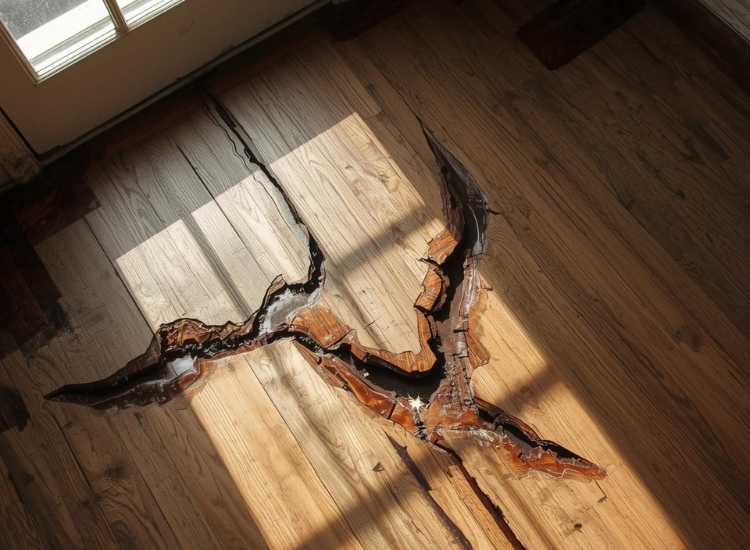
Hardwood floors buckle after water damage because the wood absorbs moisture and expands, causing individual planks to push against each other and the walls with nowhere to go but upward. This creates the characteristic warping, cupping, or crowning that defines buckling. The damage can occur within hours of exposure to water, making immediate professional intervention critical to salvage your flooring investment.
Understanding the Science Behind Hardwood Floor Buckling
Wood is a hygroscopic material, meaning it naturally absorbs and releases moisture based on environmental conditions. When water infiltrates your hardwood floors—whether from a burst pipe during Chicago’s brutal winter freeze, basement flooding from spring storms, or appliance leaks—the wood fibers swell as they absorb moisture. Since hardwood floors are installed with minimal expansion gaps, this swelling creates pressure as boards push against each other and fixed points like walls or cabinetry.
The result is buckling: boards lifting, warping, or separating from the subfloor. In Chicago-area homes, particularly historic bungalows and greystones with original hardwood flooring, this damage can be especially heartbreaking as these floors often represent irreplaceable craftsmanship and character.
Common Water Damage Scenarios Affecting Chicago Hardwood Floors
Burst Pipes and Frozen Plumbing
During January’s polar vortex events or February cold snaps, pipes in exterior walls or unheated crawl spaces can freeze and burst, releasing gallons of water onto hardwood floors. The combination of volume and sustained exposure creates perfect conditions for severe buckling.
Basement Flooding and Sump Pump Failures
Many Chicagoland homes in communities like Oak Park, Evanston, and Naperville feature finished basements with hardwood or engineered wood flooring. When sump pumps fail during spring flooding or summer thunderstorms, these lower-level floors face complete saturation and significant buckling risk.
Appliance Leaks and Plumbing Failures
Water heaters, dishwashers, and washing machines can develop slow leaks that go unnoticed for weeks, allowing moisture to gradually penetrate hardwood floors. This sustained exposure often causes more severe buckling than sudden flooding because the wood absorbs moisture deep into its core.
Roof Leaks and Ice Dams
Heavy lake effect snow accumulation combined with freeze-thaw cycles creates ice dams on roofs throughout Arlington Heights, Schaumburg, and other northern suburbs. When melting snow backs up under shingles, water can drip through ceilings onto second-story hardwood floors.
The Timeline of Buckling Damage
Hardwood floor buckling doesn’t happen instantly, but the timeline is surprisingly fast:
0-4 Hours: Surface absorption begins; water penetrates finish and starts entering wood fibers
4-24 Hours: Visible swelling starts; boards begin pushing against each other; minor cupping may appear
24-72 Hours: Significant buckling develops; boards may lift substantially from subfloor; mold growth begins in humid Chicago summers
Beyond 72 Hours: Permanent damage likely; wood fibers may delaminate; subfloor damage probable; mold colonization established
This rapid progression makes immediate water extraction and professional assessment essential for Chicagoland homeowners facing water damage.
Can Buckled Hardwood Floors Be Saved?
The answer depends on several factors:
Severity of buckling: Minor cupping may reverse with proper drying; severe buckling typically requires replacement
Water type: Clean water from supply lines causes less permanent damage than contaminated water from sewage backups common in older Chicago neighborhoods
Response time: Floors addressed within 24-48 hours have significantly better salvage rates
Wood type: Solid hardwood has better recovery potential than engineered wood, which can delaminate when wet
Age and condition: Well-maintained floors in good condition prior to water damage respond better to restoration efforts
Professional Restoration Process for Buckled Floors
Immediate Water Extraction
Professional-grade extractors remove standing water far more effectively than shop vacuums, preventing continued absorption into flooring and subfloors.
Moisture Assessment
Thermal imaging cameras and moisture meters identify hidden water pockets in walls, subfloors, and between floor layers—critical for preventing secondary damage in Chicago’s humid summer conditions.
Controlled Drying Environment
Industrial dehumidifiers and air movers create optimal drying conditions while preventing too-rapid drying that can cause additional cracking or splitting in wood floors.
Monitoring and Documentation
Daily moisture readings track progress and ensure thorough drying before restoration decisions are made. This documentation also supports insurance claims for homeowners in Cook, DuPage, Lake, Will, and Kane County communities.