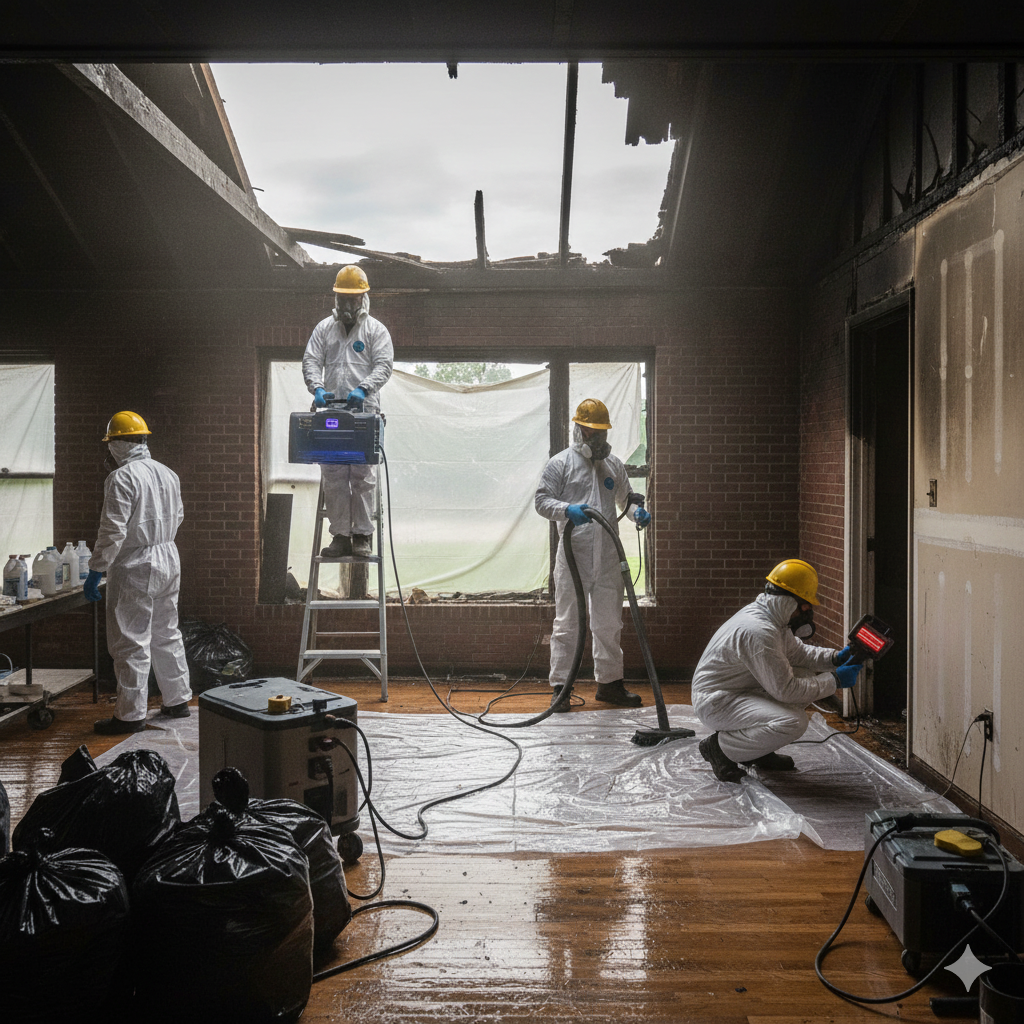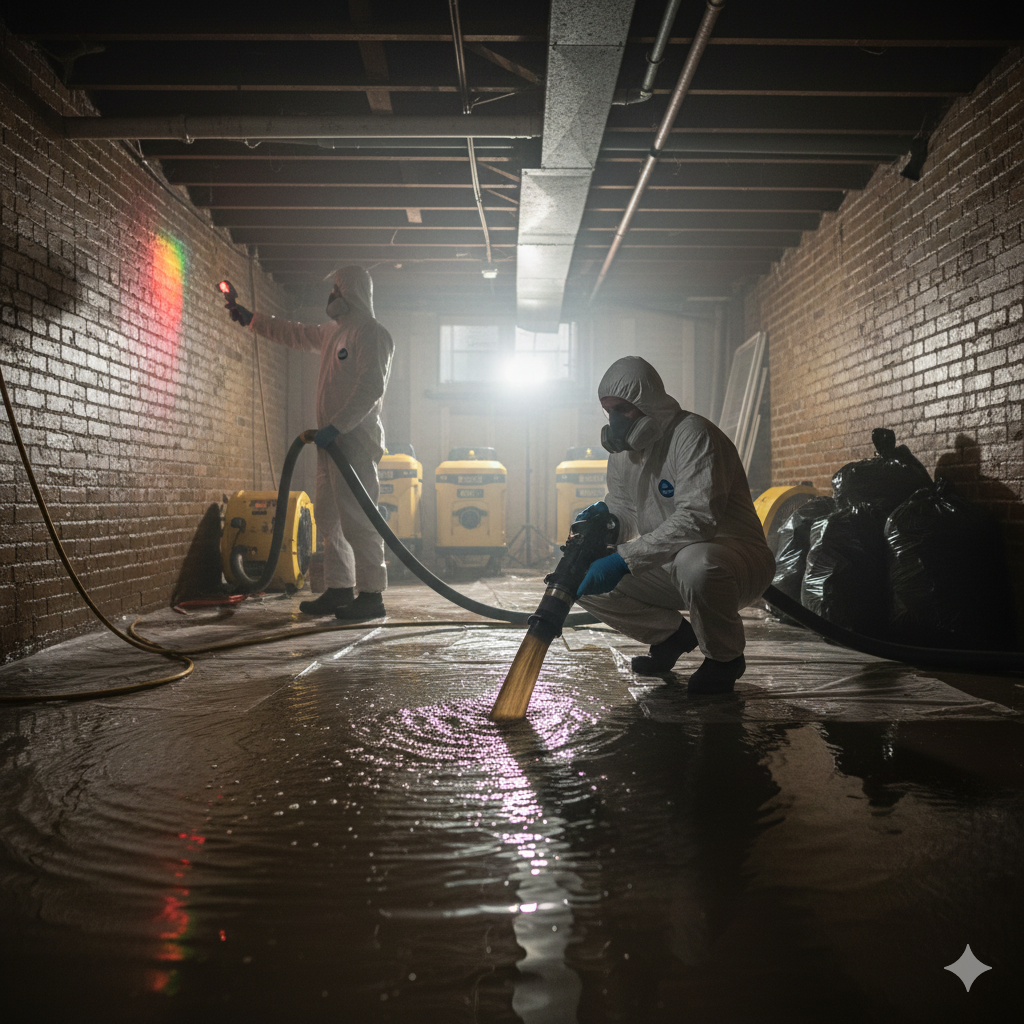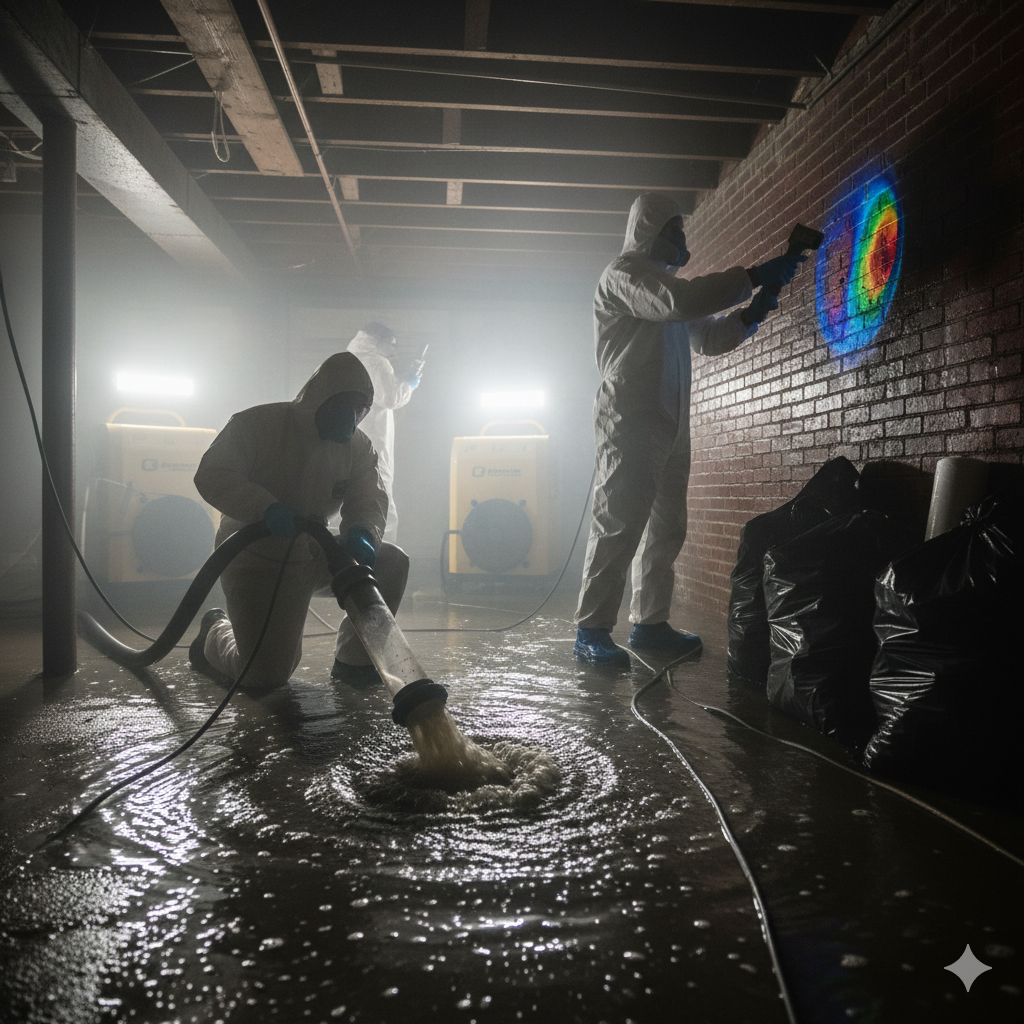
When the heavy spring rains saturate the Chicago soil or a sudden lake-effect storm overwhelms the city’s aging combined sewer system, the transition from a dry basement to a rising water level happens in a matter of heartbeats. For many property owners in the Windy City, the sight of water encroaching upon a finished basement or a commercial warehouse floor is met with an immediate sense of urgency. However, the true complexity of flood damage restoration lies not in the water you can see, but in the microscopic and structural shifts occurring within the building’s envelope.
At Redefined Restoration, we have witnessed how the unique architectural landscape of Chicago—from historic brick bungalows in Portage Park to modern high-rises in the Loop—reacts to water intrusion. Floodwater is never “just water.” It is a chemically complex, biologically active solution that begins to degrade building materials the moment contact is made. Navigating the recovery process requires more than a shop-vac and a few fans; it requires a scientific understanding of psychrometry, structural load-bearing capacities, and microbial ecology.
The Anatomy of a Chicago Flood: Beyond the Surface
Chicago’s geography presents specific challenges for property owners. Built on what was originally marshland, the city relies on a sophisticated but often strained infrastructure to manage runoff. When the ground becomes oversaturated, hydrostatic pressure builds up around foundations. This pressure can force water through tiny fissures in concrete, a process known as seepage, or lead to catastrophic sewer backups.
The Categorization of Water Intrusion
In the professional world of flood damage restoration, we categorize water to determine the level of PPE required and the salvageability of materials:
- Category 1 (Clean Water): Originates from a sanitary source, like a broken supply line. While “clean,” it can quickly degrade if left untreated.
- Category 2 (Gray Water): Contains significant contamination, such as discharge from a washing machine or a sump pump failure.
- Category 3 (Black Water): This is the primary concern during Chicago floods. It includes rising river water, seawater, and sewage backup. It contains pathogenic agents and heavy metals.
For Chicagoans, most significant flooding events fall into Category 3. The city’s combined sewer system means that when heavy rains occur, stormwater and sewage mix. This makes professional flood damage restoration a matter of public health, not just property maintenance.
The 48-Hour Micro-Climate: Why Time is the Enemy
The internal climate of a flooded building becomes a high-speed laboratory for microbial growth. In the 2026 restoration landscape, we understand that the “golden window” for intervention is roughly 24 to 48 hours. Beyond this point, the likelihood of secondary damage—such as mold colonization and permanent structural warping—increases exponentially.
The Science of Psychrometry
Psychrometry is the study of the thermodynamic properties of air-water vapor mixtures. In a flooded Chicago basement, the relative humidity can spike to 90% or higher. When the air is saturated, evaporation stops. Without industrial-grade dehumidification, the moisture in the air will seek out the driest materials in the room, which are often the upper reaches of the drywall, wooden studs, and ceiling tiles. This is how a flood on the floor can lead to mold on the ceiling.
Structural Vulnerabilities in Local Architecture
Chicago’s building stock is diverse, and each era of construction responds differently to water.
Historic Brick and Mortar
The iconic Chicago bungalow and many “two-flats” utilize old-growth wood and porous brick. While these materials are incredibly durable, they are also highly absorbent. When floodwater sits against a brick foundation, the brick absorbs the water through capillary action—much like a sponge. Even after the standing water is gone, the moisture remains trapped inside the masonry, leading to “efflorescence” (the white, powdery salt deposits) and the eventual crumbling of the mortar.
Modern High-Rise Construction
In newer commercial or residential buildings in the West Loop or River North, the challenges are different. Large-scale buildings often use complex fire-rated assemblies and multi-layered flooring. Water can travel laterally under expansive areas of luxury vinyl tile (LVT) or commercial-grade carpeting, becoming trapped against the concrete slab. If not extracted through specialized injection drying systems, this trapped moisture can cause the concrete to “sweat,” leading to long-term adhesive failure and indoor air quality issues.
The Professional Restoration Workflow: A Scientific Approach
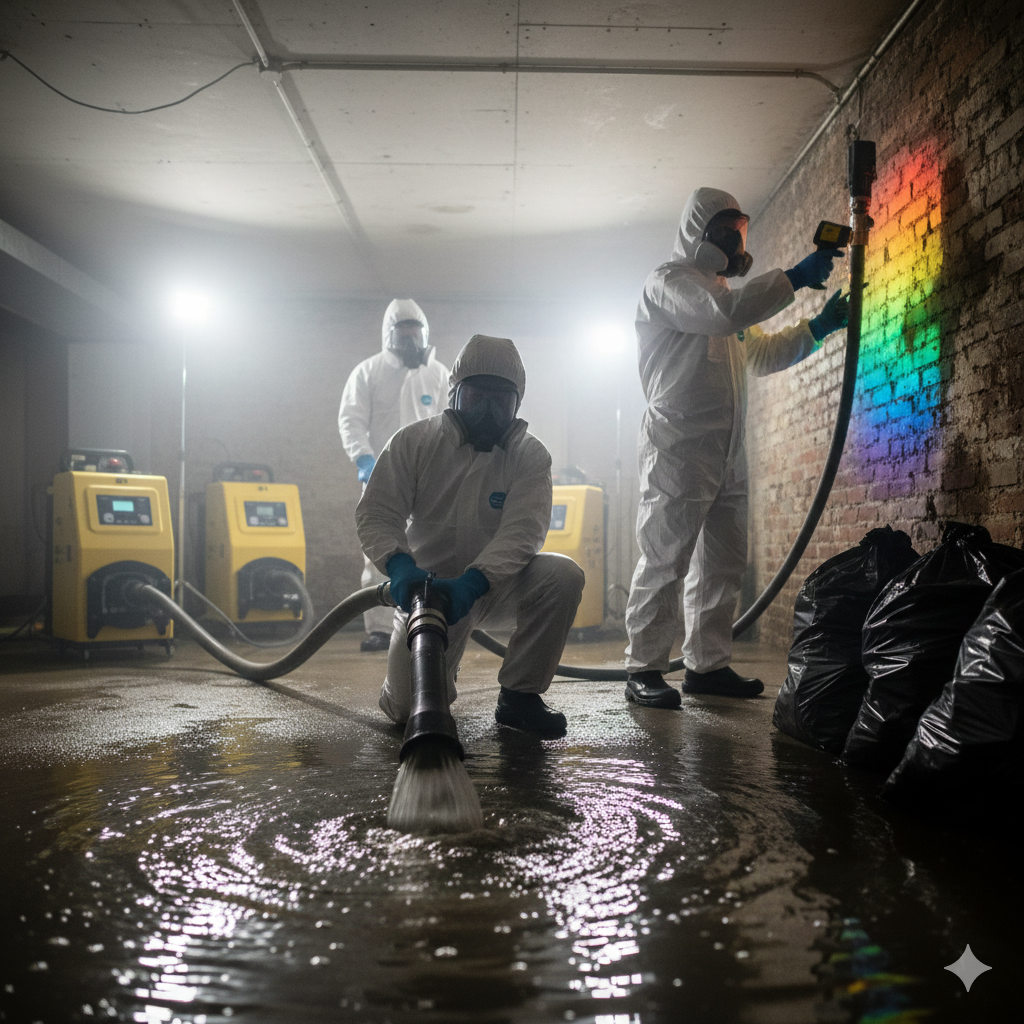
When Redefined Restoration arrives at a site, our process is governed by the IICRC S500 standards, the “bible” of our industry. This ensures that every step is documented and verified.
1. Thermal Imaging and Moisture Mapping
The first step isn’t extraction; it’s assessment. We use infrared thermography to identify the “hidden” water. Because wet materials are typically cooler than dry ones due to evaporative cooling, thermal cameras allow us to see water traveling behind finished walls without needing to tear them down immediately.
2. High-Volume Extraction
Removing standing water is a game of physics. We use truck-mounted extraction units that pull thousands of gallons of water out of the building. This is far more effective than pumping, as it removes the water from the fibers of the carpet and the pores of the concrete, not just the surface.
3. Antimicrobial Stabilization
In a Category 3 flood event, the building must be sanitized. We use EPA-registered, hospital-grade antimicrobials to neutralize bacteria, viruses, and fungi. This step is critical in Chicago, where sewer overflows introduce E. coli and other dangerous pathogens into the living space.
4. Controlled Demolition (The “Flood Cut”)
Sometimes, saving the material is impossible. For example, drywall is highly porous and contains paper, which is a food source for mold. We often perform a “flood cut,” removing the bottom 12 to 24 inches of drywall. This allows us to dry the wooden studs behind the wall and ensures no contaminated water is trapped in the insulation.
5. Industrial Dehumidification and Air Movement
This is where the real work happens. We calculate the “pints per day” removal requirement based on the cubic footage of the space and the types of materials present. We use LGR (Low Grain Refrigerant) dehumidifiers, which are capable of pulling moisture out of the air even in very low humidity conditions, effectively “pulling” the water out of the structural wood.
The Evolution of Materials: Salvageability in 2026
As building materials evolve, so do our restoration techniques. In the past, a flooded carpet was almost always a total loss. Today, depending on the category of water and the speed of response, some high-value materials can be saved using “in-place drying.”
- Hardwood Flooring: Chicago’s beautiful oak and maple floors are prone to “cupping” when they absorb moisture. We use specialized floor mats that create a vacuum, pulling moisture through the wood fibers to flatten the boards back out.
- Documents and Electronics: For commercial facilities, the loss of paper records or servers can be devastating. We utilize vacuum freeze-drying for documents and specialized cleaning for electronics to recover data and functionality.
Navigating the Insurance Maze in Chicago
A significant part of flood damage restoration is the administrative side. Chicago property owners often struggle with the distinction between “flood insurance” (rising water from the ground) and “water damage” (burst pipes or sewer backup).
At Redefined Restoration, we provide the meticulous documentation required by adjusters. This includes:
- Daily moisture logs.
- Photographic evidence of the source.
- Detailed inventories of non-salvageable items.
- Verification of “dry standards”—proving that the building has been returned to its pre-loss moisture equilibrium.
Health Implications of Improper Restoration
The danger of a flood doesn’t end when the carpets are dry to the touch. Inadequately dried structures become breeding grounds for:
- Stachybotrys chartarum (Black Mold): Which can cause severe respiratory distress.
- Endotoxins: Fragments of bacteria that can trigger inflammatory responses in humans.
- Structural Instability: Rotting floor joists or compromised foundation piers.
This is why “DIY” restoration is often a costly mistake. Household fans and bleach are insufficient for the deep-seated saturation found in a typical Chicago flood event.
Chicago’s Climate and Seasonal Risks
Our city’s weather plays a massive role in flood risk.
- The Spring Thaw: When the winter snow melts rapidly and is met with April rains, the frozen ground cannot absorb the water, leading to massive surface runoff.
- Summer Microbursts: Intense, localized storms can drop three inches of rain in an hour, flash-flooding neighborhoods like Albany Park or North Center.
- Winter Pipe Bursts: While not technically a “flood” from the ground, the volume of water from a frozen 2-inch pipe in a commercial ceiling can mimic a flood, requiring the same level of professional flood damage restoration.
Conclusion: Partnering for a Resilient Recovery
Recovering from a flood is a journey of restoration, not just repair. It is about reclaiming the safety and value of your property through a disciplined, scientific approach. Whether you are a homeowner in Beverly or a facility manager in the West Loop, the goal remains the same: a dry, healthy, and structurally sound building.
The professionals at Redefined Restoration are deeply embedded in the Chicago community. We understand the stress of these moments, but we also know the path forward. By combining cutting-edge technology with a commitment to industry standards, we ensure that your property’s story doesn’t end with the flood.
If you are currently facing water intrusion, remember that every hour matters. The transition from a manageable situation to a total loss happens quickly in the high-humidity environment of a flooded structure. Trust the science, trust the process, and let us help you redefine your restoration experience.