Standing amidst the wreckage of a fire is a singular, overwhelming experience. Even after the flames are extinguished, the silence that follows is heavy with the scent of charred materials and the sight of a property transformed by heat. For property owners, the instinct is often to begin cleaning immediately. However, the chemistry of a post-fire environment is volatile. What looks like simple soot is often a complex, acidic residue that continues to damage the building every hour it remains untreated.
In our region, the challenges of property recovery are compounded by local factors—from the specific humidity levels that can set smoke odors into porous wood, to the unique architectural styles that define our neighborhoods. Navigating this process requires more than a general contractor; it requires a specialist. At Redefined Restoration, we provide the technical precision and structural expertise necessary to navigate the complexities of fire damage restoration services and return your property to its pre-loss condition.
The Hidden Dynamics of Fire and Smoke
To effectively restore a property, one must first understand that fire damage is not just a surface-level issue. It is a multi-dimensional event that affects the air quality, the structural skeleton, and the chemical composition of the interior environment.
The Behavior of “Pressurized” Smoke
During a fire, the intense heat creates pressure that drives smoke deep into the infrastructure of a building. It travels through wall cavities, floor joists, and electrical conduits. This is why a fire in a first-floor kitchen can result in heavy smoke damage in a third-floor attic. Smoke is also attracted to cooler surfaces, often settling behind cabinets or inside the insulation of exterior walls. Without professional fire damage restoration services, these hidden deposits will continue to off-gas, causing recurring odors for years.
The Acidic Nature of Soot
Soot is the byproduct of incomplete combustion, and its composition varies depending on what burned. When synthetic materials like plastics or electronics burn, they create “wet” soot—a greasy, smeary, and highly acidic residue. On the other hand, wood and paper produce “dry” soot. If left for more than 48 hours, these acidic particulates begin to etch glass, pit metal fixtures, and permanently stain marble or granite surfaces.
Thermal Shock and Masonry
While brick and stone are fire-resistant, they are not fire-proof. The rapid expansion caused by extreme heat, followed by the rapid contraction when hit with cold water from fire hoses, can cause “thermal shock.” This leads to micro-cracks in the masonry that can compromise the structural load-bearing capacity of chimneys or foundation walls.
A Strategic Framework for Total Restoration
Recovery is a phased process that requires a delicate balance of aggressive cleaning and surgical precision. At Redefined Restoration, we follow a rigorous protocol designed to stabilize the environment and prevent secondary losses.
Phase 1: Emergency Stabilization and Site Protection
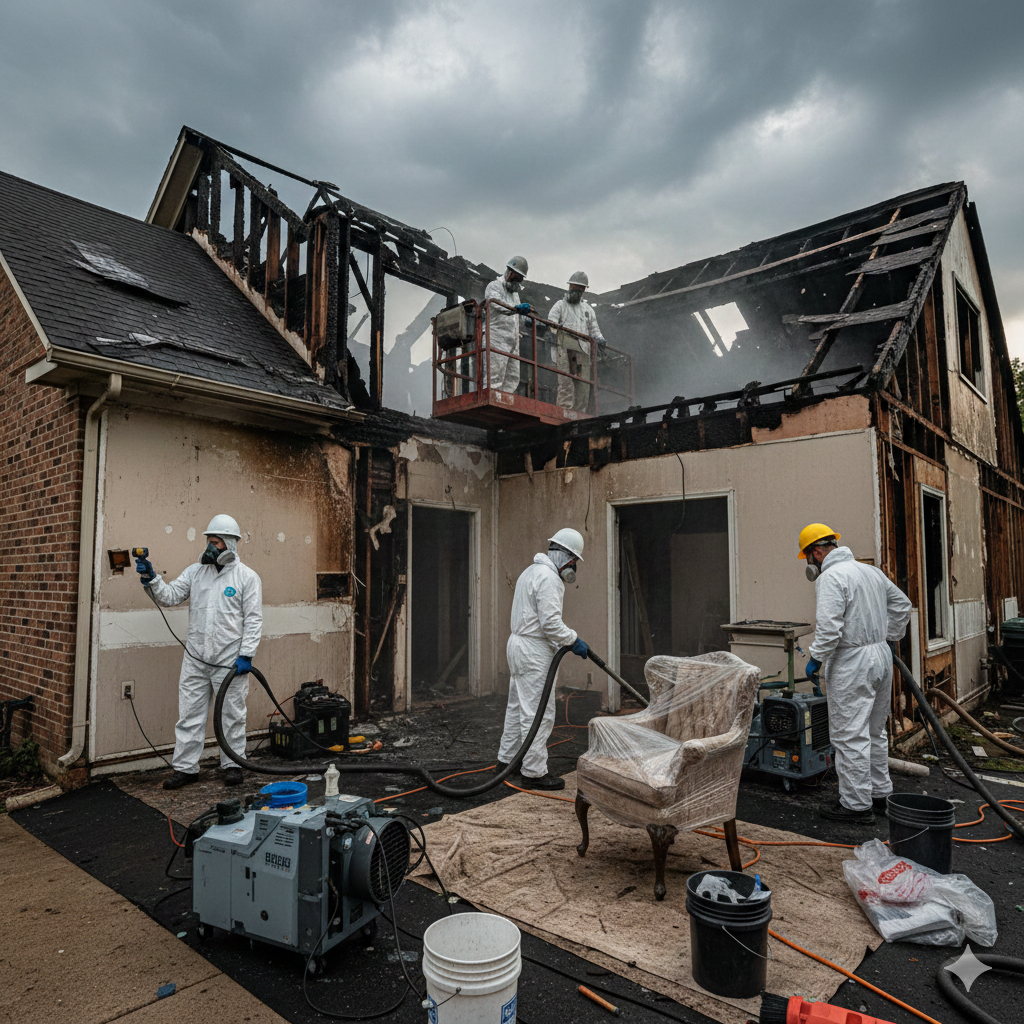
The first few hours are critical. A property with a breached roof or broken windows is vulnerable to the elements and unauthorized entry. Our team prioritizes immediate board-up and tarping services. In our local climate, where unexpected rain or high humidity can exacerbate smoke damage, sealing the building envelope is the first step in successful fire damage restoration services.
Phase 2: Comprehensive Water Extraction
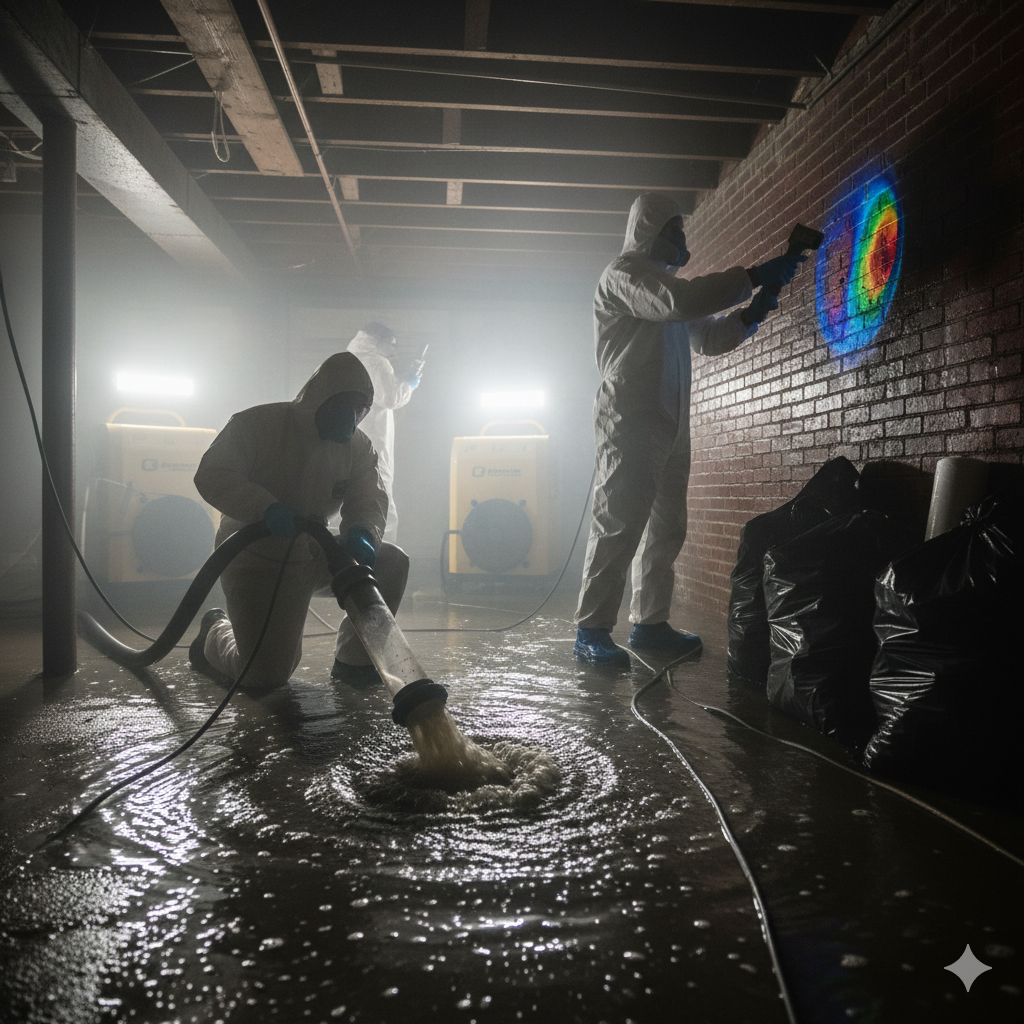
It is a common irony that water damage is often a primary component of fire recovery. Standing water from fire suppression efforts must be extracted immediately. We utilize industrial-grade dehumidifiers and high-speed air movers to stabilize the relative humidity. In the 2026 restoration landscape, we use advanced moisture-mapping technology to ensure that moisture hasn’t migrated into subfloors or behind baseboards, where it could trigger a mold outbreak.
Phase 3: Soot and Residue Decontamination
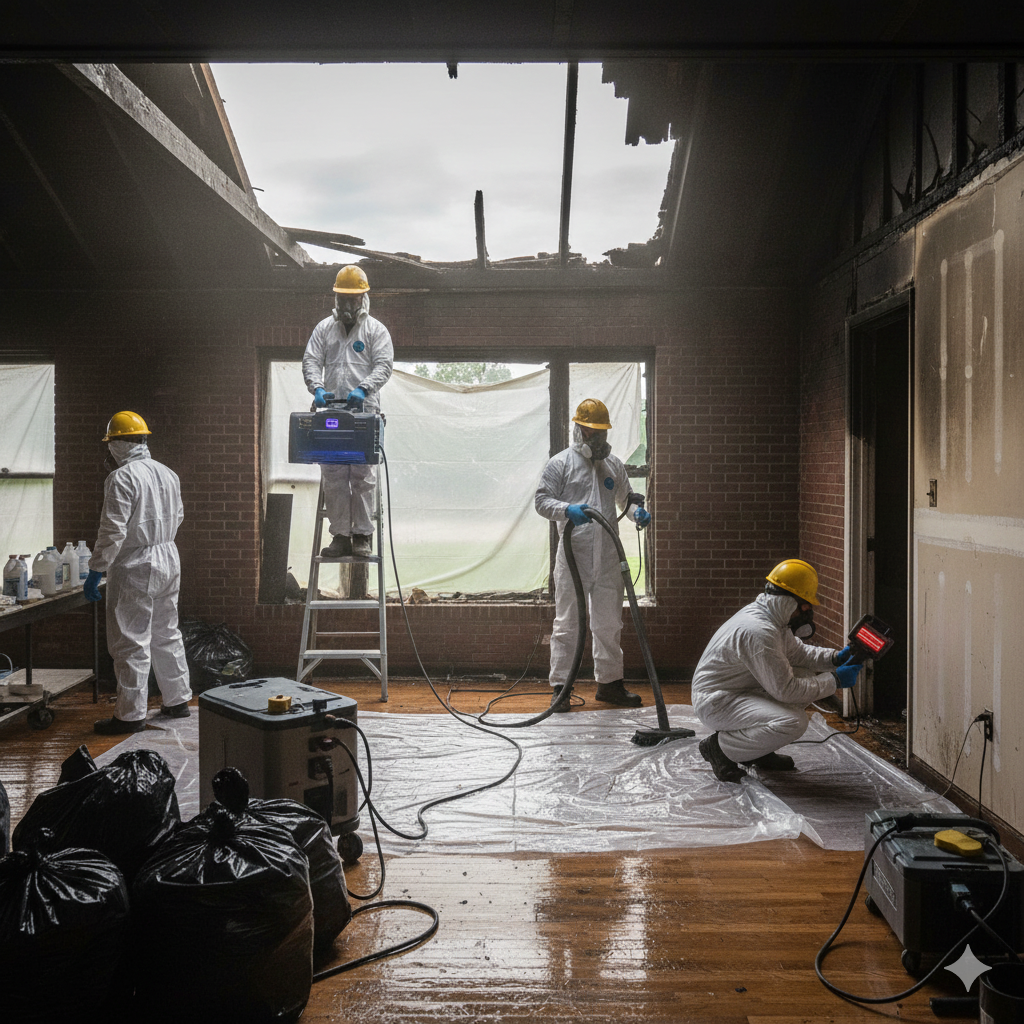
Cleaning soot requires a “top-down” approach. We begin at the highest point of the structure and work downward to prevent re-contamination. Using specialized HEPA vacuums, we remove loose particulates before they can be ground into surfaces. For stubborn residues, we utilize “dry-ice blasting” or specialized chemical sponges that lift soot without the use of water, which can sometimes drive the stain deeper into porous materials.
The Science of Odor Neutralization
Perhaps the most difficult part of fire recovery is the removal of the “smoke smell.” This is because the odor is trapped at a molecular level within the building’s materials.
Beyond Masking Agents
Traditional air fresheners only mask the smell temporarily. Professionals use a process called Thermal Fogging. This involves heating a deodorizing agent until it becomes a fine mist that mimics the behavior of smoke. This mist penetrates the same deep pores that the smoke did, neutralizing the odor molecules on contact.
Hydroxyl and Ozone Technology
For more severe cases, we deploy hydroxyl generators or ozone machines. Ozone is a reactive gas that breaks down the carbon chains in smoke molecules, effectively “killing” the scent. In 2026, the use of hydroxyl technology has become more prevalent in occupied spaces, as it allows for odor removal while people or pets are present, providing a safer and more flexible alternative for certain property types.

Structural Integrity and Reconstruction
Once the decontamination is complete, the focus shifts to the physical rebuild. Fire damage often reveals underlying issues or requires that the property be brought up to modern building codes.
- Electrical Systems: Even if the fire didn’t reach the wiring, the heat can melt insulation or corrode copper contacts. A full inspection is a non-negotiable part of our fire damage restoration services.
- HVAC Decontamination: Smoke particulates in the ductwork will circulate throughout the house every time the air kicks on. We perform deep cleaning and sealing of the entire HVAC system to ensure the indoor air quality is pristine.
- Code Compliance: Restoration in 2026 often involves navigating updated local fire and safety codes. We ensure that your reconstruction meets all current regulations, from fire-rated drywall to updated smoke detection systems.
Protecting the Value of Your Property
For many property owners, the financial aspect of fire damage is just as stressful as the physical damage. A professional restoration partner serves as your advocate during the insurance process.
By providing detailed documentation, including thermal imaging, moisture readings, and line-itemized “Scopes of Work,” Redefined Restoration ensures that your insurance adjuster has the data they need to process your claim fairly. We focus on “restoration over replacement” whenever possible, using specialized techniques to save expensive electronics, heirloom furniture, and structural elements that would be costly and time-consuming to replace.
Conclusion: A Path to New Beginnings
A fire is a disruptive event, but with the right approach, it doesn’t have to be a permanent tragedy. The goal of professional fire damage restoration services is to erase the evidence of the disaster and create a space that is once again safe, clean, and welcoming.
By addressing the hidden chemistry of smoke, the structural risks of heat, and the environmental impact of water, we help property owners move from a state of crisis to a state of completion. At Redefined Restoration, we are committed to being the partner you need during this transition.