What makes Redefined Restoration the best choice for commercial water damage restoration in Chicago?

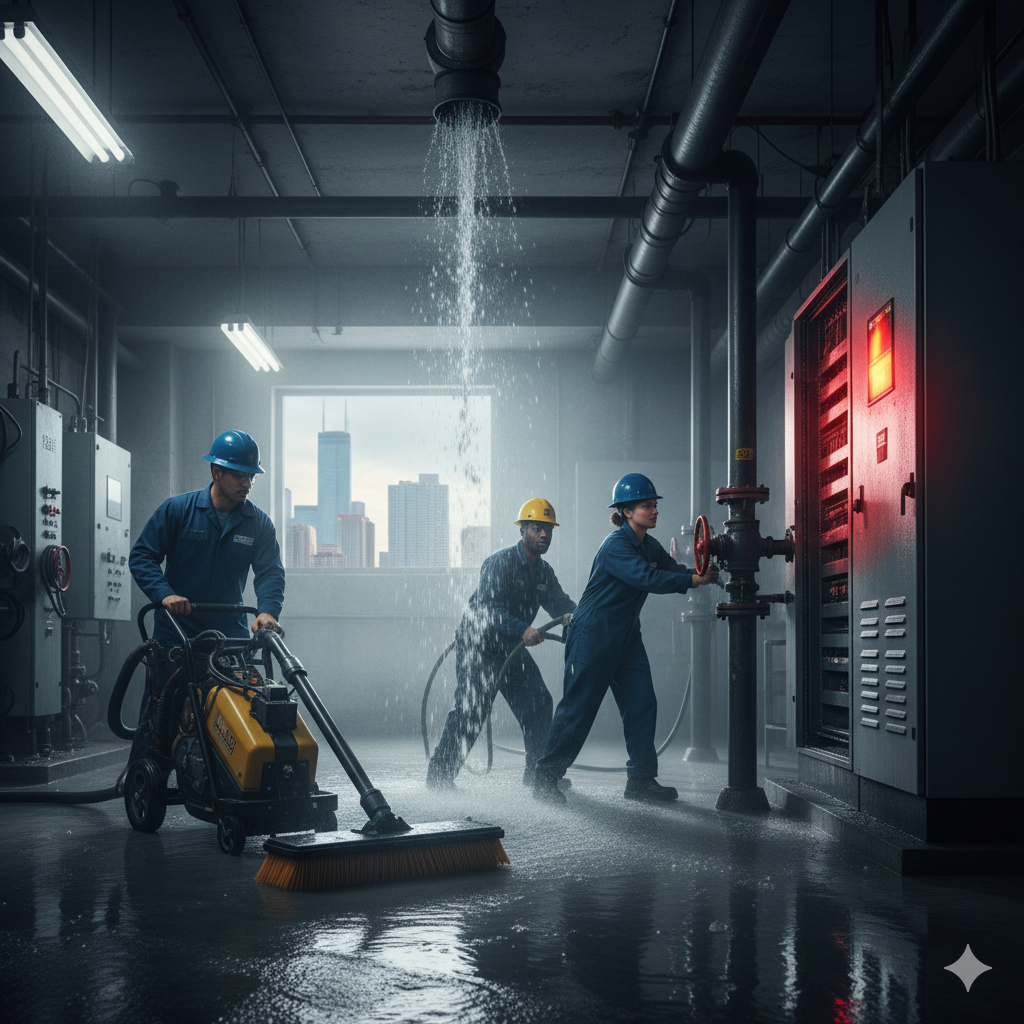
The silence of a Sunday morning in a West Loop office loft is shattered not by the bustle of industry, but by the relentless spray of a failed fire suppression sprinkler head. In 2026, Chicago’s commercial real estate landscape is a mix of high-tech “smart” skyscrapers and historic industrial warehouses converted into modern workspaces. This architectural diversity creates a unique set of challenges when water invades a business environment. At Redefined Restoration, we don’t just see a flooded floor; we see a disrupted supply chain, a paused payroll, and a threat to the reputation of your brand.

Chicago businesses operate on a razor-thin margin of time. When a pipe bursts in a River North gallery or a main line fails in a South Side manufacturing facility, the ripple effect is immediate. We stand out as the premier water damage restoration company in Chicago because we have built our entire operational model around the concept of “Business Continuity.” With over 40 years of combined experience and a roster of IICRC-certified technicians, we bring a level of forensic precision to commercial recovery that a residential-focused contractor simply cannot match.

The “why” behind our status as the best choice is rooted in our deep integration into the Chicagoland community. We aren’t a distant national franchise operating from a script; we are a locally owned powerhouse that understands the specific hydraulic pressures of Chicago’s aging infrastructure and the extreme moisture fluctuations of our 2026 climate. Our team is trained in the latest restoration techniques, utilizing professional-grade tools like LGR dehumidifiers and high-velocity axial air movers to handle any commercial emergency.

We provide more than just a cleanup crew; we provide a dedicated Project Manager who manages the complex documentation and transparent communication required by modern insurance carriers. Our reputation is built on thousands of successful projects, from retail boutiques to multi-story medical complexes. Chicago businesses trust us because we deliver fast, reliable, and stress-free restoration, backed by a 100% satisfaction guarantee. We understand that in the 2026 business world, a “stress-free” experience is one where you are kept informed at every milestone while your physical assets are restored to pre-loss condition with surgical efficiency. When you partner with Redefined Restoration, you are choosing a team that values your uptime as much as you do.

The 2026 Chicago Commercial Landscape: New Risks for Property Managers

As we navigate the middle of 2026, the way Chicago buildings “behave” has changed. Increased rainfall and rapid temperature swings—the “flash-thaw” cycles—have put unprecedented stress on the subterranean levels of Loop skyscrapers and North Side retail strips alike.

The Smart Building Vulnerability

Many commercial properties in 2026 have integrated “Smart Building” sensors. While these systems are designed to detect leaks, they often lead to a false sense of security. A sensor may tell you there is water in the basement, but it won’t tell you that the moisture is currently wicking into the structural fireproofing of your support beams. As a specialized water damage restoration company, we interpret sensor data to perform targeted, surgical extractions before the water can compromise the building’s digital or physical core.

The “Vertical Flood” Phenomenon

In high-density areas like Streeterville, a single pipe failure on the 30th floor can impact dozens of businesses below. This is what we call a “Vertical Flood.” Standard restoration approaches fail here because gravity pulls water through elevator shafts, electrical conduits, and HVAC ductwork. We utilize thermal imaging to trace this hidden path of destruction, ensuring that the water doesn’t sit in the “veins” of the building, where it can cause invisible mold growth.

Strategic Commercial Mitigation Protocols

A commercial loss is fundamentally different from a residential one. The scale is larger, the materials are more diverse, and the liability is higher.

High-Volume Water Extraction

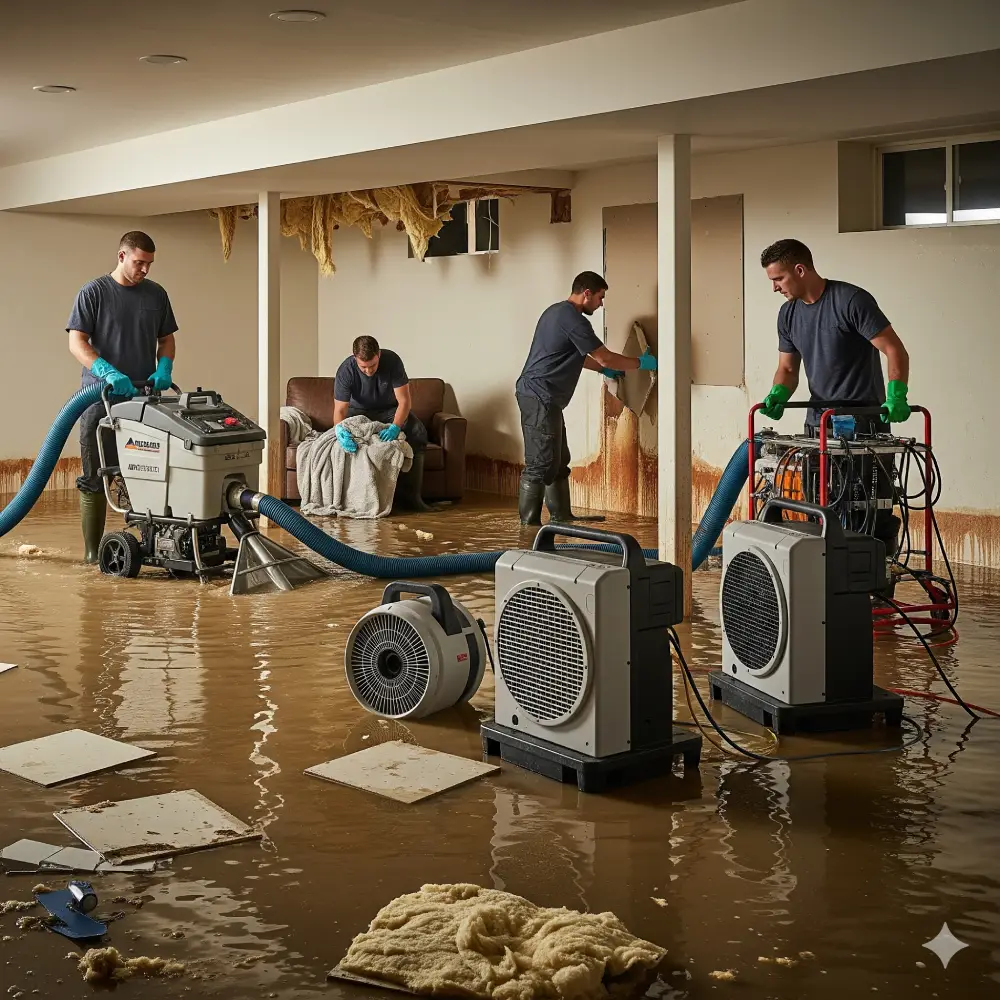
Time is the enemy of structural integrity. We utilize truck-mounted extraction units that are essentially industrial-strength “suction machines.” Think of these like a high-powered medical device for your building; they pull water not just from the surface, but from the deep pores of concrete and the microscopic fibers of commercial-grade carpets.

Atmospheric Stabilization and Humidity Control

Once the liquid is gone, the moisture remains in the air. In a large warehouse or open-plan office, this humidity can quickly cause “secondary damage” to sensitive electronics and paperwork. We deploy Low Grain Refrigerant (LGR) dehumidifiers. Think of these like a “moisture magnet” that strips water molecules out of the air at a much lower grain level than standard consumer units.

Comparing Commercial Drying Technologies in 2026

To understand the Redefined Restoration advantage, it is helpful to look at how we utilize specialized equipment compared to standard industry practices.

Technology Standard Industry Practice Redefined Restoration Protocol (2026)
Moisture Detection Visual inspection and “touch” test. Infrared Thermal Mapping & Radio Frequency Sensors.
Extraction Portable wet-vacs. Truck-mounted, high-lift vacuum systems.
Airflow Box fans and circular fans. Axial Air Movers (laminar flow technology).
Dehumidification Standard refrigerant units. LGR & Desiccant drying for large-scale voids.
Documentation Paper checklists. Real-time digital moisture logs for adjusters.

Localization: Why Chicago’s “Clay Belt” Affects Your Commercial Foundation

The geography of Chicago is a primary factor in how we handle basement and sub-grade flooding. The city sits on a “clay belt,” which is notorious for poor drainage and high hydrostatic pressure.

Hydrostatic Pressure in the Loop

After a heavy 2026 rain event, the clay soil around a building foundation becomes saturated and heavy. This exerts massive pressure against the basement walls. If a commercial property has even a hairline fracture in its foundation, this pressure will force water in like a fire hose. We don’t just pump the water out; we monitor the pressure to ensure we aren’t pumping so fast that the walls buckle inward—a critical safety step that inexperienced contractors often overlook.

Lake Effect Humidity and Drying Times

Proximity to Lake Michigan means Chicago has a higher baseline humidity. In the summer of 2026, a “natural” dry-out is impossible. Our crews use “closed-loop” drying systems that isolate the affected commercial space from the outside air, allowing our dehumidifiers to work in a controlled environment. This is essential for protecting expensive retail inventory in the Magnificent Mile or sensitive records in law firms.

The Anatomy of Business Continuity: Minimizing Downtime

For a business, every hour of closure is a loss of revenue and customer trust. Our approach is designed to keep you operational, even while we work.

Phased Restoration for Retail and Office

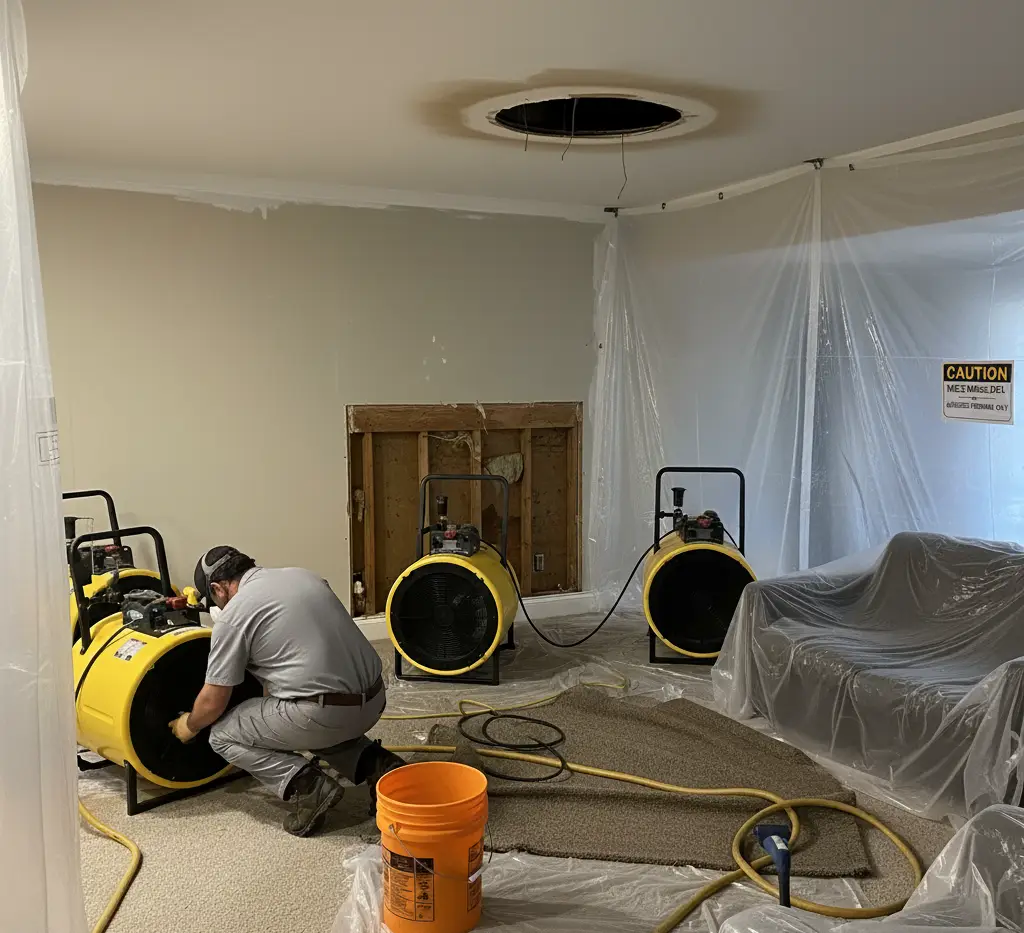
We don’t believe in the “all or nothing” approach. If a flood affects one wing of a hotel or one floor of a retail center, we establish “Containment Zones.” These are heavy-duty vapor barriers with HEPA-filtered air scrubbers that allow your employees or customers to safely use the unaffected areas while we perform intensive drying in the impacted zone.

Smart Logistics and 24/7 Availability

In 2026, logistical delays can be a project killer. Because we are a local water damage restoration company, we know the Chicago grid. We know which streets are under construction near Union Station and how to get a crew into a tight alleyway in Wicker Park. Our 60-90 minute response time isn’t just a goal; it’s a commitment to your bottom line.

Protecting Structural Integrity in Commercial Materials

Commercial buildings are made of tough stuff—steel, concrete, and heavy-duty glass. However, these materials have a hidden weakness: they are incredibly porous.

The Physics of Concrete Capillary Action

Think of concrete like a very hard, very dense sponge. When it sits in water, it “wicks” moisture upward. This can lead to “alkali-silica reaction,” which weakens the slab over time. We use specialized moisture meters that measure the “Percent Relative Humidity” deep inside the concrete to ensure that we aren’t leaving behind a structural time bomb.

Fireproofing and Insulation Concerns

In 2026, many Chicago buildings have spray-on fireproofing. When this material gets wet, it loses its structural adhesion and its fire-rating. We inspect these critical safety components, providing the documentation necessary to prove to the city inspectors that the building remains safe for occupancy.

The Role of the Project Manager in Commercial Recovery

A commercial restoration project involves many “stakeholders”—the property owner, the tenant, the insurance adjuster, and the facilities manager. Our Project Managers act as the central “hub” for this complex machine.

Transparent Documentation for Adjusters

Insurance companies in 2026 have moved toward AI-driven claim auditing. They require precise, daily data to approve a payout. We provide “Psychrometric Logs” (a record of the air’s temperature and humidity) and digital moisture maps. This authoritative data makes it nearly impossible for an insurance carrier to deny a legitimate claim, ensuring you get the investment needed to rebuild.

Legal and Safety Compliance

From OSHA requirements to Chicago’s local building codes, we manage all compliance issues. We ensure that our drying equipment doesn’t create a trip hazard and that our HEPA air scrubbers are maintaining a “negative pressure” environment so that no dust or contaminants move into unaffected areas of your business.

Specialized Equipment: The 2026 Redefined Restoration Fleet

We have invested in a premium tier of equipment specifically designed for the massive square footage found in Chicago’s industrial and commercial sectors.

Desiccant Dehumidification

For enormous spaces like a convention center or a large warehouse, standard dehumidifiers are like bringing a squirt gun to a forest fire. We utilize “Desiccant” drying, which uses a chemical process to strip moisture from the air. This creates “super-dry” air that can reach deep into the “bones” of a building, drying out materials that were previously considered unsalvageable.

HEPA Air Scrubbing for Health and Safety

In a post-pandemic 2026 world, indoor air quality is a top priority for every employer. Water damage can release mold spores and volatile organic compounds (VOCs) into the air. Our air scrubbers act like a “liver” for your building’s air, filtering it through three layers of protection to ensure that your staff is breathing medical-grade air during the restoration process.

Localization: Navigating Chicago’s Municipal Hurdles

Chicago’s Department of Buildings has strict rules regarding the restoration of commercial properties, especially in historic zones or high-rise districts.

Permit Expediting and Inspections

We maintain a professional rapport with local inspectors. They know that Redefined Restoration work is done to the highest IICRC standards. This trust often speeds up the inspection process, allowing you to move from the “drying phase” to the “reconstruction phase” days or weeks faster than you would with an unknown contractor.

Water Category Management (Clean vs. Grey vs. Black)

In Chicago, much of our commercial flooding involves “Category 3” water—this is water that comes from a sewer backup or an overflow of the Chicago River. This water is biohazardous. We treat these losses with an aggressive sanitization protocol, using EPA-registered antimicrobials that are safe for your employees but lethal to the bacteria found in urban floodwaters.

Comparing Restoration vs. Replacement Costs

In 2026, the cost of commercial building materials has reached a premium tier. Restoration is almost always more cost-effective than replacement.

Material Replacement Scenario Redefined Restoration Scenario
Commercial Carpet Tiles Full removal, landfill fees, new purchase, install. Extraction and sanitization in-place.
Hardwood Flooring Full rip-out, acclimation time, sanding/finishing. Pressure-mat drying (Injectidry system).
Drywall/Interior Walls Demolition, dust containment, taping, painting. Structural drying with wall-venting.
Electronic Systems Full hardware replacement. Dehumidification and ultrasonic cleaning.

The Human Factor: Empathy in Commercial Service

Behind every commercial building is a person who is stressed. We understand that your business is your life’s work.

Stress-Free Communication

Our PMs are trained in “Status Transparency.” You will receive a daily briefing that tells you exactly what was accomplished, what the moisture readings are, and what the goals are for the next 24 hours. No more guessing when your business will be back on its feet.

100% Satisfaction Guarantee

We stand by our work. If we say a building is dry, it’s dry. If we say it’s clean, it’s sanitized to clinical standards. This guarantee is our way of telling the Chicago business community that we are in this for the long haul. We’ve been here for years, and we’ll be here for years to come.

The Future of Restoration: 2026 and Beyond

As weather patterns continue to shift and Chicago’s infrastructure ages, the need for an authoritative water damage restoration company will only grow. We are constantly updating our training and equipment to stay ahead of these trends.

Predictive Analytics for Property Managers

In 2026, we offer “Emergency Ready Profiles” for our commercial clients. We map your building’s water shut-off valves, electrical panels, and critical assets before a disaster happens. This allows us to hit the ground running, saving precious minutes that could mean the difference between a minor incident and a total loss.

Sustainable Restoration Practices

We are committed to “Green” restoration. By drying materials in-place rather than sending them to a landfill, we help your business meet its 2026 sustainability goals. We use energy-efficient equipment and biodegradable cleaning agents wherever possible, ensuring that your restoration is good for your building and the planet.

Summary: Restoring Chicago’s Commercial Core

The strength of Chicago lies in its businesses—the small shops in Pilsen, the tech giants in the Loop, and the manufacturing hubs on the outskirts. When water threatens that core, you need a partner that is fast, reliable, and deeply local.

At Redefined Restoration, we combine the forensic science of 2026 drying technology with the “old school” values of hard work and transparent service. We are IICRC-certified, fully insured, and equipped to handle the largest commercial losses in the city. We don’t just “clean up” water; we restore your business’s ability to thrive.

Chicago is a city that knows how to rebuild. From the Great Fire to the micro-floods of 2026, we have always come back stronger. We are proud to be the team that helps our fellow Chicagoans keep the city moving forward, one restored building at a time.
The High-Rise Hydrology: Managing Commercial Continuity and Structural Health in Chicago

It is 4:45 AM on a Monday in the middle of a brutal Chicago February. The temperature in the Loop has plummeted well below zero, and the “Windy City” gusts are rattling the glass of every high-rise from Wacker Drive to Michigan Avenue. Inside your commercial office building, a silent disaster is unfolding. A fire suppression pipe, tucked away in a service plenum on the 12th floor, has succumbed to a localized freeze and burst. By the time the night security team notices water dripping through the lobby ceiling, thousands of gallons have already migrated through electrical chases, saturated the high-grade carpeting of three law firms, and reached the delicate server room of a tech startup.

In the world of business, water doesn’t just damage property; it stops time. Every hour your doors are closed is an hour of lost revenue, compromised client trust, and mounting logistical nightmares. This is where the choice of a professional water damage restoration company becomes the most critical decision in your business continuity plan. In 2026, managing a commercial flood in a city with the architectural complexity of Chicago requires more than just mops and fans. It requires a strategic understanding of structural physics, high-capacity moisture management, and the unique “vertical challenges” of our urban landscape.

The Vertical Velocity: Why Commercial Water Damage is a Unique Animal

In a single-family home in a neighborhood like Norwood Park, water damage is usually a horizontal problem. In a Chicago commercial building, it is a vertical one. Gravity is a relentless force. When a pipe breaks on an upper floor, the water follows the path of least resistance—which often means traveling down the elevator shafts, through the conduit holding your high-speed fiber optic lines, and behind the specialized “fire-rated” drywall that lines your stairwells.

This “vertical migration” creates a tiered emergency. While the 12th floor might have the most standing water, the 10th and 9th floors may actually suffer more “hidden” damage as the water settles into the architectural voids. A specialized water damage restoration company must be able to manage multiple “drying zones” simultaneously, ensuring that the moisture trapped in the sub-flooring of one suite isn’t feeding a mold outbreak in the ceiling of the suite below.

The 2026 Standard: Continuity Over Reconstruction

In the past, the standard response to a major commercial flood was “gut and rebuild.” However, in 2026, the priority has shifted to “rapid stabilization and preservation.” Business owners can no longer afford the months-long lead times for custom commercial finishes or specialized electronics.

At Redefined Restoration, our philosophy is built on the science of “in-place drying.” We use high-precision tools that allow us to save expensive commercial materials—such as engineered hardwoods, specialized acoustic ceiling tiles, and even some types of modular office furniture—that were previously considered unsalvageable. By using the air itself as a surgical tool to strip moisture out of the building’s skeleton, we can often keep your business “operational” even while the restoration process is underway.

The Science of the “Thirsty Air” for Large-Scale Spaces

To dry a 10,000-square-foot floor plate in a Chicago office building, you can’t just use standard equipment. You have to manipulate the “vapor pressure” of the entire environment. This is where we apply the science of Psychrometry, which is essentially the study of how air and water vapor interact.

The High-Powered Magnet for Moisture

We utilize LGR (Low Grain Refrigerant) dehumidifiers that are essentially giant, high-powered magnets for moisture. In a commercial setting, the air is often “heavy” with water. If the air is full, it can’t soak up any more moisture from your wet carpets. Our machines pull that heavy air in, freeze the water out of it, and blow bone-dry air back into the room. This creates “thirsty air” that is desperate to soak up moisture from your building’s materials.

Centrifugal Airflow and Surface Tension

Water has a natural “surface tension” that makes it want to stay in your carpet fibers. We use centrifugal air movers—machines designed to blow air at very high speeds directly across the floor. This “peels” the water molecules off the surface and pushes them into the air, where our thirsty-air machines can catch them. It is like a high-stakes game of catch between the fans and the dehumidifiers, played at a molecular level.

Chicago Architecture: The Challenge of Old Brick and New Glass

Chicago is a living museum of architecture. From the “Chicago School” steel-frame skyscrapers to the older brick warehouses in the Fulton Market district, each building reacts differently to water.

The “Common Brick” Reservoir

Many of our older commercial buildings utilize “Chicago Common Brick.” This brick is notoriously porous. If a warehouse in the West Loop floods, the brick walls act like a wick, pulling water upward through “capillary action.” If a restoration team doesn’t understand the density of this brick, they may dry the surface but leave the “core” of the wall wet. This leads to “spalling,” where the face of the brick literally crumbles away as the internal moisture tries to expand.

Modern Curtain Walls and Moisture Traps

In contrast, modern glass-and-steel buildings have “curtain walls.” These are designed to keep the weather out, but if water gets inside the wall assembly during a flood, it becomes trapped in a “dead air space.” Without specialized “injection drying” (where we pump dry air into the wall cavities through tiny, hidden holes), that water will sit there for months, slowly corroding the steel fasteners and inviting hidden mold growth.

The Professional Comparison: Why General Janitorial Isn’t Enough

Many commercial property managers are tempted to use their in-house janitorial staff to “clean up” after a leak. While these teams are excellent at daily maintenance, they lack the “structural medical” training required to save a building’s health.

Requirement In-House Janitorial / General Cleaning Professional Restoration Company
Moisture Mapping Sight and touch (guesswork) Infrared thermography and deep-penetrating probes
Extraction Power Shop-vacs and mops (leaves 40% behind) Truck-mounted high-lift extraction (removes 95%)
Bacteria Control Scented floor cleaners (non-remediating) EPA-registered botanical antimicrobials
Drying Tech Box fans (moves wet air around) LGR Dehumidification (removes water from the air)
Documentation None Full digital moisture logs for insurance and HOAs
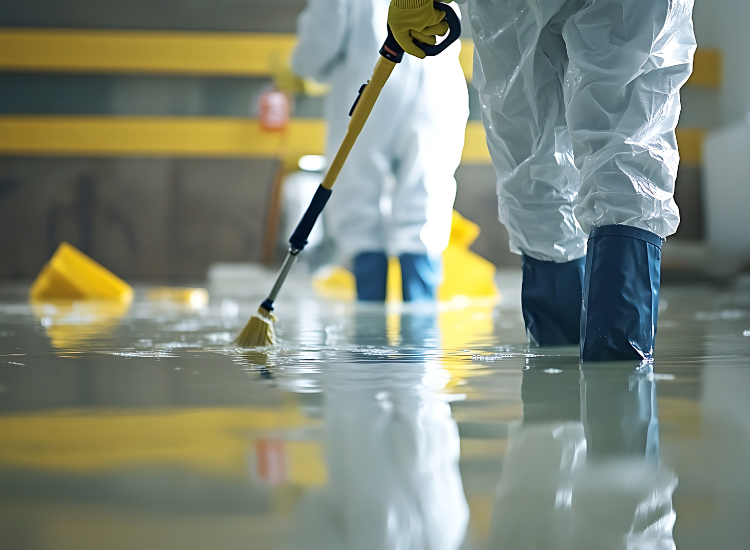
Air Quality Risk of spreading spores and dust HEPA-filtered air scrubbing and containment

The “Silent” Deadline: The 48-Hour Biological Clock

In a commercial environment, the biggest threat after a flood isn’t the water—it’s the mold. Mold spores are opportunistic. They are in the air of every building in Chicago, waiting for a “food source” (like the paper on your drywall) and “fuel” (water).

The biological clock starts the moment the water hits the floor. You have approximately 48 hours to stabilize the environment before mold begins to colonize. Once mold takes root in your commercial HVAC system or behind your wall coverings, the project changes from a “drying” job to a “remediation” job, which often requires the building to be evacuated. By hiring a professional water damage restoration company within the first four hours, you are essentially buying “insurance” against a full building shutdown.

Navigating the Commercial Insurance and HOA Maze

Commercial claims in 2026 are complex. If you are a tenant in a multi-use building near the Magnificent Mile, your leak might be your neighbor’s liability, or it might fall on the building’s HOA. Insurance adjusters in the current year are incredibly data-driven; they don’t want to hear that the floor “looks dry.” They want to see the “Dry Standard.”

A Dry Standard is a measurement we take from a part of your building that didn’t get wet—for example, a dry wall in the lobby. We use this as our “finish line.” We provide daily “Moisture Maps” and “Drying Logs” that prove to the insurance company that we brought your property back to that specific standard. At Redefined Restoration, we provide a comprehensive data package that serves as your legal defense, proving the building is safe, dry, and healthy for employees to return.

The Structural Anatomy: Sill Plates and Server Rooms

In a commercial space, we have to look at the “bones” of the building.

The Sill Plate Crisis

The sill plate is the piece of wood or metal that connects your walls to the concrete floor. When a floor floods, the water pools here. If this stays wet, it can rot or corrode, leading to structural instability. We use “pressure drying” systems to force dry air into these tiny gaps, ensuring the foundation of your interior walls is protected.

Server Room Sensitivity

Water and servers don’t mix, but neither do servers and “dust.” When a flood hits a tech-heavy space, we don’t just worry about the water; we worry about the “humidity spike.” High humidity can cause “micro-corrosion” on delicate circuit boards. We prioritize “localized climate control” in your IT rooms, using specialized, small-footprint dehumidifiers to keep the air at 40% humidity even while the rest of the floor is being dried.

Regional Environmental Challenges: The Chicago “Lake Effect”

Being a water damage restoration company in Chicago means understanding the “Lake Effect.” In the spring, we see rapid snowmelt combined with heavy rain. The soil in our region is heavy clay, which doesn’t soak up water quickly. This leads to “hydrostatic pressure”—where the water in the ground pushes against your building’s foundation with thousands of pounds of force.

This pressure can force water through the “cove joint” (where the floor meets the wall) of a commercial basement. We don’t just dry the floor; we evaluate the foundation. We may recommend “weep holes” or specialized drainage to relieve that pressure, ensuring that once we dry your building, it stays dry during the next Chicago storm.

Health and Liability: Protecting Your Workforce

As a business owner, you have a legal and moral obligation to provide a safe working environment. If a flood isn’t properly mitigated, the resulting “Musty Odor” is actually a sign of “VOCs” (Volatile Organic Compounds) being released by bacteria. This can lead to “Sick Building Syndrome,” where employees suffer from headaches, respiratory issues, and fatigue.

In 2026, we utilize “Air Scrubbers” with triple-stage HEPA filtration. These machines act like a “liver” for your building’s air, filtering out 99.97% of particulates. We don’t just “clean” the air; we scrub it clean so that when your staff returns, they are breathing air that is often cleaner than it was before the flood.

The Financial Logic of “Save Over Replace”

The “investment” in professional restoration is often far less than the cost of total replacement. Consider the “Value” of your time:

  • Lead Times: In 2026, shipping and manufacturing delays can mean that a specific type of commercial carpet or specialized office glass might take 12 weeks to arrive.
  • Lease Agreements: If your space is uninhabitable, you may be in violation of your lease or losing out on tenant rent.
  • The “Green” Factor: Restoring materials instead of throwing them in a Chicago landfill is better for the environment and often earns your building “sustainability points” that can be used for tax incentives.

Strategic Materials: What Can We Save?

In a commercial flood, we categorize materials by their “porosity” (how many tiny holes they have).

  • Non-Porous (Glass, Steel, Tile): These are easy to save. We sanitize them and they are as good as new.
  • Semi-Porous (Hardwood, Concrete, Brick): These are the challenge. They “hold” water. We use “vapor barriers” and “heat-aided drying” to pull the water out of these materials over 3-5 days.
  • Porous (Carpet Padding, Drywall, Insulation): These act like sponges. If the water was “clean” (Category 1), we can often save them. If the water was “dirty” (Category 3, like a sewer backup), these must be removed for safety.

The Psychological Recovery: Restoring Normalcy

When a manager sees their office under six inches of water, the first emotion is despair. It looks like the end of the business.

Part of our role as a professional water damage restoration company is to restore “confidence.” When our Redefined Restoration team arrives with a data-driven plan, infrared cameras, and clear timelines, the “crisis” becomes a “project.” We give you the “Estimated Time of Restoration” (ETR), allowing you to communicate clearly with your clients and employees.

Summary: The Blueprint for Commercial Recovery

If your Chicago commercial property is currently facing a water intrusion, the path forward is a race of science against time.

  1. Immediate Extraction: Get the “bulk” water out before it seeps into the sub-floor.
  2. Stabilization: Use industrial dehumidification to stop the humidity from damaging your electronics and art.
  3. Mapping: Find the hidden water in the elevator pits and utility chases.
  4. Sanitization: Use botanical cleaners to ensure the space is biologically safe.
  5. Documentation: Get the moisture logs that will ensure your insurance claim is paid in full.

In 2026, your building is a complex machine. When it gets wet, you don’t need a “cleaner”—you need a structural engineer’s mindset combined with a restorer’s heart. Chicago is a city built on grit and resilience; your business is no different. We are here to ensure that a bad Monday morning doesn’t turn into a permanent loss.

Protect your assets, preserve your continuity, and trust the science of the dry. We have been the “guardians of the grid” for Chicago’s commercial spaces, and we are ready to help you redefine what recovery looks like.

The Silent Clock: Why Timing and Technical Precision Define Top Water Damage Restoration Companies in Chicago

water damage restoration

You are standing in your basement in Lincoln Square, and the sound isn’t the usual hum of the furnace. It’s a rhythmic, heavy splashing. A pipe has burst behind the drywall, or perhaps the notorious Chicago “flash flood” has sent the city’s combined sewer system surging back into your garden-level unit. In that moment, your brain shifts into survival mode. You grab towels, you move the heirloom rug, and you start searching for help.

What most property owners in the Windy City don’t realize is that the water you can see—the puddles reflecting your flashlight—is only about twenty percent of the problem. The real crisis is the water you cannot see. It is currently wicking up your wall studs like a straw and soaking into the porous Chicago common brick of your foundation. This is where the gap between “cleaning up” and “professional restoration” becomes a chasm. In 2026, the standard for a healthy home has moved beyond surface-level drying. To truly protect your investment, you need to understand the structural physics that the best water damage restoration companies use to save a building from the inside out.

The Hidden Mechanics of Structural Wicking

When water enters a room, it doesn’t just sit on the floor. It is opportunistic. Through a process called “capillary action,” water moves upward through porous materials against the force of gravity. Think of a sponge dipping into a glass of water; the water travels up into the sponge even though the sponge is “above” the water line.

In our local architecture, from the historic greystones to the modern glass high-rises in the West Loop, this wicking can happen at an alarming speed. Drywall, insulation, and wood framing act like a giant wick for a candle. If you only dry the floor, the water trapped inside the walls stays there. This trapped moisture creates a “micro-environment” where mold spores—which are naturally present in the Chicago air—can settle and thrive. Within forty-eight hours, a simple leak can turn into a biological event that compromises the air quality of the entire property.

How Modern Restoration Science Outsmarts Moisture

Professional water damage restoration companies do not rely on “feel” or “sight” to determine if a room is dry. In 2026, we use a discipline called Psychrometry. This sounds like a complex medical term, but it is actually the science of how air and water vapor interact.

Essentially, we use the air as a tool to pull water out of your floors and walls. To do this, we have to create “thirsty air.” When the air in your home is humid, it’s like a sponge that is already full of water; it can’t soak up any more. By using industrial-grade dehumidifiers—which act like high-powered magnets for moisture—we strip the water out of the air. Once the air is “thirsty,” it starts to pull the water out of your carpet and wood studs.

This is a delicate balance. If you dry a room too fast, you can cause “case hardening,” where the outside of a wood beam dries and shrinks so quickly that it cracks the interior, causing structural weakness. If you dry it too slowly, you invite rot. The elite teams at Redefined Restoration monitor these “drying curves” daily to ensure your home returns to its original structural strength without secondary damage.

The Chicago Context: Weather and Architecture

Chicago presents a unique set of challenges that restoration companies in other parts of the country rarely face. Our local climate and building styles dictate a very specific approach to moisture management.

The Seasonal Humidity Swing

During a humid Chicago summer, the outdoor air is often already saturated. If a pipe leaks in July, we cannot simply open the windows to “air the place out.” Doing so would actually invite more moisture into the home. Conversely, in the dead of a freezing January, the indoor air is incredibly dry, but the structure itself may be frigid. If we don’t manage the temperature of the wet materials, the water won’t evaporate. In 2026, we utilize specialized heating systems to “excite” the water molecules in your floor, making them move faster so our dehumidifiers can catch them more easily.

Older Brick Foundations

Many homes in Avondale, Logan Square, and Bridgeport are built with “Chicago Common Brick.” This brick is incredibly porous compared to modern masonry. When a basement floods, this brick soaks up water like a terracotta pot. If a company doesn’t use deep-penetrating moisture meters to check the “core” of the brick, they might leave pounds of water trapped inside. This leads to “efflorescence”—that white, powdery salt you see on basement walls—which is a sign that water is still moving through the masonry, potentially weakening the mortar over time.

The Professional Workflow: What Happens Next

When you call one of the leading water damage restoration companies, the process follows a strict technical order. This isn’t just for efficiency; it’s to prevent “cross-contamination.”

1. Thermal Inspection and Moisture Mapping

We don’t start by tearing down walls. We start by seeing the invisible. Using infrared cameras, we can see temperature differences in your walls. Since wet materials are usually cooler than dry ones, the infrared camera shows us exactly where the water traveled. We create a “map” of the moisture, which allows us to be surgical in our approach rather than gutting the entire room.

2. High-Velocity Extraction

It is much more cost-effective to “vacuum” water out than it is to “dry” it out. We use truck-mounted extraction units that have thousands of times more suction power than a standard shop-vac. These units can pull water out of the deep “padding” beneath your carpet, often saving the carpet itself if the water was clean.

3. Structural Stabilization

Once the standing water is gone, we apply hospital-grade antimicrobials. This is a critical safety step. We want to make sure we aren’t just drying out a “biology project.” By sanitizing the surfaces immediately, we stop bacteria from multiplying while the drying machines do their work.

4. Controlled Evaporation

This is where the heavy equipment comes in. We use “Air Movers”—industrial fans designed to create a “cyclone” of air right at the floor level. This high-speed air “peels” the moisture off the surface so our dehumidifiers can collect it.

water damage restoration companies

Comparing Professional Restoration to General Maintenance

Many property managers or homeowners believe they can handle a leak using their in-house maintenance staff. While this might save a few dollars initially, the long-term investment in a professional firm usually pays for itself by preventing structural failure and mold.

Feature In-House Maintenance / DIY Professional Restoration Team
Moisture Detection Touch and sight (unreliable) Infrared and deep-penetrating meters
Drying Method Standard fans and open windows Industrial LGR dehumidifiers and axial fans
Bacteria Control Household bleach (mostly water-based) EPA-registered botanical antimicrobials
Documentation None Full moisture logs for insurance claims
Structural Integrity Risk of warped floors and rotted studs Scientific drying to “dry standard”
Air Quality Risk of mold spore circulation HEPA air scrubbing and filtration

The Health Implications of “Almost Dry”

In 2026, we are more aware than ever of how indoor air quality affects our health. When a home isn’t dried properly, the moisture that remains trapped behind baseboards or under kitchen cabinets becomes a breeding ground for “microbial volatile organic compounds” (MVOCs). This is what creates that “musty” basement smell.

That smell isn’t just an annoyance; it is a sign that biological organisms are active in your home. For families in Chicago with children or elderly residents, this can lead to respiratory irritation or an increase in allergy symptoms. Professional water damage restoration companies use HEPA air scrubbers during the drying process. These machines act like a “liver” for the air in your house, filtering out 99.97% of the tiny particles, dust, and spores that the drying fans might stir up. This ensures that while we are fixing the floor, we aren’t compromising the air you breathe.

Navigating the Chicago Insurance Maze

One of the most stressful parts of a water emergency is dealing with the insurance company. Adjusters in 2026 are looking for data, not just photos. They want to see “moisture logs” that prove the home was brought back to a “dry standard.”

A “dry standard” is a measurement we take from a part of your house that didn’t get wet. For example, if your basement flooded, we take a reading from a dry stud on the first floor. This tells us what “normal” looks like for your specific home and its materials. We then monitor the wet areas until they match that dry standard. When you work with Redefined Restoration, we provide this technical documentation to your insurance carrier, making the claim process much smoother. It turns the conversation from an argument about what “feels dry” into a factual report based on physics.

The Silent Threat: Secondary Damage

If a professional company isn’t brought in, “secondary damage” is almost a guarantee. This is damage that wasn’t caused by the initial leak but was caused by the high humidity that the leak created.

Imagine a pipe bursts in your kitchen. You mop the floor, but you don’t use professional dehumidifiers. The air becomes so wet that the moisture starts to condense on the cooler surfaces upstairs. Suddenly, you have “ghosting” (dark streaks) on your bedroom ceiling, or your high-end wooden furniture in the dining room starts to “cloud” (develop white spots in the finish). The right restoration team manages the entire volume of air in the property, not just the room where the water was found.

Safety and Structural Stability

Water is heavy. When a ceiling or a subfloor becomes saturated, it loses its “shear strength.” This means it can no longer hold the weight it was designed for. In older Chicago homes with plaster-and-lath ceilings, a leak on the second floor can lead to a sudden, dangerous collapse of the plaster below.

Professional restoration teams are trained to identify when a material is no longer safe. Sometimes, the most professional thing we can do is tell you that a ceiling needs to come down for your safety. We look at the “load-bearing” capacity of wet materials to ensure that as the home dries, it doesn’t become a hazard to your family.

Why 2026 Standards Favor “Restoration” over “Replacement”

A decade ago, the standard response to a flood was to “gut the house.” Today, because the technology of water damage restoration companies has advanced so much, we can save a significant amount of the original structure.

  • Hardwood Floor Drying: We use “pressure mats” that use suction to pull moisture directly through the pores of the wood. This can often save expensive oak or maple flooring that would have previously warped and required replacement.
  • Injection Drying: For walls that are wet on the inside but look fine on the outside, we can sometimes drill tiny holes and “inject” dry air directly into the wall cavity. This saves the cost of tearing out and replacing the drywall.
  • In-Place Carpet Drying: If the water is from a clean source (like a supply line), we can often dry the carpet and the padding without even pulling it up, using high-powered sub-surface extraction tools.

This “restore over replace” philosophy is not only faster, but it is also much more environmentally friendly. It keeps tons of construction debris out of our local landfills and gets your life back to normal days or even weeks sooner.

The Biohazard Reality: Category 1 vs. Category 3

Not all water is created equal. In the restoration industry, we categorize water based on its cleanliness.

  • Category 1 (Clean Water): From a broken water supply line or a leaking faucet. It doesn’t pose a substantial risk if handled quickly.
  • Category 2 (Gray Water): This might be from a dishwasher or a washing machine. It contains “nutrients” (like soap or skin cells) that can allow bacteria to grow quickly.
  • Category 3 (Black Water): This is the most dangerous. This is sewer backup or rising floodwater from the street. It contains pathogens, viruses, and chemicals.

When you deal with Category 3 water in Chicago, the mitigation process is entirely different. Everything porous—like carpet padding or drywall—that was touched by the water usually must be removed. This is where the expertise of Redefined Restoration is vital. We have the training to handle these biohazards safely, using personal protective equipment (PPE) and containment barriers to make sure that the “black water” contaminants don’t spread to the clean parts of your home.

Final Thoughts for the Chicago Property Owner

A water emergency is a test of your home’s resilience, but more importantly, it is a test of the partners you choose to fix it. In a city like Chicago, where the weather is tough and the architecture is varied, you cannot afford to guess.

Whether you are dealing with a slow drip that has been hiding behind a vanity for months or a sudden burst pipe that has turned your living room into a lake, the goal is the same: return the property to its pre-loss condition as quickly and safely as possible. By choosing among the top water damage restoration companies that prioritize 2026 drying technology and scientific documentation, you are doing more than just fixing a leak. You are ensuring the long-term health of your family and the structural integrity of your home.

When you see our trucks in your neighborhood, know that we aren’t just there to move air; we are there to protect the very “bones” of the city we love. From the first thermal image to the final moisture reading, our commitment is to provide a result that makes the emergency feel like a distant memory.