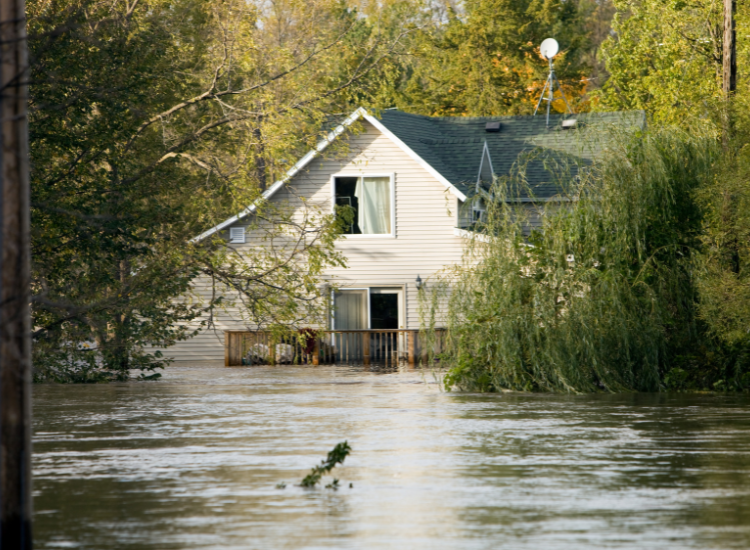
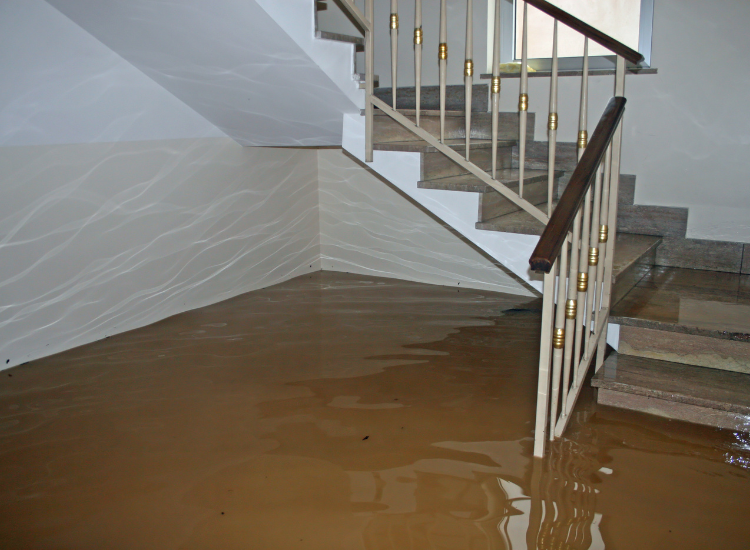
It is a Tuesday evening in April, and a sudden, violent Midwestern thunderstorm is pounding against the pavement of your street in Lakeview. You hear a sound from the basement that no homeowner ever wants to hear: the frantic, rhythmic splashing of water where there should be silence. Within minutes, the “finished” area you spent years perfecting is transforming into a dark, murky pond. As the water inches up the drywall, you realize this isn’t just a small leak; it is a full-scale environmental crisis in your own home.
In 2026, flood events in the Chicago area have become more frequent and more intense. Our city’s aging infrastructure often struggles to keep up with rapid “flash floods” that send river water, street runoff, and—most dangerously—sewer backup into the basements of historic bungalows and modern condos alike. When this happens, the clock doesn’t just start ticking; it starts racing. Most people assume that once the water is gone, the problem is solved. In reality, the departure of the water is only the end of the beginning.
The Invisible Threat of Category Three Water
In the world of professional flood damage restoration, we don’t just see “water.” we see “categories.” When a pipe bursts in your kitchen, that is Category One—clean water. However, when Lake Michigan or the Chicago River overflows, or when the city’s combined sewer system fails, you are dealing with Category Three water, often called “Black Water.”
This is the most dangerous classification of liquid a property owner can encounter. This water is not just “dirty”; it is a living soup of bacteria, viruses, chemicals, and organic matter. It carries pathogens like E. coli and Salmonella, along with whatever fertilizers or oils it picked up from the street. This is why attempting to “DIY” your flood cleanup in Chicago is more than just a difficult task—it is a significant health risk. Professional restoration is about more than just drying floors; it is about decontaminating a biological hazard zone.
The Physics of Professional Drying: Psychrometry Explained
Once the standing water is removed using high-powered, truck-mounted extraction units—which act like giant, industrial-strength vacuum cleaners for your house—the real work of flood damage restoration begins. This is where we use the science of “Psychrometry.”
Essentially, Psychrometry is the study of how air and water vapor behave. To dry a house that has been soaked through, we have to manipulate the environment using three specific levers: airflow, dehumidification, and temperature.
Creating the Thirsty Air
Think of the air in your flooded basement as a sponge. If the air is already “full” of water (high humidity), it can’t soak up any more moisture from your wet carpet or drywall. We use industrial-strength dehumidifiers that act like high-powered magnets for moisture. These machines pull the wet air in, freeze the water out of it, and blow bone-dry air back into the room. This makes the air “thirsty” again so it can continue pulling water out of your walls.
The Role of High-Velocity Air Movers
If you just turn on a standard house fan, you are only moving the surface air. In a professional flood damage restoration setup, we use centrifugal air movers. These are designed to create a “cyclone” effect right at the floor level. This high-speed air “peels” the moisture off the surface of the materials, allowing the thirsty air to do its job. It is the difference between letting a spill air-dry and using a high-pressure blow-dryer.
Chicago’s Unique Architectural Challenges
Restoring a home in the Windy City is vastly different from restoring one in a desert climate. Chicago’s architecture—from the classic brick two-flats of Avondale to the limestone-clad greystones of Lincoln Park—requires a specialized touch.
The Porous Brick Problem
Many older Chicago homes are built with “Chicago Common Brick.” This material is notoriously porous. When floodwaters rise against a brick foundation, the brick acts like a wick, sucking the water upward through a process called “capillary action.” If a technician doesn’t account for this, you might dry the floor but leave the interior of the brick walls saturated. This leads to “spalling,” where the face of the brick literally pops off as the moisture inside tries to escape.
The Modern Condo Slab
In the West Loop or the South Loop, many newer residences are built on concrete slabs with “floating” floors. If water gets under these floors, it becomes trapped in a “dead air space.” Without professional Redefined Restoration intervention, that water will sit there for months, slowly rotting the subfloor and creating a massive mold colony that you won’t even see until you start smelling it.
The Anatomy of a Professional Restoration Plan
When our team arrives at a property, we don’t just start throwing fans around. We follow a technical “Order of Operations” designed to stabilize the building and prevent “secondary damage.”
Phase One: The Inspection and Moisture Map
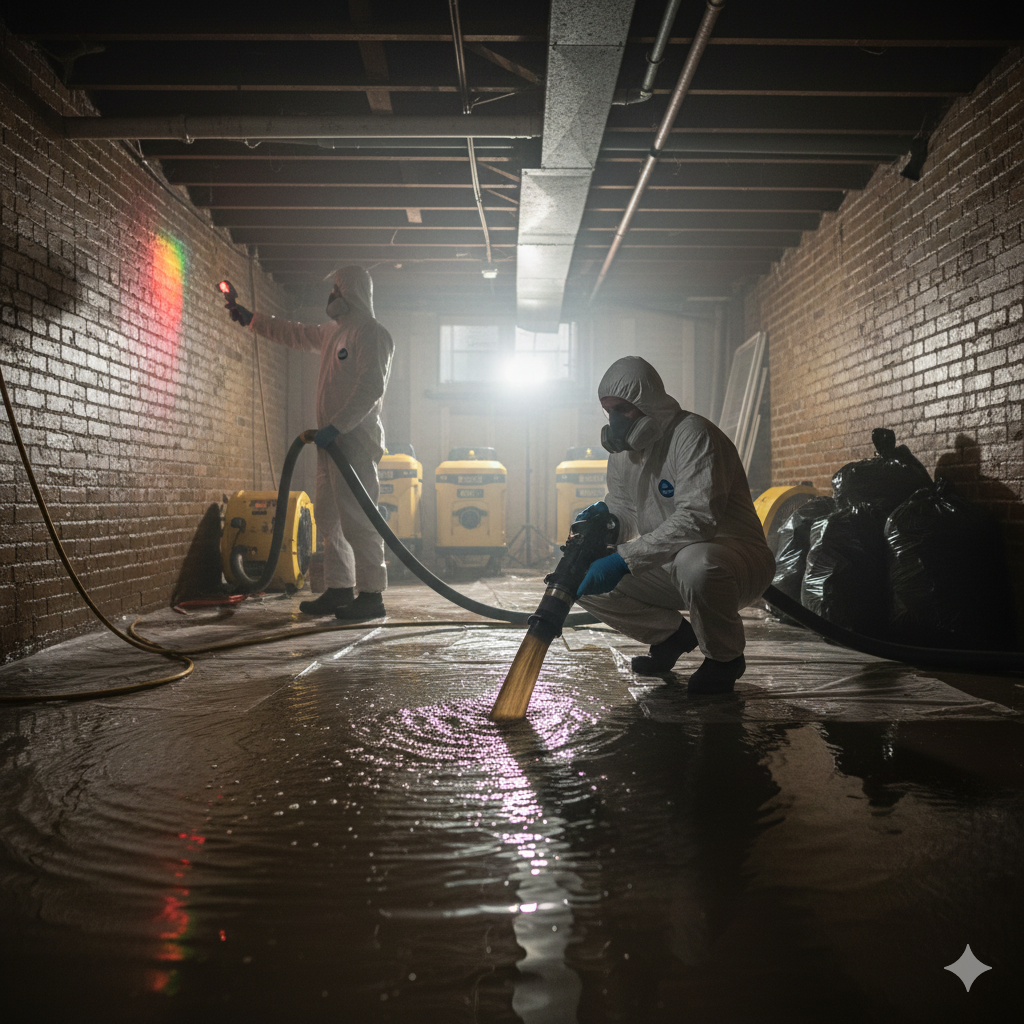
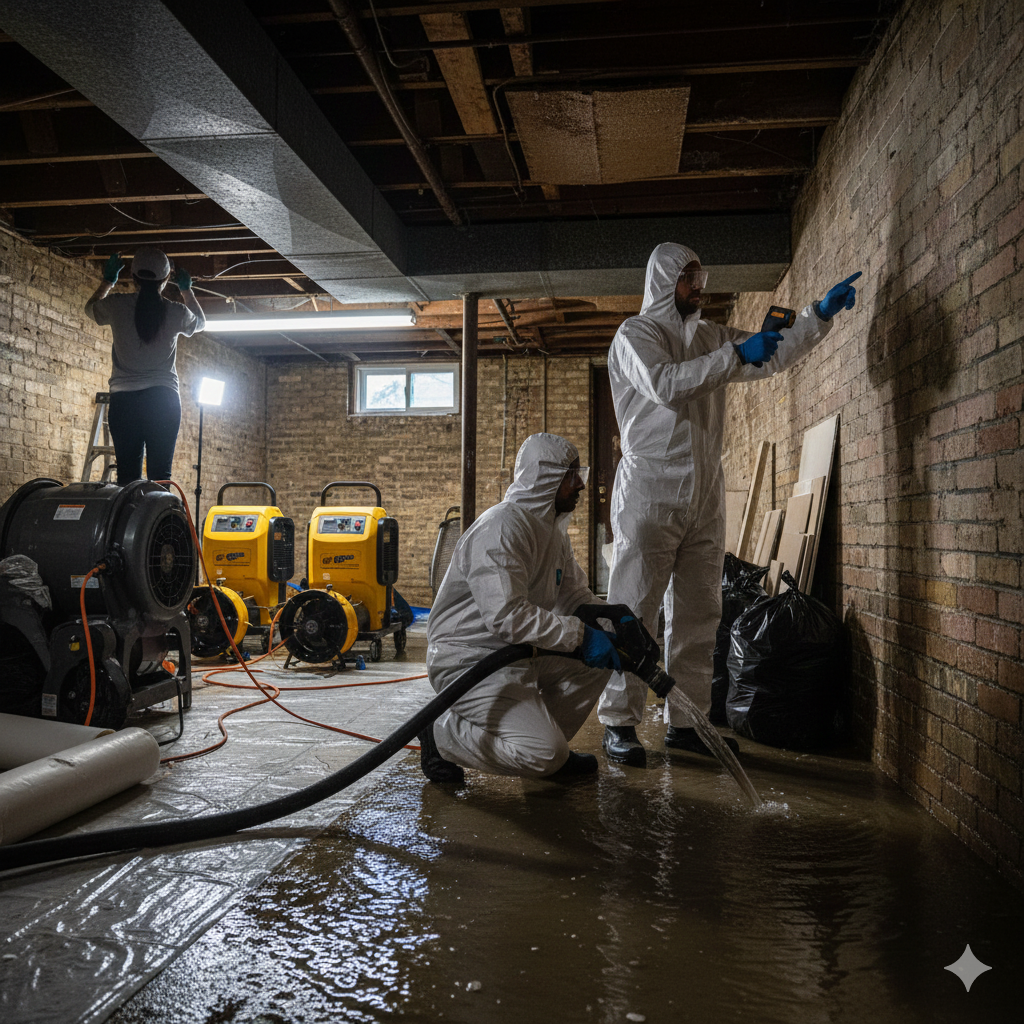
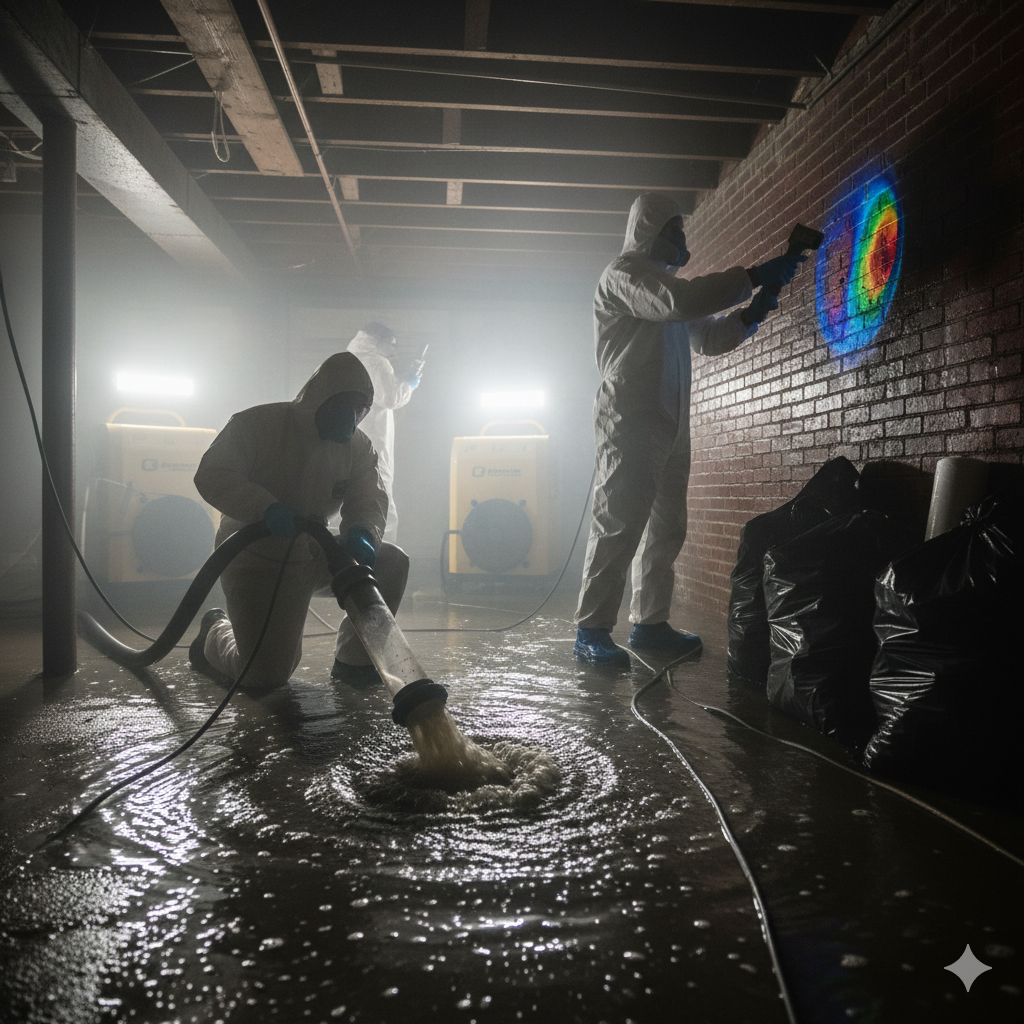
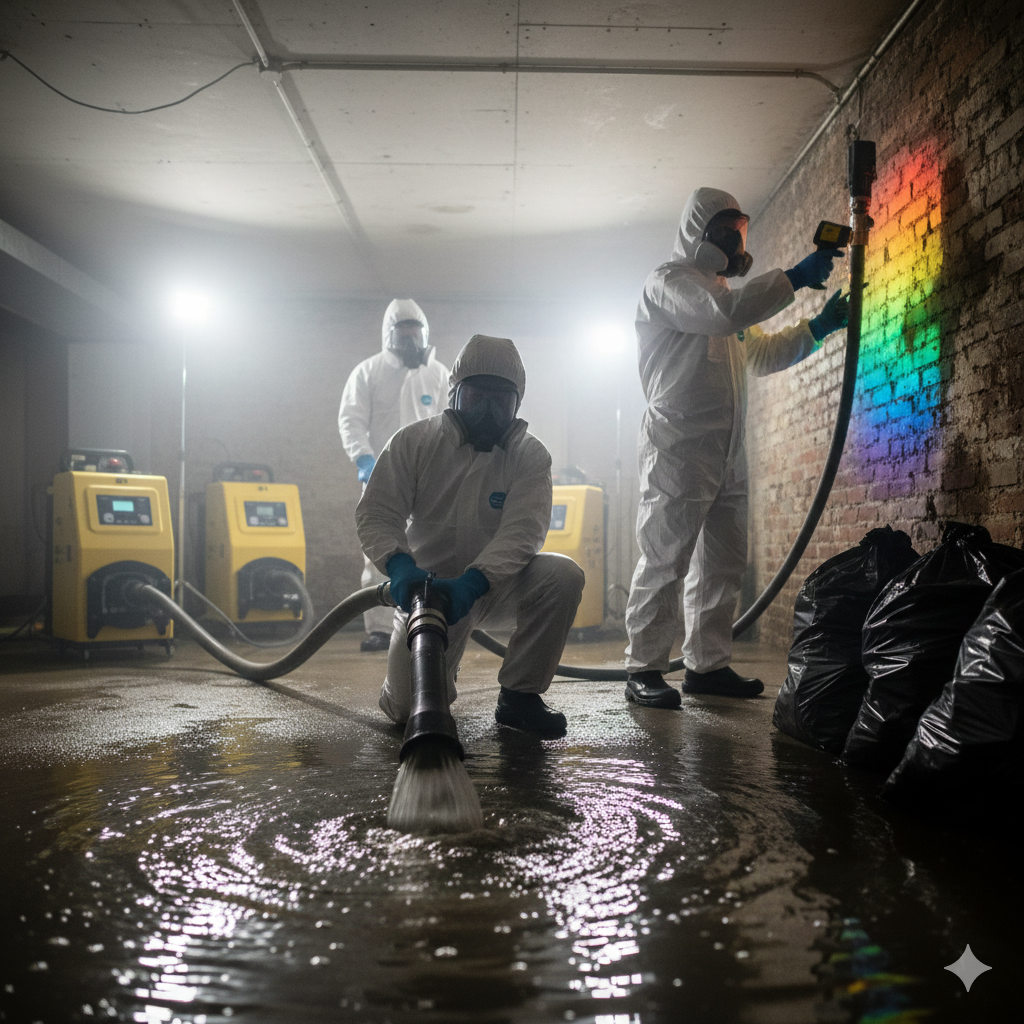
We use infrared cameras—which see temperature differences rather than light—to find the water. Since wet materials are usually cooler than dry ones, the infrared camera allows us to see exactly where the water is hiding behind your drywall without us having to tear the wall down. We create a “Moisture Map” to track our progress, ensuring that we don’t leave a single pocket of dampness behind.
Phase Two: Aggressive Extraction
We remove the bulk water. It is much faster to “vacuum” water out of a material than it is to “evaporate” it. If we can extract 90% of the water in liquid form, the drying phase becomes much more manageable.
Phase Three: Stabilization and Antimicrobial Treatment
Before the fans go on, we apply hospital-grade antimicrobials. This is a critical safety step. If you blow air across contaminated floodwater, you are essentially “atomizing” the bacteria—turning it into a fine mist that you can breathe in. We sanitize the environment first to ensure the air we move is safe air.
Phase Four: Controlled Drying and Monitoring
In 2026, we use “smart sensors” that allow us to monitor the drying progress remotely. These sensors send data to our technicians’ phones, telling us exactly when the wood studs have reached the “Dry Standard”—a baseline measurement of what a healthy, dry piece of wood should be in the Chicago climate.
Comparison: Restoration vs. Standard Cleaning
Many property owners confuse a cleaning service with a restoration firm. Here is a breakdown of why they are not the same:
| Feature | Standard Cleaning Service | Professional Restoration Service |
| Moisture Detection | Touch/Sight only | Infrared cameras & moisture probes |
| Water Extraction | Mops & Shop-Vacs | Truck-mounted high-PSI extraction |
| Bacteria Control | Household bleach (mostly water) | EPA-registered botanical antimicrobials |
| Drying Power | Household fans & open windows | Industrial LGR dehumidifiers & air movers |
| Structural Knowledge | None | IICRC-certified structural drying expertise |
| Documentation | None | Full moisture logs for insurance claims |
The Mold Clock: Why 48 Hours is the Magic Number
The most significant risk following a flood isn’t the water itself; it is what grows in its wake. Mold spores are naturally present in the Chicago air, but they need three things to grow: food (drywall or wood), the right temperature, and moisture.
In a flooded environment, you have all three. Mold can begin to colonize and become visible in as little as 24 to 48 hours. Once mold takes hold, your project transitions from a relatively simple drying job into a much more expensive “mold remediation” project. This is why we treat every flood damage restoration call as an emergency. By aggressively drying the structure within that first 48-hour window, we effectively “starve” the mold of the water it needs to survive.
Navigating the Chicago Insurance Maze
One of the most stressful parts of a flood is dealing with the financial fallout. In 2026, insurance companies have become incredibly data-driven. They don’t want to hear that your basement “was really wet.” They want to see the numbers.
At Redefined Restoration, we provide the “paper trail” that insurance adjusters require. This includes:
- The Dry Standard: Proof of what a dry area of your home looks like.
- Daily Moisture Readings: A day-by-day log showing the moisture levels dropping in your walls and floors.
- Psychrometric Logs: Data showing that the air in your home was being properly managed to facilitate drying.
Having this technical documentation makes it much harder for an insurance carrier to deny a claim or argue that the damage was “pre-existing.” We act as your technical advocate, ensuring that the work is done correctly and documented thoroughly.
The Hidden Costs of Improper Restoration
If a home isn’t dried to professional standards, the “savings” of doing it yourself often vanish within a year. We call these “secondary losses.”
Structural Integrity and “Dry Rot”
When wood stays damp for too long, it can develop a fungus commonly called “dry rot.” This fungus eats the cellulose that gives wood its strength. In older homes, this can compromise the very “sill plates” and “joists” that hold up your house. Professional drying ensures the “bones” of your home stay strong.
The “Musty Smell” and Indoor Air Quality
Have you ever walked into a Chicago basement and immediately smelled that “old house” musty scent? That smell is actually “Microbial Volatile Organic Compounds” (MVOCs)—the gases released by mold and bacteria as they eat your home. It isn’t just an annoyance; it is a sign of poor indoor air quality that can lead to respiratory issues. Professional restoration involves “Air Scrubbing”—using HEPA-filtered machines that act like a “liver” for your home’s air, filtering out 99.97% of particles and odors.
Safeguarding Your Chicago Property for the Future
While we can’t control the rain, we can control how our homes respond to it. As part of our service, we often help homeowners identify “vulnerability points” that led to the flood.
- Sump Pump Maintenance: In 2026, we recommend “smart” sump pumps with battery backups. If the power goes out during a Chicago storm, a standard pump is useless.
- Grading and Gutters: Many floods in the city are caused by water pooling against the foundation because gutters are clogged with debris from our local oak and maple trees.
- Backflow Preventers: If your flood was caused by a sewer backup, installing a backflow preventer can be a “budget-friendly” way to ensure the city’s sewage never enters your home again.
The Human Element: Empathy in a Crisis
At Redefined Restoration, we understand that we are meeting you on what might be one of the worst days of your year. You aren’t just looking at wet drywall; you are looking at damaged memories, ruined photo albums, and a disrupted life.
Our technicians are trained to be “calm in the storm.” We don’t just bring equipment; we bring a plan. From the moment we step into your home, our goal is to take the “chaos” of a flood and turn it into a structured, scientific recovery process. We handle the heavy lifting—both literally and figuratively—so you can focus on getting your family back to a sense of normalcy.
Technology in 2026: The New Standard
The tools of our trade have evolved rapidly. Today, we use “In-Place Drying” technology. In the past, if a carpet got wet from a flood, we almost always had to tear it out. In 2026, we have specialized “floor mat” systems that can pull moisture directly through hardwood or high-end carpeting without having to demolish the material.
This approach is not only faster, but it is also much more “cost-effective” and environmentally friendly. We strive to “Restore” rather than “Replace” whenever it is scientifically safe to do so. This keeps debris out of our local landfills and gets you back into your home days or even weeks sooner than a full reconstruction project would.
Understanding “Water Migration”
Water is “opportunistic.” It doesn’t just sit on the floor; it moves. Through “wicking,” water can travel up your drywall as much as four feet in a single night. It travels behind baseboards, into the “dead air spaces” between your wall studs, and even into the electrical outlets.
This “migration” is why we often have to dry areas of the house that didn’t even touch the standing water. If the humidity in your basement hits 90%, the ceiling tiles in that basement will start to soak up that moisture from the air, potentially leading to sagging and mold on the top of the room. A professional flood damage restoration plan accounts for the entire “volume” of the space, not just the square footage of the floor.
Conclusion: Turning the Tide on Flood Damage
A flood is a powerful force of nature, but it is not an invincible one. With the right combination of 2026 technology, scientific drying principles, and a deep understanding of Chicago’s unique architectural landscape, your home can be saved.
The most important thing to remember is that water is a patient enemy. It will hide in your floors and walls for months if you let it. But with aggressive, professional intervention, you can stop the damage in its tracks. You can ensure that the air your family breathes is clean, the “bones” of your house are dry, and your investment is protected.
If you find yourself standing in rising water, don’t wait for the “musty smell” to tell you there’s a problem. Take immediate action, secure your property, and bring in the experts who know how to manage the “invisible” side of restoration. Your home is more than just a building—it is your sanctuary. Let’s keep it that way.