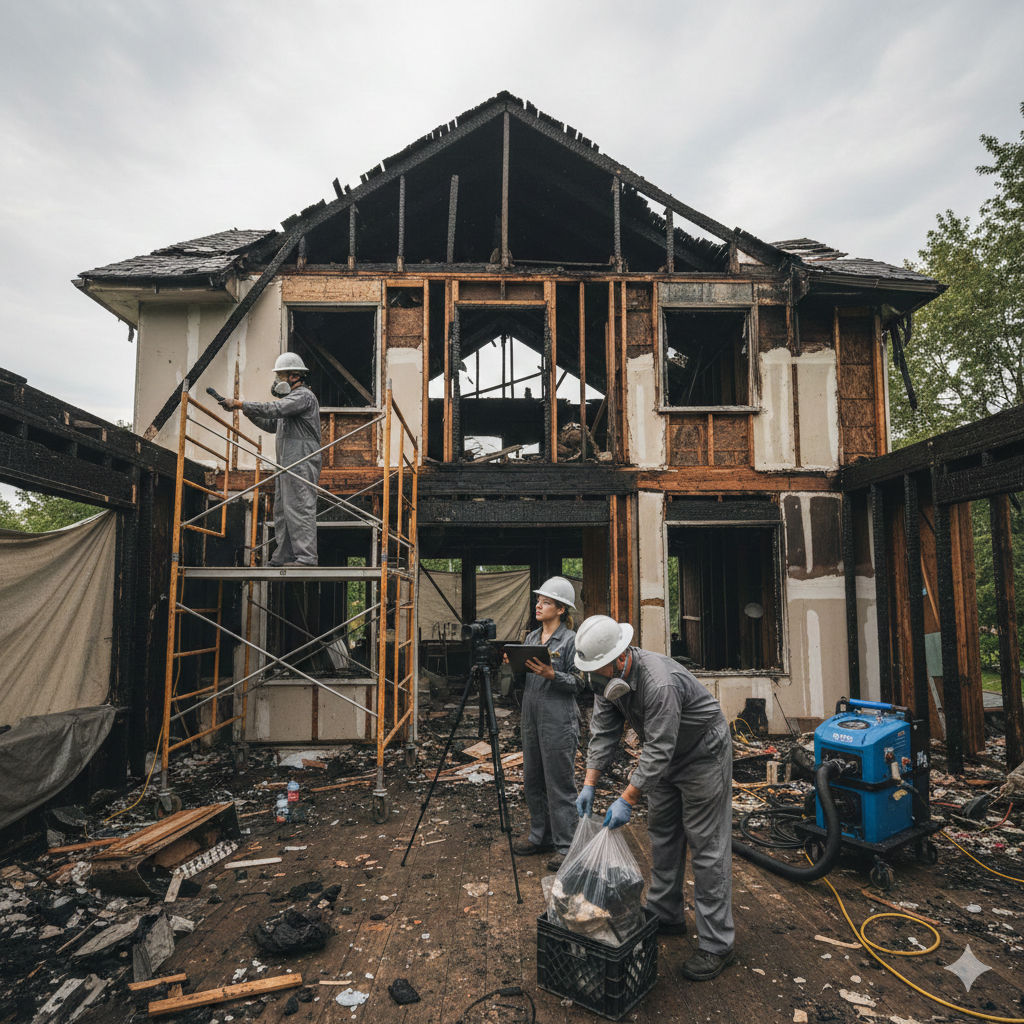
Imagine returning to your property after the fire trucks have departed. The air is thick with a heavy, acrid scent, and a layer of fine, grey dust covers every surface. In these initial hours of 2026, the decisions a property owner makes are pivotal. While the fire itself is out, a silent, chemical clock has started ticking. Without immediate intervention, the acidic residues left behind by smoke and soot will begin to permanently etch glass, tarnish metal fixtures, and deeply saturate porous building materials.
Professional fire damage restoration services are not merely about cleaning up a mess; they are about a highly technical intervention designed to stop the progression of secondary damage and return a structure to a safe, habitable state. At Redefined Restoration, we have spent over 15 years navigating these complex recovery scenarios, seeing firsthand how a systematic approach can save properties that initially seemed like total losses.
The Immediate Response: Securing the Perimeter
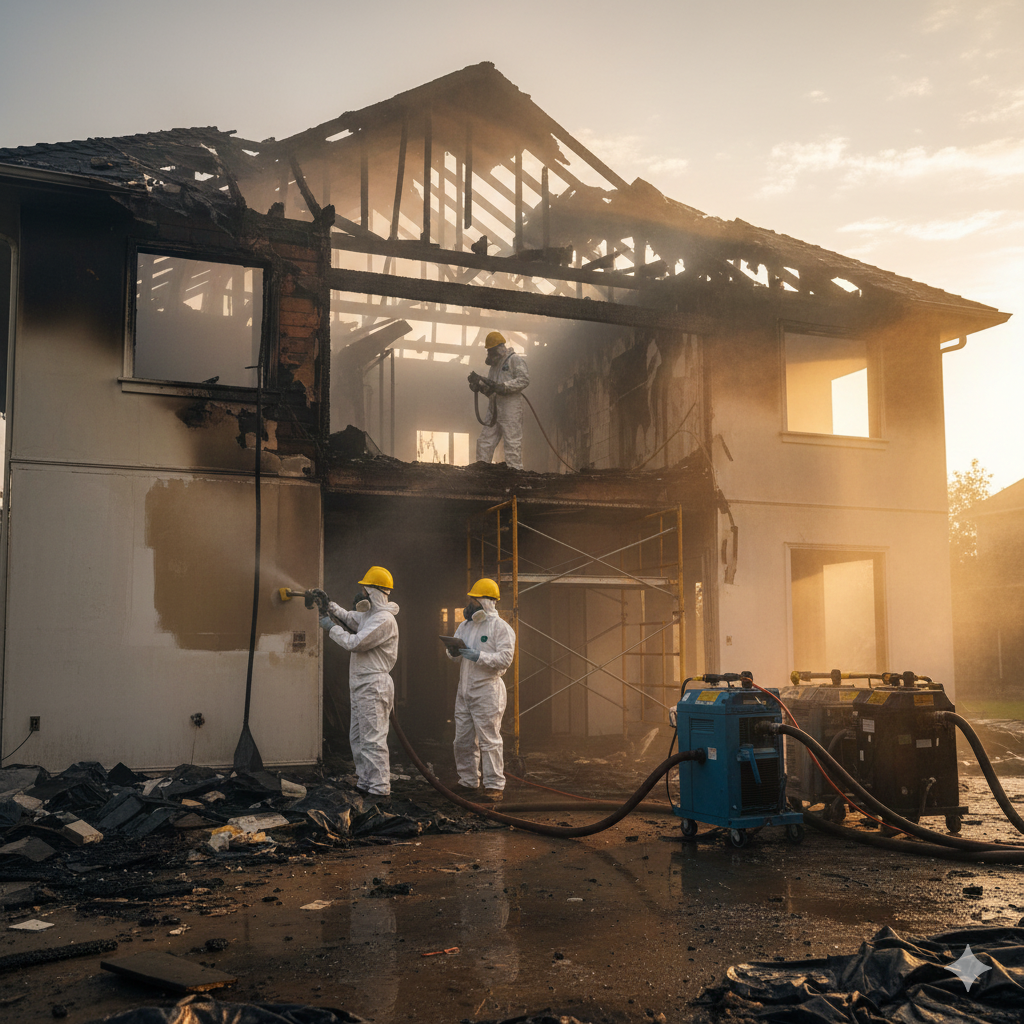
The first phase of any legitimate restoration project begins with stabilization. A structure that has been compromised by fire is often vulnerable—not just to the elements, but to unauthorized entry.
Emergency Board-Up and Tarping
In the immediate aftermath, our priority is to secure the property. This involves boarding up broken windows and securing damaged doorways. If the roof has been compromised by fire or by the strategic venting performed by firefighters, we implement heavy-duty tarping. This is a critical step in our fire damage restoration services because it prevents rain or debris from entering the building, which would only complicate the recovery process and increase the risk of mold growth.
Assessing Structural Stability
Before any cleaning can begin, the structural integrity of the building must be verified. High heat can weaken wooden trusses, warp steel beams, and cause masonry to spall. Our team works to identify load-bearing compromises early, ensuring that the work environment is safe for our technicians and eventually for the property owners.
The Paradox of Suppression: Managing Water Damage
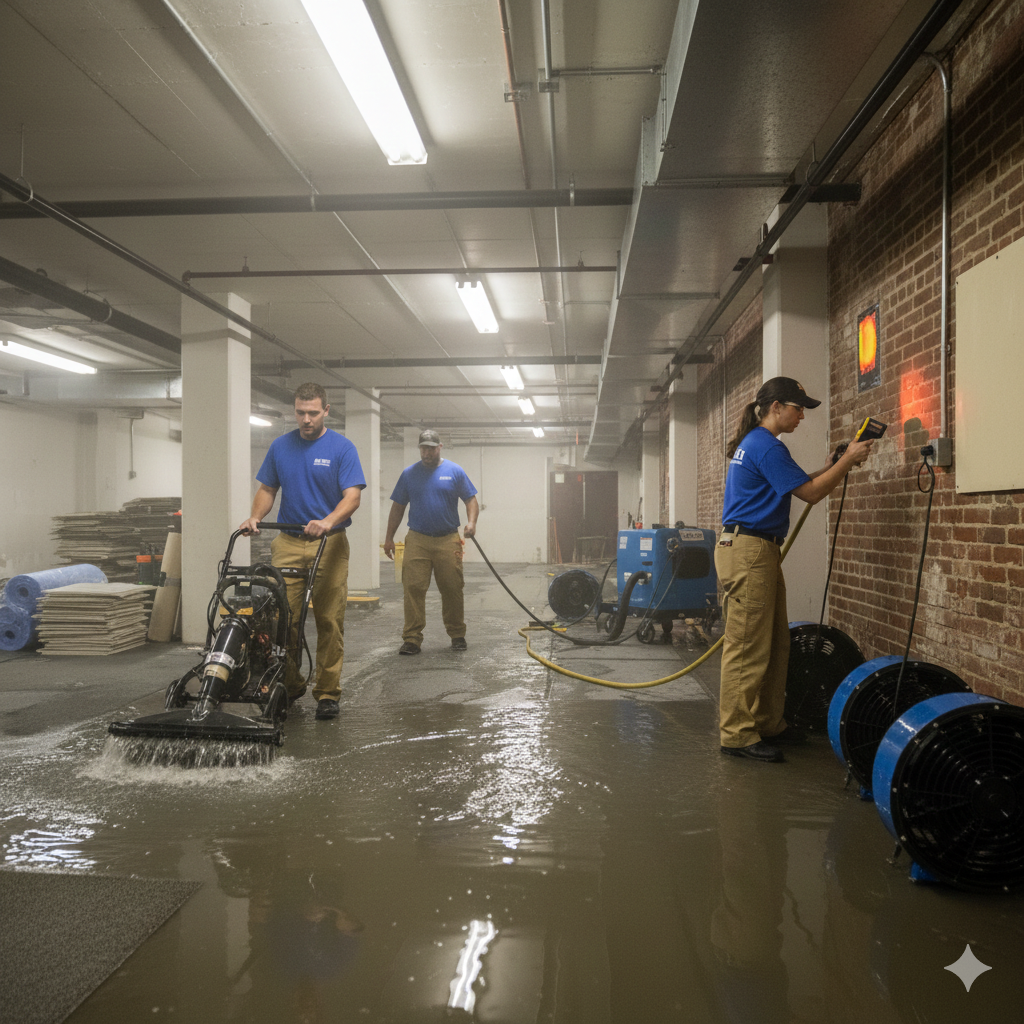
It is one of the most difficult realities for property owners to grasp: the water used to save the building often causes more widespread damage than the fire itself. Fire hoses can pump hundreds of gallons of water per minute into a structure. This water pools in basements, saturates crawlspaces, and is absorbed by drywall and insulation via capillary action.
Rapid Water Extraction
At Redefined Restoration, we treat fire recovery as a dual-threat project. Our IICRC-certified professionals immediately deploy industrial-grade water extraction units. Removing standing water is the only way to halt the “wicking” effect that pulls moisture up into unaffected walls.
Structural Drying and Dehumidification
Once standing water is removed, the environment remains dangerously humid. This humidity facilitates the spread of smoke odors and creates a prime environment for mold. We utilize high-velocity air movers and LGR (Low Grain Refrigerant) dehumidifiers to stabilize the indoor air quality. By controlling the moisture levels, we protect the “bones” of the house from rot and fungal growth, a cornerstone of high-quality fire damage restoration services.
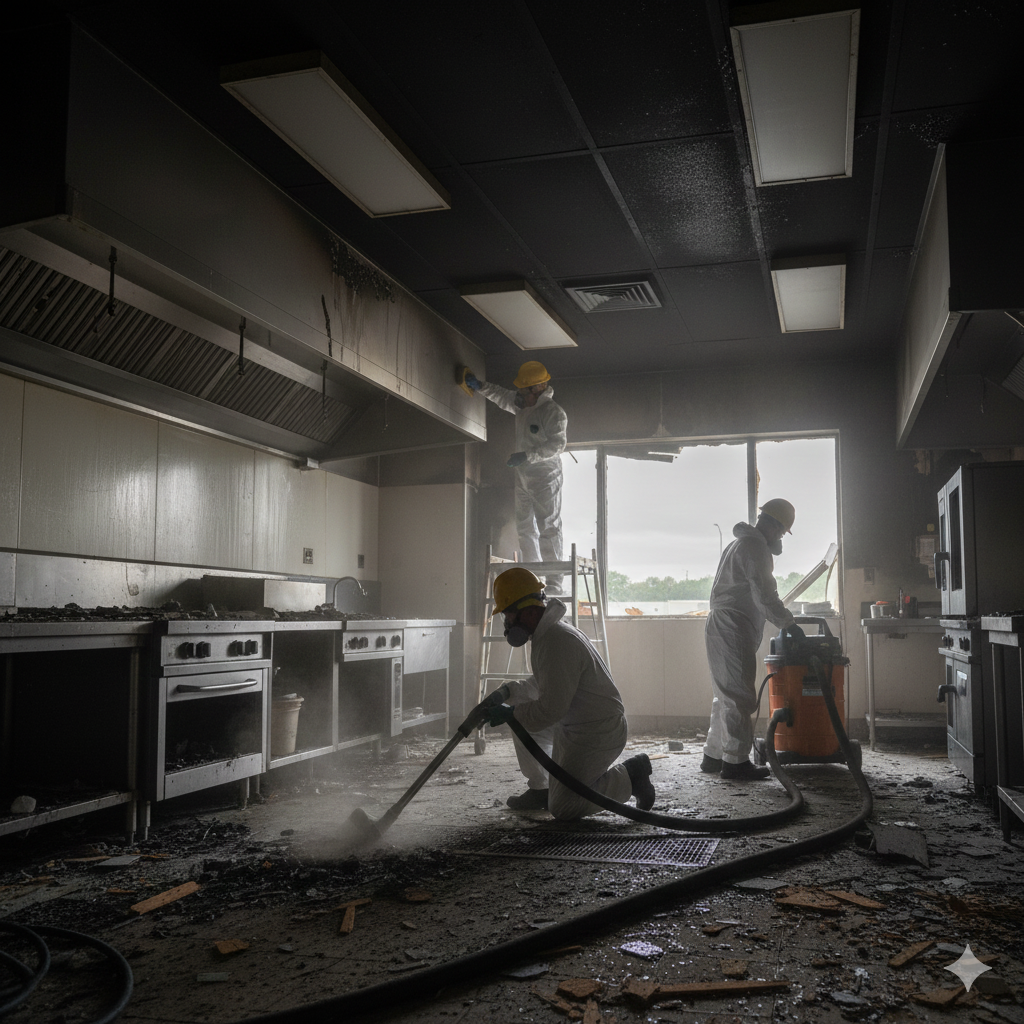
The Chemistry of Soot and Smoke Residue Removal
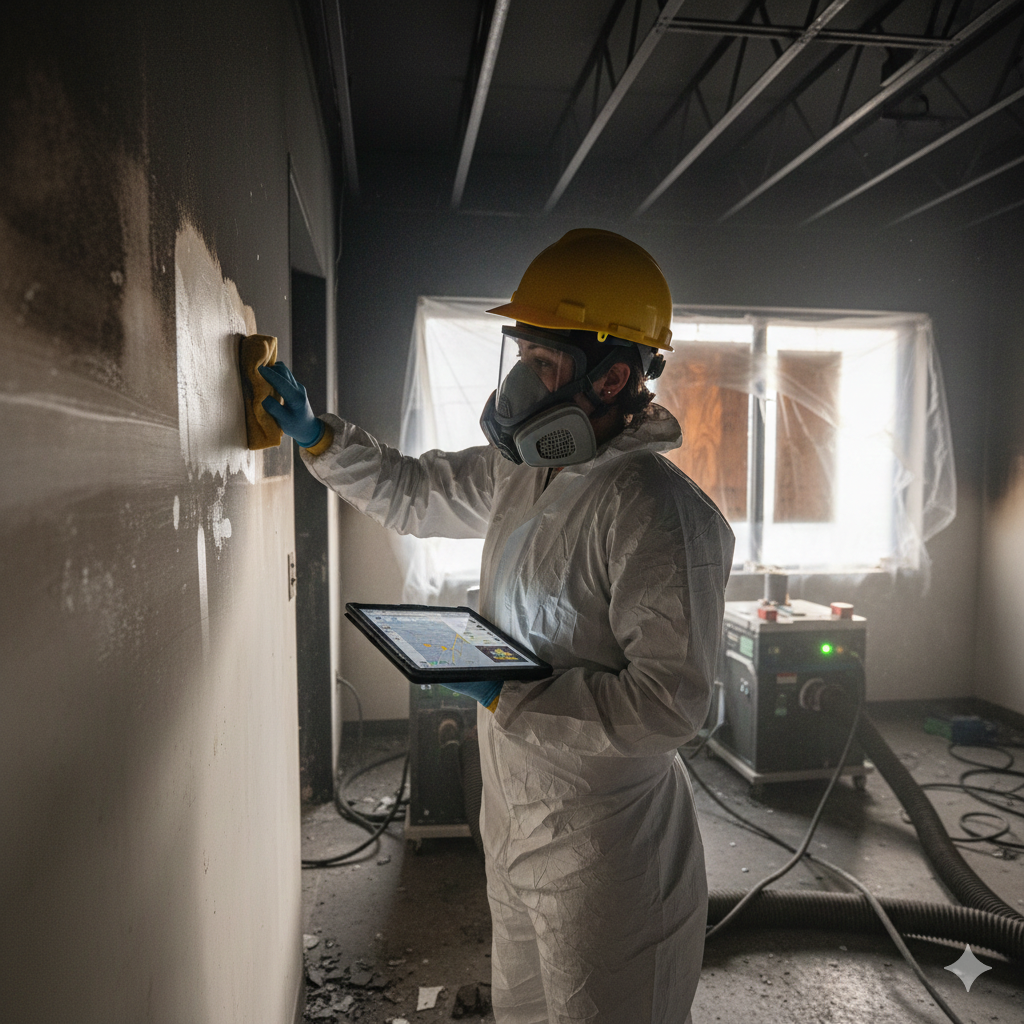
Soot is not a uniform substance. Depending on what burned—plastics, wood, proteins, or synthetic fabrics—the residue left behind can be oily, dry, or smeary. Using the wrong cleaning agent on a specific type of soot can actually “set” the stain, making it permanent.
Identifying Residue Types
- Dry Soot: Usually results from fast-burning wood or paper fires. It is powdery and easier to remove if handled correctly with dry-chem sponges.
- Oily Soot: Resulting from burnt plastics or rubber, this residue smears easily and requires specialized degreasing agents.
- Protein Residue: Often invisible but incredibly pungent, this comes from kitchen fires. It discolors paints and finishes over time if not neutralized.
Advanced HEPA Filtration
In 2026, air quality standards are more rigorous than ever. We employ state-of-the-art HEPA filtration systems and “air scrubbers” during the cleaning process. These units cycle the air in the room, trapping microscopic soot particles that are far too small for the human eye to see but large enough to cause respiratory irritation if inhaled.
Content Salvage: Preserving What Matters
A building is more than just its walls; it is filled with the items that make it a home or a functional business. The process of content salvage is one of the most delicate aspects of fire damage restoration services.
The Pack-Out Process
When a property is heavily damaged, we perform a “pack-out.” This involves carefully inventorying, wrapping, and transporting your belongings to a climate-controlled facility. Here, items can be cleaned in a controlled environment using ultrasonic cleaners, specialized laundry systems for textiles, and electronics restoration tools.
What Can Be Saved?
Many property owners are surprised to learn that electronics, fine art, and even delicate upholstery can often be restored if treated quickly. Our experience allows us to provide honest, upfront communication about which items are salvageable and which are “total losses,” helping you navigate the insurance claim process with clarity.
Deodorization: Eliminating the Ghost of the Fire
The smell of smoke is perhaps the most persistent reminder of a fire. It lingers in the pores of wood, deep within the fibers of carpets, and inside the HVAC system. Simply “airing out” the house is rarely effective because smoke molecules are incredibly small and lodge themselves deep within structural substrates.
HVAC Restoration
The ventilation system often acts as a delivery vehicle for smoke during a fire, spreading soot to rooms that weren’t even touched by flames. We perform comprehensive HVAC cleaning, ensuring that when you finally turn on your heat or air conditioning, you aren’t blasting soot and odors back into your clean environment.
Thermal Fogging and Ozone Treatment
To truly eliminate odors, we must reach the same microscopic pores the smoke reached. We utilize thermal fogging—a process that mimics the heat and particle size of smoke—to deliver neutralizing agents deep into the walls. In vacant properties, we may also use ozone or hydroxyl generators to break down odor-causing molecules at a molecular level, a standard practice for premium fire damage restoration services.
The Path to Reconstruction and Restoration
Once the property is clean, dry, and odor-free, the transition to reconstruction begins. This is where the “restoration” in our name truly shines. We don’t just leave you with a clean, gutted shell; we work to return the property to its pre-loss condition or better.
Compliance and Building Codes
In 2026, building codes frequently change. Our team is well-versed in local regulations, ensuring that all repairs and reconstruction efforts are fully compliant. This includes updating electrical systems that may have been heat-damaged and ensuring that insulation and structural repairs meet modern energy and safety standards.
Our Satisfaction Guarantee
We understand that your trust is earned through results. That is why we offer a satisfaction guarantee on our workmanship. Whether it is a minor kitchen fire or a major commercial loss, our 15 years of industry authority mean we stand behind every board replaced and every surface cleaned.
Understanding the Financial and Insurance Landscape
Navigating an insurance claim after a fire is often the most stressful part for a property owner. Detailed documentation is the currency of the insurance world.
Our technicians document every step of the fire damage restoration services with high-resolution photos, moisture maps, and detailed line-item estimates. This transparency ensures that your insurance adjuster has all the information they need to process your claim fairly and efficiently. We act as a professional bridge, providing the technical data required to justify the necessary scope of work.
Why Professional Intervention Outperforms DIY
It is a common mistake for property owners to attempt to clean soot themselves. Using a household vacuum can actually blow fine soot particles back into the air or deeper into the carpet. Household cleaning chemicals can react with acidic soot to create permanent bleach-like stains.
By hiring a professional team like Redefined Restoration, you are investing in:
- Specialized Equipment: Tools that are not available at local hardware stores.
- Technical Training: IICRC certifications ensure that the latest science is applied to your recovery.
- Safety: Protecting yourself from the carcinogenic compounds found in fire ash and soot.
Resilience and Recovery: Your Future in 2026
The moments after a fire are overwhelming, but they do not have to be the end of your property’s story. Through a combination of rapid response, chemical expertise, and structural knowledge, fire damage restoration services can turn a disaster into a manageable recovery.
At Redefined Restoration, we are more than just a cleaning crew; we are your partners in rebuilding. We bring honesty, expertise, and a decade and a half of real-world experience to every project. We know the challenges of local construction, the nuances of regional climate, and the emotional weight of a property loss.
If you find yourself facing the aftermath of a fire, do not wait for the damage to become permanent. Reach out for a professional inspection and let us help you redefine your space.