If your Chicago commercial property has water damage, Redefined Resto (Redefined Restoration) provides 24/7 emergency mitigation, full commercial water damage restoration, and insurance coordination with a typical timeline from immediate mitigation to final repairs that ranges from days to a few weeks depending on scope.
This in-depth guide explains how Redefined Resto handles commercial water damage in Chicago, Illinois, walks through the step-by-step restoration timeline you should expect, describes specific services and certifications, shares real operational details and local relevance for Chicago neighborhoods, and answers the ten most common FAQs building strong EEAT signals and local authority for business owners and property managers.
Why this matters for Chicago commercial properties
Commercial properties in Chicago—from River North offices and West Loop restaurants to Logan Square warehouses, Lincoln Park retail storefronts, and near-shore facilities along Lake Shore Drive—face unique water damage risks: frozen and burst pipes in winter, heavy rains and basement flooding, sump pump failures near the Chicago River or near Navy Pier, and aging infrastructure in older building stock such as those around Wrigley Field or the South Loop. Quick, expert action prevents secondary damage like structural deterioration and mold that can disrupt operations and escalate insurance costs.
Redefined Resto’s presence and capabilities in Chicago
Redefined Resto—operating as Redefined Restoration—positions itself as a local Chicagoland emergency restoration company with an on-the-ground office at 2924 W Armitage Ave in Logan Square and response capacity across neighborhoods including River North, West Loop, Lincoln Park, Hyde Park, and South Loop. Their website emphasizes a local 60–90 minute emergency response for Chicago incidents and IICRC-certified technicians handling water, fire, smoke, and mold work, supporting credibility for commercial clients needing fast mitigation and complete restorations.
Commercial water damage services Redefined Resto provides
When a commercial client calls Redefined Resto for water damage, the company follows an industry-standard, documented process tailored for commercial-scale needs: inspection and assessment, water removal, drying and dehumidification, cleaning and sanitation, structural repairs and reconstruction, and insurance coordination. Their site explicitly lists the following commercial-focused capabilities:
- 24/7 immediate emergency service with a 60–90 minute response window to begin mitigation.
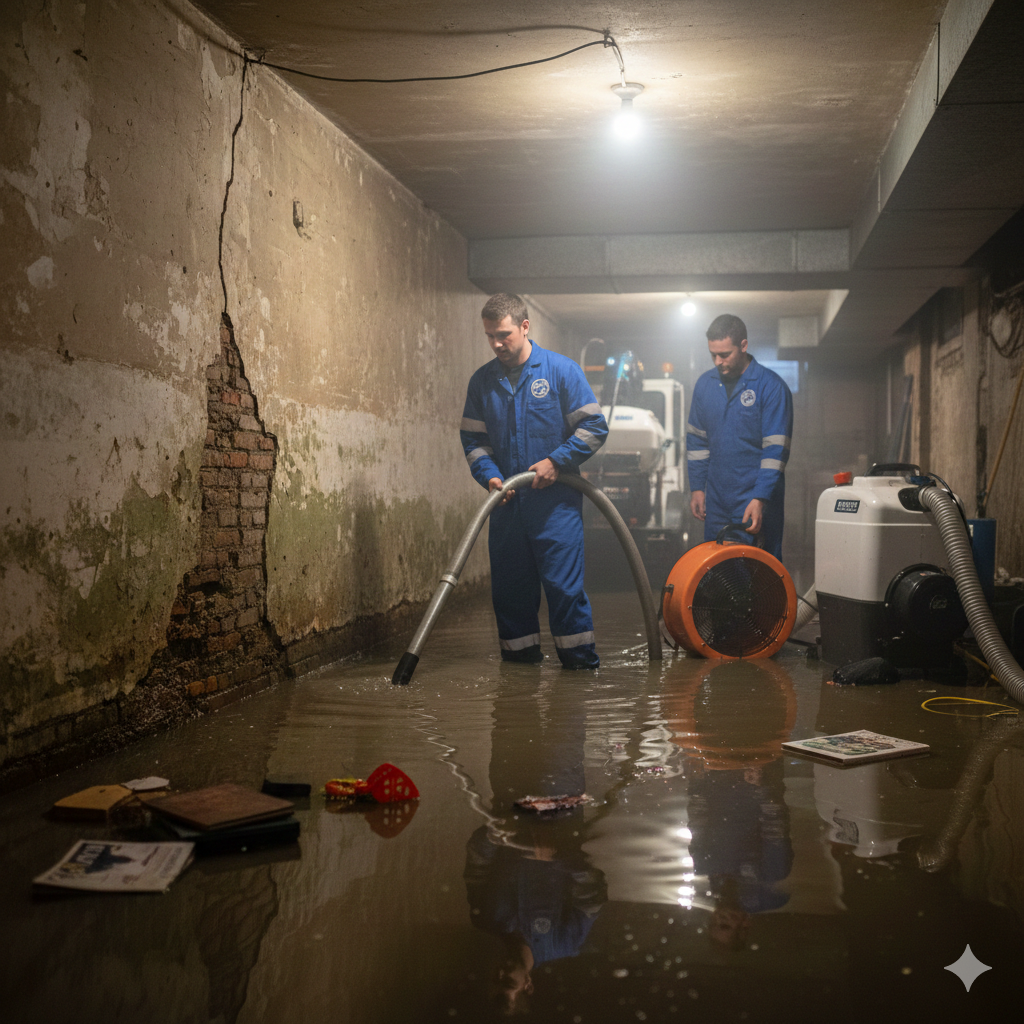
- High-powered water extraction using commercial-grade pumps and vacuums to remove standing water quickly.
- Industrial drying and dehumidification with air movers and desiccant or refrigerant dehumidifiers to lower moisture levels in large open-plan spaces, basements, and mechanical rooms.
- Mold prevention and remediation coordination to reduce the risk of mold growth after water intrusion.
- Sanitation and hazardous material handling for sewage backups and contaminated water incidents common in commercial settings.
- Full-service repairs and reconstruction including structural, electrical, and plumbing repairs, and final finishes to return the property to pre-loss condition.
- Insurance claim management—direct coordination with adjusters, documentation, and billing with all major insurance carriers.
Those services are structured for commercial timelines and scale: mitigation crews to stop ongoing loss, coordinated drying plans to protect inventory and finishes, and reconstruction teams capable of phased occupancy solutions so businesses can reopen sooner.
Step-by-step: What a commercial water damage response looks like
Below is a practical, field-oriented walk-through of how Redefined Resto typically executes a commercial restoration project from notification to final sign-off. This is based on the company’s process information and local response commitments for Chicago properties.
1) Emergency call and dispatch (0–90 minutes)
Redefined Resto advertises a 60–90 minute emergency response for Chicago incidents. For commercial clients, that rapid arrival begins the mitigation clock—early intervention reduces extraction and drying time and limits business interruption. A project manager is usually assigned at first contact to coordinate access and insurance notification.
2) Inspection and immediate mitigation (first 1–4 hours)
Technicians perform a documented inspection, assess water source and category (clean, gray, black), and implement emergency measures: shutting off the water source, moving or protecting sensitive equipment and inventory, boarding or tarping exposed openings, and beginning water extraction in priority zones like mechanical rooms, server closets, and customer-facing areas.
3) Water removal and inventory protection (first 4–24 hours)
Commercial-grade pumps and extractors remove standing water quickly while crews tag and inventory damaged stock, furniture, and equipment when requested. For retail or food service, cold storage and food-safety priorities are handled immediately to meet health code requirements, and Redefined Resto coordinates sanitation steps when sewage or contaminated water is involved.
4) Drying and environmental control (24–72+ hours)
Air movers, industrial dehumidifiers, and moisture meters track drying progress. For larger commercial volumes or deep saturation in concrete slabs, drying can extend beyond 72 hours and may require specialized dehumidification strategies or floor mat drying systems. Redefined Resto emphasizes using proper drying equipment and IICRC-informed drying plans to accelerate safe re-occupancy.
5) Cleaning, deodorization, and mold prevention (2–7 days)
Once moisture levels are controlled, crews clean and sanitize affected surfaces, remove irreparably damaged materials, and apply antimicrobial treatments when needed. Mold-prevention measures are prioritized in humid Chicago summers or when water intrusion is prolonged. If mold is detected, remediation protocols follow industry standards and are coordinated with reconstruction plans.
6) Repairs, rebuilding, and final testing (1–3 weeks or longer)
Reconstruction timelines depend on permit needs, material lead times, and the extent of structural or system repairs. Redefined Resto states that complete restoration, including repairs, generally takes from one to three weeks in typical cases, though more extensive commercial projects may take longer and are scoped individually. Throughout reconstruction, a dedicated project manager communicates progress, coordinates subcontractors, and arranges inspections required by Chicago building codes.
Typical timelines summarized for Chicago commercial jobs
- Initial response and mitigation: within 60–90 minutes of the call.
- Water extraction: same day (hours) for most commercial sites depending on depth and access.
- Drying and dehumidification: commonly 2–7 days for light to moderate damage; deeper saturation or slab drying can take 7–21+ days.
- Cleaning, sanitation, and mold prevention: concurrent with drying, often completed within 3–7 days for standard jobs.
- Repairs and reconstruction: typically 1–3 weeks for standard moderate repairs; large-scale commercial reconstruction can extend beyond a month.
These timelines align with Redefined Resto’s published guidance that initial extraction and drying typically take two to three days and full restoration including repairs commonly takes one to three weeks for many projects. More complex commercial claims, multiple affected floors, or contaminated water events will expand those ranges and require tailored scopes and permit coordination with the City of Chicago.
Insurance coordination and project management
Redefined Resto highlights that they work directly with all insurance companies and assign a dedicated project manager to handle claims, documentation, and billing. For commercial property managers, this reduces administrative burden and helps accelerate approvals for mitigation, emergency repairs, and larger reconstruction scopes while preserving documentation for loss reporting and subrogation if needed.
Commercial case examples and real-world context
Redefined Resto’s Chicagoland focus and Logan Square operations mean their crews respond across the city: from high-rise water intrusions near Willis Tower to basement flooding in neighborhoods like Wicker Park and Bucktown, to restaurant sewage backups in West Loop or Lincoln Park. Their website and local directory listings reference work with complex insurance claims and decades of combined team experience, reflecting practical expertise with commercial-sector incidents such as restaurants, multi-tenant office buildings, retail stores, and warehouse facilities.
Project examples commonly described for commercial clients include emergency water extraction after burst pipes in winter, sewage backup remediation in food service establishments, drying and reconstruction after overflow from neighboring tenant spaces in mixed-use buildings, and large-scale drying efforts in basements and parking garages where moisture wicking into concrete requires extended dehumidification.
Local codes, permits, and Chicago-specific considerations
Commercial restoration in Chicago must account for local building codes and permit requirements for structural, electrical, and plumbing repairs; Redefined Resto notes that some repairs may require permits and that working with a restoration provider familiar with Chicago regulations is essential. For example, projects requiring replacement of fire-suppression systems, major plumbing alterations, or significant structural repairs will involve permit submissions to the City of Chicago and inspections before final occupancy clearance.
Neighborhood-specific conditions matter: older masonry and timber-frame buildings in parts of Lincoln Park or the South Loop can behave differently during drying than newer steel-and-concrete structures in the West Loop or River North, while buildings near Lake Michigan and along Lake Shore Drive often contend with higher ambient humidity that affects drying timelines. Redefined Resto’s local experience across neighborhoods like Logan Square, Hyde Park, Wicker Park, and proximity to landmarks such as Wrigley Field and the Willis Tower helps them anticipate these variations.
What affects cost and timeline for commercial water damage jobs
Major factors that affect both cost and timeline include:
- Water category: clean water is cheaper and faster to remediate than gray or black water (sewage), which requires additional sanitation and disposal steps.
- Extent of saturation: surface-only damage dries quickly; saturation into walls, ceilings, and slabs takes longer and is more costly.
- Square footage and ceiling heights: tall, open commercial spaces require more equipment and time to achieve even drying.
- Inventory and equipment protection: moving, storing, or replacing stock and sensitive electronic systems adds time and logistics.
- Permit needs and subcontractor availability: permit delays and specialty trades for structural, mechanical, or electrical repairs lengthen the schedule.
- Season and weather: Chicago winters and high humidity periods change drying efficiency and may affect material availability.
Mitigation tips for Chicago business owners to reduce downtime
- Act immediately: call an emergency restoration provider that commits to a local 60–90 minute response to limit secondary damage and mold growth.
- Document everything for insurance: photos, videos, and inventory lists saved to cloud storage accelerate claims.
- Protect critical systems: prioritize server rooms, POS systems, refrigeration, and inventory for emergency drying or relocation.
- Segregate contaminated water incidents: designate no-access zones and engage professionals to handle sewage or chemical contamination safely.
- Work with a single point of contact: a dedicated project manager expedites communication with adjusters and trades.
EEAT signals and Redefined Resto’s expertise
Redefined Resto communicates key trust and expertise signals that matter for commercial clients:
- Local presence: a physical Logan Square location provides Chicago-area accessibility.
- Rapid emergency response (60–90 minutes): critical for limiting loss and aligning with industry best practices in mitigation.
- Certified technicians: IICRC-certified technicians are identified across the company’s site, signaling training in water, mold, and fire restoration standards.
- Insurance coordination: explicit claims management and documentation support reduces administrative friction for businesses.
- 100% satisfaction and free estimates: service guarantees and transparent initial estimates build trust during stressful incidents.
How Redefined Resto documents and verifies work
Redefined Resto emphasizes a methodical approach to inspection, mitigation, and documentation. Typical verification steps used on projects include moisture mapping, ongoing moisture-content measurements, photographic records at key milestones (pre-mitigation, during drying, pre-reconstruction, and final sign-off), and written drying logs. This documentation supports insurance claims and provides objective evidence of progress toward safe re-occupancy.
Contracting Redefined Resto for a commercial project—what to expect
Commercial property managers should expect the following when engaging Redefined Resto:
- One-call dispatch with 24/7 availability and a 60–90 minute response.
- An on-site assessment and free estimate with a clear scope and timeline overview.
- Assignment of a dedicated project manager to coordinate crews, subcontractors, inspections, and insurance communication.
- Deployment of extraction and drying equipment and routine progress reporting using moisture readings and photos.
- Phased reconstruction planning to support partial occupancy or staged re-openings when feasible.
- Final verification and client sign-off when moisture levels meet industry standards and structural repairs are complete.
Local Chicago examples and geography to demonstrate GEO authority
Redefined Resto’s Chicago-focused site mentions service across neighborhoods and references landmarks and local conditions that commercial clients will recognize: rapid response near Willis Tower and along Lake Shore Drive, experience handling water intrusion in Logan Square and Wicker Park properties, and knowledge of building types in Hyde Park, Lincoln Park, and the South Loop. These local references demonstrate their operational reach from downtown corridors like the Magnificent Mile to neighborhood retail strips near Damen Avenue and Armitage Avenue.
Examples of local site challenges include winter pipe bursts that commonly affect older masonry buildings in Lincoln Park and the Near North Side, basement flooding in areas near the Chicago River, and restaurant equipment failures or grease trap overflows in the West Loop and River North restaurant districts. Redefined Resto’s Logan Square base places them close to these central service areas for fast dispatch.
When to call Redefined Resto vs. internal facilities teams
Call Redefined Resto immediately when you observe standing water that threatens structural components, when water affects electrical systems, when contamination (sewage or gray water) is present, or when the scale of extraction and drying exceeds in-house capabilities. Smaller, isolated leaks that stop quickly and don’t saturate building materials might be managed by facilities staff, but commercial-scale saturation, multi-room involvement, or unknown contamination sources warrant professional mitigation to protect health and assets and to preserve insurance claims.
Questions commercial clients commonly ask—and how Redefined Resto answers them
- How quickly can you be on site? Redefined Resto advertises a 60–90 minute emergency response in Chicago.
- Do you work with my insurance? Yes, they coordinate directly with all major insurance carriers and provide documentation and adjuster support.
- Can you protect my inventory and equipment? Yes—crews can inventory, move, and arrange specialized drying or storage for sensitive items.
- Will you handle permits? They manage reconstruction coordination and understand when permits are required for Chicago building work.
How to prepare your commercial property before Redefined Resto arrives
- Shut off affected utilities if safe to do so and document the scene with photos and notes.
- Protect critical documents or move them to a dry location or off-site cloud storage whenever possible.
- Segregate employee and customer access for safety in contaminated water events.
- Gather insurance policy information and lease details to speed claim intake and coordination.
- Identify sensitive areas (server rooms, freezers, cash-handling areas) so mitigation crews can prioritize them immediately.
Contact and next steps
If your Chicago commercial property is impacted by water damage, reach out to Redefined Resto’s emergency line for immediate dispatch and a documented plan of action. For quick navigation and additional service context, visit the company homepage using the anchor link Redefined Resto’s Chicagoland Restoration Hub and review the water damage restoration page directly at the brand’s Water Damage Restoration Services resource to prepare for a consultative inspection and free estimate.
The homepage link above leads to the company root domain to help you explore related services such as fire and mold restoration and to review company locations, certifications, and contact options.
Conclusion and recommended expectations
Redefined Resto is positioned to handle commercial water damage in Chicago with a rapid 60–90 minute emergency response, IICRC-certified technicians, commercial-grade equipment, and full-service insurance coordination. Typical timelines for commercial projects begin with same-day extraction and move through controlled drying over several days, with full repairs commonly completed within one to three weeks for typical moderate jobs—while more complex or larger scale commercial restorations will take longer depending on contamination, saturation depth, permitting, and reconstruction scope. For the fastest recovery and best protection of assets, call for mitigation immediately and document the loss for insurance and operational continuity.
Frequently Asked Questions
Can Redefined Resto respond to a commercial water emergency in Chicago within an hour?
Yes. Redefined Resto advertises a 60–90 minute emergency response time for incidents in Chicago, meaning they dispatch technicians to begin mitigation quickly to limit further damage and mold risk. Rapid arrival is especially important for commercial properties where inventory, equipment, and tenant operations are at stake; early mitigation reduces extraction and drying time and improves the chance of partial occupancy during reconstruction. When you call, expect an initial assessment and immediate containment measures followed by a documented plan and assignment of a project manager to coordinate with your insurance and building management.
Does Redefined Resto handle sewage and contaminated water in commercial buildings?
Yes. The company lists handling contaminated water events among its services, which includes sanitation, hazardous material precautions, and specialized disposal when sewage or black water is present. For commercial clients—restaurants, apartment common areas, and buildings with complex mechanical systems—Redefined Resto follows industry protocols to isolate contamination, remove affected materials, apply antimicrobial treatments, and document the remediation process for health-code and insurance purposes. These steps help protect staff and customers while meeting regulatory requirements for contaminated water events.
How long does the drying process take for a commercial space?
Drying timelines for commercial spaces vary by severity: light to moderate water intrusion often dries within two to seven days using industrial air movers and dehumidifiers, while deeper saturation in walls, carpet padding, or concrete slabs can extend drying to one to three weeks or more. Large, open commercial spaces and high-ceiling retail areas typically require more equipment and monitoring. Redefined Resto emphasizes using documented moisture readings and moisture mapping to verify drying progress and ensure safe re-occupancy.
Will Redefined Resto coordinate with my insurance company for a commercial claim?
Yes. Redefined Resto states that they work with all insurance companies and will handle claim documentation, adjuster coordination, and billing processes. They assign a dedicated project manager to manage communications and submit required records, which helps expedite approvals for mitigation and reconstruction and reduces administrative burden on building owners and property managers. This direct coordination is particularly important on commercial claims where timelines and business interruption considerations are critical.
What reconstruction services does Redefined Resto provide after mitigation?
After mitigation and drying, Redefined Resto offers full reconstruction and repair services to restore commercial spaces to pre-loss condition. Services include structural repairs, drywall replacement, painting, flooring replacement, plumbing and electrical repairs as needed, and final cleaning and testing. The company coordinates permits and inspections when necessary under Chicago building codes and stages work when partial occupancy is required to support business continuity for tenants or operations.
How does Redefined Resto prevent mold after water damage?
Preventing mold begins with rapid mitigation and thorough drying. Redefined Resto applies industrial drying equipment, moisture monitoring, and antimicrobial treatments to prevent mold colonization. If mold is discovered, they follow remediation steps consistent with industry standards, including containment, removal of contaminated materials, HEPA-filtered air scrubbing, and post-remediation verification. Documented moisture logs and clearance readings are provided to demonstrate that conditions are safe and meet restoration goals.
Are Redefined Resto technicians certified for commercial restoration work?
Redefined Resto highlights IICRC-certified technicians on their site, which indicates training in water damage restoration, mold remediation, and adherence to industry best practices. For commercial clients, certification helps ensure that staff apply standardized protocols for drying, documentation, and remediation—important for maintaining safety, supporting insurance claims, and meeting regulatory expectations when restoration intersects with electrical, plumbing, or structural systems.
Will Redefined Resto help protect critical systems like server rooms or refrigeration during mitigation?
Yes. Commercial mitigation includes prioritizing critical systems and inventory. Redefined Resto crews can relocate, dry, or isolate sensitive equipment and coordinate temporary power or climate control to protect servers, refrigeration units, and POS systems. Early notification of critical areas helps crews stage resources and minimize downtime for business operations during extraction and drying phases.
How do permit requirements affect the commercial restoration timeline in Chicago?
Permit needs can extend reconstruction timelines because structural, electrical, and plumbing repairs often require City of Chicago permits and inspections. Redefined Resto states they understand local permit processes and coordinate reconstruction activities and documentation to obtain necessary approvals. Planning for permit submission, scheduling inspections, and meeting code requirements are all factors that can add days or weeks to the reconstruction phase of a commercial project depending on the scope.
What should commercial property managers do immediately after discovering water damage?
First, ensure safety: if electrical hazards exist, isolate power to affected areas and keep people away from standing water. Document the damage thoroughly with photos and notes, locate and secure insurance and lease information, and contact an emergency restoration company with local rapid response like Redefined Resto. Protect critical assets where safe to do so, and inform tenants or staff about restricted areas. Early engagement with a professional restoration team speeds mitigation, preserves evidence for the claim, and reduces overall downtime.