
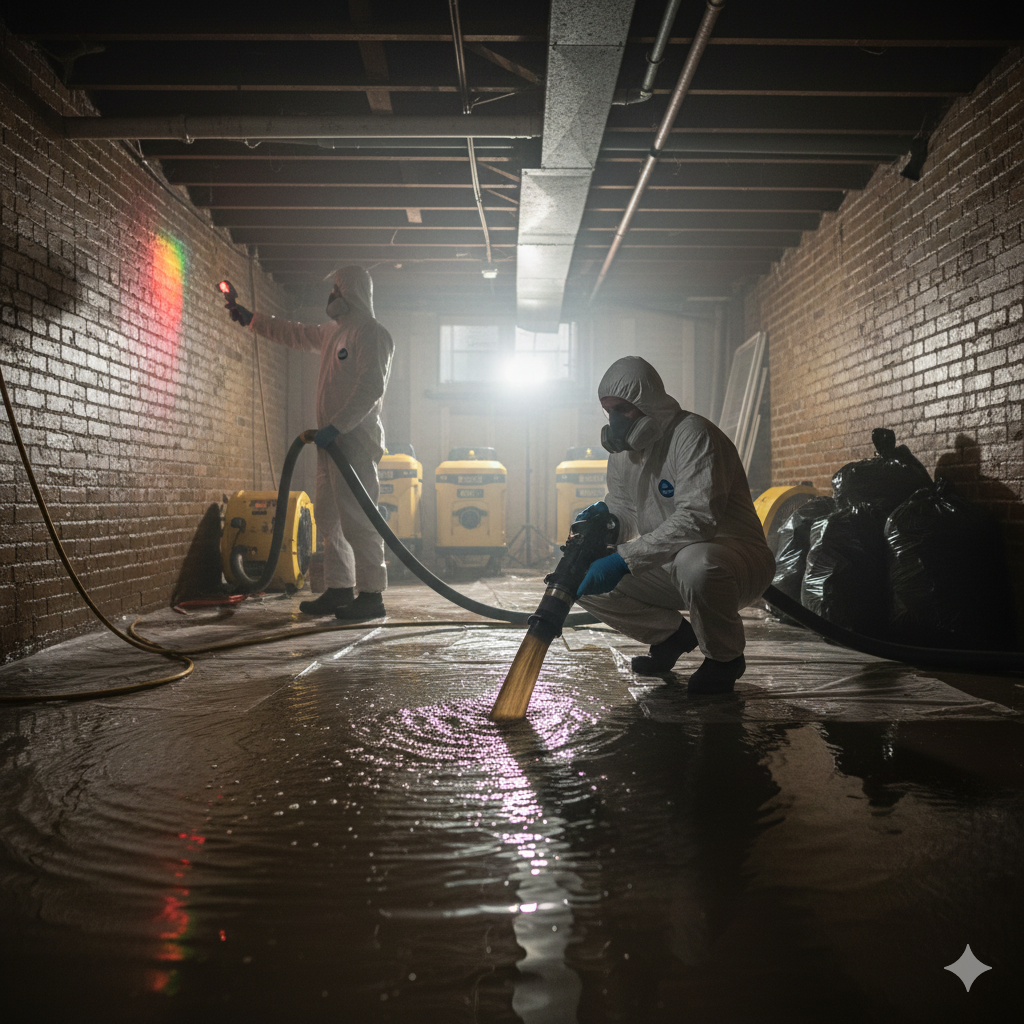
Chicago property owners face unique flood threats from Lake Michigan surges, heavy spring rains, and aging infrastructure in neighborhoods like Albany Park or the South Loop. Flood damage restoration demands swift, expert action to prevent mold, structural decay, and costly rebuilds. This guide unpacks the process, local challenges, and strategies to safeguard your investment.
Chicago’s Flood Risks Exposed
The Windy City’s flat terrain and combined sewer system amplify flooding during intense storms, often overwhelming basements in historic brownstones or modern condos. Properties near the Chicago River or in low-lying areas like Pilsen experience rapid water intrusion, saturating carpets, drywall, and electrical systems within hours. These events spike in spring and fall, when Lake Michigan levels rise and rainfall exceeds 2 inches in a day, turning routine maintenance into emergencies.
Local building codes require elevated HVAC units in flood zones, yet many pre-1980s structures lack these protections, leading to contaminated air systems post-flood. Property managers of multi-unit buildings in Logan Square report that undetected moisture behind walls fosters black mold, a health hazard exacerbated by Chicago’s humid summers. Restoration teams prioritize these vulnerabilities, using thermal imaging to detect hidden damage before it compromises tenant safety or property value.
Immediate Response: First 24 Hours Matter Most
Act within the first hour to minimize harm—shut off electricity at the breaker and avoid wading through water that may carry sewage from overflowing city drains. Extract standing water using wet vacuums if safe, but never bypass professionals for deep floods common in Chicago’s clay-heavy soil, which retains moisture longer than sandy substrates. Delays beyond 48 hours allow Category 3 contaminated water to seep into subfloors, breeding bacteria like E. coli prevalent in urban runoff.
Document everything with photos and videos for insurance claims, noting water levels and affected areas like warped hardwood in Lincoln Park rowhouses. Contact certified restorers immediately; in Chicago, IICRC standards dictate rapid response to comply with city health regulations. This phase sets the tone—poor handling escalates minor incidents into six-figure repairs.
Step-by-Step Flood Damage Restoration Breakdown
Restoration unfolds in precise phases, each tailored to Chicago’s variable climate where post-flood humidity can prolong drying.
Emergency Water Extraction
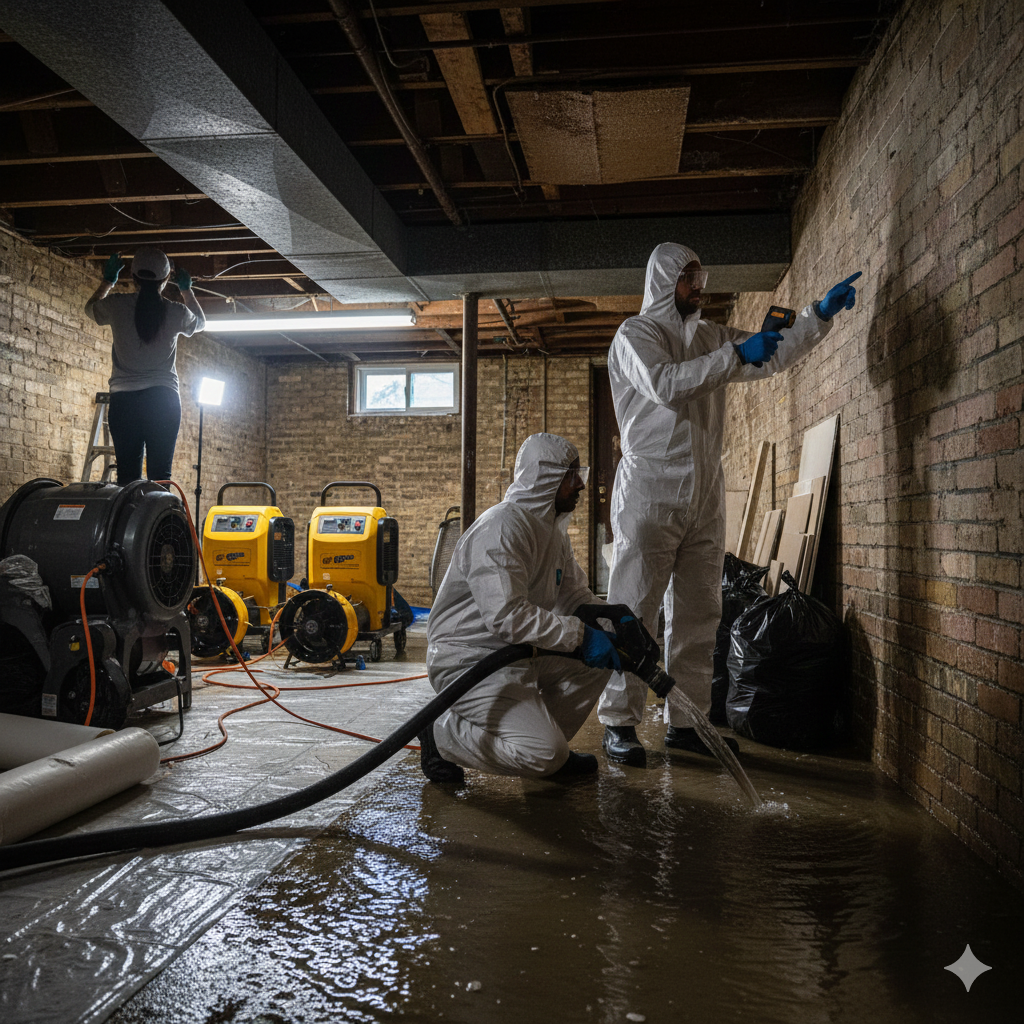
Technicians deploy high-capacity truck-mounted pumps to remove gallons per minute, followed by industrial extractors for carpets and upholstery. In Chicago high-rises, submersible pumps navigate tight elevator shafts, preventing water migration to lower floors. This step alone can extract 90% of visible water, critical before mold spores activate in warm indoor temps.
Comprehensive Drying and Dehumidification
Air movers and desiccant dehumidifiers circulate 500-1000 CFM to evaporate trapped moisture, monitored via moisture meters targeting under 15% in wood framing. Chicago’s cold snaps complicate this; teams use propane heaters to maintain 70-90°F, countering winter floods from burst pipes in uninsulated bungalows. Progress checks every 24 hours ensure no secondary damage, like rusting steel beams in West Side warehouses.
Mold Mitigation and Antimicrobial Treatment
Floodwaters introduce microbes; pros apply EPA-approved antimicrobials to all surfaces, then remove porous materials like swollen drywall if saturation exceeds 16%. In humid Chicago basements, HEPA vacuums capture 99.97% of airborne spores during containment with plastic sheeting. This prevents “sick building syndrome” reported in flood-hit commercial spaces along the Magnificent Mile.
Structural Cleaning and Inspection
Non-salvageable items—insulation, subfloors—get discarded per OSHA guidelines, while salvageable hardwood receives specialized drying. Electricians inspect wiring for corrosion, vital in Chicago’s older grid prone to surges. Odor control via ozone generators or hydroxyl units neutralizes musty smells lingering in HVAC ducts.
Why Chicago Properties Demand Specialized Expertise
The city’s freeze-thaw cycles weaken foundations, making flood-damaged concrete slabs prone to cracking under weight. Brick rowhouses in Uptown absorb water into mortar joints, leading to efflorescence and spalling if not addressed. Commercial facilities like Loop office towers face downtime costs exceeding $10,000 daily, underscoring the need for 24/7 responders familiar with Chicago’s permitting process through the Department of Buildings.
Regional construction favors slab-on-grade in bungalows, trapping water underneath and necessitating crawlspace ventilation upgrades. Property owners in flood-prone Englewood prioritize restorers with Chicago-specific experience, as generic teams overlook sump pump failures common during Nor’easters. Learn more about tailored solutions at Redefined Restoration’s flood damage repair page.
Health Hazards Lurking After Floods
Stagnant water breeds Aspergillus and Stachybotrys, triggering respiratory issues, especially in children or elderly tenants in dense Bronzeville apartments. Contaminants from Chicago’s industrial past—lead, asbestos disturbed in floods—require hazmat protocols. HVAC systems recirculate moldy air, dropping indoor air quality below EPA thresholds.
Restorers conduct post-clean air sampling, ensuring levels below 500 spores per cubic meter. Vulnerable groups like asthmatics in Humboldt Park benefit from HEPA filtration during recovery, reducing hospital visits by up to 40% per local health studies. Ignoring these risks invites lawsuits under Chicago’s strict habitability codes.
Insurance Navigation: Claims and Coverage Pitfalls
Standard homeowners policies cover sudden floods like appliance failures but exclude external flooding—necessitating NFIP or private riders for Lake Michigan overflows. Commercial owners in River North document pre-existing conditions to avoid denials, as adjusters scrutinize unsealed cracks.
File claims promptly, providing psychrometric charts from restorers proving drying efficacy. Chicago’s high claim volume delays payouts; pros like those at Redefined Restoration expedite with detailed reports. Expect deductibles of $5,000+ for basements, offset by preventive credits for backflow valves.
Preventive Measures Tailored to Chicago Homes
Install battery-backup sump pumps in basements, rated for 1/3 HP to handle 2,500 gallons/hour—essential for Edgewater properties near the lake. Elevate utilities 18 inches above grade per city code, and seal foundation cracks with hydraulic cement to block groundwater during rainy seasons.
Smart leak detectors integrated with apps alert owners to slow drips in condos, preventing escalation. For commercial spaces in Wicker Park, annual HVAC inspections catch coil corrosion early. Landscape grading slopes away from foundations, reducing runoff by 30% in sloped lots.
Commercial vs. Residential: Key Differences in Chicago
Residential bungalows emphasize family safety and quick habitability, focusing on carpet replacement and drywall demo. Commercial high-rises prioritize minimal disruption—phased drying allows partial occupancy in Fulton Market lofts while extracting from server rooms.
Inventory loss hits restaurants harder; contents restoration salvages $50,000+ in equipment via ultrasonic cleaning. Multi-tenant buildings require coordination with landlords, adhering to Chicago’s smoke-free ordinances during ozone treatments. Scale dictates equipment: trucks for single-family vs. generators for block-long facilities.
Timeline Realities: From Chaos to Normalcy
Minor floods (under 1 foot) restore in 3-5 days; severe events like 2026’s projected spring deluges take 2-4 weeks, factoring Chicago permitting delays. Drying dominates 40-60% of time, monitored to prevent over-drying brittle wood.
Full rebuilds for gutted Rogers Park homes span months, involving architects for code-compliant elevations. Interim solutions like antimicrobial sealants enable temporary use, buying time for insurers.
Cost Factors Influencing Your Bottom Line
Expect $3.50-$7 per square foot for basic drying, escalating to $15+ with mold remediation in Chicago’s labor market. Basement floods average $10,000-$30,000 due to access challenges; whole-house hits $50,000+. Factors like Category 2 gray water add 20% for antimicrobials.
Value-focused owners invest in infrared inspections ($500) to avoid $20,000 surprises. Longevity tip: Post-restoration warranties from pros like Redefined Restoration ensure callbacks don’t recur.
Choosing the Right Restoration Partner in Chicago
Vet for IICRC certification, Chicago business licenses, and 100+ local reviews—avoid out-of-state firms unfamiliar with union labor rates. 24/7 availability trumps low bids, as does fleet size for rapid deployment during citywide events.
References from similar properties—e.g., condos in Lakeview—reveal reliability. Transparency in scoping prevents upcharges; request detailed bids itemizing labor, equipment, and disposables.
Long-Term Resilience: Beyond the Flood
Post-restoration audits verify moisture equilibrium, with warranties covering reinfestations. Upgrade to permeable pavers in driveways, channeling stormwater legally under Chicago’s green infrastructure push.
Annual flood drills for commercial teams minimize response time, integrating with city alerts via NotifyChicago app. Resilient materials like elevated drywall alternatives future-proof against rising lake levels projected through 2030.
Structural Integrity Checks You Can’t Skip
Floods compromise load-bearing walls; engineers assess shear strength in Chicago’s masonry-heavy stock. Rebar corrosion in slabs demands epoxy injection, preventing settlement cracks.
Roof-to-foundation scans via drones identify overlooked vulnerabilities, like clogged leaders exacerbating interior floods. Compliance with 2026 IBC updates ensures seismic resilience alongside water resistance.
HVAC and Plumbing: Hidden Flood Victims
Submerged ducts harbor biofilms, slashing efficiency 25%; pros disassemble and fog with EPA biocides. Copper pipes pit from acidic runoff, risking pinhole leaks—ultrasonic testing detects early.
Chicago’s hard water accelerates scaling post-flood; whole-house softeners maintain flow. Boiler resets prevent bursts in winter, a common Hyde Park woe.
Contents Recovery: Salvaging Valuables
Pack-out services catalog items via apps, freeze-wetting electronics for lab drying. Textiles ozone in chambers, restoring 70% of soft goods without shrinkage.
Sentimental items like family photos digitize first, then air-dry flat. Commercial docs shred if Category 3 exposed, with backups mitigating data loss.
Legal and Regulatory Hurdles in Chicago
City mandates 72-hour notifications for commercial floods over 1,000 sq ft; non-compliance fines $1,000+. Demolition permits for condemned structures follow DOB inspections.
Tenant rights under RLTO protect habitability—restorers coordinate relocations. Flood disclosure laws impact sales; full remediation reports boost resale by 5-10%.
Case Study: Albany Park Basement Revival
A 1920s bungalow flooded 18 inches from sewer backup; extraction removed 4,000 gallons in 4 hours. Drying spanned 72 hours amid 80% humidity, mold treatment saved 80% of cabinets. Total cost $18,500, back to occupancy in 10 days—owner avoided $40,000 gut job via early intervention.
Eco-Friendly Restoration Practices Rising
Low-VOC antimicrobials and HEPA filtration minimize environmental impact, aligning with Chicago’s sustainability goals. Recycled content drywall and soy-based foams reduce carbon footprint 20%.
Water recycling in extraction cuts usage 50%, appealing to green-certified Loop offices. Biodiesel trucks lower emissions during hauls.
When DIY Fails: Lessons from Chicago Floods
Bucket brigades work for drips but fail deep water, spreading contaminants. Store-bought fans dry surfaces only, ignoring joists—mold recurs 90% of cases. Pros’ psychrometers guide precise humidity drops, unavailable to amateurs.
Safety overrides savings; electrocution risks soar in standing water near panels.
Future-Proofing Against Climate Shifts
Chicago’s 20% rainfall increase demands French drains and cisterns, capturing 1,000 gallons per storm. Elevated first floors in new builds set precedents for retrofits.
Smart sensors predict floods via IoT, alerting before basements submerge. Community pumps in Englewood share costs, enhancing resilience.
Property owners reclaim control through informed restoration, turning disasters into fortified homes. Explore expert flood damage restoration at Redefined Restoration, Chicago’s trusted partner for comprehensive recovery.