
Chicago’s skyline is a testament to architectural resilience, but for the property managers and business owners who maintain these structures, a silent threat often looms larger than the winds off Lake Michigan. Whether it is a burst pipe in a historic Loop high-rise, a failed sump pump in a River North basement, or the aftermath of a rapid thaw following a legendary Midwest deep freeze, water intrusion is a high-stakes emergency. When thousands of square feet of commercial real estate are compromised, the search for water damage restoration companies becomes a race against time, biology, and structural degradation.
The complexity of the Chicago commercial landscape—ranging from sprawling industrial warehouses in the surrounding suburbs to intricate, mixed-use developments in the city center—demands a specialized approach to recovery. Selecting a partner for restoration is not merely about finding someone with a pump; it is about identifying a team that understands the intersection of building science, local compliance, and the immense pressure of business continuity.
The High Cost of Mitigation Delays in the Windy City
In a metropolis like Chicago, the environment is rarely neutral. Our climate, characterized by high humidity in the summer and extreme temperature fluctuations in the winter, creates a volatile backdrop for water damage. When water enters a commercial space, the clock starts ticking on several fronts.
Structural Porosity and Material Integrity
Commercial buildings in Chicago often utilize a mix of vintage masonry and modern steel-and-glass construction. Each material responds differently to saturation. Drywall and ceiling tiles act as sponges, wicking moisture upward and losing structural integrity within hours. In larger facilities, water can travel through elevator shafts, electrical conduits, and HVAC ductwork, turning a localized leak into a multi-floor catastrophe. Professional water damage restoration companies must prioritize rapid extraction to prevent the “secondary damage” that often costs more than the initial repair.
The Microbial Window
Microbial growth—specifically mold and mildew—is not a distant threat; it is an inevitability if moisture is not controlled within 24 to 48 hours. Chicago’s humid summer air provides the perfect incubator for spores. In a commercial setting, mold is not just a property issue; it is a liability and health safety concern for employees and tenants. Mitigating this risk requires more than just drying the air; it requires a scientific approach to psychrometry—the study of air-water vapor mixtures.
What Defines the Elite Water Damage Restoration Companies in Chicago?
When an emergency occurs in 2026, the sheer volume of options can be overwhelming. However, commercial decision-makers must look beyond flashy marketing to find the technical backbone necessary for complex restoration.
IICRC Certification and Technical Pedigree
The gold standard for the industry is the Institute of Inspection, Cleaning and Restoration Certification (IICRC). An elite restoration firm ensures that its technicians are not just laborers, but certified specialists in Water Damage Restoration (WRT) and Applied Structural Drying (ASD). At Redefined Restoration, this technical proficiency is combined with over 40 years of collective experience, ensuring that the nuances of Chicago’s unique building codes and construction styles are respected during the recovery process.
Professional-Grade Infrastructure
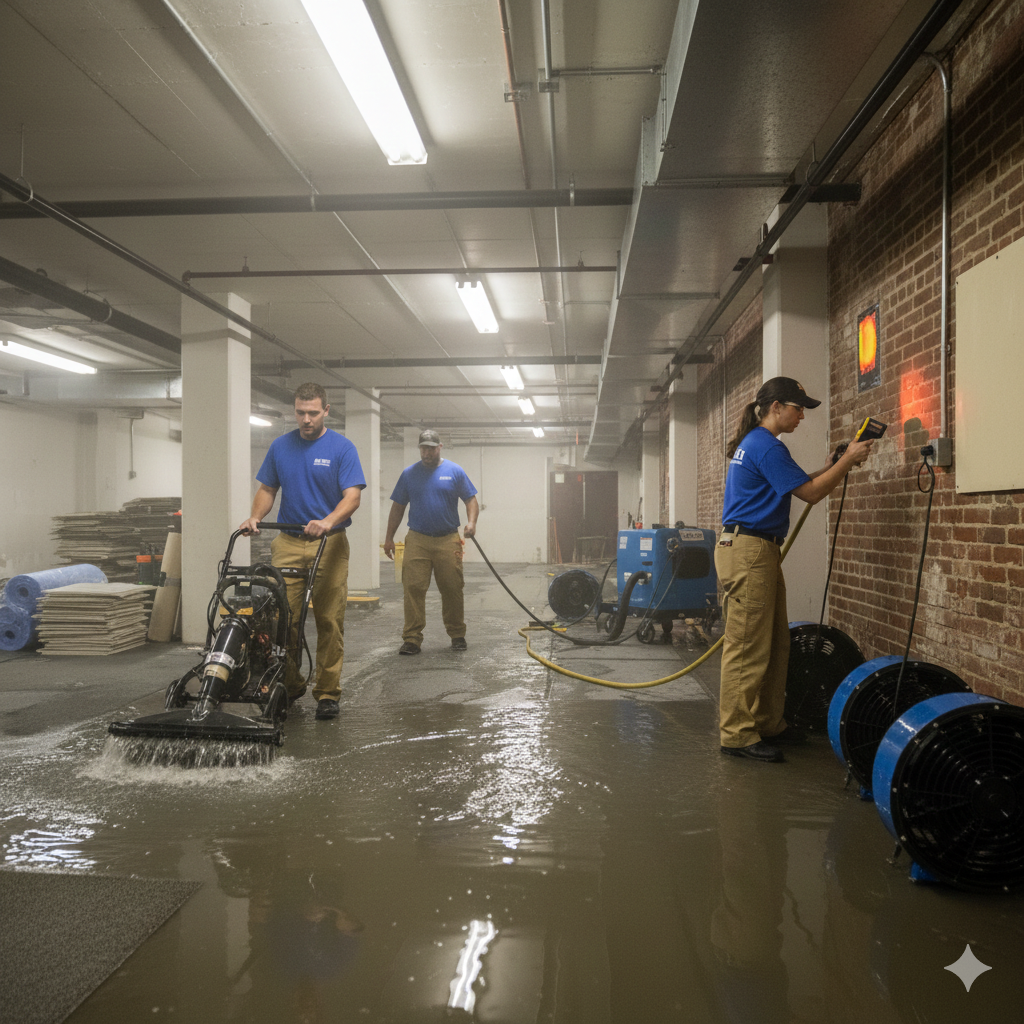
The equipment found in a residential van is often insufficient for a commercial loss. Large-scale emergencies require industrial-strength water extractors, LGR (Low Grain Refrigerant) dehumidifiers, and high-velocity air movers. For Chicago businesses, the ability of a company to scale its response—deploying dozens of units simultaneously to stabilize a multi-story environment—is the difference between a one-week closure and a one-month shutdown.
Local Ownership and Community Accountability
There is a distinct advantage to partnering with locally owned firms. National franchises often face logistical hurdles during regional “catastrophe” events, such as a city-wide freeze. A locally rooted company like Redefined Restoration understands the specific challenges of Chicagoland—from the logistics of parking a response fleet in the West Loop to the intricacies of working with local insurance adjusters who know the area’s property values.
The Strategic Process of Commercial Water Recovery
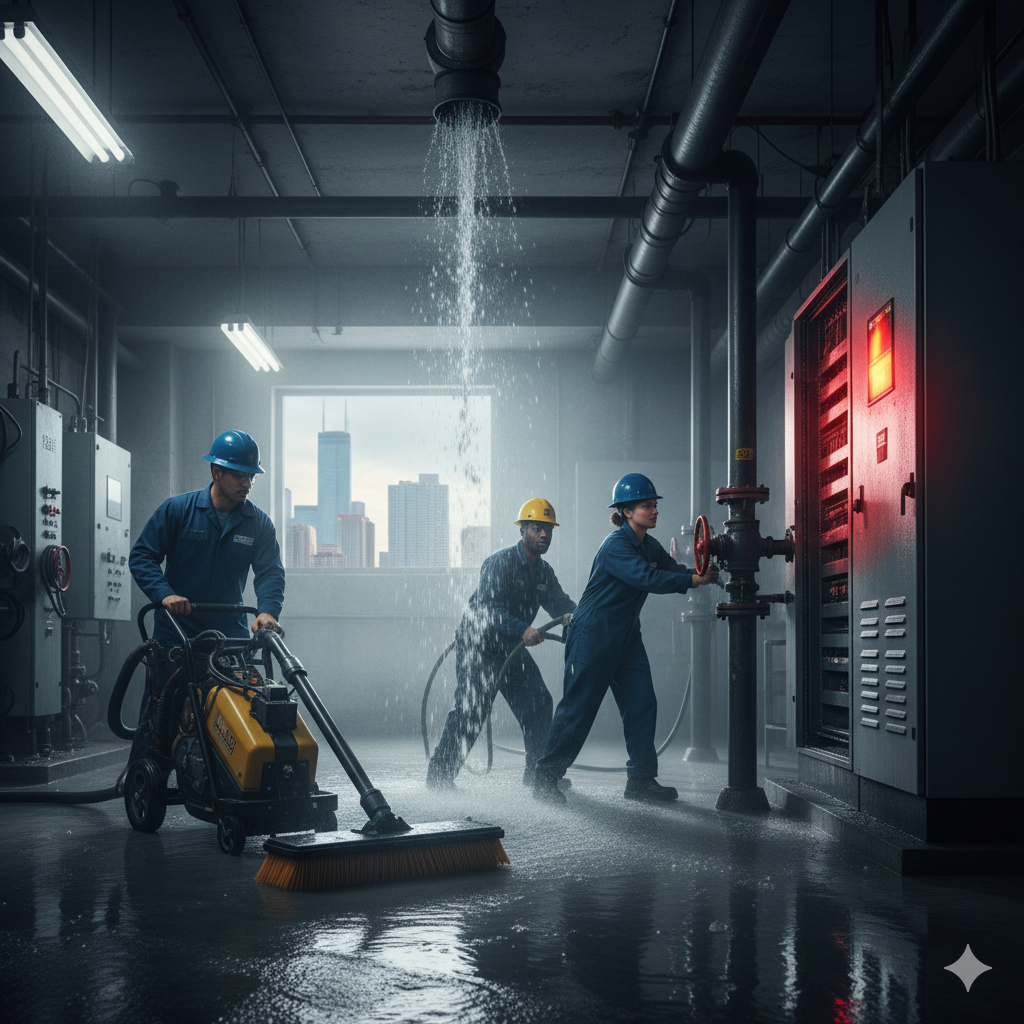
Understanding the workflow of top-tier water damage restoration companies helps facility managers set realistic expectations and monitor the quality of the work being performed on their site.
1. The Immediate Stabilization Phase
The first hour is critical. Upon arrival, the priority is identifying the source of the water and ensuring the site is safe. This includes electrical lockouts and assessing the “category” of the water. Is it “Category 1” (clean water from a broken supply line) or “Category 3” (grossly contaminated water, such as sewage or “black water”)? The category dictates the entire sanitization protocol and determines what materials can be saved versus what must be discarded.
2. Precision Water Extraction
Modern extraction technology has moved far beyond the shop vac. Weighted extraction tools are used to pull moisture from deep within carpet pads and subfloors. In Chicago’s commercial spaces, where expensive hardwood or specialized flooring is common, these tools can often save materials that were previously considered unsalvageable.
3. Controlled Demolition and Material Removal
A transparent restoration partner will only remove what is necessary. This “dry-in-place” philosophy is preferred, but when materials like insulation or heavily saturated drywall are involved, they must be removed to allow the structural “bones” of the building to breathe. Professionals ensure that these cuts are clean and strategically placed to make the eventual reconstruction faster and more cost-effective.
4. Advanced Dehumidification and Monitoring
This is where the science of restoration is most visible. Technicians use moisture meters and thermal imaging cameras to track the “drying goal.” It isn’t enough for a surface to feel dry to the touch; the internal moisture content of the studs and sills must return to a pre-loss state. In the fluctuating Chicago climate, managing the “vapor pressure” inside a building is essential to prevent moisture from being driven deeper into the walls.
Specialized Challenges in Chicago Commercial Real Estate
Every city has its quirks, but Chicago’s architectural history and climate create specific scenarios that require an expert hand.
High-Rise Logistics and Water Migration
In a skyscraper, water follows gravity. A leak on the 40th floor can impact dozens of tenants below. Elite water damage restoration companies must coordinate with building security, freight elevator operators, and multiple insurance stakeholders simultaneously. Managing the logistics of a high-rise loss requires a level of communication that most residential-focused companies simply cannot provide.
The Chicago “Deep Freeze” and Pipe Bursts
Our winters are legendary, but the real danger comes during the “thaw.” When frozen pipes finally burst, the volume of water released can be staggering. These events often happen simultaneously across the city, stretching the resources of many restoration firms. Having a relationship with a partner that offers a 100% satisfaction guarantee and has a proven track record of rapid response in the Chicagoland area is a vital part of a facility’s disaster preparedness plan.
Mixed-Use and Retail Continuity
For a retail storefront or a restaurant, every hour the doors are closed represents lost revenue and potential brand damage. Restoration in these environments must be discreet, efficient, and often performed during off-hours to minimize the impact on customers. Professional teams focus on “containment”—using HEPA-filtered air scrubbers and physical barriers to keep the rest of the business operational while the affected area is restored.
The Importance of Documentation and Insurance Advocacy
For most commercial entities, the restoration process is as much about paperwork as it is about pumps. The financial recovery of a business depends on the quality of the documentation provided by the restoration company.
A professional firm provides:
- Detailed Moisture Maps: Proving that the building was returned to a dry state.
- Photo Documentation: Before, during, and after images for every stage of the process.
- Standardized Line-Item Estimates: Using industry-standard software like Xactimate to ensure that insurance adjusters have everything they need to process the claim quickly.
- Communication Logs: Ensuring all stakeholders—from the property owner to the tenant—are kept informed of the timeline.
By handling the complexities of the claim, Redefined Restoration helps reduce the “stress-tax” that water damage imposes on a business owner, allowing them to focus on their operations rather than the logistics of the loss.
Why “Locally Owned” Matters for Chicago Businesses
When you search for water damage restoration companies, you will find both massive conglomerates and boutique local firms. For the Chicago market, the local option frequently offers superior value.
Rapid Response in a Congested City
Navigating Chicago traffic requires local knowledge. Whether it’s the Kennedy, the Dan Ryan, or side streets in Logan Square, a local team can get boots on the ground faster. In a water emergency, a 30-minute difference in arrival time can save thousands of dollars in flooring and equipment.
Deep Roots and Reputation
A local company survives on its reputation within the community. Unlike a national brand that may rely on a rotating door of subcontractors, a locally owned and operated firm like Redefined Restoration uses dedicated, IICRC-certified staff who are part of the very neighborhoods they serve. This personal investment leads to a higher standard of care and a commitment to excellence that is often missing from larger, impersonal organizations.
Long-Term Resilience: Beyond the Initial Restoration
The goal of restoration is to return a property to its “pre-loss condition,” but a true partner looks forward. After the drying is complete, the best water damage restoration companies help their clients identify vulnerabilities. Was the leak caused by an aging pipe? Was it a lack of insulation in a plenum space?
In 2026, building owners are increasingly focused on “hardening” their assets against future water loss. This includes:
- Smart Water Sensors: Installing IoT-connected devices that can shut off water mains the moment a leak is detected.
- Upgraded Sump Systems: Especially for properties in flood-prone areas near the Chicago River or lower-lying suburbs.
- Regular Facility Audits: Identifying “silent leakers” before they become catastrophic bursts.
Conclusion: Securing Your Property’s Future
Water damage is an intrusive, destructive force, but it does not have to be the end of your business’s success story. The difference between a minor setback and a permanent closure often comes down to the quality of the partnership you forge in the aftermath of a loss.
For Chicago businesses, the choice of a restoration partner should be based on a proven track record, technical certification, and a deep understanding of the local environment. When the unexpected happens, you need a team that combines the precision of modern building science with the urgency of a neighbor.
Protecting a commercial asset in the Chicagoland area requires vigilance and a ready-to-act plan. By choosing a team with over four decades of combined experience and a relentless focus on customer satisfaction, you ensure that your property—and your livelihood—is in the most capable hands.