Imagine returning to your River North loft or your family home in Logan Square after a long weekend, only to be met by the unmistakable, heavy scent of damp drywall and the sound of a slow, persistent drip. In the high-stakes environment of Chicago real estate, water is a silent predator. Whether it is a frozen pipe that finally gave way during a January deep freeze or a basement surge following a torrential Midwestern spring rain, the clock begins ticking the moment moisture meets your structural materials.
For property owners in 2026, understanding the mechanics of water damage restoration is not merely about cleanup; it is about preservation, liability mitigation, and the technical precision required to return a building to a pre-loss condition. This isn’t a task for a shop-vac and an open window. In a city where humidity levels fluctuate wildly and historic architecture meets modern high-rises, the restoration process requires a sophisticated blend of thermodynamics, microbiology, and structural engineering.
The Critical Window: Why Minutes Matter in Chicagoland
In the restoration industry, we often speak about the “Golden Hours”—the first 24 to 48 hours following a water intrusion. This is the period during which damage can still be contained. Beyond this window, a Category 1 loss (clean water from a broken pipe) can rapidly degrade into a Category 3 loss (highly contaminated water) due to the proliferation of microbial growth and the chemical breakdown of building materials.
In Chicago, geography plays a significant role in response times. Traffic congestion on Lake Shore Drive or the Danbury can turn a minor leak into a major flood if your restoration partner is coming from the far suburbs. This is why Redefined Restoration prioritizes a logistical model that allows for an emergency arrival within 60 to 90 minutes for most neighborhoods. When high-capacity pumps and IICRC-certified crews arrive on the scene quickly, the “wicking” effect—where water travels up drywall and into wooden studs—is significantly curtailed.
The Physics of Absorption
Water doesn’t just sit on the floor; it seeks equilibrium. Through capillary action, moisture moves into porous materials like gypsum board, hardwood, and concrete. In Hyde Park, where many homes feature vintage lath and plaster, this absorption can lead to structural sagging or the permanent warping of historical architectural details. Professional water damage restoration stops this progression by creating a controlled environment that encourages evaporation faster than the material can absorb the liquid.
Chicago’s Unique Challenges: From Deep Freezes to Lakefront Seepage
Chicago’s climate is uniquely hostile to plumbing and structural integrity. Our seasoned technicians have spent over 15 years witnessing the specific ways water destroys property in the Windy City.
The “Big Freeze” and Burst Pipes
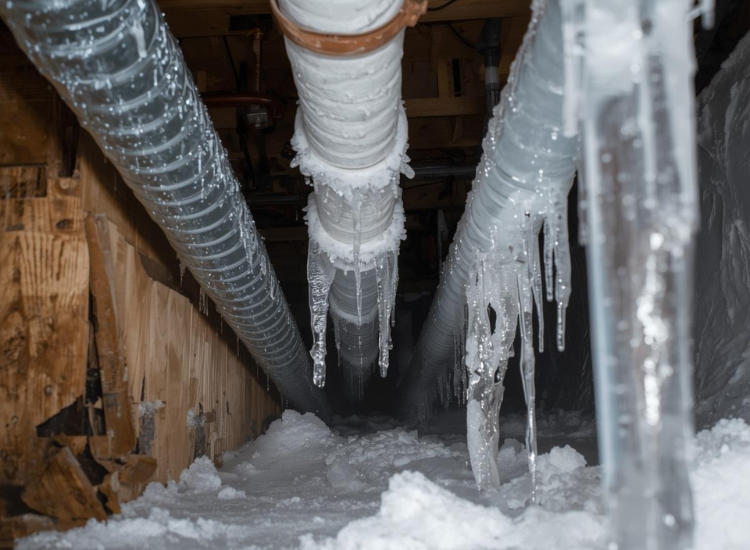
Winter in Chicago isn’t just a seasonal shift; it’s a structural stress test. When temperatures plummet, the water inside poorly insulated pipes in outer walls can freeze, expand, and exert thousands of pounds of pressure per square inch. When that pipe inevitably bursts, the resulting flood is often high-volume and high-pressure. Restoration in these conditions requires more than just water extraction; it requires managed heating to ensure that the drying equipment can operate effectively in sub-zero ambient temperatures.
Basement Flooding and Lake Level Pressures
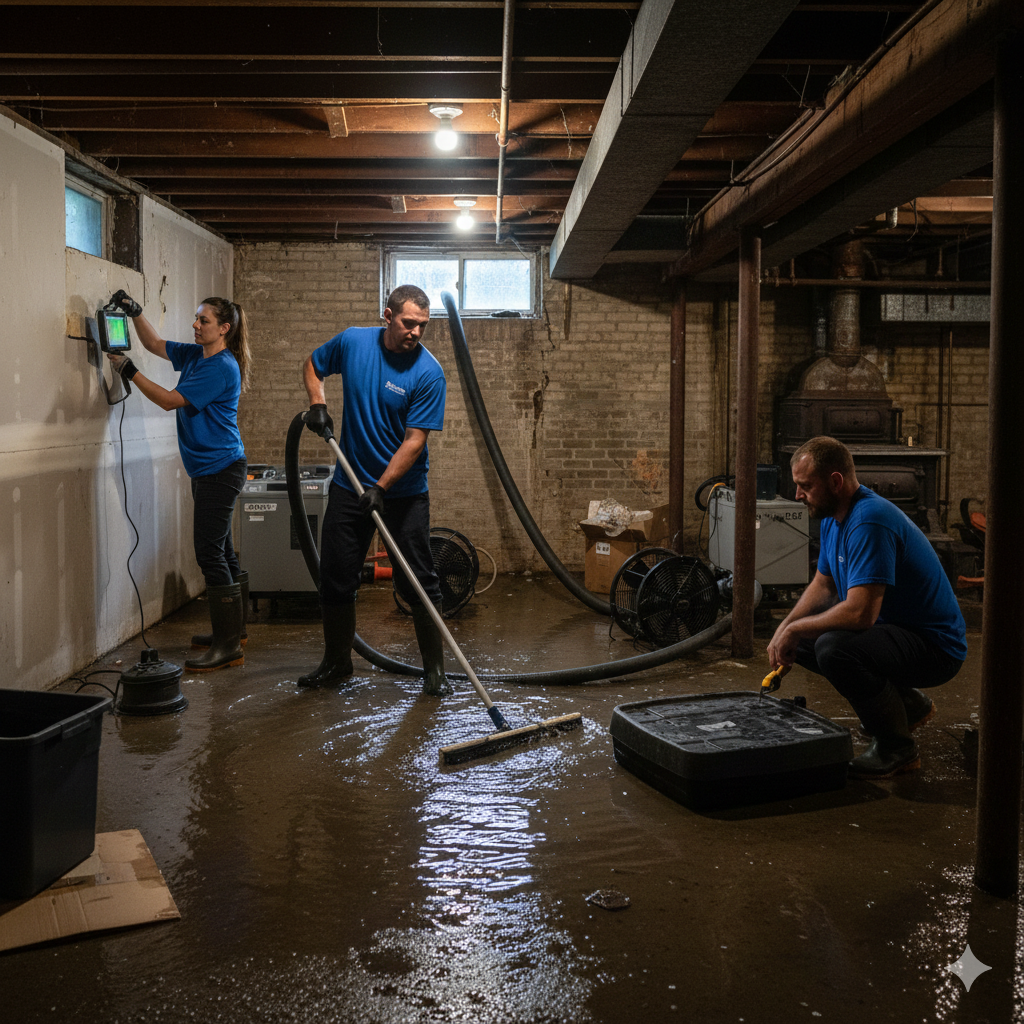
For properties near Lake Shore Drive or in lower-lying areas, hydrostatic pressure is a constant concern. When the ground becomes saturated, water is pushed through foundation cracks or up through floor drains. This water is rarely “clean.” It often carries silt, urban runoff, and potential pathogens. Dealing with basement floods in 2026 requires a high degree of technical accuracy in sanitization, ensuring that the space is not just dry, but also biologically safe for habitation.
The Technical Phases of Professional Restoration
A comprehensive water damage restoration project is a multi-stage operation. Each phase must be documented and executed with precision to satisfy both building safety codes and insurance requirements.
Phase 1: Emergency Assessment and Documentation
Upon arrival, the first priority is safety—identifying electrical hazards and gas leaks. Following safety protocols, the crew begins a moisture mapping process. Using non-penetrating moisture meters and thermal imaging cameras, technicians identify the hidden migration of water behind tiles or under laminate flooring. This data is critical for the Project Manager, who manages the communication with your insurance provider, ensuring that every destroyed square foot is accounted for in the claim.
Phase 2: High-Volume Extraction
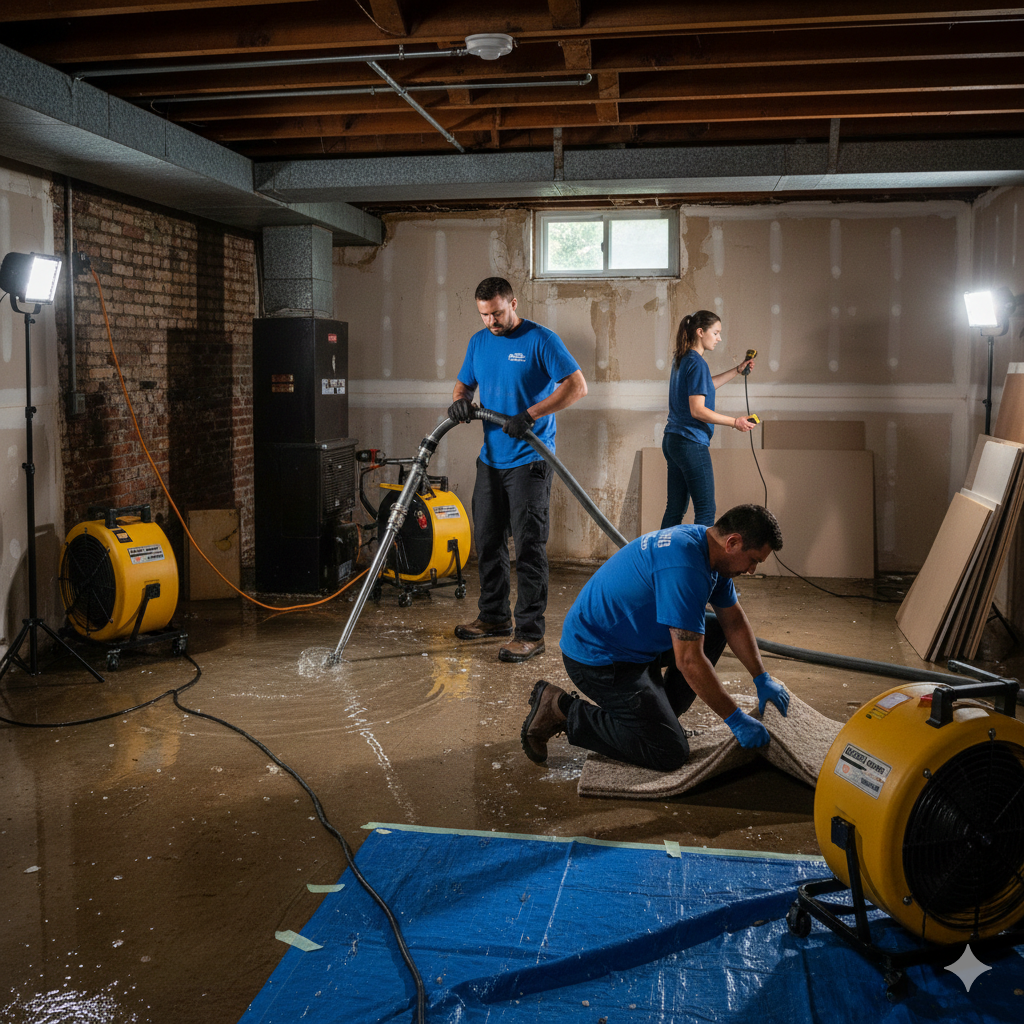
The most efficient way to dry a building is to remove water in its liquid state. We utilize industrial-grade, truck-mounted extraction units and high-capacity submersible pumps. This is particularly vital in large-scale commercial losses or flooded basements where thousands of gallons may be present. Every gallon pumped out is a gallon that doesn’t have to be evaporated, saving days of drying time.
Phase 3: Stabilizing the Environment (Dehumidification)
Once standing water is gone, the air becomes the enemy. High humidity in a closed space will lead to secondary damage—mold growth on ceilings, the peeling of wallpaper, and the “cupping” of expensive hardwood floors. By deploying LGR (Low Grain Refrigerant) dehumidifiers, we pull moisture out of the air, creating a “thirsty” environment that draws deep-seated water out of the building’s skeleton.
Phase 4: Controlled Evaporation and Airflow
Large axial air movers are positioned strategically to create a vortex of high-velocity airflow across wet surfaces. This disrupts the stagnant “boundary layer” of saturated air sitting on surfaces, accelerating the transition of water from liquid to vapor. In Chicago’s high-rise apartments, where natural ventilation is often impossible, these mechanical systems are the only way to ensure structural drying.
Beyond the Surface: Hidden Dangers and Long-Term Health
One of the most common mistakes property owners make is assuming a space is “dry” because it feels dry to the touch. This misconception is where the most expensive long-term damage occurs.
Structural Integrity and “Dry Rot”
Wood that remains at a moisture content above 16-20% for an extended period becomes a breeding ground for wood-decay fungi. Over time, this weakens floor joists and wall studs. Professional water damage restoration involves “drying to a standard,” which means measuring the moisture content of the wood against a “dry goal” established from an unaffected area of the building.
The Mold Threshold
In the humid summers of Chicago, mold spores can begin to colonize in as little as 24 hours. Once mold is established in the paper backing of drywall or the fibers of carpet padding, simple drying is no longer enough; remediation and demolition of affected materials become necessary. Rapid response from a team like Redefined Restoration is designed specifically to beat this microbial clock.
Navigating the Insurance Maze in 2026
Water damage is almost always an unplanned expense. For many, the financial stress is as significant as the physical damage. A hallmark of a professional restoration firm is their ability to act as a liaison between the property owner and the insurance company.
The Role of the Project Manager
When you engage a professional service, you aren’t just hiring technicians; you are hiring a Project Manager. This individual is responsible for documenting the loss using industry-standard software like Xactimate. They provide the itemized “proof of loss” that insurance adjusters require to process a claim efficiently. By offering 100% satisfaction guarantees and maintaining transparent communication, a restoration partner reduces the “friction” of the claims process.
Mitigating Secondary Damage
Insurance policies generally include a “Duty to Mitigate” clause. This means the policyholder is required to take reasonable steps to prevent further damage after a loss occurs. Hiring a professional restoration team immediately is considered a primary step in mitigation. If a homeowner waits several days to call for help, an insurer may argue that the resulting mold or structural rot was preventable and, therefore, not covered.
Choosing a Restoration Partner in Chicago
Not all restoration companies are created equal. When evaluating providers for water damage restoration, property owners should look for specific indicators of professional authority:
- IICRC Certification: The Institute of Inspection, Cleaning and Restoration Certification is the industry’s gold standard. It ensures that the technicians on your property are trained in the latest scientific drying methods.
- Local Testimonials: A company’s reputation in neighborhoods like River North or Logan Square is a testament to its ability to handle the local infrastructure.
- Availability of Specialized Equipment: Ask if the company owns their own high-capacity pumps and HEPA air scrubbers. Subcontracting these items can lead to delays that your property cannot afford.
- Insurance Coordination: A firm that refuses to work directly with your insurer may leave you with a massive out-of-pocket bill and the headache of reimbursement.
The Path to Recovery: What to Expect
The restoration process can be intrusive. Expect the presence of loud machinery (dehumidifiers and fans) that must run 24/7 until the drying goals are met. Expect technicians to return daily to take moisture readings and adjust equipment. While this may be a temporary inconvenience, it is a surgical necessity to prevent the permanent loss of your property’s value.
In 2026, the technology behind Redefined Restoration allows for faster, quieter, and more efficient drying than ever before. However, the fundamental principle remains the same: the faster the response, the better the outcome.
Restoration vs. Reconstruction
Once the “dry-out” is complete, the restoration phase ends and the reconstruction phase begins. This may involve hanging new drywall, painting, or installing new flooring. By ensuring the “bones” of the house are perfectly dry before these finishing touches are applied, you guarantee that you aren’t just covering up a problem that will resurface as mold or rot in six months.
Conclusion: Protecting Your Chicago Investment
Water damage is an emotionally and physically taxing event. Whether you are a business owner in the Loop or a homeowner in the suburbs, the threat of water intrusion is a reality of urban living in a four-season climate. By understanding the phases of water damage restoration and the importance of a rapid, 60-90 minute local response, you can transform a potential disaster into a manageable repair.
The goal of professional restoration is to restore not just your property, but your peace of mind. In 2026, don’t leave your most valuable asset to chance. When the water rises, ensure you have a team backed by 15 years of Chicago experience, the right certifications, and the high-capacity equipment required to win the battle against moisture.