
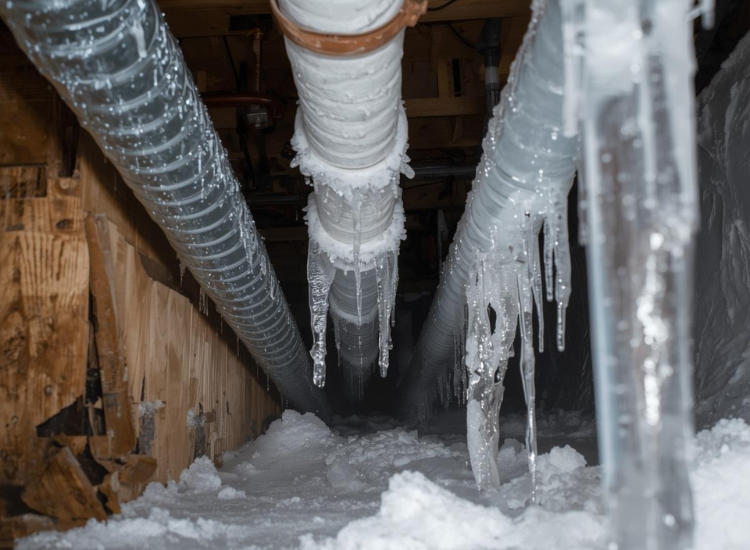
Keep your heat at a minimum of 55°F throughout your home, open cabinet doors under sinks to allow warm air circulation, let faucets drip slightly during extreme cold snaps, and insulate exposed pipes in unheated areas like basements, crawl spaces, and garages. These preventive measures are especially critical during Chicago’s brutal winter months when temperatures routinely plunge below zero and polar vortex events can create emergency conditions. Taking action before the cold arrives can save you from thousands of dollars in water damage and the headache of dealing with burst pipes during the coldest days of the year.
Why Frozen Pipes Are a Serious Threat in Chicagoland
Chicago winters are notoriously harsh, with subfreezing temperatures lasting for weeks and occasional polar vortex events driving thermometers well below zero. When water inside your pipes freezes, it expands, creating immense pressure that can crack or burst the pipe. Once temperatures rise and the ice thaws, water comes rushing out, flooding basements, damaging walls, and destroying personal belongings.
Homes throughout Cook, DuPage, Lake, Will, and Kane Counties face unique vulnerabilities. Classic Chicago bungalows, historic greystones in neighborhoods like Lincoln Park and Hyde Park, and mid-century ranch homes in suburbs like Naperville, Schaumburg, and Arlington Heights often have pipes running through exterior walls or unheated spaces. Finished basements—common in area homes—can sustain significant damage when pipes burst, affecting not just the plumbing but also drywall, flooring, furniture, and irreplaceable personal items.
At Redefined Restoration, we respond to countless frozen pipe emergencies each winter across communities from Evanston to Orland Park. The good news? Most of these disasters are entirely preventable with the right precautions.
Essential Prevention Steps for Chicago Homeowners
Maintain Adequate Heat Throughout Your Home
Never let your thermostat drop below 55°F, even when you’re away from home or trying to save on heating costs. This minimum temperature helps ensure that pipes in exterior walls and unheated spaces don’t reach freezing temperatures. If you’re leaving town during winter months, ask a neighbor to check on your home daily to confirm the heat is working properly—furnace failures during cold snaps are a leading cause of frozen pipe disasters.
Insulate Vulnerable Pipes
Identify pipes in unheated or poorly insulated areas: basements, crawl spaces, attics, garages, and along exterior walls. Foam pipe insulation is inexpensive and available at any hardware store throughout the Chicagoland area. Pay special attention to pipes on north-facing walls, which receive less sunlight and stay colder. For homes in older neighborhoods like Oak Park, Elmhurst, or Beverly with original plumbing configurations, professional insulation may be worth the investment. Electrical systems in these older homes can also be affected by extreme cold, as exposed wiring or outdated panels may be vulnerable to temperature fluctuations. The team at Eclectic Electric points out that addressing insulation in tandem with electrical and plumbing improvements can help maintain the overall safety and efficiency of a property during winter.
Let Faucets Drip During Extreme Cold
When temperatures are forecast to drop below 10°F or during polar vortex warnings, allow faucets to drip slightly—both hot and cold water. Moving water is much harder to freeze than standing water. Focus on faucets served by pipes running through exterior walls or unheated spaces. The small amount of water you’ll use costs far less than repairing water damage from a burst pipe.
Open Cabinet Doors
Kitchen and bathroom sinks are often located against exterior walls. Opening the cabinet doors beneath these sinks allows warm air from your home to circulate around the pipes, keeping them above freezing temperatures. This simple step is particularly important during overnight hours when temperatures drop to their lowest points.
Seal Cracks and Openings
Inspect your home’s exterior for cracks, gaps, or openings near pipes. Cold air flowing through these openings can quickly freeze nearby pipes. Seal openings with caulk or expanding foam. Check basement windows, dryer vents, and anywhere pipes enter your home. The freeze-thaw cycles common in Chicagoland winters can create new cracks each season, so make this an annual inspection task.
Disconnect Outdoor Hoses and Shut Off Exterior Faucets
Before the first hard freeze—typically by late November in the Chicago area—disconnect all garden hoses and drain outdoor faucets. If your home has shut-off valves for exterior faucets, close them and drain the remaining water from the lines. Frozen exterior faucets can cause pipes to burst inside your walls.
What to Do If Pipes Freeze
If you turn on a faucet and only a trickle comes out, you likely have a frozen pipe. Act immediately:
- Keep the faucet open—as the ice melts, water needs somewhere to flow
- Apply gentle heat to the frozen section using a hair dryer, heating pad, or warm towels (never use open flames or high-heat devices)
- Open cabinet doors and increase heat in the affected area
- If you cannot locate the freeze or if a pipe has burst, shut off your main water valve immediately
When Disaster Strikes: Professional Water Damage Restoration
Even with the best prevention efforts, pipe bursts can happen. If you experience frozen pipe damage in Chicago, Lincoln Park, Lakeview, Logan Square, Wicker Park, Naperville, Downers Grove, Tinley Park, or anywhere across the Chicagoland area, immediate action is critical.
Redefined Restoration provides 24/7 emergency response for frozen pipe disasters throughout Cook, DuPage, Lake, Will, and Kane Counties. Our team quickly extracts water, dries affected areas, and begins restoration to prevent mold growth and structural damage. We work directly with insurance companies to streamline your claim process during an already stressful time.
Prepare Now for Winter Peace of Mind
Don’t wait until the next polar vortex warning to protect your home. Taking preventive steps now—before December’s deep freeze arrives—gives you peace of mind throughout the harsh Chicago winter season.
Need help assessing your home’s vulnerability to frozen pipes or dealing with winter water damage? Contact Redefined Restoration at https://redefinedresto.com or call us 24/7 for emergency service throughout Chicagoland. Our experienced team serves all Chicago neighborhoods and surrounding communities with fast, professional restoration services you can trust.