How long does fire damage restoration take?

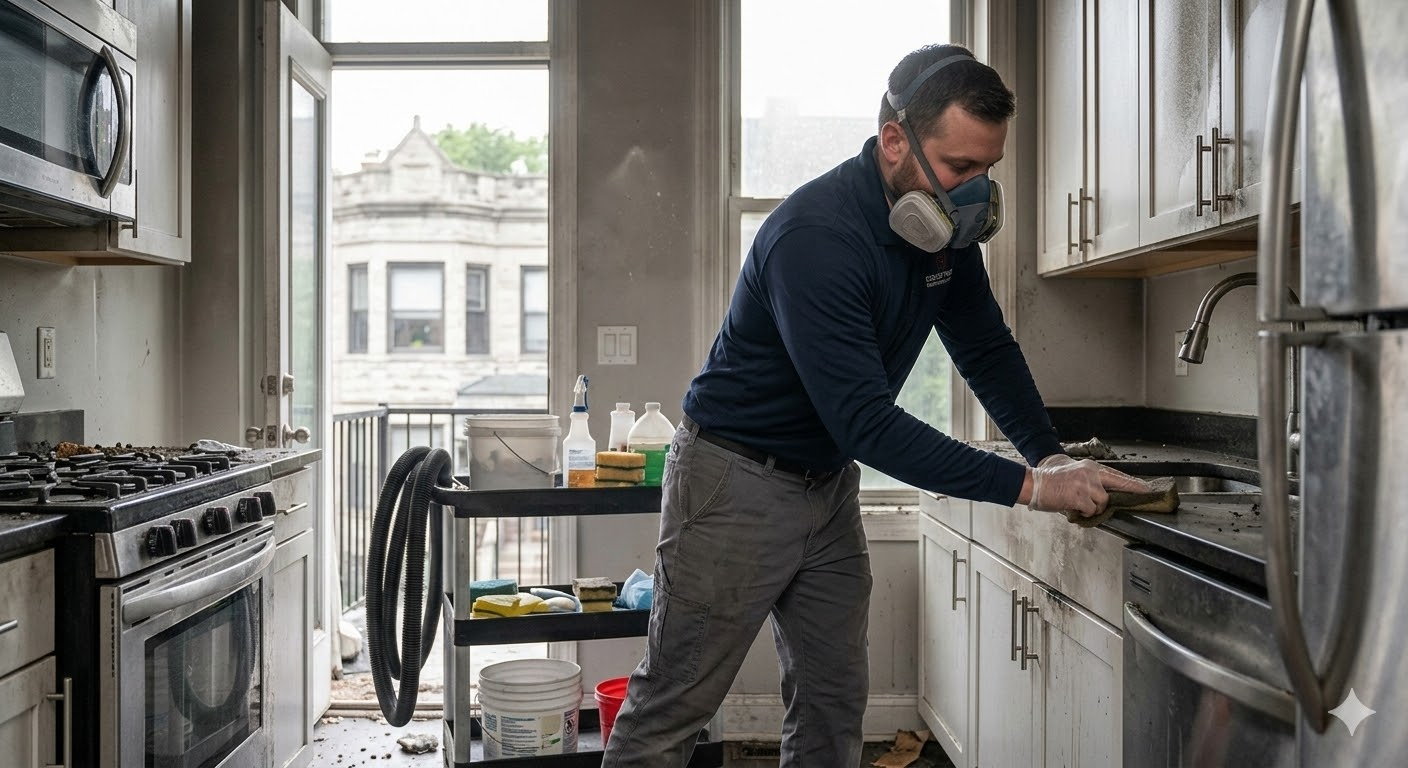
The scent of a structural fire is unlike any other—a heavy, synthetic acridity that clings to the air long after the last ember has been extinguished by the Chicago Fire Department. As we navigate the early spring of 2026, many homeowners in neighborhoods from Wicker Park to Beverly are finding that the aftermath of a kitchen flare-up or an electrical short is not just a physical mess, but a complex temporal puzzle. The question of “how long” is often the first thing asked when our 24/7 emergency response team arrives on the scene. At Redefined Restoration, we understand that time is the most precious commodity during a crisis. The duration of fire damage restoration varies significantly based on damage severity, property size, and the specific types of affected contents. While minor smoke issues might be resolved in a few days, extensive structural repairs can span several weeks or even months.

Drawing from more than a decade of expertise in fire recovery across the diverse architectural landscape of Chicago, we deliver precise, transparent timelines upfront following our initial forensic inspection. Our licensed and fully insured team utilizes advanced techniques and professional-grade tools to accelerate the mitigation process. We view every project through the lens of local accountability, backed by a workmanship warranty that ensures the recovery is not just fast, but permanent. In the context of 2026, where building material supply chains in the Midwest have become more localized and efficient, we leverage our deep connections within the Chicago construction industry to minimize downtime. Whether we are dealing with a historic greystone or a modern high-rise, our goal is to help you return home swiftly while maintaining strict compliance with evolving municipal building codes. This narrative of efficiency is not just about speed; it is about an authoritative, trustworthy service that respects the emotional and structural weight of your property.

Navigating the Forensic Phases of Fire Recovery in Chicago

To understand the timeline, one must first understand the stages of the process. In 2026, fire damage restoration services are no longer just about scrubbing soot; they are about chemical stabilization and structural engineering.

The Immediate Stabilization Window (24–48 Hours)

The first two days are the “Golden Hours” of restoration. During this time, the acidic soot produced by the fire begins to etch into surfaces. Think of soot like a microscopic, corrosive sandpaper. If left to sit, it will permanently pit glass, tarnish metal fixtures, and yellow your appliances. Our crews focus on “board-up” services and emergency pre-cleaning to halt this chemical reaction.

The Chicago Environmental Factor: Humidity and Airflow

In the humid air of a Chicago spring, moisture from fire-suppression efforts can combine with soot to create a thick, sludge-like residue. This mixture can seep deep into the porous Chicago brick found in many local homes. We utilize industrial-grade dehumidification to stabilize the environment, preventing secondary issues like mold growth, which can start in as little as 48 hours following the introduction of water.

Decoding the Complexity of Smoke and Soot Behavior

One of the most misunderstood aspects of Redefined Restoration work is why “small” fires can lead to “long” restoration times. It all comes down to the way smoke moves.

The Pressure Cooker Effect

When a fire burns, it creates a high-pressure environment. This pressure pushes smoke into every crevice—behind electrical outlets, into the insulation of your attic, and through the HVAC ductwork. Even if the flames were contained to the stove, the smoke has likely traveled through the entire home’s “circulatory system.”

Soot Categorization: Dry vs. Oily

The timeline is heavily influenced by what actually burned. We categorize soot into two primary types:

  • Dry Soot: Typically from wood or paper fires. This is easier to remove with specialized sponges and HEPA vacuuming.
  • Oily Soot: Resulting from grease fires or plastic/synthetic materials (common in 2026 modern furniture). This soot is smeary and requires complex chemical degreasers, which extends the cleaning phase of the project.

Comparative Recovery Timelines by Damage Scale

Every property is unique, but we can look at the typical investments in time required for various scenarios in the Chicago area.

Damage Level Typical Mitigation Phase Reconstruction Phase Chicago Context (2026)
Minor Smoke/Odor 3–5 Days Minimal to None Often caused by seasonal furnace “puff-backs.”
Kitchen/Single Room 1–2 Weeks 2–4 Weeks Requires local plumbing/electrical inspections.
Structural/Multi-Room 3–5 Weeks 2–6 Months Subject to Chicago Department of Buildings permits.
Commercial/Large Loss Variable 6+ Months Coordination with OSHA and municipal safety codes.

The Physics of Odor Neutralization: Why Scents Linger

The “smell of fire” is actually microscopic particles of burnt material trapped in the pores of your walls and furniture. Think of your drywall like a very dense, dry sponge. When the fire happens, the pores expand and soak up the smoke. Once the house cools, the pores close, trapping the scent inside.

The Thermal Fogging Solution

In 2026, we utilize thermal fogging, which mimics the behavior of the original fire. We heat a specialized neutralizer into a fine mist that has the same particle size as the smoke. This mist travels into the same pores that the smoke occupied, neutralizing the odor at its source rather than just masking it with a floral scent.

Hydroxyl Generation and Ozone

For more stubborn odors, we use hydroxyl generators. These machines utilize UV light to create atmospheric “scrubbers” that break down the carbon chains in smoke molecules. This is a safe, effective way to clean the air in 2026, allowing our crews to work while the air is being purified, further accelerating the fire damage restoration services timeline.

Structural Integrity and the Modern Building Code

Chicago’s building codes are some of the most stringent in the country, and as of 2026, they have updated requirements for fire-rated materials and insulation. When we perform fire damage restoration services in areas like the Loop or Gold Coast, we are not just repairing; we are bringing the structure up to current safety standards.

The Invisible Weakness: Heat Damage

Wood and steel react differently to heat. Even if a beam isn’t charred, extreme heat can cause “annealing” in metal or “delamination” in plywood. Our Project Managers perform forensic checks on the structural “skeleton” of your home. Think of this like checking a bone for a hairline fracture—it looks fine on the outside, but it won’t hold the weight it used to.

Permit Navigation in the 312 and 773

One of the most significant factors in a “long” restoration timeline is the municipal permit process. Our deep roots in the Chicago community allow us to navigate these waters more efficiently. We maintain open lines of communication with local inspectors to ensure that our work is verified and approved without unnecessary delays.

Content Management: What Stays and What Goes?

A major part of the Redefined Restoration process involves the inventory and cleaning of your personal belongings. We call this “Content Pack-Out.”

The “Soot-Sensitive” Inventory

In 2026, electronics are more prevalent than ever. Smoke contains chlorides, which, when combined with the humidity in the air, become acidic and can eat through the delicate circuit boards of your smart-home devices.

  • Hard Contents: Dishes, metal furniture, and glass can usually be salvaged through ultrasonic cleaning.
  • Soft Contents: Clothing, curtains, and upholstery require specialized laundry techniques to remove the deep-seated “smoke ghost” from the fibers.
  • Electronic Contents: These must be professionally cleaned and decontaminated to prevent long-term failure.

Ultrasonic Cleaning Technology

We utilize high-frequency sound waves in specialized water baths to “shake” soot loose from delicate items. This technology, which has become a premium-tier standard in 2026, allows us to save family heirlooms and intricate jewelry that would have been discarded just a few years ago.

The Chemistry of Corrosion: A Race Against the Clock

Fire creates a cocktail of chemicals. When plastics burn (common in 2026 flooring and appliances), they release hydrogen cyanide and hydrochloric acid. When these gases mix with the air, they create an “acidic mist” that settles on everything.

Metallic Pitting Analogy

Think of a silver spoon left in a bowl of lemon juice. Over time, the acid eats away the finish. The same thing happens to your faucets, door handles, and electronic ports after a fire. Our team uses alkaline neutralizing agents to “freeze” this corrosion process immediately upon arrival. This is why our 24/7 response is so critical—a delay of even six hours can mean the difference between cleaning a fixture and having to replace it entirely.

Working with Insurance Adjusters in 2026

The insurance landscape in Chicago has evolved. Today, adjusters rely heavily on digital documentation and real-time data. Redefined Restoration uses advanced software to provide a “live” look at the restoration progress.

Transparency Through Technology

We provide our clients and their adjusters with a detailed digital trail. This includes:

  1. Moisture Maps: Proving that the house is dry after fire suppression.
  2. Photo Inventories: Documenting every item before it is moved.
  3. Atmospheric Readings: Showing the reduction in volatile organic compounds (VOCs) as we clean.

By providing this level of authoritative detail, we reduce the “back-and-forth” with insurance companies, which is often a hidden bottleneck in the restoration timeline.

Specialized Care for Chicago Architecture

Chicago’s varied building stock requires a nuanced approach to fire recovery. A loft in the West Loop presents very different challenges than a mid-century modern home in Evanston.

Timber Lofts and Exposed Brick

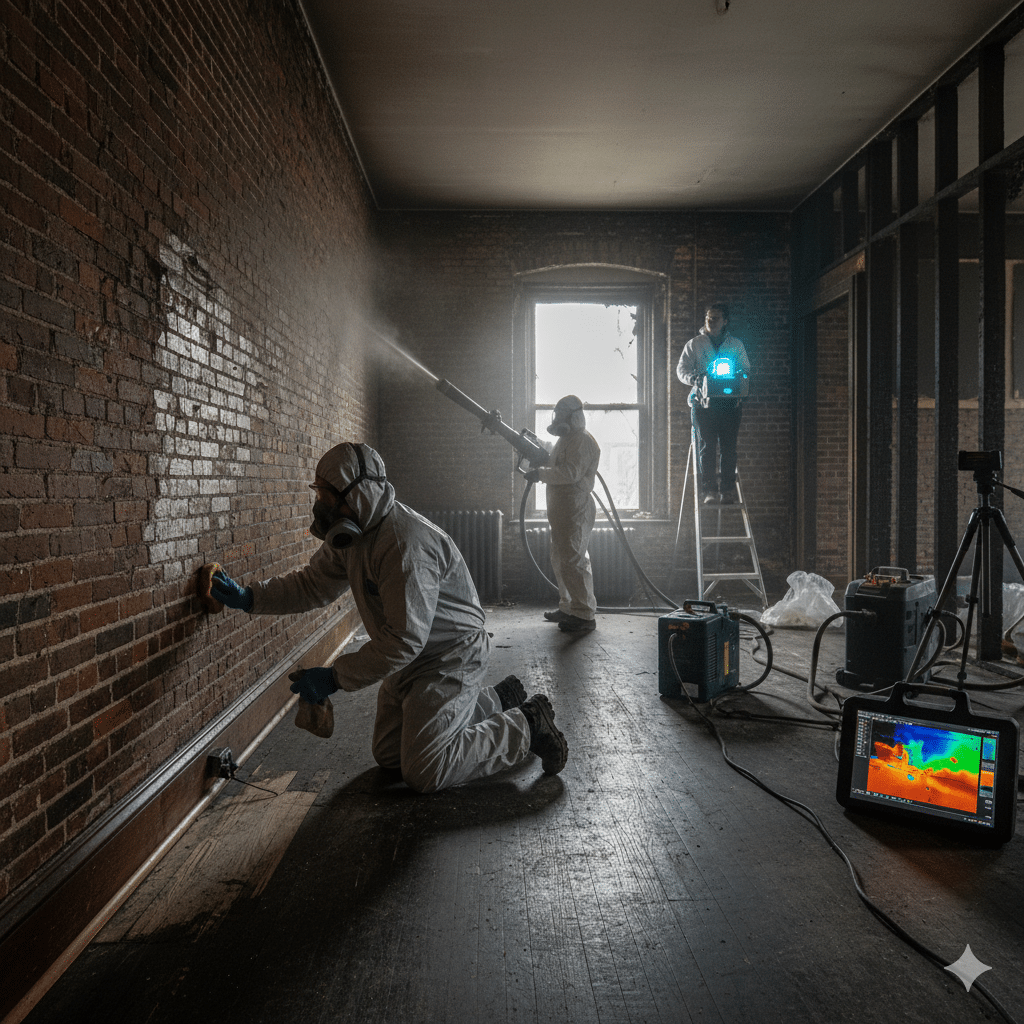
In many of Chicago’s converted timber lofts, the porous nature of the heavy beams and exposed brick makes smoke removal incredibly difficult. Traditional scrubbing can push the soot deeper into the grain. We utilize dry-ice blasting—think of it like power washing with frozen CO2. The dry ice hits the soot, causing it to “pop” off the surface without introducing moisture or abrasive chemicals to the historic wood.

High-Rise Smoke Travel

In modern Chicago high-rises, “stack effect” is a major concern. This is where the temperature difference between the inside and outside of the building creates a vacuum that pulls smoke up through elevator shafts and stairwells. A fire on the 4th floor can easily lead to smoke damage on the 24th floor. We specialize in high-rise fire damage restoration services, coordinating with building management to clean common areas and shared ventilation systems.

The Psychological Journey of Fire Restoration

At Redefined Restoration, we never forget that we are not just working on a building; we are working on someone’s life. The displacement caused by fire is a profound stressor.

Restoring the “Sense of Home”

Our timeline is always built with the “human factor” in mind. We prioritize the restoration of essential living spaces—like a kitchen or a bedroom—to allow families to move back into their properties even if smaller, non-essential repairs are still ongoing. This “phased return” approach is part of our commitment to authoritative, compassionate service.

24/7 Support and Guidance

From the moment the sirens stop, we are there. Our 2026 service model includes a dedicated concierge for every fire loss. This person acts as your single point of contact, navigating you through the complexities of permits, insurance, and construction so you never feel lost in the process.

Summary: A Roadmap to Fire Recovery in Chicago

Fire damage is an multifaceted challenge that requires a blend of chemistry, engineering, and local expertise. In 2026, the speed of recovery is dictated by how quickly you can neutralize the chemical threats and how efficiently you can navigate the modern building landscape.

The timeline for your restoration will always be a reflection of your property’s specific needs. Whether it is a few days of air scrubbing or a multi-month structural rebuild, Redefined Restoration stands as the Chicago authority in fire recovery. Our 5-star reviewed projects across the city are a testament to our ability to combine technical precision with genuine local care.

We don’t just fix walls; we restore the safety and comfort of your sanctuary. By using the latest in 2026 restoration technology and a deep understanding of Chicago’s unique environment, we ensure that your recovery is as swift and stress-free as possible.
What happens during the initial assessment?

The sound of rushing water in a Chicago basement at 2:00 AM on a Tuesday is a sound that triggers an immediate, visceral fight-or-flight response. In the spring of 2026, the Windy City has experienced a series of “flash-thaw” events, where rapid temperature swings from frozen tundra to a balmy fifty degrees have put unprecedented pressure on municipal drainage and aging residential plumbing. When the inevitable happens, and you find yourself standing ankle-deep in a flooded laundry room, the fog of panic can make the recovery process seem like an insurmountable mountain.

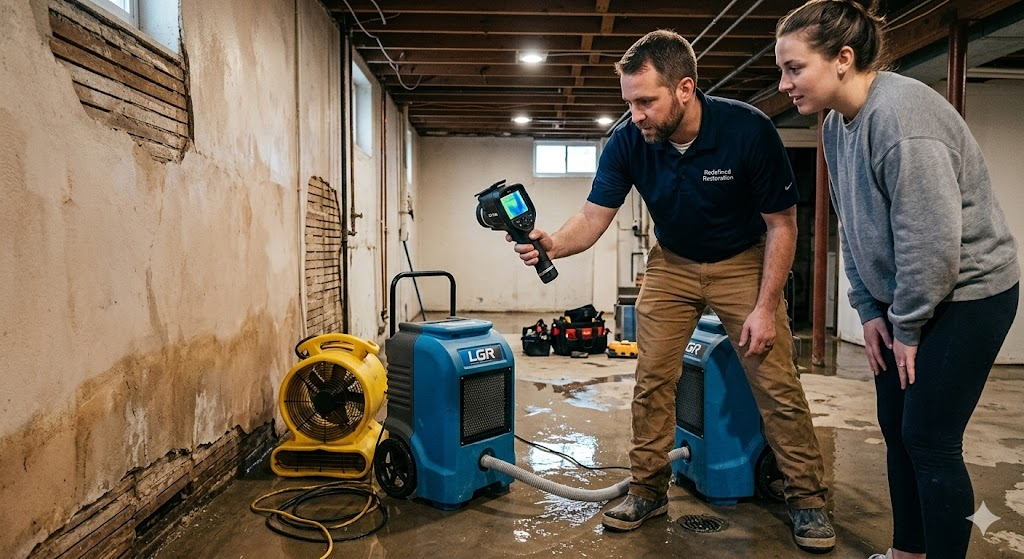
At Redefined Restoration, we understand that the first hour of a flood is a period of high-stakes decision-making. The “initial assessment” is not just a formality; it is a forensic deep dive into the structural integrity of your home. When our team arrives, a dedicated Project Manager (PM) takes the lead. This specialist doesn’t just look for puddles; they map the invisible journey of moisture through your property. The PM will meticulously assess the damage, identifying the “class” and “category” of the water—distinguishing between a clean pipe burst and the more hazardous groundwater intrusions common near the Des Plaines River.

During this walkthrough, the PM explains the strategic water mitigation plan tailored to your specific architectural needs. Whether you own a historic greystone in Lincoln Park or a modern high-rise unit in the Loop, the physics of drying are different. Once the scope of work is clearly defined, the PM provides a work authorization. This document is the roadmap for your property’s recovery, outlining the essential steps to halt structural decay and microbial growth. Reviewing and signing this authorization is the critical “green light” that allows our technicians to deploy high-velocity air movers and industrial-grade dehumidifiers, ensuring that the moisture doesn’t have the time to settle into a permanent problem.

The Forensic Science of Chicago Water Mitigation

In 2026, we view water mitigation as a race against biological timelines. Water is a persistent traveler; it doesn’t just sit on the floor. It climbs. Through a process called capillary action, moisture can travel up drywall like a paper towel dipped in a glass of water.

Understanding the Chicago Greystone Challenge

Many Chicago properties feature traditional masonry and plaster. Plaster is incredibly durable, but it is also porous. Think of plaster like a hard sponge; it can hold an immense amount of moisture without showing a single drip on the surface. Our PMs use thermal imaging cameras to “see” through these historic walls. This allows us to identify moisture pockets that would otherwise turn into a mold colony by the weekend. Without this forensic assessment, you might dry the floor but leave the “bones” of your home saturated.

The Dynamics of Modern High-Rise Leaks

In 2026, high-rise living in Chicago has its own set of hydraulic risks. A failure in a multi-stack plumbing system three floors above you can send water cascading through fire-rated walls and utility chases. Mitigation in these environments requires a surgical approach to prevent vertical damage from spreading through the entire building’s core.

The Critical Transition from Assessment to Action

Once the PM has completed the initial assessment, the speed of implementation becomes the primary factor in salvaging your investment. Redefined Restoration prioritizes “structural drying” over “demolition” whenever possible, but this is only viable if work begins immediately after the authorization is signed.

Why Work Authorization Cannot Wait

Water is a universal solvent. The longer it sits, the more it breaks down the glues in your subflooring and the binders in your drywall. By signing the work authorization promptly, you are authorizing the deployment of specialized equipment designed to “wick” moisture out of the air. This lowers the vapor pressure in the room, literally pulling water out of the wood and into the air where it can be captured and removed.

The Role of the Project Manager as an Advocate

Your PM is more than a technician; they are your primary link between the damage and the recovery. During the assessment, they document everything with a level of detail required for 2026 insurance standards. This documentation includes moisture readings, atmospheric conditions (relative humidity and temperature), and photo evidence that serves as a “before” snapshot for your claim.

Classifying the Threat: The Three Categories of Water

Not all water is created equal. During the initial assessment at your Chicago property, the PM must determine the “Category” of the water to ensure the safety of the occupants and the crew.

Water Category

Source

Risk Level

Mitigation Strategy

Category 1 (White)

Supply lines, broken faucets

Low

Direct drying and salvaging of materials.

Category 2 (Grey)

Dishwashers, washing machines

Moderate

Sanitization required; some porous materials removed.

Category 3 (Black)

Sewage, river flooding, stagnant water

High

Heavy demolition; professional decontamination.

The 2026 Micro-Flood Reality

In 2026, we are seeing more “Category 2” intrusions due to the prevalence of smart-home appliances. A faulty sensor in a high-efficiency washing machine can lead to a slow leak that goes unnoticed for days. By the time it is discovered, the water has been sitting in a warm, dark space under the flooring, transitioning from “clean” to “grey” as bacteria begins to multiply. Our PMs are trained to spot these “aged” leaks that require more than just a fan to fix.

The Mechanics of Moisture Removal: Beyond the Puddle

Many homeowners think that if they don’t see water, the problem is solved. At Redefined Restoration, we know that the real danger is the “bound water”—the moisture trapped inside the cellular structure of your building materials.

The Dehumidification Cycle

Think of a dehumidifier like a reverse-thirst machine. Standard fans move air across a surface to evaporate water, but if that moisture isn’t removed from the air, the room just becomes a sauna. Our LGR (Low Grain Refrigerant) dehumidifiers pull the humid air in, chill it to condense the water into a tray, and exhaust bone-dry air back into the room. This dry air is “hungry” for more moisture, creating a continuous loop that pulls water out of the deep layers of your hardwood floors.

Targeted Heat Application

In the cold Chicago winters of 2026, standard drying can take too long. We often use targeted heat injectors. Think of this like a focused hairdryer for your walls. By raising the temperature of a specific wet spot, we increase the “evaporation rate,” cutting down the drying time from five days to three. This is a premium-tier approach that saves historic trim and expensive cabinetry that would otherwise be lost to warping.

Localization: The Chicago Environmental Factor

The climate in Northern Illinois creates unique challenges for water mitigation. We aren’t just fighting the water; we are fighting the dew point.

The “Ice Dam” Complications of 2026

This winter has seen significant “ice damming” on older Chicago bungalows. When heat escapes through the roof, it melts the snow, which then refreezes at the gutters. This creates a reservoir of water that backs up under the shingles and into the attic. Mitigation for an ice dam leak is different than a basement flood; it involves managing the temperature of the attic while simultaneously drying the ceiling below to prevent a structural collapse.

Lake Effect Humidity and Drying Timelines

Proximity to Lake Michigan means Chicago often has high baseline humidity. On a muggy August afternoon, a simple open window can introduce more moisture into a drying environment than the fans can remove. Our PMs monitor the “outdoor grains per pound” to determine when to keep a house “closed” for optimal drying. This local expertise ensures your project doesn’t stall due to Chicago’s temperamental weather.

Managing the “Next Steps”: The Post-Mitigation Phase

Once the initial water mitigation is complete—usually within three to five days—the PM returns for a “final clearance” assessment.

Validating the Dry-Out

We don’t rely on the “touch test.” We use “penetrating” and “non-penetrating” moisture meters to verify that the subfloor is at its dry standard. Think of this like a doctor checking your temperature; until the readings return to the “normal” range for Chicago’s climate, the drying equipment stays in place. This prevents the “phantom mold” issues that occur when contractors rush to the reconstruction phase.

Transitioning to Reconstruction

The PM will then walk you through the Redefined Restoration reconstruction plan. Because we handled the mitigation, we have a forensic record of exactly what was removed. This makes the “put back” phase seamless. We ensure that the new materials installed—whether it is premium-tier LVP flooring or standard drywall—are compatible with the existing structure.

Interacting with Insurance in 2026

The insurance landscape for water damage has shifted significantly in 2026. Many policies now have specific “caps” on mold remediation but allow for more leeway in “emergency mitigation.”

Why Documentation is King

Your PM provides a comprehensive digital package for your adjuster. This isn’t just a list of equipment; it is a “log of atmospheric conditions.” In 2026, insurance companies use AI to verify if the drying plan was efficient. If a contractor doesn’t provide daily moisture logs, the claim might be partially denied. Redefined Restoration utilizes advanced software to track every grain of moisture removed, providing a “defensible” file for your insurance company.

The Work Authorization as Protection

By signing the work authorization, you establish a formal start date for the “emergency phase.” This is crucial for meeting the “duty to mitigate” clause found in almost every homeowner’s policy. If you wait three days to call a PM, the insurance company may argue that the secondary damage (like mold or warped floors) was caused by your negligence, not the original leak.

The Human Element: Empathy in Restoration

Standing in a wet house is an emotional experience. Your PM at Redefined Restoration is trained to manage not just the water, but the stress.

Transparent Communication

During the assessment, the PM will identify which items are “salvageable” and which are “non-salvageable.” This can be heartbreaking when it involves family heirlooms or custom furniture. Our team uses a value-based approach to restoration; we try to save what matters most. If a piano has been sitting in water, we don’t just toss it; we discuss specialized drying techniques that might preserve the soundboard.

Protecting Your Health

In 2026, we are more aware of “Aerosolized Contaminants.” When water hits old building materials, it can release particulates into the air. Part of the mitigation plan includes “HEPA Air Scrubbers.” Think of these like giant, industrial-strength N95 masks for your house. They pull the air through a multi-stage filter, removing mold spores and dust so that you can breathe safely while the work is being done.

The Physics of Secondary Damage: Why 48 Hours is the Magic Number

Mold doesn’t need much to grow—just a food source (like the paper on drywall), a comfortable temperature (like your Chicago living room), and moisture. In the 2026 climate, certain “super-strains” of microbial growth can begin to colonize in as little as 24 to 48 hours.

The Dew Point Barrier

When your basement is flooded, the “relative humidity” hits 100%. This means the air can’t hold any more water, so the water begins to condense on cold surfaces—like the underside of your upstairs subfloor. This is how a basement flood can cause mold in your kitchen. Mitigation prevents this by “dropping the dew point,” ensuring the air stays dry enough that condensation can’t form on secondary surfaces.

Structural Integrity of Fasteners

Many homeowners forget about the nails and screws. Constant moisture leads to oxidation (rust). Over time, rusted fasteners lose their “grip,” which can lead to “floor squeaks” or even structural sagging. Fast mitigation stops the oxidation process before it compromises the metal connections in your home’s frame.

Why “Local” Matters in 2026 Chicago Restoration

There are many national “franchise” restoration companies, but Redefined Restoration is built on Chicago grit and local knowledge.

Navigating Chicago Building Codes

Our PMs are experts in the specific building codes of the City of Chicago and surrounding suburbs like Evanston or Oak Park. We know that electrical requirements in a flooded basement are different in the city than they are in the exurbs. We ensure that our mitigation work doesn’t create a “code violation” that could complicate your reconstruction later.

Understanding Chicago’s Soil and Drainage

The “Chicago Blue Clay” soil is notoriously poor at draining water. After a heavy rain, the ground stays saturated for days, exerting “hydrostatic pressure” on your foundation. We don’t just pump the water out of your basement; we monitor the pressure to ensure we don’t pump it out too fast, which could cause your foundation walls to buckle inward. This is the kind of local expertise that only comes from years of working in the Illinois mud.

Final Thoughts: Restoring Peace of Mind

The initial assessment is the most important hour of your property’s recovery. It is the moment where the chaos of a flood is replaced by a structured, professional plan. At Redefined Restoration, we don’t just see a wet basement; we see a family’s home and a significant financial investment that needs to be protected.

The year 2026 has brought new challenges to the Chicago restoration industry, from extreme weather patterns to stricter insurance requirements. We have evolved our techniques to meet these challenges, using the latest in forensic moisture detection and high-efficiency drying technology. When our PM walks through your door, you can be certain that you are getting more than just a quote; you are getting a dedicated advocate who will see your home through from the first drop of water to the final coat of paint.


Don’t let water have the final word. If you’ve discovered a leak or a flood, the clock is already ticking. The assessment is your first step toward a dry, safe, and restored home.

Premier Fire Damage Restoration Services in Chicago and Franklin Park: 2026 Property Recovery Guide

The sirens of the Chicago Fire Department have finally faded into the distance, and the flashing red lights reflecting off the wet asphalt of a Franklin Park street have been replaced by a heavy, acrid silence. For a property owner in 2026, this is the most vulnerable moment. You are standing in front of a structure that smells like a mix of burnt plastic and wet charcoal, wondering if the building—and the memories inside—can ever be reclaimed. In the Chicagoland area, where historic graystones meet modern industrial warehouses, fire doesn’t just burn; it creates a complex chemical event.

Smoke from a kitchen fire in a high-rise near the Loop migrates differently than soot from an electrical blaze in a Franklin Park bungalow. By early 2026, we have seen a shift in how these disasters manifest, driven by the increased use of synthetic polymers in home furnishings and the specific atmospheric humidity of the Great Lakes region. At Redefined Restoration, we don’t just “clean up” after a fire. We perform a high-stakes structural and molecular intervention. When you require fire damage restoration services, you aren’t just hiring a contractor; you are enlisting a team of forensic cleaners and master builders dedicated to reversing the clock on disaster.

The Architecture of a Fire Loss: Why Professional Intervention is Vital

To the untrained eye, the damage is the black char on the walls. To a professional, that is only the beginning. Fire damage is a multi-layered crisis involving heat, smoke, soot, and the water used to extinguish the flames.

The Corrosive Nature of Modern Soot

In 2026, homes are filled with synthetic materials—plastics, foams, and treated textiles. When these burn, they create “acidic soot.” Think of this soot like microscopic, jagged magnets that are dripping in vinegar. Because they are jagged, they hook into the pores of your walls. Because they are acidic, they begin to eat away at metals, glass, and delicate electronics within hours. If left untreated, this soot will permanently etch your stainless steel appliances and cloud your windows.

Atmospheric Pressure and Smoke Migration

Smoke is a pressurized gas. During a fire, the heat creates pressure that pushes smoke deep into the “bones” of the building. It travels through electrical conduits, plumbing chases, and behind baseboards. Even if a room was never touched by flames, the smoke has likely infiltrated the wall cavities. If these hidden pockets aren’t neutralized, the “old fire” smell will return every time your HVAC system kicks on or the Chicago humidity spikes.

Managing the Clock: What to Expect During the Restoration Timeline

One of the most frequent questions we receive is centered on the duration of the recovery. The duration of fire damage restoration varies based on damage severity, property size, and affected contents, ranging from a few days for minor smoke issues to several weeks or months for extensive structural repairs. Redefined Resto, drawing from more than a decade of expertise in fire recovery across diverse scenarios, delivers precise timelines upfront after our detailed inspection. Our licensed, fully insured team employs advanced drying techniques and professional-grade tools to accelerate mitigation, as seen in numerous 5-star reviewed projects. With our workmanship warranty and 24/7 emergency response, we minimize downtime, helping clients return home swiftly while maintaining transparency and compliance with building codes for authoritative, trustworthy service.

The “why” behind this timeline is rooted in the chemistry of stabilization. You cannot rush the molecular neutralization of smoke. If a project manager tells you they can have a major structural loss “fixed” in a week, they are likely just masking odors rather than removing them. At Redefined Restoration, we prioritize the “Mitigation Phase” in the first 48 to 72 hours. This is the emergency room phase. We extract the water left by firefighters, board up broken windows to prevent the 2026 Lake Michigan humidity from turning soot into a sticky sludge, and begin “air scrubbing.” By taking these steps immediately, we often prevent a “few weeks” of restoration from turning into “several months” of mold remediation and structural replacement. We provide daily data logs to our clients, showing the drop in moisture levels and the reduction in airborne particulates, ensuring that every day spent on the project is a day spent moving toward a verified, safe return to normalcy.

Tactical Phases of Fire Damage Recovery in Chicago

Our approach is divided into distinct, scientific steps. Each phase is designed to address a specific byproduct of the fire.

Emergency Stabilization and Board-Up

Chicago weather in 2026 is unpredictable. A fire on a Tuesday could be followed by a heavy thunderstorm on a Wednesday. If your roof is compromised or windows are blown out, the secondary damage from rain can be worse than the fire itself. We immediately secure the building envelope using high-grade plywood and “shrink-wrap” roof membranes that provide a drum-tight seal against the elements.

High-Volume Water Extraction and Structural Drying

People often forget that fire restoration is also water restoration. Fire hoses can dump thousands of gallons of water into a structure. In a Franklin Park basement, this water can seep under the slab or into the foundation. We use truck-mounted extraction units and LGR (Low Grain Refrigerant) dehumidifiers. Think of an LGR dehumidifier like a “super-cooled sponge” that pulls water out of the air so effectively that it forces the water trapped inside your wooden studs to evaporate.

Soot Removal and Surface Decontamination

We don’t just “wipe” walls. Wiping soot without the correct chemical sponge can “set” the stain, essentially painting the wall with charcoal. We use specialized dry-chemical sponges that act like erasers, lifting the soot away. For heavy char on structural beams, we utilize “Media Blasting”—using dry ice or soda—to strip the damage away without harming the underlying wood.

The Chemistry of Deodorization: Neutralizing the Molecule

The most difficult part of fire damage restoration services is removing the scent. To do this, you have to change the molecular structure of the odor itself.

Hydroxyl Generators vs. Ozone

In 2026, we primarily use Hydroxyl technology. Think of a Hydroxyl generator as a “light-powered air cleaner.” It uses UV light to mimic the natural cleaning power of the sun, creating molecules that hunt down and break apart “stink molecules.” Unlike older ozone technology, hydroxyls are safe to use while people (and pets) are in the building, which allows us to work faster.

Thermal Fogging

To reach the smoke that is trapped inside your insulation or behind your kitchen cabinets, we use thermal fogging. This recreates the behavior of smoke. We heat a specialized deodorizer into a fine mist that has the same particle size as smoke. Because the particles are so small, they follow the exact same path the smoke took, neutralizing the odor at the source.

Comparing Restoration Strategies: Salvage vs. Replacement

Material Type Restoration Strategy Outcome Goal
Porous Drywall Typically removed if heavily soot-laden Prevent hidden odor reservoirs
Structural Timbers Media blasting (Dry Ice) and sealing Retain structural integrity
Finished Hardwoods Light sanding and “In-Place” drying Restore original aesthetic
Synthetic Textiles Ultrasonic cleaning and Hydroxyl treatment 95% scent and particulate removal
Electronics Forensic cleaning and de-ionization Prevent acidic short-circuiting

Content Restoration: Rescuing Your Legacy

Your home is more than a structure; it is a museum of your life. Our “Pack-Out” service is designed to rescue your belongings. We don’t just throw things in boxes. We barcode every item and move them to our climate-controlled facility in the Chicago area for specialized cleaning.

Ultrasonic Cleaning for Heirlooms

For items like jewelry, fine china, or even certain electronics, we use ultrasonic tanks. This involves high-frequency sound waves that create millions of tiny bubbles in a cleaning solution. These bubbles “implode” against the soot, lifting it out of tiny crevices that a human hand could never reach.

Esporta Wash Systems for Textiles

In 2026, we can save 90% of soft goods (clothes, stuffed animals, leather goods) that would have been discarded ten years ago. The Esporta system uses hydraulic pressure and specialized detergents to remove soot and bacteria without the heat of a traditional dryer, which would “bake” the smoke smell into the fabric.

Navigating the 2026 Insurance Landscape in Cook County

Dealing with insurance adjusters after a fire can be as stressful as the fire itself. At Redefined Restoration, we act as your technical advocate. The insurance industry in 2026 is increasingly data-driven. Adjusters no longer accept a bill that just says “Cleaned House.” They want a “Justification of Expenditure.”

Digital Documentation and 3D Scanning

We use 3D-scanning technology (Matterport) to create a digital “twin” of your home’s damage. This allows the adjuster to “walk through” the loss from their office. This transparency leads to faster approvals and fewer disputes over what was damaged.

Direct Insurance Coordination

We speak the language of adjusters. We provide them with moisture maps, thermal imaging reports, and chemical testing results that prove the presence of soot in “clean-looking” areas. This ensures your investment in your home is fully protected by your policy.

Structural Rebuilding: The Rebuild Phase

Once the property is clean and the air is pure, we transition into the reconstruction phase. This is the “Redefined” part of our name. We don’t just put things back the way they were; we build them back better.

Code Compliance and Safety Upgrades

Chicago and Franklin Park have strict building codes, which were updated in late 2025. When we rebuild your kitchen or living room, we ensure every repair meets 2026 safety standards. This includes:

  • Fire-Rated Drywall: Adding extra layers of protection.
  • Smart-Home Sensors: Integrating heat and smoke sensors that can shut off your HVAC system automatically.
  • Non-Toxic Primers: Using “smoke-sealant” primers that act like a lightweight raincoat for your wall studs, locking in any microscopic remnants of the fire forever.

The Regional Challenges: Chicago vs. Franklin Park Restoration

While they are neighbors, restoring a property in downtown Chicago presents different logistical challenges than a project in Franklin Park.

Urban Density and “Stack Effect”

In Chicago high-rises or multi-unit apartments, we have to worry about the “Stack Effect.” This is when air pressure in a tall building pulls smoke from a lower floor fire up through the elevator shafts and stairwells. We often have to “air scrub” entire floors that weren’t even near the flames.

Industrial vs. Residential Franklin Park

Franklin Park has a heavy industrial presence. A fire in a warehouse or manufacturing plant often involves “Chemical Soot.” This requires a completely different cleaning chemistry than a residential grease fire. We maintain specialized equipment for large-scale industrial de-sooting to get local businesses back to work as quickly as possible.

Why “Local” Expertise Matters in 2026

You may see national franchises advertising fire restoration, but they often lack the deep-rooted knowledge of Chicagoland building history. A company that doesn’t understand the difference between 1920s plaster-and-lath and 1970s drywall will likely fail to properly deodorize a historic home.

At Redefined Restoration, we are your neighbors. We understand the specific soil conditions in Cook County that can affect how a foundation settles after it has been saturated with water. We understand the “Lake Effect” humidity that can cause mold to bloom in a damp attic within 48 hours. Our proximity to Chicago and Franklin Park allows us to maintain a 24/7 emergency response—because in fire restoration, an hour of delay can mean the difference between a restorable heirloom and a piece of trash.

The Psychological Impact of Fire Recovery

We never forget that we are working in your private sanctuary. Fire is a violation of your safety. Our technicians are trained in empathy as much as they are in chemistry. We provide:

  • Clear Timelines: Knowing when the kitchen will be functional again reduces stress.
  • Transparent Communication: You will have a dedicated project manager who answers your calls, not a nameless call center.
  • Quality Guarantees: Our workmanship warranty ensures that you can sleep soundly, knowing your home is safe, structural, and scent-free.

Summary: A Blueprint for Resilience

Fire damage is an overwhelming event, but it is not the end of your property’s story. By leveraging 2026 technology—from ultrasonic cleaning to 3D damage mapping—we can reclaim spaces that would have been considered a “total loss” just a decade ago.

The road back to normalcy begins with the first phone call. Whether you are dealing with the aftermath of a small electrical flare-up or a major structural blaze, the goal is the same: to return your home or business to a state of “Pre-Loss Condition or Better.”

Professional Fire Damage Restoration in Chicago & Franklin Park: Your 2026 Recovery Guide

The night air in Franklin Park can be thick with the hum of the nearby O’Hare flight path, but when the sirens of the Chicago Fire Department cut through the silence of a residential neighborhood like Logan Square or a commercial block in East Leyden, the sound marks a life-altering event. By early 2026, we’ve seen a shift in the local landscape: a winter season defined by rapid-thaw cycles and aging structural wiring has led to a spike in residential blazes. Whether it was a historic Greystone or a mid-century bungalow, once the flashing red lights fade, you aren’t just left with a charred house; you are left with a toxic, corrosive environment that requires immediate, expert-level intervention.

When disaster strikes, the immediate impulse is to “clean up.” However, in the 2026 restoration industry, we know that grabbing a sponge and a bucket of soap can actually cause permanent damage to your belongings. At Redefined Restoration, we treat every project as a scientific recovery operation. Because Chicago’s architecture is a complex tapestry of historic timber and modern synthetics, the smoke residues from a fire here are uniquely aggressive. You need a team that understands the local “DNA” of the building and the specific IICRC S700 standards required to return a property to its safe, pre-loss condition.

The Chemistry of Recovery: Why Professional Intervention is Non-Negotiable

Fire damage is an umbrella term that hides several distinct, high-threat sub-categories. At Redefined Restoration, we don’t just look at what’s burned; we look at what has been chemically altered.

The Aggressive Nature of Synthetic Soot

In modern 2026 homes, a fire doesn’t just burn wood. It burns plastics, electronics, and foam-filled furniture. When these synthetic materials combust, they create a “wet” soot that is highly acidic and smeary.

  • The Clock is Ticking: Within minutes, this soot begins to yellow finishes on appliances and plastics.
  • Permanent Etching: Within hours, the acid in the soot can permanently etch glass and tarnish metals like chrome or brass.
  • Porous Penetration: Within days, the soot deeply penetrates wood finishes and drywall, making a “simple cleaning” impossible without professional-grade chemical neutralizers.

The Invisible Migration of Smoke

Smoke behaves like a pressurized gas. During a fire, the heat creates pressure that pushes smoke into every nook and cranny—behind baseboards, into light fixtures, and through the wall cavities of your Franklin Park ranch. Even if a room looks untouched, the “smoke ghost” remains, hidden in the insulation where it can off-gas toxins for years if not neutralized.

Deep-Dive into the Fire Damage Restoration Process

Fire damage restoration is the comprehensive process of cleaning, repairing, and reconstructing properties affected by fire, smoke, soot, and water from firefighting efforts, aiming to return them to pre-loss condition or better. At Redefined Resto, with over 15 years of hands-on experience handling everything from minor soot residue to major structural damage, our IICRC-certified technicians use industry-leading equipment for thorough soot removal, deodorization, and content restoration. As a BBB-accredited leader trusted by thousands of homeowners, we provide transparent estimates and a 100% satisfaction guarantee, ensuring safe, efficient recovery. We’ve restored countless homes, mitigating further damage while adhering to the latest industry standards and regulations for lasting results.

The “why” behind this meticulous process is rooted in property longevity and health safety. When we enter a site, we aren’t just looking for charred beams. We are performing a molecular audit of the air and surfaces. A fire in a Chicago 2-flat, for example, often involves water damage from the fire department’s hoses. This creates a “humid soot” environment. In the 2026 climate, where local humidity levels are fluctuating, wet soot can foster microbial growth in as little as 48 hours. This is why our process begins with “triage”—stabilizing the structure, extracting water, and setting up HEPA air scrubbers to trap airborne particulates before we ever pick up a scrub brush. This phased approach ensures that we don’t just mask the disaster; we eliminate it from the foundation up.

Local Architectural Nuances: Restoring Chicago’s Heritage

Chicago is a city of “building types,” and each requires a specialized restoration playbook. A fire in a downtown high-rise is a completely different engineering challenge than one in a Franklin Park industrial park.

The Historic Chicago Bungalow and Two-Flat

Many homes in neighborhoods like Belmont Cragin or Franklin Park were built with old-growth timber and lath-and-plaster walls. While these materials are incredibly resilient, they are also “thirsty.”

  • Lath and Plaster: Unlike modern drywall, plaster is porous and can “drink” smoke odors deep into its core. We use specialized vapor-sealing primers to ensure that “old fire” smells don’t return on hot, humid Chicago summer days.
  • Timber Searing: Heavy timber often survives fires better than modern “toothpick” framing, but it requires “media blasting” (using dry ice or soda) to remove the charred exterior and reveal the healthy, structural wood beneath.

Modern Urban Condos and 2026 Smart Homes

In 2026, Chicago has seen a massive surge in smart-home integration. Fire restoration for these properties involves delicate “electronic decontamination.”

  • Microscopic Soot: Soot is conductive. If it gets inside your home automation hub or your high-end sound system, it can cause short circuits the moment you turn them back on.
  • Data Recovery: Our specialized content restoration teams prioritize the cleaning and testing of electronics, often saving premium-tier devices that an untrained crew would simply throw away.

Mitigation vs. Reconstruction: Understanding the Tiers of Service

Homeowners often ask where “cleaning” ends and “building” begins. We view the restoration of your property through a lens of value-based recovery.

Phase Focus Area Technology Used (2026 Standards)
Mitigation Stabilization & Decontamination HEPA Scrubbers, LGR Dehumidifiers, Hydroxyl Generators
Cleaning Soot Removal & Deodorization Media Blasting, Ultrasonic Content Cleaning, Thermal Fogging
Structural Rebuild Carpentry & Finish Work Laser-Guided Framing, Fire-Rated Insulation, 2026 Code Upgrades
Final Polish Air Quality & Aesthetic Detail Particle Counters, Vapor-Seal Priming, Zero-VOC Finishes

The “Raincoat” Analogy for Odor Control

Think of a fire-damaged stud like a sponge that has soaked up a foul liquid. If you just paint over it, the smell will eventually “bleed” through. At Redefined Restoration, we use specialized “encapsulants”—think of them as a microscopic, airtight raincoat for your wood beams. This seals the odor molecules inside forever, ensuring your home smells fresh from the day you move back in.

Navigating the 2026 Insurance Landscape in Cook County

In 2026, insurance policies have become increasingly detail-oriented. The “proof of loss” requirements in Chicago and Franklin Park are more stringent than ever.

Acting as Your Expert Advocate

We don’t just fix the house; we handle the paperwork. Because we use industry-standard estimating software (Xactimate and Symbility), we speak the same language as your adjuster. This ensures:

  1. Direct Billing: We work directly with your carrier, so you aren’t stuck in the middle.
  2. Detailed Documentation: We provide 3D “Matterport” scans of the damage, creating a digital “twin” of your loss. This transparency prevents the insurance company from “under-valuing” your claim.
  3. Code Compliance: Cook County building codes were updated recently to require specific fire-stop materials during reconstruction. We ensure every repair meets these 2026 mandates.

Advanced Deodorization: Beyond the Surface

The hardest part of fire damage restoration isn’t seeing the damage; it’s smelling it. The “charred” smell is actually a cocktail of carbon and chemicals.

Hydroxyl Generators: Nature’s Detergent

In 2026, we’ve moved away from ozone (which can damage some materials) and toward Hydroxyl technology. Imagine the way the air smells clean after a thunderstorm. Hydroxyl generators mimic that natural process, using UV light to break down the carbon chains that create smoke odors. This process is safe to run while people are in the building, allowing us to deodorize your property while our crews are working, significantly shortening the recovery timeline.

Thermal Fogging: Recreating the Fire Path

To get deodorizers into the exact spots the smoke went, we use thermal fogging. This creates a fine mist with a particle size similar to smoke. Because it “behaves” like smoke, the fog travels into the walls and insulation, neutralizing odors at the source.

Content Restoration: Saving What Matters Most

Your home is more than a structure; it’s a collection of memories. Our Redefined Restoration team treats your personal belongings with the same care as the house itself.

The Pack-Out Process

When a home in Franklin Park is severely damaged, we perform a “Pack-Out.” We carefully inventory every item, using digital barcoding, and transport them to our climate-controlled facility.

  • Ultrasonic Cleaning: For intricate items like jewelry, fine china, or delicate electronics, we use ultrasonic tanks. High-frequency sound waves create millions of tiny bubbles that gently “implode” against the soot, lifting it away from surfaces without scrubbing.
  • Document Recovery: In 2026, we use specialized freeze-drying and vacuum chambers to save charred or water-damaged paper documents and photographs.

The Seasonal Challenges of Chicago Restoration

Restoring a home in the Windy City requires a weather-specific strategy. Our 2026 environmental conditions have brought unique hurdles to the industry.

Winter Nor’easters and “Freeze-Thaw” Risks

If a fire occurs in January, the water used to put it out can freeze inside your pipes and foundation. This “ice expansion” can cause more damage than the fire itself. We use industrial heaters and “structural drying” techniques to ensure the building doesn’t shift or crack as it thaws.

Summer Humidity and “Secondary Damage”

The humid Illinois summers of 2026 make “soot-staining” much worse. Moisture in the air acts as a carrier for soot particles, allowing them to settle deeper into fabrics. We utilize LGR (Low Grain Refrigerant) dehumidifiers to drop the indoor humidity below 30%, which “locks” the soot in place so it can be vacuumed off rather than absorbed.

Why “Local” is a Vital Safety Requirement

You may see national franchises advertising fire restoration, but they often lack the deep-rooted knowledge of Chicago’s specific city ordinances and Franklin Park’s village codes.

  • Zoning Knowledge: We know which neighborhoods require specific “fire-rated” drywall and which historic districts have strict rules about window replacements.
  • Vendor Relationships: Because we’ve been here for 15+ years, we have direct lines to the best local plumbers, electricians, and inspectors. This means your “Certificate of Occupancy” arrives weeks earlier than with an out-of-town crew.

The Psychological Impact: Restoring Peace of Mind

Fire is a violation of your personal safety. At Redefined Restoration, we understand that our job is 50% technical and 50% emotional support.

Transparent Timelines

One of the biggest stresses for homeowners is the “unknown.” We provide a daily progress report through our client portal. You can log in from your phone and see exactly what was accomplished today—whether it was the completion of the HVAC cleaning or the installation of new insulation.

The “Redefined” Standard of Clean

We don’t stop until your home is “white-glove” clean. This includes:

  • HVAC System Decontamination: If you don’t clean the ducts, your furnace will blow soot onto your new furniture the first time it kicks on.
  • Hidden Cavity Inspection: We use borescope cameras to look inside wall voids to ensure no smoldering embers or active soot remains.

Future-Proofing During Rebuild: The 2026 Advantage

If your home requires reconstruction, we don’t just put it back the way it was. We offer premium-tier “resiliency upgrades” that can lower your future insurance premiums and increase your home’s value.

  • Intumescent Coatings: These are specialized paints that expand when heated, creating a fire-resistant barrier on your wood framing.
  • Smart Detection Systems: We can integrate the latest 2026 heat-sensor and smoke-inhalation systems that can shut down your HVAC system automatically, preventing smoke from being pumped through the house.
  • Non-Combustible Insulation: Replacing old fiberglass with modern mineral wool insulation provides a much higher fire rating and superior soundproofing.

Summary: From Ashes to Restoration

A house fire is a moment of chaos, but your recovery doesn’t have to be. In Chicago and Franklin Park, the 2026 standard for fire damage restoration requires a partner who is as much a scientist as they are a builder.

By choosing Redefined Restoration, you are choosing a team that understands the corrosive chemistry of soot, the physics of smoke migration, and the intricate bureaucracy of Cook County insurance claims. We don’t just “fix things”—we restore the sanctuary you call home. From the first emergency board-up to the final coat of paint, we stand by our work with a 100% satisfaction guarantee.